What 'Sizing' a Containerized MBR STP Actually Means in Kathmandu
Sizing a containerized MBR is a five-variable design problem that a vendor must demonstrate it can solve before a single ISO container is dispatched. The five variables are: design daily flow (m³/day), peak hydraulic load (m³/hr), organic load (kg BOD/day and kg COD/day), the container envelope that physically houses the membrane area, and the local operating envelope—power stability, ambient temperature, and the discharge or reuse rule the effluent must hit. A containerized MBR system from the HydropureWater catalogue and competitors such as Pure Aqua and MENA-Water combines activated-sludge biology with submerged ultrafiltration, but the published product page only tells you what the unit is, not whether it will pass its first monsoon at your site.
For a Kathmandu residential block or a temporary worker camp, three of those variables behave differently than in the manufacturer test bay. Monsoon inflow can lift average dry-weather flow by 1.5–2× over a few hours, intermittent grid power will dictate whether blowers and backwash pumps need a standby arrangement, and an earthquake-zone siting rule affects how the container is anchored and how the pipework enters the frame. The top three commercial pages for this query stop at describing what a containerized MBR is and do not treat any of these as sizing inputs—that is the gap this guide fills.
Step 1 — Calculate Design Flow from Population and Per-Capita Demand
Average daily flow is the most important number in the sizing exercise, derived from an assumption of litres per person per day. Pure Aqua's MBR-C sizing chart is built on 50 gpd per capita, which converts to roughly 190 L/p/d for residential and camp duty (Pure Aqua, 2026 product page). Multiply that figure by the design population to obtain Q_avg in m³/day; divide by 24 and multiply by the peaking factor to get Q_peak in m³/hr.
The peaking factor is where Kathmandu and camp duty diverge from textbook numbers. A residential block with steady occupancy and a diurnal morning/evening peak usually holds inside 1.5–2× average flow at the hydraulic peak. A labour or construction camp is burstier—shared ablution blocks, single-shift changeovers, and a high greywater fraction from kitchens and washing—and vendors typically design aeration and equalisation against 2.5–3× average. The specific factor the bioreactor was tested at is a question to put to the vendor in writing, because it is rarely published.
Output of Step 1: a defensible Q_avg (m³/day) and Q_peak (m³/hr) for the residential or camp scenario, derived from a stated per-capita figure and a stated peaking factor. Both numbers feed Step 2 (organic load) and Step 3 (container envelope).
Step 2 — Confirm the Bioreactor Can Carry the Organic Load
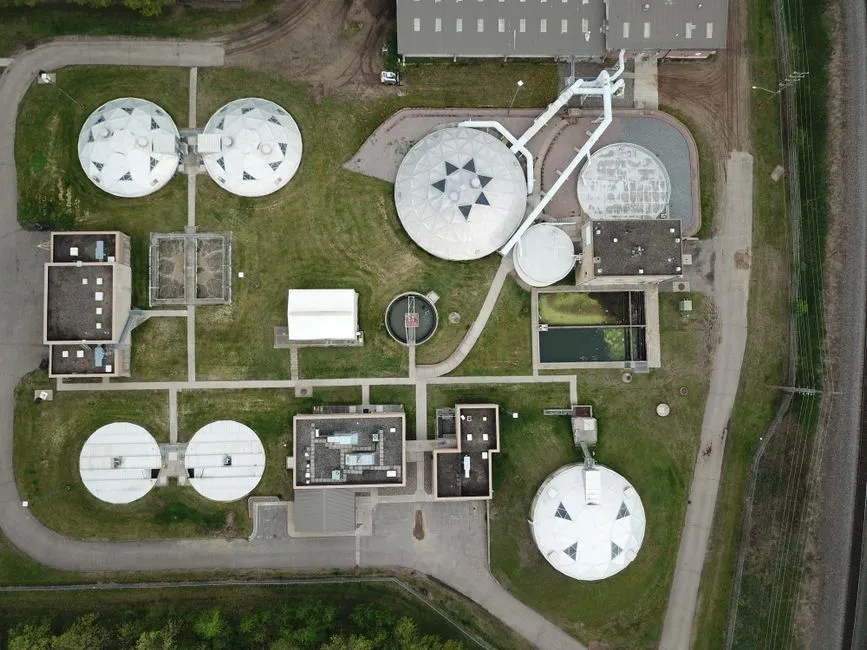
Sizing on flow alone is the most common way a containerized MBR ends up hydraulically large but biologically under-sized. The check is to convert flow and influent concentration into a mass load: BOD load (kg/day) = Q_avg (m³/day) × BOD (mg/L) ÷ 1000, and the same for COD. That load must keep the food-to-microorganism ratio (F/M) inside the envelope the manufacturer tested against—typically 0.05–0.15 kg BOD/kg MLSS·day for MBR duty.
For residential sewage in the Kathmandu Valley, raw BOD typically sits in the 200–400 mg/L range; this is a qualitative figure and site-specific sampling is preferable to any book value. The pre-treatment step the manufacturer specifies also matters: Pure Aqua's MBR-C uses a drum screen with 1.5 mm perforation upstream of the aeration tank to keep rags and grit off the membrane surface (Pure Aqua, 2026). For projects with higher solids—a camp that admits silt from vehicle wash, for example—pairing the bioreactor with a coarse GX-series rotary bar screen protects the membranes and keeps the cleaning interval realistic.
Output of Step 2: a check that the published aeration tank volume and MLSS target can carry the calculated BOD and COD loads, and that the upstream screening is matched to the actual solids profile of the site.
Step 3 — Pick the Container Envelope and Membrane Area
Standard envelopes are 20' and 40' high-cube ISO containers, and the published envelope numbers let you translate hydraulic and load numbers into a physical pick. MENA-Water states that more than 1,200 m³/day can be filtered inside a single 40-foot ISO container (MENA-Water, 2026); Pure Aqua offers both 20' and 40' HC depending on capacity (Pure Aqua, 2026). The HydropureWater DF-series flat-sheet MBR modules deliver 80–225 m² of membrane area per skid producing 32–135 m³/day per skid, at 0.1 µm pore size with an integrated aeration box for membrane scouring.
Worked example, Kathmandu, 50 gpd per capita: a 200-person residential block yields roughly 38 m³/day average flow, which sits comfortably inside a single 20' HC envelope once peaking is buffered by the equalisation tank. A 1,000-person camp at the same per-capita figure approaches ~190 m³/day and points to a 40' HC or a multi-skid arrangement. UF pore sizes of 0.04–0.1 µm are typical for submerged hollow-fibre or flat-sheet modules and produce an effluent that is clear and very low in TSS; confirm in writing that the membrane cut meets the reuse or discharge target for the site.
| Population served | Per-capita basis | Q_avg (m³/day) | Container envelope | Membrane configuration |
|---|---|---|---|---|
| 200 residents | 50 gpd (≈190 L/p/d) | ~38 | 20' HC | Single DF-series skid, 0.1 µm UF |
| 500 residents | 50 gpd (≈190 L/p/d) | ~95 | 40' HC | Single or dual DF-series skid |
| 1,000 camp workers | 50 gpd (≈190 L/p/d) | ~190 | 40' HC or multi-skid | Dual DF-series skids with peak buffer |
Output of Step 3: container size (20' or 40' HC), number of membrane skids, and a confirmed UF pore size against the discharge or reuse target.
Step 4 — Verify the Local Operating Envelope in Kathmandu
Most field failures of containerized MBRs in South Asia are caused by power, temperature, and discharge-rule mismatches that were not addressed before dispatch. Pure Aqua's MBR-C is specified for 460V/3Ph/60Hz and an operating range of 20–30°C (Pure Aqua, 2026). Confirm with the vendor whether the Kathmandu site voltage is 400V/3Ph/50Hz, what ambient temperatures the container will see in winter mornings and pre-monsoon heat, and whether the blower and backwash duty cycle has been derated for the local power factor.
For camps with weak or diesel-only power, ask the manufacturer to confirm aeration and backwash duty cycles, and whether standby pumps and remote monitoring are in scope—both are listed as options on the MBR-C datasheet (Pure Aqua, 2026). Finally, confirm the discharge or reuse target against Nepal's prevailing effluent rule and against any Kathmandu Valley receiving-water sensitivity: MBR effluent is typically clear and very low in TSS, but BOD, NH₃, and faecal-coliform numbers still have to be quoted against the rule, not assumed. For a deeper read on the membrane-side risks in this climate, the hollow-fiber MBR troubleshooting field guide walks through ten field-tested fixes drawn from operating data.
Output of Step 4: a signed-off compatibility matrix covering power, ambient temperature, and effluent compliance before any container leaves the factory.
Containerized MBR vs Buried Package STP — Which Fits Kathmandu?
The containerized MBR and the buried package STP solve the same problem with different site footprints. The HydropureWater WSZ underground package STP covers 1–80 m³/h with optional trailer mounting, while the containerized MBR range covers 10–2,000 m³/day in 20'/40' HC frames. Use the following table to determine which system fits your site-lifecycle needs.
| Decision driver | Containerized MBR | Buried WSZ package |
|---|---|---|
| Delivery & commissioning | Plug & Play, factory-tested, fast mobilisation | On-site civil works, longer install window |
| Redeployment | Unit can be lifted and relocated when camp/contract ends | Permanent; decommissioning is a civil task |
| Aesthetics and vibration | Container visible; vibration transmitted unless isolated | Buried; landscaping above the unit is possible |
| Effluent target | UF-grade, suitable for direct reuse or tight discharge | Conventional clarifier effluent; usually needs polishing for reuse |
| Footprint | Compact above-grade | Buried envelope, larger civil footprint underground |
Pick a containerized MBR when the project needs Plug & Play delivery, fast commissioning, and the option to redeploy the unit when a camp or contract ends. Pick a buried WSZ package when the site is permanent, the owner wants landscaping above the unit, or vibration and aesthetics rule out a container in a residential courtyard. Both can be paired with downstream disinfection (UV or ClO₂) and sludge dewatering, but neither replaces a proper site-specific hydraulic calculation. For a broader Nepal procurement and compliance view, the Nepal package wastewater treatment plant 2026 guide sits alongside this sizing article, and a comparable regional methodology is in the containerized MBR sizing methodology (Yangon 2026 guide).
Frequently Asked Questions
How many people can a single 20' HC containerized MBR actually serve in Kathmandu?
A single 20' HC frame typically serves up to roughly 200 residents at 50 gpd per capita (≈38 m³/day average), which is the per-capita basis Pure Aqua uses for the MBR-C sizing chart. Above that, a 40' HC envelope or a multi-skid arrangement is the correct direction; MENA-Water states that more than 1,200 m³/day can be filtered in one 40-foot ISO container.
What per-capita flow and peaking factor should I put into my calculation?
Use 50 gpd per capita (≈190 L/p/d) as a starting figure, then apply a peaking factor of 1.5–2× for residential blocks and 2.5–3× for labour or construction camps. Ask the vendor in writing for the specific peaking factor their bioreactor was tested against, because the published product page does not usually state it.
How much does a containerized MBR STP cost for a Kathmandu residential or camp project?
No published price exists for a Kathmandu-supplied unit; cost depends on envelope size, membrane area, pre-treatment scope, and whether standby pumps and remote monitoring are in scope. Request a written quote that itemises the container, membrane skids, pre-treatment, electrical panel, and freight to the Kathmandu Valley so you can compare vendors on the same line items.
What should I ask a vendor before I sign the purchase order?
Ask for: (1) the peaking factor the bioreactor was designed against, (2) confirmation that the electrical spec is re-rated for 400V/3Ph/50Hz, (3) the aeration tank volume and MLSS