
Why Adana's Climate Changes the Blowdown Math
Adana’s Akdeniz climate features long, hot, dry summers and mild, wetter winters, with annual evaporation rates in the Ceyhan and Seyhan basins far exceeding rainfall. For a hyperscale data center using evaporative cooling, this balance drives cooling tower blowdown (CTBD) total dissolved solids (TDS) into the 1,200–6,000 mg/L range (S2, Genesis Water Technologies) and increases the volume of freshwater required for make-up. A 100 MW facility can use up to 2 million liters of water per day (S3, IDE Tech), making even small increases in blowdown volume a significant line item on municipal utility bills.
The hot, dry conditions in Adana push operators toward higher cycles to reduce blowdown, though each additional cycle concentrates scaling minerals and tightens the discharge envelope. Two design risks arise: freshwater scarcity in the Seyhan basin during dry years, and regulatory scrutiny regarding heated or concentrated discharge to surface water or the Mediterranean coast. Before specifying equipment, engineers must obtain four Adana-specific inputs: a recent municipal or well make-up water analysis (TDS, hardness, silica, chloride, and sulfate); the current and projected Adana industrial discharge tariff; the ÇSİDB permit envelope for the site; and a site-specific evaporation rate for the cooling-tower design point. Treating these inputs as placeholders leads to oversized membranes and inaccurate OPEX projections. For pretreatment logic on hard feed water, the RO pretreatment for high-hardness wastewater guide provides a useful reference.
Blowdown Chemistry a Data Center Engineer Will Actually See
CTBD is the controlled purge of recirculating cooling water that maintains dissolved solids, corrosion byproducts, and biological growth below damaging limits. The chemistry observed in Adana reflects the quality of the make-up water and the cooling-water treatment program. Genesis Water Technologies reports that TDS in blowdown is typically 4–8× higher than make-up water, landing in the 1,200–6,000 mg/L range depending on cycles and source-water quality (S2). Scaling minerals — calcium, magnesium, silica, and alkalinity — concentrate proportionally and represent the primary constraint for any RO or NF stage. Suspended solids from corrosion products, biofilm, and airborne dust typically range from 10–50 mg/L even with basin filtration, necessitating side-stream or UF polishing before RO treatment. Treatment chemicals, including biocides, corrosion inhibitors, and dispersants, accumulate in the blowdown and affect both discharge compliance and membrane-fouling risk (S2). Because biological content is persistent, any recovery train must include a disinfection or biocide-control step compatible with downstream membranes.
These parameters shift based on cycles of concentration and source water, so the table below summarizes the ranges an Adana engineer should plan around; site-specific make-up analysis remains necessary to confirm these values.
| Parameter | Typical CTBD range | Why it matters for the train |
|---|---|---|
| Total Dissolved Solids (TDS) | 1,200–6,000 mg/L (4–8× make-up) | Sets osmotic pressure and recovery ceiling for RO |
| Hardness (Ca, Mg) | Concentrates proportionally with cycles | Drives calcium carbonate / sulfate scaling risk |
| Silica (SiO₂) | Concentrates proportionally with cycles | Limits RO recovery; common scaling foulant at high cycles |
| Alkalinity | Concentrates proportionally with cycles | Sets LSI profile and antiscalant demand |
| Suspended Solids | 10–50 mg/L | Forces side-stream or UF polishing before RO |
| Biocide and inhibitor residuals | Variable, often legacy chromate/phosphate | Defines discharge chemistry and membrane compatibility |
| Biological content | Planktonic bacteria, algae, biofilm | Requires biocide control compatible with downstream membranes |
Source: Genesis Water Technologies, 2025 data center blowdown treatment guide (S2).
Treatment Train Options: From Side-Stream Filter to Full ZLD
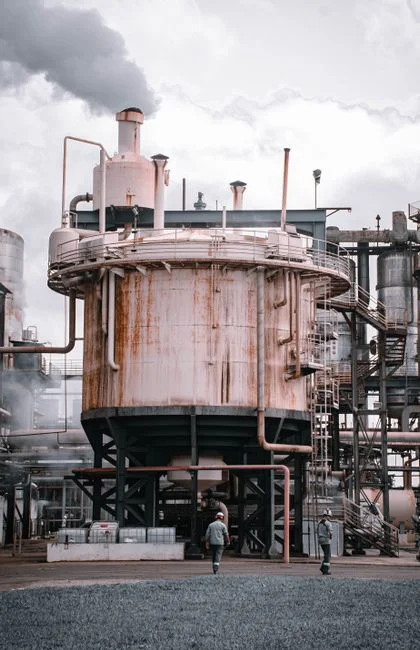
The technology menu for an Adana campus mirrors global standards, but the most cost-effective option matches the specific blowdown constraints. Genesis Water Technologies categorizes these choices by the parameter solved and the associated capex/opex (S2); IDE Tech utilizes a chemistry-aware RO architecture that exceeds the conventional brackish-water RO (BWRO) recovery ceiling of 75–80% by precipitating sparingly soluble salts, reporting ~95% recovery on high-salinity industrial streams (S3). The table below maps standard trains to recovery, energy, and capex requirements.
| Technology | Operating envelope | Adana trigger / what it solves |
|---|---|---|
| Side-stream filtration (sand / multimedia / self-cleaning spiral) | 10–25 µm; 1–5% of circulation flow; $50,000–200,000 CAPEX for typical data-center flow (S2) | First move on any new Adana site to drop blowdown suspended solids to membrane-friendly levels |
| Ultrafiltration (UF) | 0.01–0.1 µm pore; 10–30 psi; 90–95% recovery (S2) | Biological control and SDI reduction ahead of RO; required whenever the recovered stream is destined for cooling-tower make-up |
| Reverse osmosis (RO) | 95–99% salt rejection; 10–50 mg/L permeate TDS; 50–85% recovery; 150–400 psi; $250,000–500,000 installed for 50,000 GPD; $1.50–3.00/kgal OPEX (S2) | Core reuse step — permeate returns as cooling-tower make-up via an industrial RO system for cooling-tower makeup reuse, with PVDF ultrafiltration pretreatment protecting the membranes |
| Nanofiltration (NF) | 75–150 psi; 70–85% recovery; permeate TDS 30–50% of feed (S2) | Lower-pressure option when hardness is the binding discharge or reuse limit, not total TDS |
| Mechanical vapor compression (MVC) | 95–98% recovery on concentrate; distillate <10 mg/L TDS; 15–25 kWh per 1,000 US gal; $1–3M CAPEX for 10,000–30,000 GPD (S2) | Justified only when discharge is restricted, freshwater allocation tightens, or the RO concentrate cannot be sent to sewer |
| Brine concentrator + crystallizer (ZLD) | 95–99% overall recovery; $3–8M CAPEX; $5–15/kgal OPEX at data-center scale (S2) | Last-resort ZLD for sites where any liquid discharge is prohibited; partial-ZLD (80–90% volume reduction) is usually the cost-effective middle ground |
Dosing strategies are as critical as membrane selection: an PLC-controlled antiscalant and biocide dosing skid maintains RO performance at high cycles. Additionally, IDE Tech’s MAXH₂O Brine Desalter demonstrates ~95% recovery on blended industrial blowdown with permeate silica near 1 mg/L (S3), proving that 75–80% recovery is a default limit rather than a physical ceiling when systems are engineered for specific salt chemistry.
Matching the Train to Adana's Compliance and Reuse Options
Technology selection depends on end-use requirements and site-specific permits. Genesis Water Technologies categorizes these decisions into reuse, discharge compliance, and zero liquid discharge (S2). Cooling-tower make-up reuse provides the highest value, typically achieving 60–85% recovery and reducing freshwater withdrawal. Process-water reuse, such as for irrigation or washdown, requires lower recovery but necessitates pathogen and biocide-residual control, making it a secondary option. Discharge-compliance designs focus on meeting municipal TDS, metal, and biocide limits; in water-stressed regions, discharge fees can reach $5–15 per thousand gallons, making on-site CTBD treatment economically viable (S2). Some jurisdictions mandate TDS levels below 1,500 mg/L for discharge, effectively requiring on-site treatment.
For an Adana campus, determine the end use first to size the equipment accordingly. If cooling-tower make-up reuse is the goal, the train should consist of side-stream filtration, UF, and RO, with biocide control provided by a chlorine dioxide generator and a polishing UV sterilizer downstream of the UF to protect the RO membranes. If ÇSİDB permit conditions restrict discharge, the train shifts toward MVC concentration. Full ZLD is only justified when the permit or freshwater allocation makes liquid discharge unfeasible; partial-ZLD, which concentrates blowdown by 80–90%, often provides a more cost-effective balance (S2).
Decision Framework and ROI Sketch for an Adana Campus
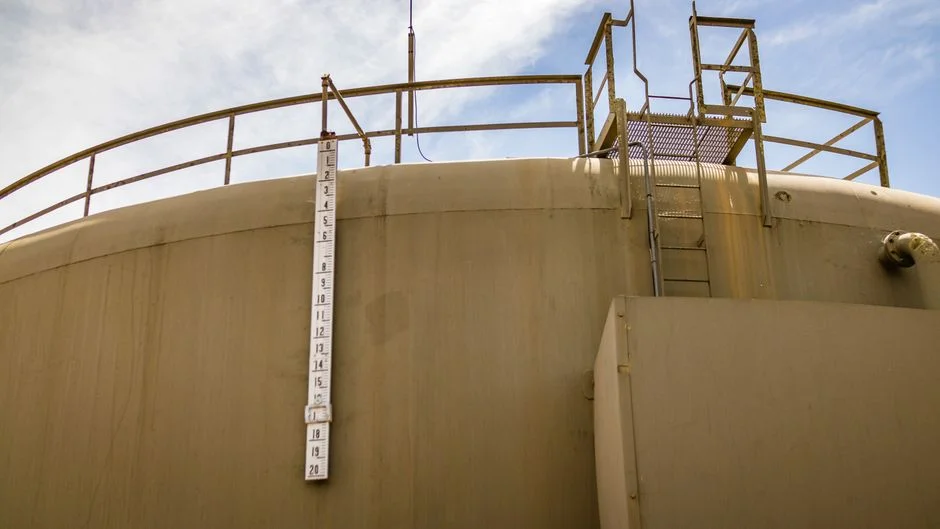
The recommendation is to base equipment choices on cycles of concentration rather than static hardware requirements. Increasing cycles reduces blowdown volume, making the cost-optimal target the highest cycle count the chemistry allows without violating scaling rules or discharge limits. The ROI model calculates annual savings (freshwater and discharge fees) minus annual OPEX, measured against installed CAPEX. Use site-specific Adana make-up water tariffs and discharge fees rather than general benchmarks, though $1.50–3.00 per thousand gallons for blowdown RO OPEX and $5–15 per thousand gallons for ZLD OPEX serve as industry standards (S2).
A staged build often survives budget review: implement side-stream filtration, UF, and RO for cooling-tower make-up reuse in Phase 1, sized according to Adana make-up analysis and target cycle counts. Hold MVC and crystallization as a Phase-2 contingency, triggered by increased discharge fees, stricter ÇSİDB permit conditions, or reduced freshwater allocations. Similar logic is documented in the Diyarbakir counterpart of this guide and the Vadodara data center blowdown treatment guide. Final sizing requires Adana-specific data: make-up water analysis (TDS, hardness, silica, chloride), IT load, WUE, site evaporation rate, ÇSİDB permit envelope, and municipal discharge tariffs.
Frequently Asked Questions
What blowdown treatment train should a hyperscale data center in Adana specify as a baseline?
Side-stream filtration plus ultrafiltration feeding a brackish-water reverse osmosis stage, sized for 60–85% recovery, with the RO permeate returned as cooling-tower make-up (S2). UV sterilizers and chlorine dioxide generators are typically integrated to prevent biological fouling.
How much does a CTBD treatment train cost to install and run in 2026?
Genesis Water Technologies reports $250,000–500,000 for an installed 50,000 GPD blowdown RO with OPEX of $1.50–3.00 per thousand gallons, and $50,000–200,000 for side-stream filtration (S2). Full ZLD requires $3–8M CAPEX and $5–15/kgal OPEX (S2). Actual Adana costs depend on make-up water analysis, target cycles, and local discharge tariffs; request a site-specific quote.
What Adana-specific inputs must be confirmed before finalizing the design?
Engineers must confirm the municipal or well make-up water analysis (TDS, hardness, silica, chloride, sulfate), the current Adana industrial discharge tariff, the ÇSİDB permit envelope, and the site evaporation rate. These variables significantly impact recovery targets, membrane selection, and OPEX.
When is ZLD actually justified for an Adana campus?
ZLD is justified only when ÇSİDB permit conditions prohibit liquid discharge, or when Seyhan basin freshwater allocation costs exceed ZLD OPEX. In most cases, partial-ZLD—concentrating blowdown by 8