Why EV and Auto Plants in Sparta Are Re-evaluating Activated Sludge
Sparta's auto and EV facilities combine machining coolant blowdown, stamping lubricants, paint-shop resin and pigment streams, phosphate/nickel cleaner rinses, Gigafactory electrode-coating washwater, and sanitary flow in one headworks, causing influent to swing with every production shift. Conventional activated sludge relies on a secondary clarifier whose overflow quality is capped by mixed liquor suspended solids (MLSS), sludge volume index (SVI), and free oil and grease (FOG) carryover; any one of those can push solids over the weir and trip a discharge exceedance.
Available footprint is typically fixed by earlier construction, which makes the 60% footprint reduction cited for the integrated MBR membrane bioreactor system (HydropureWater verified product catalog) directly relevant to a retrofit decision. Local Tennessee discharge limits, watershed-specific reuse rules, and any Gigafactory water-reuse target are not given in the supplied research and must be obtained from the plant's permit file and the Tennessee Department of Environment and Conservation (TDEC) before any technology is specified.
How MBR and CAS Actually Differ at the Process Level
Conventional activated sludge couples biological treatment and solids separation through a final clarifier, consisting of an aeration basin followed by a secondary clarifier and optional tertiary polishing. Because hydraulic retention time (HRT) and solids retention time (SRT) cannot be set independently, the clarifier's settling flux caps MLSS and therefore effluent total suspended solids (TSS). A submerged membrane bioreactor replaces the clarifier with a membrane cassette immersed in the aeration tank, so the membrane physically retains biomass. SRT and HRT decouple, MLSS can run far higher, and partial nitrification completes in a smaller basin. In the HydropureWater DF series, the PVDF flat-sheet MBR membrane module is specified with a 0.1 μm nominal pore, per the verified product catalog.
Effluent quality follows from different physics in each system. CAS effluent is bounded by sludge settleability and clarifier hydraulics, which is why high SVI or a FOG slug immediately shows up at the weir. MBR effluent is bounded by membrane integrity, backwash discipline, and aeration scour intensity, which is why the same FOG or hardness event that briefly clouds a clarifier can permanently foul a membrane if upstream oil removal is missing. Operators who have spent a career watching SVI now have to watch transmembrane pressure, relaxation cycles, and clean-in-place chemistry instead, a behavioral shift that often determines retrofit success more than the hardware itself.
EV and Auto Wastewater Characteristics That Stress Each System
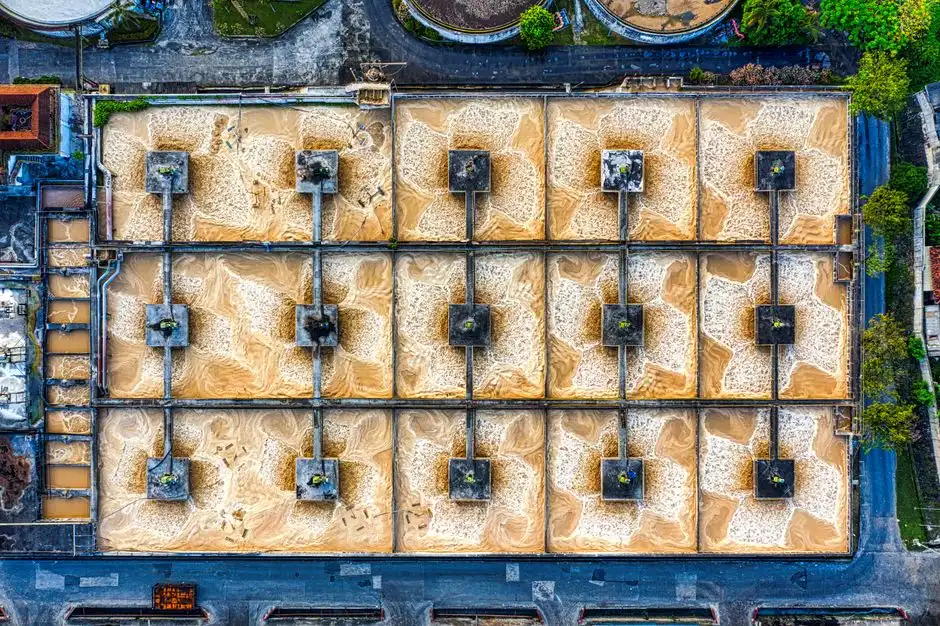
Four stream families dominate a Sparta auto or EV headworks, and each one stresses CAS and MBR differently. FOG from machining and stamping emulsions reaches the biological stage in both systems, but in CAS it is handled by a dissolved-air flotation (DAF) or rotary skimmer upstream; in MBR, residual FOG that reaches the cassette fouls the membrane surface, so a DAF oil and FOG removal system becomes a hard prerequisite. Paint-shop wastewater carrying resins, solvents, and pigments hits CAS with hydraulic buffering in the aeration basin; MBR's smaller footprint has less buffering, so equalization tanks become critical to absorb slug loads from booth washdown. Electrode-coating and Gigafactory washwater containing lithium-bearing solvents and metal-bearing cleaners resists biological degradation in both systems, but MBR's higher SRT can support slower-growing specialist biomass while the membrane rejects, rather than destroys, dissolved metals. None of these streams is quantified for Sparta in the supplied research, so the article instructs the reader to compile a 30-day composite influent dataset covering flow, FOG, total metals, BOD, COD, and temperature before specifying any upgrade.
MBR vs CAS vs Hybrid: Head-to-Head Comparison for Sparta Plants
The table below consolidates only the facts supported by the supplied research. Local CAPEX, electricity tariff, and labor cost numbers are not present in the research and must be collected from the buyer's own purchasing and utility records before any cost claim is made.
| Parameter | CAS (conventional activated sludge) | MBR (HydropureWater DF series, per verified catalog) |
|---|---|---|
| Core unit operations | Aeration basin + secondary clarifier (+ optional tertiary) | Aeration basin + submerged PVDF membrane cassette |
| Footprint vs equivalent CAS | Baseline | ~60% smaller (HydropureWater verified product catalog) |
| Capacity envelope | Practical across small to very large flows; upper limit set by basin area | 10–2,000 m³/day per system (HydropureWater verified product catalog) |
| Filtration / effluent particle size | Set by sludge settleability; no defined pore | <1 μm via 0.1 μm PVDF membrane (verified catalog) |
| SRT/HRT coupling | Coupled via clarifier | Decoupled by membrane |
| Energy basis | Process aeration only | Process aeration plus membrane scour aeration; DF series stated at 10–20× lower energy than external cross-flow MBR designs (verified catalog) — kWh/m³ must still be confirmed with vendor |
| Critical O&M skill | SVI and clarifier sludge wasting | Transmembrane pressure, relaxation, CIP chemistry, membrane replacement |
| Reuse suitability of raw effluent | Requires downstream polishing for reuse | Near-reuse-grade filtrate directly (verified catalog) |
Two cross-cutting points belong in the comparison. First, on shock loads: CAS tolerates a hydraulic or FOG spike because the clarifier buffers it; MBR has less hydraulic buffer, so equalization tank sizing moves the burden upstream. Second, on robustness: a clarifier that loses its sludge blanket takes hours to recover, while a membrane that fouls can take days to recover through chemical cleaning, so the consequence profile of an operator error is asymmetric and worth pricing into the retrofit risk register.
When CAS Still Wins — and When It Doesn't
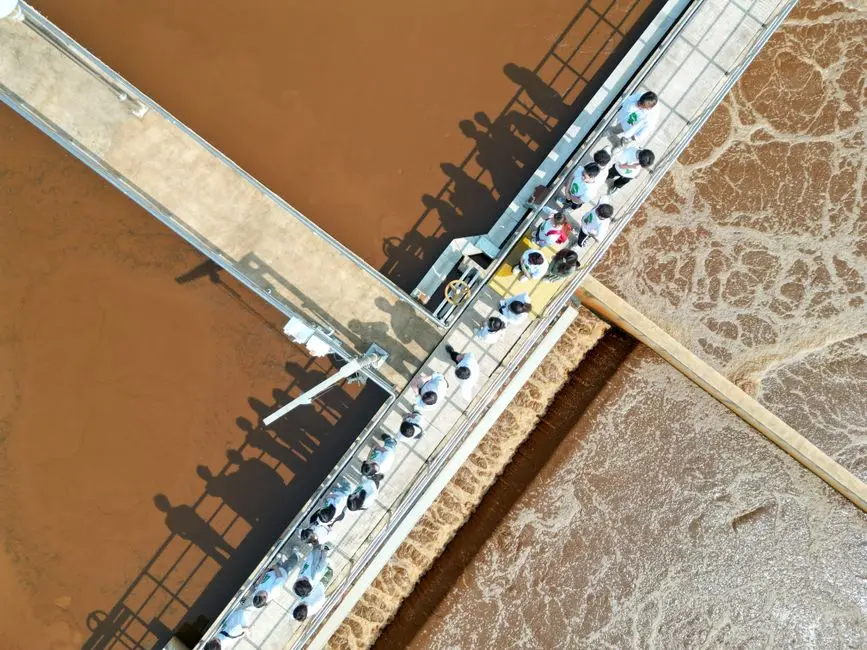
CAS remains the right answer where the plant has spare land inside the existing boundary, where influent FOG and metals are consistently low, and where the operations team has decades of activated-sludge troubleshooting experience that does not transfer one-for-one to membrane cleaning. In those settings, the capital and operator-skill cost of an MBR retrofit is hard to justify against stable discharge limits. CAS breaks down when the plant is landlocked, when production is shifting to new EV product lines that introduce new chemistries upstream, or when a tightening Tennessee permit pushes effluent quality below what a clarifier can guarantee without a costly tertiary add-on. Membrane replacement exposure is a hidden OPEX that CAS does not carry: PVDF submerged membranes in similar designs are typically replaced on a multi-year cadence, but that interval is not specified in the supplied research and must be confirmed with the membrane vendor before the lifecycle cost is locked in.
Retrofit Path: Converting an Existing CAS Basin to MBR in Sparta
A realistic retrofit into an operating auto or EV plant follows five steps, and each one has a go/no-go gate. Step 1 is an audit of the existing aeration basin: confirm volume, diffuser condition, blower capacity, and whether the basin can hold the higher MLSS that MBR operation requires, because MBR runs at MLSS levels that often exceed the aeration turndown of a CAS blower. Step 2 is verification of upstream pretreatment: FOG and TSS must be removed before the membrane, so an existing DAF or lamella clarifier typically becomes mandatory rather than optional, and the existing headworks may need new chemical dosing for emulsion break. Step 3 is cassette sizing against peak wet-weather flow rather than average day flow, because the membrane must pass the spike even if the aeration basin can buffer it; HydropureWater DF-series cassettes are specified for 32–135 m³/day per 80–225 m² of membrane area, per the verified product catalog, so the cassette count is set by the peak flow that the buyer confirms. Step 4 is shutdown planning: cassette installation requires draining the aeration basin, which is only feasible during a planned line outage, so the retrofit has to be sequenced against the production calendar rather than the engineering calendar. Step 5 is operator training on membrane aeration scour, relaxation cycles, and clean-in-place chemistry, which is typically the largest behavioral change in the project. More detail on the integrated package is in the integrated MBR membrane bioreactor system listing, and a cross-sector comparison is available in the MBR vs CAS for mining and metals wastewater guide.
2026 Decision Framework: CAS, Hybrid, or Full MBR for a Sparta EV Plant
Three paths cover the realistic options for a Sparta EV or auto plant in 2026, and the choice is driven by five buyer inputs that this article cannot supply. Stay with CAS when discharge limits are stable, no on-site reuse is required, and the plant has spare land for a clarifier and any future tertiary polish. Hybridise with CAS plus MBR when the existing CAS handles bulk BOD correctly but a reuse stream is needed for one specific demand, such as cooling-tower makeup, in which case the MBR polishes a slipstream while CAS continues to treat the rest of the flow. Convert to full MBR when the plant is landlocked, when discharge limits are tightening toward reuse quality, or when a Gigafactory reuse target pushes the plant beyond a single-process slipstream. The five inputs the buyer must collect before signing a purchase order are: current TDEC permit limits and any forthcoming rule changes, a 30-day composite influent characterization, an audited plot plan of available footprint inside the existing boundary, the percentage of total water demand targeted for reuse, and a vendor-confirmed 10-year membrane replacement exposure and energy figure. None of these values is given in the supplied research, and each one will move the answer between the three paths. For background on cost framing, the MBR cost per cubic metre 2026 guide and the COD and BOD removal technology buyer's guide lay out the input list a buyer should request from a vendor.
Frequently Asked Questions
How much does it cost to retrofit a CAS basin to MBR for a Sparta EV plant?
The supplied research does not contain a CAPEX, OPEX, or $/m³ figure for a Sparta retrofit, so a buyer should not rely on a generic industry number. Request a site-specific budgetary quote that includes cassette count (sized off peak flow, using the 32–135 m³/day per 80–225 m² HydropureWater DF-series specification), blower upgrade cost, DAF pretreatment, equalization tank sizing, installation labor during the planned line outage, operator training, and a vendor-confirmed membrane replacement interval and unit cost.
What should I check before selecting an MBR supplier for a Tennessee plant?
Verify that the supplier can provide the verified catalog specification for membrane pore size (0.1 μm PVDF in the HydropureWater DF series), a written cassette sizing calculation against your peak wet-weather flow, a reference list of at least one operating EV, auto, or battery-component site, a documented operator-training program covering relaxation cycles and clean-in-place chemistry, and a clear membrane replacement interval and warranty path. Confirm that the supplier's NSF/ANSI 61 or equivalent third-party certification matches the Tennessee permit's material-contact requirements before signing.
How do I size an MBR system for a variable EV/auto influent?
Size the membrane cassette count to peak wet-weather flow rather than average day flow, because the cassette must pass the spike even if the aeration basin can buffer it. Use the HydropureWater DF-series range of 32–135 m³/day per 80–225 m² (verified product catalog) to bracket the cassette count, and confirm upstream equalization tank volume separately so flow surges do not exceed the cassette's rated flux.
Will an MBR retrofit let me reuse wastewater for cooling-tower makeup at a Sparta plant?
A submerged MBR with a 0.1 μm PVDF membrane (per the verified HydropureWater product catalog) produces a near-reuse-grade filtrate that is a starting point for cooling-tower makeup, but reuse suitability also depends on conductivity, silica, hardness, and any pathogen or disinfection