What Domestic Sewage Treatment in Pretoria Actually Involves in 2026
Domestic sewage treatment in Pretoria in 2026 centres on packaged and decentralized biological systems sized to the 1–80 m³/h band that most residential estates, schools, and small commercial sites generate. Because Pretoria combines partial municipal sewer coverage with chronic water stress, the practical engineering decision is between an underground A/O package plant for routine domestic loads and a submerged membrane bioreactor where near-reuse effluent is required. Local process design should be benchmarked against South African effluent data: the Eastern Cape municipal works study by the Polish Journal of Environmental Studies (Sept 2015–Feb 2016) reports effluent temperatures of 19–36ºC, electrical conductivity 60–1,095 mS/m, alkalinity 2.6–20.9 mg/L, and nitrate 0.24–26 mg/L. The right answer for any Pretoria site is driven by footprint, target effluent quality, and operator skill on site.
"Domestic sewage" in this context is the sanitary load from homes, staff accommodation, schools, guest houses, and small commercial premises — the same stream the US EPA's municipal wastewater framing distinguishes from industrial effluent. Pretoria's housing stock is a mix of fully sewered suburbs and peri-urban or estate developments that must treat and dispose on-site, which is why packaged, buried units dominate new build. Two technology families cover the mainstream 2026 envelope: underground A/O (anoxic/aerobic) package plants and submerged MBR systems. Research-stage options such as constructed wetlands coupled with microbial fuel cells (InTech, 2018) and vermifiltration (IntechOpen, 2022) appear in the literature as efficient, decentralizable alternatives, but they remain niche for institutional Pretoria duty.
Pretoria Sewer Realities: Separate Sanitary Systems vs On-Site Treatment
Procurement for sewage treatment begins by determining whether to connect to a municipal sewer or treat waste on-site. The US EPA municipal wastewater guidance (epa.gov) describes two sewer architectures: combined sewers that carry sanitary sewage and stormwater in a single pipe, and sanitary (separate) sewers that carry wastewater only. State and local authorities in the US have generally not permitted construction of new combined sewers since the first half of the 20th century (epa.gov, municipal wastewater page) — and South African new-build practice follows the same separate-sanitary logic.
The operational risk for Pretoria specifiers is inflow and infiltration (I/I). Sanitary sewers that are not watertight due to cracks, faulty seals, or improper connections can receive large volumes of stormwater during wet weather, which can cause sanitary sewer overflows (SSOs) and operational problems at the downstream wastewater treatment facility (epa.gov). For an estate or school in Pretoria's wet season, that municipal I/I risk is one of the strongest arguments for a self-contained on-site plant: the developer controls the hydraulic envelope rather than absorbing municipal wet-weather peaks. For peri-urban and rural-precode sites around Pretoria, the realistic answer is rarely "extend the municipal sewer"; it is a packaged plant sized to the development's own load.
Influent and Effluent Characteristics a Pretoria Designer Should Plan Around
The only locally anchored physicochemical dataset in the supplied research is the Eastern Cape municipal sewage works evaluation published in the Polish Journal of Environmental Studies (Sept 2015–Feb 2016). It evaluated three municipal works and reported the following effluent ranges:
| Parameter | Range (Eastern Cape, Sept 2015 – Feb 2016) |
|---|---|
| Temperature | 19–36 ºC |
| Electrical conductivity | 60–1,095 mS/m |
| Alkalinity | 2.6–20.9 mg/L |
| Nitrate | 0.24–26 mg/L |
Two practical implications follow. First, Pretoria's cooler winter air and soil temperatures sit toward the lower end of the 19–36 ºC band, which slows nitrification kinetics and should be reflected in aerobic tank sizing and burial depth below the frost-affected zone. Second, the Eastern Cape paper does not provide a Pretoria-specific dataset — the engineer should treat the table as a defensible South African band and request a recent site-specific influent sample (COD, BOD, NH₄-N, P, pH, temperature) from a local laboratory before final sizing.
For decentralized biological treatment, the feed stream is well characterised. The IntechOpen vermifiltration chapter (DOI 10.5772/intechopen.103920) explicitly applies vermifiltration to domestic septic-tank sewage, validating that the sanitary load from an estate or school is a recognised input to small-footprint biological units. That same logic underwrites the use of an A/O package or submerged MBR in Gauteng.
Process Selection: Septic, A/O Package, MBR, or Wetland-Based
Site constraints determine the process family, specifically available footprint, target effluent quality, and operator skill level. The table below summarises the decision frame.
| Process family | Best-fit Pretoria duty | Capex band (relative) | Footprint | Operator skill | Effluent quality |
|---|---|---|---|---|---|
| Septic tank + soakaway | Single rural homestead, very low density | Lowest | Large soakaway field | Periodic desludge | Disposal only, no reuse |
| Underground A/O package (WSZ-type) | Residential estates, schools, guest lodges, hospitals, small factories (1–80 m³/h) | Low–medium | Buried, small surface footprint | Fully automated, no operator required | Discharge compliant; limited reuse |
| Submerged MBR | Sites targeting near-reuse irrigation; tighter effluent consents (10–2,000 m³/day) | Medium–high | ~60% smaller than conventional activated sludge | Requires membrane management and CIP planning | Reuse-quality, low TSS |
| Constructed wetland / vermifiltration | Land-available, low-skill, low-energy sites | Low (land cost aside) | Very large | Low-skill, periodic maintenance | Discharge; some reuse potential |
Septic plus soakaway is the lowest-capex option but is unsuitable for dense Pretoria estates, sensitive soils, or any site that needs reuse-quality effluent. An underground A/O package plant combines anoxic/aerobic biological contact oxidation with sedimentation and disinfection in a single buried unit, handles 1–80 m³/h, and is fully automated with no operator required — the default for most residential communities, hotels, and rural estates in 2026 (HydropureWater WSZ product specification). Where near-reuse irrigation is the project goal, a submerged MBR membrane bioreactor with submerged PVDF membrane at sub-micron pore size delivers the tighter effluent the reuse consent requires, at roughly 60% of the footprint of a comparable conventional activated-sludge plant. Constructed wetlands coupled with microbial fuel cells (InTech, 2018) and vermifiltration (IntechOpen, 2022) are documented as efficient, low-expertise, decentralizable options in the literature, but are not the first choice for institutional or commercial Pretoria duty in 2026 where land is constrained or discharge consent is tight.
Sizing a Pretoria Domestic Plant: The 1–80 m³/h Operating Window
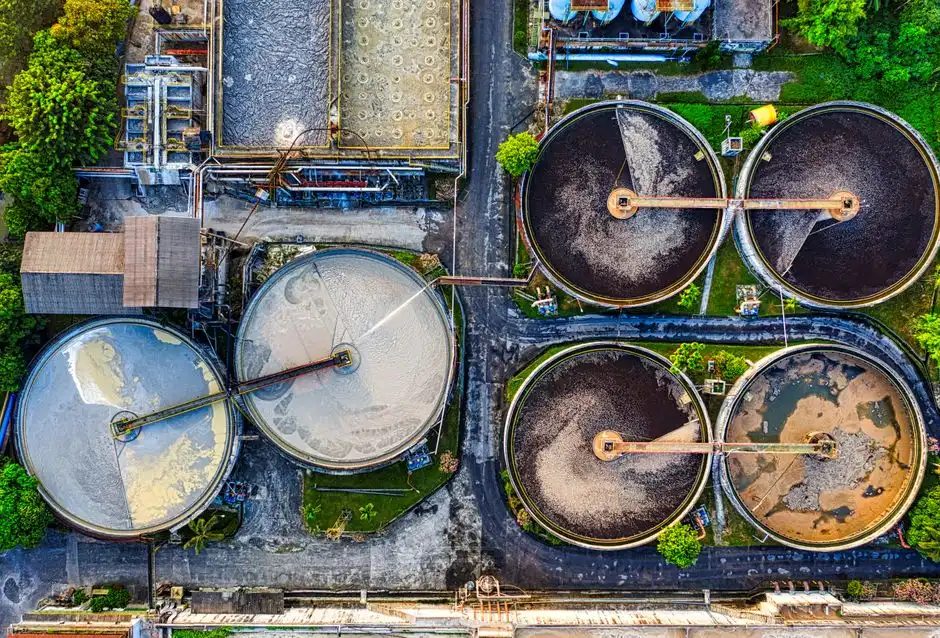
Most Pretoria residential, school, and small commercial projects fall inside the 1–80 m³/h envelope. A 200-unit residential block, a 120-bed school, or a 60-key guest lodge generally sits within that band and can be served by a WSZ-type underground package unit (HydropureWater WSZ product specification). MBR systems are typically specified by daily flow in the 10–2,000 m³/day range — for Pretoria sites the lower half of that range covers the same estate and institutional duty where reuse is the design driver.
The supplied research does not contain a Pretoria-specific dry-weather flow or population-equivalent figure, so the engineer must collect these inputs locally rather than rely on a published range. The minimum dataset a vendor needs to size correctly is: average dry-weather flow, peak factor (typically 2–3× for institutional duty), population equivalent, and a recent influent sample. Any design that ignores wet-weather peaks and the SSO risk at the downstream municipal works will under-size the equalisation stage — the EPA municipal wastewater guidance (epa.gov) is explicit that significant wet-weather flow increases at treatment facilities create operational challenges and can adversely affect treatment efficiency. For sites targeting water reuse, size for the higher MBR envelope and confirm that the irrigation demand curve matches the dry-season effluent production curve, otherwise storage has to be added.
Buyer's Checklist for a 2026 Pretoria Domestic Sewage Treatment Project
Before signing a purchase order, the specifier should walk through five checkpoints. First, confirm the vendor's stated capacity band covers both the project's average and peak flow — for the WSZ envelope that is 1–80 m³/h, and for the MBR envelope 10–2,000 m³/day (HydropureWater product specifications). Second, ask for documented compliance with the local Tshwane by-laws and any required South African standards or department approvals; the buyer must confirm these with the local authority. Third, specify the automation level: an A/O package unit is fully automated with no operator required, a strong fit for sites with limited on-site skill, while MBR systems require membrane management and a CIP (clean-in-place) plan. Fourth, for buried installations confirm hydraulic design, ventilation, and access for desludging — these are the items most often under-scoped on Pretoria estate projects. Fifth, decide the reuse path up front (irrigation versus discharge to sewer or watercourse), because that single decision locks the rest of the equipment train. The wider context for rural and decentralized sewage treatment options in South Africa and for hotel, lodge, and guesthouse wastewater treatment in South Africa is covered in the companion guides.
Frequently Asked Questions
What size domestic sewage treatment plant does a 100-unit Pretoria estate need?
A 100-unit residential estate typically generates a daily flow that places the project inside the 1–80 m³/h envelope covered by an underground A/O package plant (HydropureWater WSZ product specification). The supplier cannot quote a single price without the average dry-weather flow, peak factor, and population equivalent for the specific estate; the buyer should request a site-specific sizing calculation rather than accept a generic unit price.
Is an underground package plant or an MBR better for a Pretoria residential site?
An underground A/O package plant is the correct default for routine domestic loads where the effluent is discharged to a sewer or watercourse, because it is fully automated and requires no dedicated operator. An MBR becomes the better answer only when the project requires near-reuse irrigation quality or a tighter discharge consent — the decision is driven by the reuse path, not by the technology itself.
What influent parameters should be tested before specifying a Pretoria domestic sewage plant?
Request a recent influent sample from a South African-accredited laboratory covering at minimum COD, BOD, NH₄-N, total phosphorus, pH, and temperature, plus a flow profile. The Eastern Cape municipal works study (Polish Journal of Environmental Studies, Sept 2015 – Feb 2016) provides a defensible South African physicochemical band (temperature 19–36 ºC, electrical conductivity 60–1,095 mS/m, alkalinity 2.6–20.9 mg/L, nitrate 0.24–26 mg/L) but does not substitute for site-specific data.
Can treated domestic sewage be reused for garden irrigation in Pretoria?
Reuse is technically feasible through a submerged MBR delivering low-TSS effluent, but the discharge consent and any reuse permit must be confirmed with the local authority before specifying. The buyer must request permit IDs and consent limits from the local authority and the selected vendor as part of the supplier evaluation.