How Sludge Dryer Energy Efficiency Is Measured in 2026
Sludge dryer energy efficiency is reported in two parallel units: BTU per pound of water evaporated (BTU/lb) on the US side and kWh per ton of water evaporated on the metric side. Vendors quote both because American engineers still size heat duties in MMBTU/day while European and Asian procurement documents are written in kWh/m³ equivalents of water removed. The 2026 commercial band runs from roughly 1,100 BTU/lb for a heat-pump belt dryer with energy recovery to over 2,200 BTU/lb for a direct-fired rotary drum without exhaust heat recuperation, per CNASIN's 2026 sludge dryer guide.
A general benchmark across thermal dryers is 750–1,100 kWh per ton of water evaporated, per Cambi's overview of THP and sludge drying. Solar dryers sit outside that band because they have near-zero thermal input, but they can take up to 30 days to reach dryness targets, per Cambi, which limits them to seasonal or low-throughput service. The practical takeaway is that the 1,100 BTU/lb floor assumes a heat-integrated, low-temperature belt dryer, not a generic convective unit.
Engineers translating these numbers into a 2026 energy budget should convert BTU/lb into kWh per metric ton of water evaporated using 1 BTU/lb ≈ 2.326 kWh/t. At 1,100 BTU/lb that is roughly 2,560 kWh/t, and at 2,200 BTU/lb it is roughly 5,120 kWh/t — figures that immediately show why the choice between a heat-pump belt dryer and an unrecuperated rotary drum is the dominant cost line in any 20-year TCO.
Dryer Type vs Energy: A 2026 Parameter Comparison
Convective or direct dryers expose sludge to hot gas; the family includes belt, fluidized bed, flash, and rotary drum designs, and the rotary drum sits at the high end of the BTU/lb band at over 2,200 BTU/lb when it has no exhaust heat recuperation, per CNASIN's 2026 guide. Indirect contact dryers — disc, thin film, paddle — transfer heat through a metal wall and sit in the middle of the band because the carrier steam is not vented with the moisture, per Cambi. Heat-pump belt dryers operating at 60–130 °C and using waste heat from a CHP unit or a heat-pump evaporator circuit reach the low end of the band at roughly 1,100 BTU/lb, per CNASIN. Solar dryers, including greenhouse-style and Huber turning-machine designs, have near-zero thermal input but the same 30-day residence time caveat, per Cambi, which makes them a side option rather than a baseline. On the dryness axis, mechanical dewatering alone reaches 10–55% dry solids (DS) depending on sludge type, while thermal drying typically produces anywhere from ~65% DS up to ~90% DS, per Cambi. The table below maps the practical 2026 envelope.
| Dryer family | Typical BTU/lb range | Operating temperature | Output DS range | Best fit |
|---|---|---|---|---|
| Direct-fired rotary drum (no recuperator) | > 2,200 | 400–800 °C gas | 65–90% DS | High-throughput, single-train, fuel-tolerant |
| Direct-fired rotary drum (with exhaust recuperator) | Mid-band | 400–800 °C gas | 65–90% DS | Brownfield retrofits where exhaust ducting exists |
| Convective belt / fluidized bed / flash | Mid-band | 150–400 °C gas | 65–90% DS | Municipal biosolids, fertilizer-grade product |
| Indirect contact (disc, thin film, paddle) | Middle of band | 150–250 °C jacket | 65–90% DS | Odour-sensitive sites, closed-loop carrier steam |
| Heat-pump belt dryer (CHP or HP waste heat) | ~1,100 (low end) | 60–130 °C | 65–90% DS | Plants with on-site heat source, low-temperature requirement |
| Solar / greenhouse dryer | Near-zero thermal | Ambient | Up to ~90% DS in dry climates | Seasonal, low-throughput, low-capex |
The 60–130 °C window of a heat-pump belt dryer is also where an air-source or waste-heat heat pump can deliver useful coefficient-of-performance gains, which is why the lowest BTU/lb figure in 2026 is anchored to that integration rather than to the dryer hardware alone.
Four Levers That Actually Cut kWh per Ton
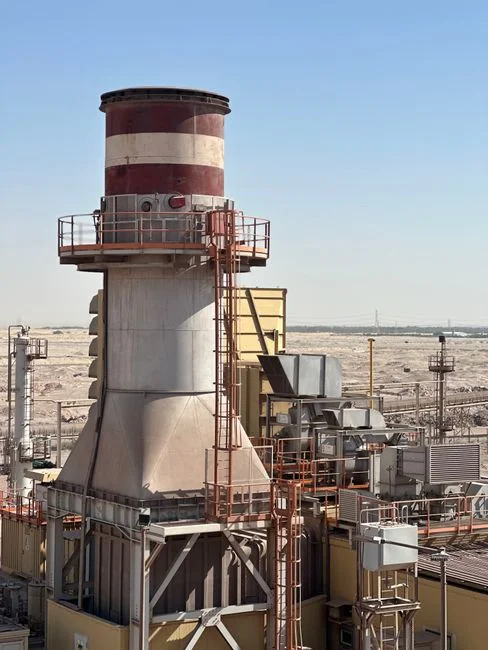
Once the dryer is selected, four engineering levers control whether the plant runs at the low or high end of the BTU/lb band. The first lever is upstream dewatering, because the incoming moisture content is the single most controllable variable in the energy budget. A well-maintained centrifuge or belt press paired with polymer optimization can achieve 72–78% moisture on municipal secondary sludge, per CNASIN's 2026 guide, and mechanical dewatering alone can reach 75–82% moisture across equipment types. If a plant is feeding the dryer cake at 80% moisture instead of 75%, the dryer has to evaporate about 20% more water per dry ton, which moves the operating point straight up the BTU/lb curve. The second lever is exhaust heat recuperation on direct-fired dryers, which CNASIN flags as the single largest spread between 20-year TCO outcomes for a given dryer type. The third lever is heat-pump and CHP integration: belt dryers paired with CHP waste heat or a dedicated heat-pump evaporator circuit reach the ~1,100 BTU/lb floor identified in the 2026 commercial band, per CNASIN. The fourth lever is process integration through anaerobic digestion, where biogas can offset roughly 55% of the dryer's thermal demand at integrated WWTPs, per CNASIN, and a 2026 digital-shadow control study on a sludge incineration system demonstrated a 40% reduction in biogas consumption while keeping the furnace within European temperature limits, per Scientific Reports (Jun 2026). The cheapest place to spend capex is usually lever one, because a plate and frame filter press with optimized polymer dosing can pull cake moisture down without changing the dryer at all.
Thermal Hydrolysis and Biogas: The Psyttalia Data Set
Thermal hydrolysis pretreatment (THP) is the strongest quantified case for changing the dryer's energy balance rather than just the dryer's hardware. THP can increase biogas production by up to 50% versus conventional digestion, per Cambi, and the additional biogas more than offsets THP's own steam demand once the digester heating load is included. The Psyttalia (Athens) plant, owned and operated by EYDAP, is the cleanest published data set. Treating the full waste-activated-sludge stream with THP raised biogas output from 984 to 1,135 MMBTU/d (288 to 333 kWh/d), per Cambi. The improved biosolids dewaterability then reduced the sludge dryer's energy demand, so the dryer's share of biogas use fell from 73% to 40%. As a result, the share of biogas available for electricity or biomethane production rose from 27% to 60%, roughly 160% more energy than in the case without THP, per Cambi. In 2023 Psyttalia added a second THP train so that 100% of its waste activated sludge is now treated, locking in those gains, per Cambi. The same logic is being applied at Anyang-Bakdal (South Korea), Jurong (Singapore), Ringsend (Scotland), Vigo (Spain) and Vilnius (Lithuania), all of which use THP to feed sludge dryers, per Cambi. For a finance review, the defensible wording is that THP both lowers the dryer's specific energy demand and raises total on-site biogas, so the project moves from an opex problem to an energy-export discussion.
20-Year TCO: What Each BTU/lb Actually Costs
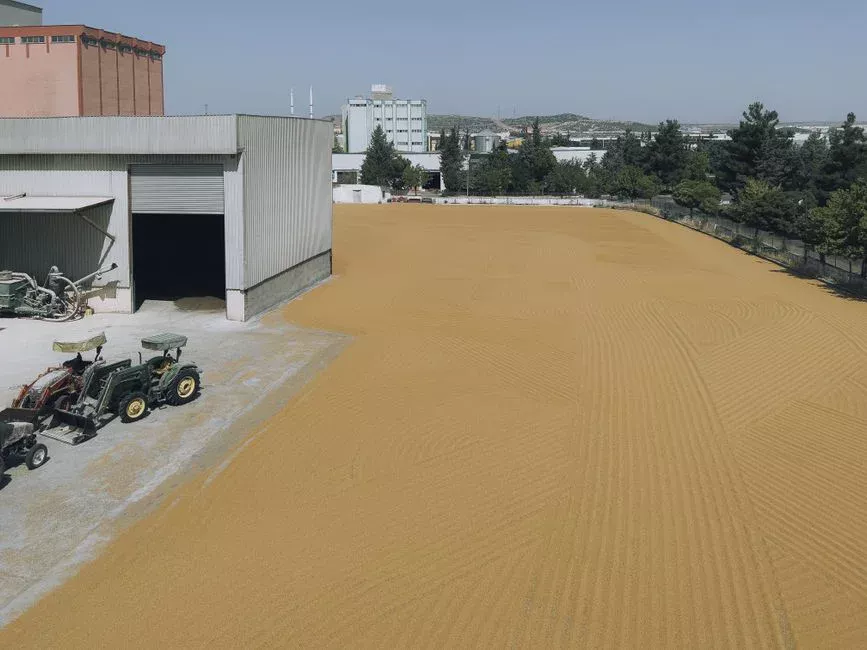
CNASIN's 2026 TCO model for a mid-size WWTP processing 30 dry tons/day gives the cleanest worked numbers in the public literature. Capital equipment and installation runs $2.5M–$6M depending on technology, scheduled maintenance and parts should be budgeted at 2–4% of capital per year, and labor runs 0.5–1.5 FTE depending on automation level, per CNASIN's 2026 guide. Aggregated over 20 years and discounted at 4%, the same throughput costs $18 per dry ton for a heat-pump belt dryer using waste heat, up to $62 per dry ton for a direct-fired rotary drum with no heat recovery, per CNASIN. The energy line is the swing variable: at the 2026 BTU/lb gap of roughly 1,100 to over 2,200, the energy component alone can differ by a factor of two, which is the gap between the $18 and $62 figures. Biogas offset of roughly 55% of thermal demand, per CNASIN, compresses the energy line and can move a project from operating-cost discussion to revenue discussion once biomethane export or Class A land-application revenue is on the table. A side-by-side view:
| Configuration (30 dry tons/day, 20-yr horizon, 4% discount) | Capex envelope | Annual maintenance | Labor | 20-yr cost per dry ton |
|---|---|---|---|---|
| Heat-pump belt dryer using waste heat | $2.5M–$4M | 2–3% of capex | 0.5–1.0 FTE | $18 |
| Indirect contact dryer (disc / paddle) | $3M–$5M | 2–3% of capex | 0.5–1.0 FTE | Mid-range |
| Direct-fired rotary drum with exhaust recuperator | $4M–$6M | 3–4% of capex | 1.0–1.5 FTE | Mid-to-upper range |
| Direct-fired rotary drum, no heat recovery | $4M–$6M | 3–4% of capex | 1.0–1.5 FTE | $62 |
Two practical caveats belong in any 2026 capital submission. First, the 20-year cost per dry ton is highly sensitive to the assumed natural gas or electricity price; the $18-to-$62 spread is the engineering envelope, not a guaranteed outturn. Second, EPA 40 CFR Part 503 — the federal rule governing sewage sludge management and land application — is the binding compliance constraint in the US, and any TCO that ignores the cost of staying inside Part 503 pathogen and vector-attraction limits is incomplete, per CNASIN's 2026 guide. For non-US plants, the analogous compliance line is the EU's sludge directive and any local biosolids end-of-waste criteria, which are not numerically defined in the public sources used here and should be confirmed with the relevant regulator before bid.
Frequently Asked Questions
What kWh per ton of water evaporated should we budget for a new sludge dryer in 2026?
Budget 750–1,100 kWh per ton of water evaporated as the general thermal-dryer benchmark, per Cambi. A heat-pump belt dryer with energy recovery sits near the low end of the BTU/lb band at roughly 1,100 BTU/lb, while a direct-fired rotary drum without exhaust heat recuperation exceeds 2,200 BTU/lb, per CNASIN's 2026 guide. The specific number for a given plant should be requested from each shortlisted vendor as a guaranteed specific energy consumption at the contractual feed moisture and final DS.
How much does a 30 dry tons/day sludge dryer line cost in 2026?
CNASIN's 2026 model places capital equipment and installation at $2.5M–$6M for a 30 dry tons/day plant, with annual maintenance at 2–4% of capex and 0.5–1.5 FTE for labor. The 20-year discounted lifecycle cost at 4% ranges from $18 per dry ton for a heat-pump belt dryer using waste heat to $62 per dry ton for an unrecuperated direct-fired rotary drum, per CNASIN. Buyers should request a vendor-specific TCO that fixes the assumed energy price, currency year, and discount rate before comparing bids.
How do we pick between a heat-pump belt dryer and a rotary drum dryer?
Use the BTU/lb band as the first filter. If the plant has a usable low-grade heat source (CHP jacket cooling, digester gas engine waste heat, or a dedicated heat-pump circuit) and the sludge is mostly waste activated sludge, a heat-pump belt dryer at 60–130 °C hits the ~1,100 BTU/lb floor, per CNASIN's 2026 guide. If the plant is fuel-flexible, needs a single high-throughput train, and can accept the higher BTU/lb load, a direct-fired rotary drum with an exhaust recuperator is the standard workhorse. The unrecuperated rotary drum should be treated as a last-resort option because it sits at the top of the 20-year TCO envelope.
Does adding THP in front of the dryer actually reduce energy use?
Yes, and the Psyttalia data set is the cleanest published proof. Treating the full waste-activated-sludge stream with THP raised biogas output from 984 to 1,135 MMBTU/d and cut the dryer's share of that biogas from 73% to 40%, freeing about 160% more energy for electricity or biomethane, per Cambi. For a 2026 capex submission, the defensible position is that THP both reduces the dryer's specific energy demand and raises total on-site biogas; the steam demand of THP itself is included in the same energy balance. Upstream dewatering gains from THP also mean less water reaches the dryer, which is why pairing THP with a plate and frame filter press and a high-efficiency sedimentation tank upstream is the configuration most operators now specify.
Further Reading
- screw press energy efficiency in 2026
- Cambi's overview of THP and sludge drying