
Why Dublin Projects Need a Containerized MBR
A containerized MBR is the right answer when a Dublin project sits outside the Irish Water sewer network, or where a connection has been refused or offered on uneconomic terms—common scenarios for small rural housing schemes, holiday camps, glamping sites, scout camps, and temporary construction camps at the edge of the Greater Dublin drainage region. In these cases, the developer or operator must install a packaged sewage treatment plant and obtain a discharge route via the local authority or EPA. A membrane bioreactor replaces the secondary clarifier of a conventional package STP with a submerged PVDF ultrafiltration membrane, with nominal pore sizes of 0.04 µm (Pure Aqua MBR-C) or 0.1 µm (Kaveri / CPG design) per the published MBR-C datasheet and the MBR-STP design note. The result is a permeate with very low suspended solids that meets tight discharge consents or reuse criteria without a downstream polishing stage.
For a constrained Irish site, the containerized format brings three practical benefits: a factory-tested skid arrives on one lorry, civil work reduces to a slab and an inlet manhole, and the unit can be lifted off at the end of a temporary camp licence. The HydropureWater integrated MBR membrane bioreactor system follows the same containerized, factory-built pattern described in published datasheets and is a useful reference configuration when you are sketching a Dublin site layout.
The Five-Step Sizing Method
A defensible Dublin sizing calculation follows five steps to ensure the system meets local requirements.
- Population equivalent (PE). Count dwellings, bedspaces, or camp occupants at peak loading. For seasonal camps, apply an occupancy factor that reflects the worst realistic loading week rather than the licence maximum, and state the factor you have used so the calculation is auditable.
- Per-capita flow. Irish design practice for domestic dwellings typically uses 150 L/h·d; camps with showers, kitchens, and laundry sit higher because of food waste and longer shower times. Confirm the figure with the local authority or the EPA CoP before freezing the design.
- Peaking factor. Apply a daily peaking factor of 2.0–2.5 for small populations to size the equalization tank and transfer pumps. The Kaveri / CPG MBR-STP design note (S2) uses an 8-hour hydraulic retention in the equalization tank to even out morning and evening peaks and feed a constant rate to the aeration tank.
- Influent load envelope. Adopt 250 mg/L BOD, 400 mg/L COD, 200 mg/L TSS, 30 mg/L NH4-N as the feed assumption (Pure Aqua MBR-C datasheet, S3). For camps with significant food waste, lift BOD and TSS by a further margin to reflect kitchen solids; do not assume the lower envelope if a grease separator is undersized.
- Match to a published containerized model. Pick the model whose rated flow and population band enclose the design value with a 15–25% margin, and check that the permeate envelope meets the discharge consent before you buy.
The same five-step logic is set out in more detail in the MBR capacity and sizing 2026 engineering calculation guide.
Published Containerized MBR Model Lines You Can Match Against
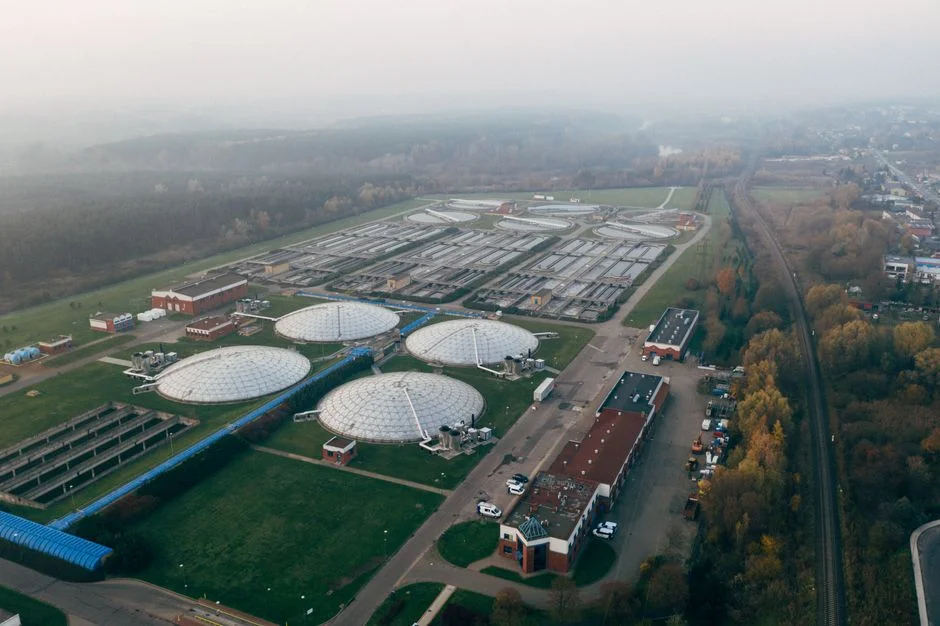
The Pure Aqua MBR-C series (S3, S4) is a representative containerized line that an Irish buyer can match a design against. Four standard models cover the small-to-mid capacity band that Dublin camps and housing schemes typically need, all mounted in either one 20' HC or one 40' HC insulated container with a 1.5 mm drum screen, anoxic zone, fine-bubble aeration, submerged hollow-fibre PVDF membrane modules with coarse-bubble air scouring, and built-in chemical cleaning.
| Model | Flow (gpd) | Flow (m³/d) | PE @ 50 gpd/capita | Skids × Modules | Container |
|---|---|---|---|---|---|
| MBR-C-13.2K-06 | 13,211 | 50 | 265 | 2 × 3 | 1 × 20' HC |
| MBR-C-26.4K-10 | 26,421 | 100 | 529 | 2 × 5 | 1 × 40' HC |
| MBR-C-39.6K-16 | 39,631 | 150 | 793 | 2 × 8 | 1 × 40' HC |
| MBR-C-50.2K-20 | 50,198 | 190 | 1,004 | 2 × 10 | 1 × 40' HC |
The permeate envelope a Dublin buyer should demand is <5 mg/L TSS, <10 mg/L BOD, <50 mg/L COD, <2 mg/L NH4-N (S3, S4). The MBR-C datasheet also names a 20–30°C operating range with a 20°C design point, and electrical supply 460 V / 3 Ph / 60 Hz (S3, S4) — both points a Dublin buyer must translate into local terms, because an unheated Irish container will sit below 20°C in winter and the European supply is 400 V / 3 Ph / 50 Hz. A Dublin specification usually needs container insulation, a small heater or heat trace, and a confirmed electrical interface before order. The same 20°C design point appears in the flat-sheet DF series PVDF flat-sheet MBR membrane module family.
Dublin-Specific Compliance Checks Before You Buy
A correctly sized container must also clear the regulatory route before a discharge consent is issued. The route depends on the population equivalent the project serves, and the Greater Dublin drainage region is split between the four Dublin local authorities and the adjoining councils in the mid-east region.
| Project scale | Primary regime | Key documents to satisfy |
|---|---|---|
| Single house <10 PE | EPA Wastewater Treatment and Disposal Systems Serving Single Houses (CoP, 2009); Building Regulations Part H | Site characterisation, percolation value, treatment system standard |
| Multi-house / small development above single-house threshold | Irish Water pre-connection enquiry; if refused, discharge licence via local authority or EPA | Pre-connection enquiry response, discharge licence application |
| Seasonal camp or commercial development | EPA discharge licence (Water Pollution Act) and Greater Dublin Region Code of Practice for domestic wastewater treatment | Discharge licence, planning permission, building control sign-off |
Set the design discharge limit at the conservative end of Irish practice—typically BOD <10 mg/L and TSS <10 mg/L for a discharge to ground or to surface water—and confirm that the chosen containerized MBR's permeate envelope (S3, S4) can hit it without an add-on sand filter or reed bed. On the planning side, confirm that a 20' or 40' HC container (S3) is visually acceptable, that an HGV can reach the slab, and that blower noise is within the local authority's residential limit at the nearest dwelling. For the disinfection step, a pipeline UV sterilizer for the MBR permeate is the usual choice where reuse or a tight bathing-water consent applies, and the EU compliance framing is covered in the EU sewage treatment plant compliance guide.
Worked Example: 50-Person Summer Camp, Greater Dublin Area
Inputs: 50 occupants at peak, 90-day operating season, peak-week occupancy 60, per-capita flow 200 L/h·d to cover showers, kitchen and laundry. The design average is 50 × 200 L/h·d = 10 m³/d. Apply a peaking factor of 2.0 to get a peak day of about 20 m³/d. The Pure Aqua MBR-C-13.2K-06 unit is rated 50 m³/d (13,211 gpd) and 265 PE at 50 gpd/capita (S3), giving roughly a 1.7× margin on average flow and comfortable headroom on peak. The same -13.2K model ships in a single 20' HC container (S3), which is the smallest footprint option and the right answer on a tight camp site.
Two Irish-specific caveats then drive the rest of the specification. First, the camp closes for winter, so the unit must either be kept on a low-load maintenance regime or formally drained, cleaned and recommissioned at the start of the next season—neither of which the datasheet (S3, S4) addresses and which must be agreed in writing with the supplier. Second, the published 20°C design temperature (S3, S4) sits above what an unheated Irish container will see from November to March, so the order specification must add container insulation, a small heater or heat trace on the permeate line, and a control strategy that protects the membrane at low temperature. The exact same procedure applied to a different climate is set out in the containerized MBR STP sizing guide for Hyderabad projects, and the contrast highlights how much of the Irish specification is driven by winter temperature, not by flow alone.
Container Selection: 20' HC vs 40' HC vs Multi-Unit
The container footprint is determined by the total design flow. As a working rule, one 20' HC handles flows up to about 50 m³/d and one 40' HC handles roughly 50–190 m³/d in the published MBR-C line (S3, S4); above that, multiple containers are used in parallel. A 20' HC fits on a single domestic-sized reinforced slab and can be delivered on a standard rigid lorry, while a 40' HC needs a turning area suitable for a 40-foot articulated vehicle and a longer reach for the delivery crane.
| Design flow | Container option (per S3, S4) | Site implication |
|---|---|---|
| Up to ~50 m³/d | 1 × 20' HC | Domestic-sized slab, standard lorry delivery |
| ~50–190 m³/d | 1 × 40' HC | Larger slab, 40 ft articulated lorry access, crane lift |
| >190 m³/d | Multiple containers in parallel | Larger compound, duplicated blowers and MCC, more planning visibility |
For camps and other sites where downtime is unacceptable, specify a duty/standby pump arrangement (the published MBR-C standard features include standby pumps, S3, S4) and an online UV or chlorination step on the permeate (S2, S3). If the development may expand, oversize the slab, the inlet manifold, and the electrical supply now—the container itself can be replaced with a larger one later, but the civils are the expensive item to retrofit.
Frequently Asked Questions
What does a containerized MBR for a small Dublin development actually cost?
The supplied research gives no price for the Pure Aqua MBR-C line, the Kaveri/CPG reference design, or any other packaged MBR aimed at the Irish market (S1, S2, S3, S4). Request a written quotation that breaks the price into the container, the membrane modules, the blowers, the control panel, delivery to a Dublin site, commissioning, and a two-year spares and service package; the breakdown is the only way to compare one supplier against another on like-for-like terms.
How do I shortlist containerized MBR suppliers for a Dublin project?
Shortlist against four verifiable items: a published datasheet naming flow, PE, container size, permeate envelope and design temperature (S3, S4 are the template); a documented reference list of containerized MBR units in service, preferably in a temperate climate; written confirmation that the unit can be supplied
Frequently Asked Questions
What size containerized MBR do I need for a 50-person camp near Dublin?
For a 50-person camp, you must calculate based on the EPA Code of Practice for Wastewater Treatment and Disposal Systems, which typically estimates 150 liters per person per day. This results in a required hydraulic capacity of 7.5 m³/day.
A standard 20-foot containerized Membrane Bioreactor (MBR) unit is recommended for this load, providing sufficient buffer capacity for peak flow fluctuations and ensuring the effluent meets the stringent discharge requirements often mandated by the Dublin local authorities.
Do I need planning permission for a containerized sewage treatment plant in Ireland?
Yes, the installation of a containerized sewage treatment plant typically requires planning permission under the Planning and Development Acts. Because these units are considered structures and involve the discharge of treated effluent into the environment, they fall under the jurisdiction of the local planning authority.
You will also likely require a Certificate of Authorisation or a Discharge Licence from the local council or the EPA, depending on the volume of discharge and the sensitivity of the receiving water body. Consult a qualified civil engineer to prepare the site assessment report required for your application.
How much does a 50 m³/day containerized MBR cost in Ireland in 2026?
As of 2026, a 50 m³/day containerized MBR system in Ireland typically ranges from €120,000 to €180,000, depending on the level of automation, specific membrane material, and tertiary treatment requirements. This estimate includes the modular container housing, pumps, aeration systems, and control PLC.
Additional costs for site preparation, including concrete plinth construction, electrical grid connection, and final effluent piping, usually add 20% to 30% to the total project capital expenditure. Ongoing annual maintenance and membrane cleaning cycles should be budgeted at approximately 5% of the initial capital cost.
Can a containerized MBR meet the EPA single-house discharge standard in Dublin?
Yes, containerized MBR technology significantly exceeds the standard requirements for single-house discharge set by the EPA. While standard systems often target BOD/SS levels of 20/30 mg/l, an MBR system consistently achieves BOD levels below 5 mg/l and suspended solids below 2 mg/l.
Due to the ultrafiltration membranes, these units are capable of producing effluent suitable for potential reuse in non-potable applications or for discharge into highly sensitive water catchments where traditional septic or secondary treatment systems would fail to meet strict environmental quality standards.
What is the lead time for a 20' or 40' containerized MBR delivered to Ireland?
The typical lead time for a custom-configured 20' or 40' containerized MBR delivered to Ireland ranges from 16 to 24 weeks. This period accounts for the manufacturing of the internal process components, membrane module sourcing, and the integration of the containerized electrical and control systems.
Supply chain variables, including the availability of specialized control hardware and international shipping logistics, can influence these timelines. It is advisable to place orders well in advance of the planned commissioning date to allow for site civil works and local authority inspection scheduling.