Why Tamale's Domestic Sewage Problem Is an Engineering Brief, Not Just a Sanitation One
Abdul-Rahaman (2012) documented that only about 4–5% of Ghana's population is connected to infrequently functional sewage systems, and large volumes of wastewater are released untreated into the environment. The same study measured Tamale's stabilisation-pond sewage at pH 8–10, turbidity 32–480 NTU, electrical conductivity 1128–5035 µS/cm, dissolved oxygen 3.3 mg/L in the discharge pond rising to 10.7 mg/L in the aerobic pond, total coliforms 1136–1880 CFU and faecal coliforms 336–739 CFU — a high-strength, high-microbiological profile that does not match textbook domestic-sewage assumptions.
The 2013 Tamale Metropolis study area, anchored at latitude 9°24′00″ N, longitude 0°50′00″ W, shows that even the eight farm-gate wastewater samples used to irrigate vegetables were already a fair proxy for decentralised inflows in peri-urban estates. For a developer, hotel operator or municipal engineer in 2026, the implication is direct: any new housing estate, school, hospital, mining camp or resort around Tamale is effectively building its own sewage treatment plant, and the design choices made at procurement stage decide whether the facility meets Ghanaian reuse expectations for the next 20 years.
Influent Characterisation: What Tamale Sewage Actually Looks Like on Day 1
The Abdul-Rahaman (2012) Tamale pond dataset serves as the most defensible local influent envelope available to a 2026 buyer. The spread in the numbers provides the primary engineering signal: turbidity swings from 32 to 480 NTU, a roughly 15× range, meaning any primary stage or membrane protection must be sized for the dirtiest end of the envelope. The pH range of 8–10 is basic and unaffected by seasonal variation, which constrains nitrification efficiency and forces alkalinity management or pH correction into the biological stage. Electrical conductivity at 1128–5035 µS/cm is high, confirming that dissolved solids and any trade or food-processing tie-ins are already influencing the sewage. The microbiological envelope — total coliforms 1136–1880 CFU and faecal coliforms 336–739 CFU — sets the minimum disinfection load any package plant must handle.
The Abdul-Rahaman (2012) dataset does not provide BOD, COD, TSS or nutrient speciation for Tamale sewage. A 2026 brief should therefore instruct the supplier to confirm BOD, COD, TSS, NH₃-N and P with a one-week composite sample at the actual discharge point rather than rely on generic textbook values. Other site-level inputs the buyer must collect before sizing include diurnal flow peaking from morning bathing and evening cooking, peak loadings from any on-site food processing, abattoir tie-in, laundry or garage activity, dry-season groundwater ingress into the sewer, and the power-quality and outage profile of the Tamale grid, since standby sizing depends on it.
| Parameter | Tamale pond range (Abdul-Rahaman 2012) | Design implication for 2026 sizing |
|---|---|---|
| pH | 8–10, basic, no seasonal shift | Constrains nitrification; plan alkalinity dosing or pH trim |
| Turbidity | 32–480 NTU (≈15× swing) | Robust primary/sedimentation and membrane protection |
| Electrical conductivity | 1128–5035 µS/cm | Confirms trade/food inputs; check for trade-waste agreement |
| Dissolved oxygen | 3.3 mg/L (discharge pond) to 10.7 mg/L (aerobic pond) | Pond already self-aerates; package plant must protect DO |
| Total coliforms | 1136–1880 CFU | Disinfection is non-negotiable; size UV or ClO₂ for upper bound |
| Faecal coliforms | 336–739 CFU | Drives faecal-indicator log-reduction target |
Technology Options for Tamale: MBR, WSZ Package STP, Constructed Wetland, Pond Upgrade
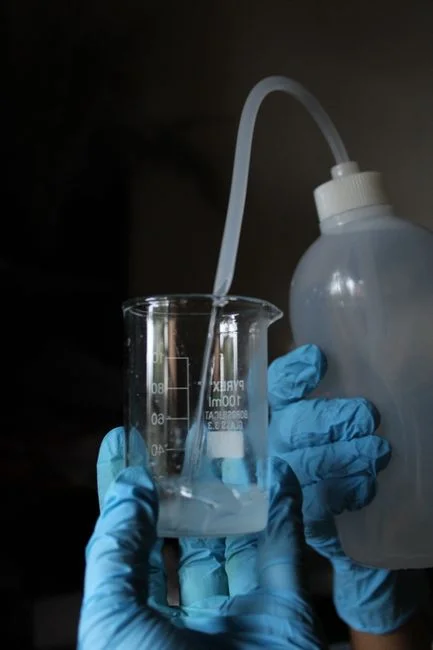
Four technology families are realistic for a 2026 Tamale procurement, and the right choice is driven by footprint, automation, reuse intent and land availability. The submerged MBR membrane bioreactor system uses PVDF membranes with nominal pore sizes below 1 µm, producing near-reuse-quality effluent in roughly 60% of the footprint of a conventional activated-sludge plant of the same flow, which makes it the strongest fit for high-density hotels, hospitals and gated estates where reuse for toilet flushing or irrigation is planned. The underground package sewage treatment plant in the WSZ series combines anoxic/aerobic biological contact oxidation with sedimentation and disinfection in a single buried unit, runs fully automated without an operator and covers 1–80 m³/h, which suits residential estates, schools and rural camps where visible infrastructure and operator skill are limited. A constructed wetland paired with a microbial fuel cell, framed in the IntechOpen chapter on integrating wetlands with MFCs, is the lower-energy and lower-skill option, climate-fit for Tamale's semi-arid seasonality, but it needs more land, longer residence time and explicit validation against the WHO ≤ 0.1 nematode eggs/L reuse target flagged in Abdul-Rahaman (2012). The pond-upgrade path, intensifying the existing series-pond system that Abdul-Rahaman (2012) already characterised, is the lowest-capex route but remains vulnerable to the coliform and helminth loadings that the 2013 Tamale farm-gate study documented on irrigated vegetables.
| Option | Footprint | Automation / operator | Reuse suitability | Best-fit Tamale use case |
|---|---|---|---|---|
| MBR membrane bioreactor | Compact (≈60% of CAS) | High; PLC, membrane maintenance | High — near-reuse quality | Hotels, hospitals, high-density housing |
| WSZ / anoxic-aerobic package STP | Compact, buried | Fully automated, no operator | Moderate — disinfection stage defines quality | Estates, schools, rural camps |
| Constructed wetland + MFC | Large land take | Low skill, low energy | Conditional — needs helminth validation | Low-density rural or peri-urban sites |
| Pond upgrade / series-pond intensification | Very large | Manual, periodic desludging | Low for unrestricted irrigation | Existing municipal ponds, low-risk discharge |
Compliance Hooks: Ghana EPA, Water Resources Commission and WHO Reuse Targets
The binding reuse benchmark for any 2026 Tamale project is the WHO ≤ 0.1 nematode eggs/L target that Abdul-Rahaman (2012) cites from the updated WHO guidelines. The 2013 Tamale Metropolis study documented E. coli, faecal coliform and helminth eggs of Ascaris lumbricoides, Trichuris trichura, Hymenolepis diminuta, Fasciola hepatica and Strongyloides on vegetables irrigated with wastewater at levels above the WHO and ICSFM recommended limits. Effluent acceptability in Ghana sits with EPA Ghana permit conditions, and any reuse into raw water or irrigation also implicates Water Resources Commission raw-water and reuse guidance; the 2026 brief should request the current EPA Ghana permit template for the specific site category (estate, hotel, hospital, school) rather than rely on memory of older limits. Helminth control should drive the disinfection and tertiary step from the front of the design, not be added at the end — a UV steriliser sized for the upper-bound turbidity and a chlorine dioxide generator for residual disinfection are the two practical options for Tamale package plants.
Public Acceptance Risk: The 21% Who Refuse Treated Sewage

Abdul-Rahaman (2012) found that 21% of Tamale residents refuse treated sewage outright, with acceptance influenced by education, marital status and the cost and reliability of piped water supply. That figure is a project risk because the 2013 Tamale Metropolis study provides evidence that residents have already seen vegetables irrigated with wastewater exceed WHO and ICSFM limits for E. coli and helminth eggs. A 2026 estate, hotel or hospital that switches to treated-effluent irrigation or toilet flushing without a stakeholder step can expect complaints even when the engineering data is sound. The minimum project-level checklist is pre-commencement stakeholder mapping of the surrounding community and any downstream water users, signage at every reuse point stating the source and quality class, on-site testing transparency with results shared on request, and a defined grievance channel that feeds back into operations. These are part of permit defensibility and belong in the procurement specification.
2026 Buyer Checklist: Sizing, Supplier Shortlisting and Lead-Time Risks for Tamale
Base the hydraulic load on the actual occupancy profile — residents, staff, guests, students, shift workers — with a peaking factor in the 1.4–1.6 range, and require a one-week composite sample at site to verify BOD, COD, TSS, NH₃-N and P. For technology fit, shortlist two to three options from the table above, for example a WSZ package STP plus UV for a residential estate, an MBR plus ClO₂ for a hospital, or constructed-wetland polishing for a low-density rural site, and score them on footprint, automation, reuse suitability and climate resilience. For supplier shortlisting, require documented reference plants in Ghana or West Africa, evidence of EPA Ghana engagement, factory acceptance test data, English-language O&M manuals and a clear spare-parts pipeline, which the local market experience suggests is the single largest 2026 risk in Tamale. For logistics and lead time, confirm containerisation, road access for skids during the rainy season, on-site power and standby sizing — and request a full load list with weights from the supplier so the civil and electrical designs are not blocked by late surprises. Pre-treatment ancillaries worth specifying alongside the biological stage are a rotary mechanical bar screen for screenings, a high-efficiency sedimentation tank to protect downstream membranes, and an automatic chemical dosing system for pH and coagulant control.
Frequently Asked Questions
What is a realistic 2026 budget for a domestic sewage treatment plant in Tamale?
The supplied research does not include 2026 capital or operating cost data for domestic sewage treatment in Tamale, so any number a buyer sees should be treated as indicative only. The defensible move is to request a written quotation broken into equipment, freight to Tamale, installation, civil works, commissioning and a one-year spares list, and to ask for separate priced options for WSZ, MBR and constructed-wetland configurations at the same design flow.
How do I shortlist a sewage treatment supplier for the Northern Region?
Shortlist on evidence rather than brochure: documented reference plants in Ghana or West Africa that a buyer can visit or call, evidence of EPA Ghana permit engagement, factory acceptance test reports, English-language O&M manuals, and a confirmed spare-parts route into Tamale. Cross-check with our wastewater treatment plant manufacturer in Accra buyer's guide and our hotel and resort wastewater treatment in Ghana guide for the supplier-evaluation criteria specific to this market.
How do I size the plant when Tamale-specific BOD and COD data is missing?
Use the Abdul-Rahaman (2012) turbidity, pH, conductivity, dissolved oxygen and coliform envelope as the local anchor and treat it as the minimum data set. For BOD, COD, TSS and nutrients, run a one-week composite sampling campaign at the actual discharge point, ideally covering a weekday and a weekend, and size the biological stage on the 85th percentile of those site measurements rather than on textbook defaults.
What compliance risk should a 2026 Tamale project plan for?
The binding reuse benchmark is the WHO ≤ 0.1 nematode eggs/L target cited in Abdul-Rahaman (2012), supported by the 2013 Tamale Metropolis evidence that vegetables irrigated with local wastewater exceeded WHO and ICSFM limits. Plan for EPA Ghana and Water Resources Commission engagement from the design stage, treat helminth control as a primary design driver, and add a stakeholder-engagement step to cover the 21% outright refusal of treated sewage documented in Tamale.