
Step 1 — Set the Design Population and Per-Capita Flow
The design population is the primary input and the one most often under-counted. Lock the occupancy number first, then add 5–10% for visitors, guests and shift-changeover surges before converting to flow (S5). For an Isfahan residential colony with full-time occupants and limited fixtures, 130–180 L/c/d is a typical band (S5, residential range). For an Isfahan labour or construction camp with shared showers, a canteen and laundry, 200–250 L/c/d is more realistic (S5, camp range). Hotel-style transient-occupancy projects can exceed 250 L/c/d; do not copy that value onto a camp (S5).
Use the Pure Aqua 50 gpd (≈190 L/c/d) figure as a starting baseline only — the manufacturer presents it explicitly as a baseline, not a universal rule (Pure Aqua, S4 via S5). The safer discipline is to treat it as the midpoint of a range, adjust based on the fixture count, and validate against an on-site water-use survey before locking the per-capita number. If no on-site water-use survey exists, commission one before issuing a PO.
Common errors are forgetting visitors and guests, under-counting the morning shift-changeover surge, or copying a hotel's per-capita value onto a camp that has different fixture counts (S5). A 250-person Isfahan construction camp with shared showers and a canteen should not be designed at 130 L/c/d; a 500-unit residential colony should not be designed at 220 L/c/d. Get the occupancy profile right first, then pick the per-capita figure, then multiply.
Step 2 — Convert Qavg to Qpeak with a Site-Specific Peak Factor
The peak hourly flow (Qpeak) determines the size of the membrane tank, even though utilities bill based on average daily flow (Qavg). The flux through a submerged PVDF UF cassette is rate-limited, so the unit must be sized for the peak hourly flow the camp will actually push through the membrane (S5). The conversion is Qpeak hourly = Qavg × peak factor, then divided by 24 to express it in m³/h (S5).
Apply a peak factor of 2.0–2.5 for Isfahan camp occupancies with morning wash-block surges, and 1.5–1.8 for steady residential developments where fixtures are spread across many households (S5). The factor matters because the membrane tank's equalization volume is finite: if the buffer is too small, influent surges push transmembrane pressure (TMP) up, shorten cleaning intervals, and risk compliance excursions during peak windows (S5).
Most containerized MBR skids include a small internal equalization/buffer sized for typical diurnal patterns; extreme profiles — for example, a single morning wash block serving 250 workers in 90 minutes — need external buffer storage of at least 4–6 hours of Qpeak (S5). A conservative engineer sizes for the worst observed 4-hour window, not the 24-hour average (S5). For Isfahan's plateau climate with cold winter mornings shifting the wash-load later in the day, capture the worst observed window in a 2–3 day on-site flow survey before sizing the buffer.
Isfahan Site Conditions vs the Stock MBR-C Envelope
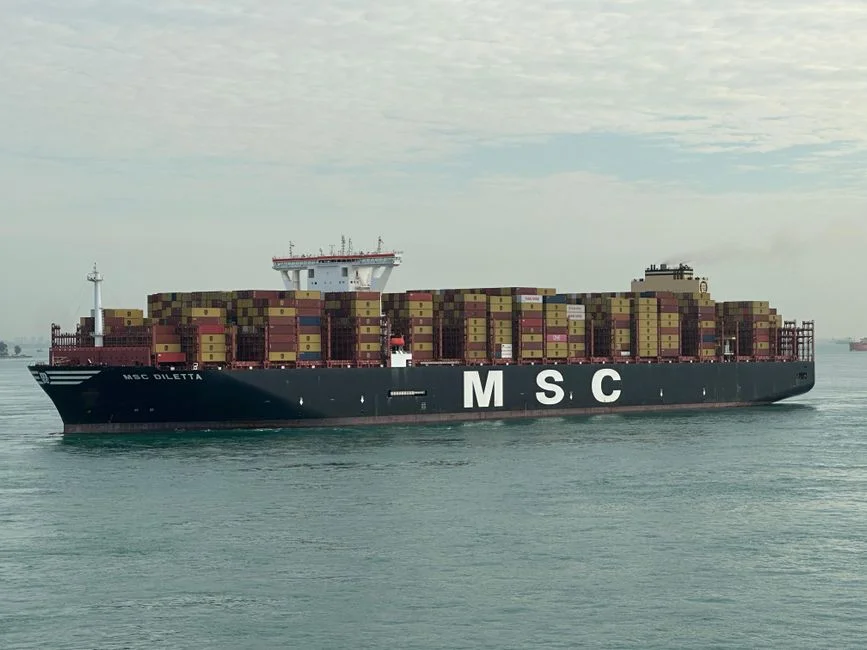
The stock design envelope must be re-checked against Isfahan grid, climate and discharge reality before any container is quoted. The MBR-C stock envelope sets operating temperature at 20–30°C with a 20°C design point, influent bands of BOD 200–400 mg/L, COD 400–800 mg/L and TSS 200–350 mg/L, a 1.5 mm drum screen for pre-treatment, submerged PVDF hollow-fiber UF at 0.04 µm nominal pore size, and an electrical supply of 460V/3Ph/60Hz (Pure Aqua, S4). The container is built in either 20 ft or 40 ft high-cube format with insulated walls, zero-leakage floor and seaworthy structure (Pure Aqua, S4).
Three factors are critical for an Isfahan project. First, the Iranian grid runs at 380–400V/3Ph/50Hz, while the stock MBR-C is built for 460V/3Ph/60Hz — a step-down transformer or a voltage-matched build must be specified at quotation. Second, Isfahan winter temperatures can fall below 20°C against the 20–30°C operating band, so any outdoor skid on the Isfahan plateau needs explicit confirmation of design temperature, outdoor insulation, and possibly a heat-trace or enclosure. Third, run on-site influent sampling for at least 2 weekdays and 1 weekend day before finalizing the design, because BOD and TSS at the upper end of the camp range will change the aeration-tank volume and MLSS setpoint.
| Parameter | Stock MBR-C Envelope (S4) | Isfahan Site Reality |
|---|---|---|
| Operating temperature | 20–30°C, design point 20°C | Winter can fall below 20°C — confirm design temperature and insulation |
| Electrical supply | 460V / 3Ph / 60Hz | Iranian grid 380–400V / 3Ph / 50Hz — specify transformer or voltage-matched build |
| Pre-treatment | 1.5 mm drum screen | No change required; confirm upstream grit removal for camp greywater |
| Membrane | Submerged PVDF hollow-fiber UF, 0.04 µm nominal pore | Match — cassette is the replaceable element inside 20 ft or 40 ft |
| Influent BOD | 200–400 mg/L | Confirm via on-site sampling; camp canteen can push higher |
| Influent TSS | 200–350 mg/L | Confirm via on-site sampling |
| Container envelope | 20 ft HC ≈ 50 m³/day; 40 ft HC ≈ 50–200 m³/day | Match — parallel containers for larger flows |
Worked Example — 250-Person Construction Camp on the Isfahan Plateau
Design population: 250, with shared showers and a canteen, so use the camp band at 220 L/c/d (S5, camp range). Qavg = 250 × 220 = 55,000 L/day = 55 m³/day. Apply a peak factor of 2.2 for a camp; Qpeak hourly = 55 × 2.2 / 24 = 5.0 m³/h (S5, camp PF and formula).
Add 20–30% spare capacity for population growth, seasonal load spikes and future reuse upgrades; the design envelope becomes ~6.0–6.5 m³/h peak and ~66–72 m³/day average (S5 spare-capacity guidance). A single 20 ft HC unit is at the upper edge of its ~50 m³/day envelope, so the defensible specification is a 40 ft HC unit, or two parallel 20 ft units with one held as standby (Pure Aqua, S4 envelope via S5).
For a phased build-out, install a 20 ft now, plumb the second pad, and add the second 20 ft when occupancy hits ~70% of design (S5). The submerged membrane cassette inside either format is the replaceable element — a containerized MBR membrane bioreactor system can be expanded or refurbished by cassette swap rather than full container replacement (S5). This matters for an Isfahan project with a 3–5 year camp horizon, where the unit may be redeployed to a new site after the build phase.
Selecting the Container Format
Translate the calculated Qpeak into a 20 ft or 40 ft configuration using the Pure Aqua flow envelope: a 20 ft HC unit handles up to ~50 m³/day and a 40 ft HC unit covers 50–200 m³/day (Pure Aqua, S4 via S5). Always add 20–30% spare capacity above Qpeak for population growth, seasonal load spikes and future reuse upgrades (S5). Multiple 40 ft units can be paralleled for flows above 200 m³/day (S5).
The membrane cassette inside either format is typically a submerged PVDF flat-sheet or hollow-fiber module, which can be swapped or expanded without replacing the container (S5, submerged PVDF module reference). For an Isfahan installation, confirm the container's sealed floor and zero-leakage wall design where groundwater or freeze-thaw is a concern.
| Configuration | Indicative Flow Envelope | Indicative Population at 190 L/c/d (S4 baseline) | Site / Logistics |
|---|---|---|---|
| 20 ft HC | Up to ~50 m³/day | ~250 people | Standard flatbed; tight urban or camp sites |
| 40 ft HC | ~50–200 m³/day | ~250–1,000 people | Standard flatbed; needs longer clear approach |
| Two × 20 ft HC, parallel | ~50–100 m³/day with N+1 standby | ~250–500 people | Reserve space for the second unit |
| Multiple 40 ft HC, parallel | Above 200 m³/day | 1,000+ people | Multi-pad layout; common feed and discharge headers |
Pre-Purchase Site Checklist for Isfahan Projects
Run these checks before issuing the PO. Power: confirm 380–400V/3Ph/50Hz compatibility and specify a step-down transformer or a voltage-matched build at quotation; size a genset for the expected outage rate (S5 power-compatibility framework). Climate: confirm winter design temperature against the 20–30°C operating band and specify insulation, heat-trace or an enclosure for any outdoor skid on the Isfahan plateau (S5 climate framework).
Compliance: confirm the receiving environment — ground irrigation, surface watercourse in the Zayandeh-Rood basin, or municipal sewer — and the relevant Iranian Department of Environment discharge standard before specifying effluent polishing. Sampling: run on-site influent sampling for at least 2 weekdays and 1 weekend day before finalizing the design (S5 sampling guidance). Operation: a fully automatic PLC control system is appropriate for camps with no full-time operator; add remote monitoring if the camp is intermittently staffed (S5, PLC reference).
For an Isfahan procurement, two local service partners worth a first call are listed in the IDA Water Security Handbook 2020–2021 reference directory: Heshmat Roud Co. and Zolal Iran Co. (S3). Other regional firms named in the same directory include Nasr Isfahan Co. and Farazab Co. (S3). Confirm scope and current contact details directly with each firm before issuing any PO. For background on the membrane stage inside the envelope, see the DF series PVDF flat-sheet MBR membrane module; for upstream screening, see the rotary mechanical bar screen; for downstream polishing, see the UV sterilizer.
Frequently Asked Questions
What does a containerized MBR STP cost for an Isfahan camp, and what inputs do I need to get a defensible quotation?
The supplied research does not include a numeric price for a containerized MBR STP, so do not work from a generic per-camp figure. The inputs a buyer must provide to obtain a defensible quotation are: design population and per-capita flow band (130–180 L/c/d residential, 200–250 L/c/d camp), Qpeak with peak factor, the voltage and frequency variant (380–400V/3Ph/50Hz), the winter design temperature, the receiving environment and the discharge standard, and any standby/redundancy requirement. Two or three vendors should be asked to quote on the same spec sheet so prices are comparable.
How do I select between an Iranian supplier and an overseas supplier
Frequently Asked Questions
What size containerized MBR do I need for a 250-person camp in Isfahan?
For a 250-person camp, you should estimate a daily hydraulic load of 150 liters per person, totaling 37.5 cubic meters per day (m³/d). Considering peak flow factors and the arid climate of Isfahan which may increase water usage, a standard 40-foot containerized MBR unit rated for 40–50 m³/d is recommended to ensure adequate hydraulic retention time.
Can a containerized MBR run on the Iranian 380V 50Hz grid or do I need a transformer?
Yes, standard containerized MBR systems are designed to operate on the Iranian industrial power standard of 380V–400V, 3-phase, 50Hz. You do not need a transformer, provided the site power supply offers a stable voltage range within ±10% tolerance to protect the sensitive PLC controls and variable frequency drives (VFDs) used for the pumps and blowers.
What effluent quality will a containerized MBR produce for reuse in Isfahan?
A containerized MBR system typically achieves high-grade effluent suitable for non-potable reuse, such as landscape irrigation, which is vital for Isfahan’s water conservation goals. You can expect Biological Oxygen Demand (BOD5) of less than 5 mg/L, Total Suspended Solids (TSS) of less than 1 mg/L, and a turbidity of less than 0.2 NTU, consistently meeting Department of Environment (DOE) Iran standards for treated wastewater discharge and reuse.
How much does a containerized MBR STP cost for a residential colony in Isfahan?
Costs for a containerized MBR in Iran are highly variable based on membrane brand, automation level, and civil works, typically ranging from $800 to $1,500 per cubic meter of daily treatment capacity. For a residential colony requiring a 100 m³/d system, capital expenditure usually falls between $80,000 and $150,000, excluding site preparation, piping, and local installation labor.
Can I expand a containerized MBR later if my Isfahan camp population doubles?
Yes, containerized MBR systems are modular by design, allowing for "plug-and-play" expansion. If your population doubles, you can add a second containerized unit in parallel to the existing system, sharing the same influent equalization tank and sludge management infrastructure, which minimizes the need for site redesign and complex piping modifications.