What Fabricated Metals Wastewater in Elk Grove Village Actually Looks Like
Four contaminant families recur in fabricated metals streams. Free and emulsified tramp oils leak from stamping presses, hydraulic circuits, and parts washers, then ride the floor drain as a surface slick. Drawing compounds, stamping lubes, and cutting fluids arrive as semi-stable emulsions that resist gravity separation. Metal fines — iron, aluminum, zinc, nickel, and occasionally hexavalent chrome — enter the stream from grinding, deburring, and rinsing, and their behaviour depends on density: light fines and precipitates float or stay in suspension, while heavy fines settle. Rinse water brings the fourth family, acidic or alkaline pH swings and phosphate drag-out from conversion coatings.
The decision between a dissolved air flotation (DAF) unit and a conventional clarifier turns on which behaviour dominates. Oils and light solids behave as floatables and are the technical hinge of the DAF case. Heavy fines and metal hydroxides behave as settleables and are the technical hinge of the clarifier case. Kemco Systems lists metal finishing among the industrial streams where DAF is a proven fit, which is why most Elk Grove Village shops with mixed loads land on DAF as the primary.
Two regulatory ceilings frame any equipment choice. The federal baseline is 40 CFR Part 433, the Metal Finishing categorical pretreatment standards that cap daily maximum and monthly average discharges of metals, oil and grease, and total suspended solids. The local ceiling is the Metropolitan Water Reclamation District of Greater Chicago (MWRD) sewer-use ordinance, which layers site-specific local limits on top of the categorical standards. Both documents must be on the desk before any sizing is signed.
How a DAF Clarifier Handles a Metals Stream
A DAF train is a sequence of unit operations, not a single tank. According to Kemco Systems, coarse filtration comes first — a hydrocyclone or shaker screen strips sand, scale, lint, and other large objects that would otherwise accumulate in the flotation cell. pH adjustment follows, because flocculation chemistry only works inside a narrow pH window and because both 40 CFR 433 and MWRD local limits enforce a discharge pH range. Coagulant and polymer flocculant are dosed next, either in flocculation tubes that deliver a 15–45 second flash mix or in mix tanks fitted with impeller agitators for longer contact time, as Clearwater Industries describes. Jar testing establishes the right dose and contact time before the chemistry is locked into the PLC.
The flotation cell itself is where dissolved air does the work. A recirculation pump takes clarified effluent, pressurizes it, and saturates it with air in a pressure vessel. When the saturated stream re-entents the flotation tank at atmospheric pressure, micro-bubbles in the 30–50 micron range precipitate out of solution (Clearwater Industries). Those bubbles attach to oil droplets, flocculated colloids, and light suspended solids, and lift them to the surface as a float blanket. A skimmer sweeps the blanket into a collection trough, and the float sludge drops to a plate-and-frame filter press downstream for dewatering. Supernatant exits the tank between the float blanket and the bottom sludge layer.
Two design realities should shape how the engineer reads a vendor proposal. First, a DAF is not a pure float device — Clearwater Industries notes that most DAF systems include a sediment compartment or basin with a sludge extraction system, so a DAF tolerates a settleable solids load. Second, the cell must be filled with clean water on startup; if wastewater fills the cell, the first hours of discharge will be dirty and the recirculation pump and air saturation system can be damaged. A packaged skid such as the HydropureWater DAF system typically builds both realities into the controls so the operator does not have to remember them.
How a Conventional Clarifier Handles the Same Stream
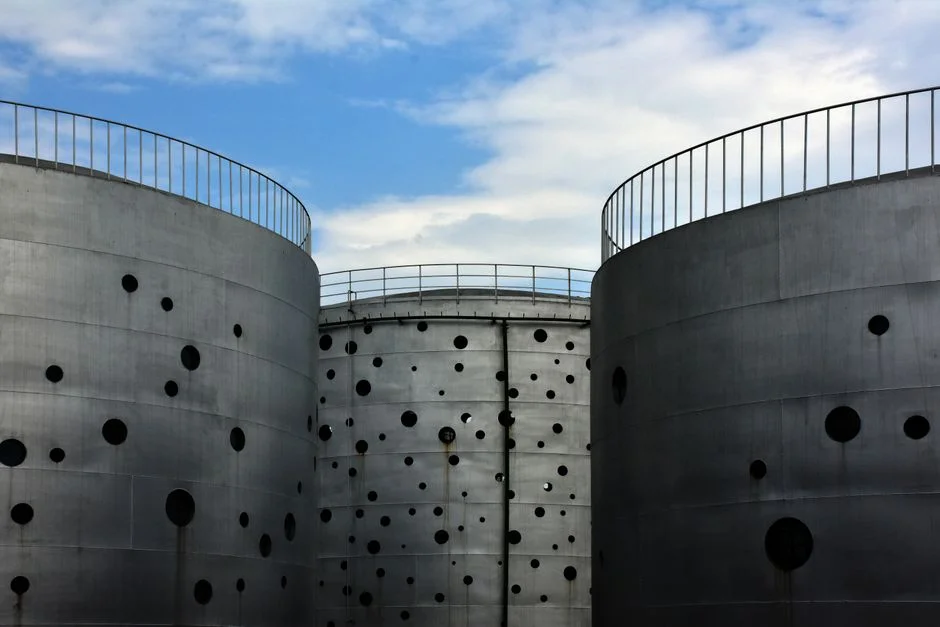
When wastewater engineers say "clarifier" alongside DAF they usually mean an inclined-plate (lamella) or conventional sedimentation tank — a gravity device, not a flotation device. The HydropureWater lamella clarifier combines sludge recirculation, flocculation, and inclined-plate separation in one compact structure, and operates at surface loading rates of 20–40 m³/m²·h on the projected plate area. Water flows upward through a stack of parallel plates set at 55–60°; heavy solids slide down the plate face and collect in a hopper, while clarified water exits through a top launder.
Like a DAF, a lamella clarifier is not a stand-alone process. Coagulation and flocculation must happen upstream, pH must be controlled, and the operator must jar-test the chemistry for the actual stream. The two key sizing parameters are plate spacing (typically 50–80 mm in industrial lamellas) and the effective projected plate area, because that area sets the surface loading rate and therefore the particle size the unit can capture. Sludge recirculation back to the flocculation zone stabilizes the blanket and improves capture, which is one reason the HydropureWater lamella integrates the recirculation loop inside the same tank.
The structural limitation is oil. A clarifier cannot lift free oil — oil passes through the plate pack or coats the plates and fouls them. If a clarifier is the primary, oil removal has to happen upstream, either by skimming a collection sump, by an API-style separator, or by sending the stream through a DAF first. This is why the lamella is most often seen either as a polish step after a DAF, or as the primary in a metal-finishing line where oil has already been segregated at the source.
DAF vs Clarifier: Side-by-Side for Fabricated Metals
The two technologies target different parts of the particle spectrum and different chemistries. The table below summarizes the comparison on the parameters that drive a fabricated-metals decision. Numbers come from Clearwater Industries (DAF micro-bubble size, COMPACT DAF skid threshold) and the HydropureWater lamella clarifier data sheet (surface loading rate envelope).
| Parameter | Dissolved Air Flotation (DAF) | Lamella / Inclined-Plate Clarifier |
|---|---|---|
| Driving force | Buoyancy of 30–50 micron micro-bubbles (Clearwater Industries) | Gravity sedimentation on inclined plates at 20–40 m³/m²·h (HydropureWater lamella data sheet) |
| Target contaminant | Oils, FOG, emulsified lubricants, light TSS, flocculated colloids | Settleable metal fines, metal hydroxide precipitates, dense TSS |
| Footprint for a given flow | Compact packaged skids available; Clearwater COMPACT DAF handles ≤66 GPM on a single skid, >66 GPM modular two-skid | Compact relative to a conventional basin, but taller plate stack than a DAF cell of equal flow |
| Chemical demand | Coagulant + polymer required; pH adjustment mandatory | Coagulant + polymer required; pH adjustment mandatory |
| Sludge character | Float blanket, voluminous but pre-thickened; easier to dewater (Clearwater Industries) | Bottom sediment, denser; benefits from sludge recirculation to the flocculation zone |
| Oil tolerance | Designed for free and emulsified oil | Poor — free oil passes through or fouls plates; oil must be removed upstream |
| Sensitivity to flow surges | Recycle ratio and pressure need stable flow; surge equalization recommended | Surface loading rate must be held inside the design envelope; surge equalization recommended |
| Best fit in fabricated metals | Mixed streams with free oil > ~50 mg/L, tight O&G and TSS limits, job-shop flow variability | Streams where oil is already removed upstream and the load is heavy fines or precipitates |
The "best fit" row is the working conclusion. A DAF primary is the right call when any two of the three primary contaminants are oils, light TSS, or emulsified FOG. A lamella clarifier is the right call when the stream is predominantly settleable fines and the oil has already been separated at source. A hybrid train — HydropureWater DAF system followed by a HydropureWater lamella clarifier polish — handles the mixed stream typical of an Elk Grove Village job-shop fabricator, and lines up cleanly with 40 CFR 433 effluent targets.
Decision Framework: Which One Should Your Elk Grove Village Plant Choose in 2026
Five questions move the choice from a vendor pitch to a defensible internal recommendation. (1) Is free oil present in the wastewater, or has it already been removed at source? (2) Are TSS and O&G limits tight enough that a single gravity step will not reliably meet them? (3) Is floor space constrained — do you need a low-profile skid rather than a tall inclined-plate stack? (4) What is the design flow — does it sit below or above the 66 GPM single-skid threshold the Clearwater COMPACT DAF uses as its modular breakpoint? (5) Do the MWRD local limits on your discharge point push the required effluent below what a typical DAF or lamella can deliver without a polish step?
The decision rule is straightforward. If oils, light TSS, or emulsified FOG are two of the three primary contaminants, choose DAF as the primary. If the stream is predominantly settleable fines with the oil already removed upstream, choose a lamella clarifier. If the stream is mixed, which is the common case in fabricated metals, specify a DAF primary followed by a lamella or settling polish step. The DAF carries the oil and the floatable load; the lamella polishes the residual fines so the combined effluent sits inside 40 CFR 433 Metal Finishing limits and the MWRD local limits layered on top.
For a job-shop with variable flow and chemistry, a packaged turnkey DAF is usually the lower-friction path. Clearwater Industries describes the COMPACT DAF as a pre-assembled system with chemical conditioning, sensors, a PLC control screen, and a plug-and-play skid architecture, which shortens installation and operator-training time. Pair it with a HydropureWater automatic chemical dosing system so pH and polymer dose track the influent swing instead of being set once and forgotten.
Sizing, Sludge Handling, and Site Integration
The equipment choice does not end at the cell wall. DAF float sludge is voluminous but is already pre-thickened by the float blanket, which is why Clearwater Industries notes that a well-conditioned DAF sludge often needs little to no further dewatering. The downstream step is normally a plate-and-frame filter press — Kemco Systems describes filter presses as the standard endpoint for DAF sludge, and the press drops moisture content enough to qualify the cake for landfill disposal. The HydropureWater plate and frame filter press is sized off the dry-solids loading from the DAF, not off the wet flow.
Lamella clarifier sludge is denser and benefits from sludge recirculation back to the flocculation zone, which the HydropureWater lamella clarifier integrates into the same vessel. Recirculation stabilizes the solids blanket and improves capture on the plates, but it also means the underflow solids concentration has to be watched so the hopper does not blind. The dewatering endpoint is the same plate-and-frame press; the difference is that the press sees a thicker feed and a smaller daily volume than it would from an equivalent DAF float sludge load.
pH control is a prerequisite for both trains. Kemco Systems is explicit that accurate pH control is vital to any wastewater treatment system and that automatic acid/caustic addition — a treatment tank with a mixer, in-tank pH sensor, metering pumps, and a control panel — is preferred over manual dosing. A HydropureWater automatic chemical dosing system upstream of either the DAF or the lamella keeps the chemistry inside the flocculation window and prevents the off-spec events that drive MWRD non-compliance.
Vendor Evaluation Checklist for 2026
Walk into the vendor meeting with a fixed data package so proposals can be compared on the same basis. The package should include peak and average flow in GPM or m³/h, influent TSS, oil and grease, total metals (Fe, Al, Zn, Ni, Cr where applicable), pH range and temperature, and the available footprint including ceiling height. Any supplier who cannot quote against that data set is not yet serious about your stream.
Require a jar-test or pilot basis for the chemistry. Clearwater Industries is explicit that the amount of contact time for coagulants and flocculants is variable and that jar testing is how proper mixing time is established. Without a jar test on your actual wastewater, polymer dose and contact time are guesses, and guesses on metal finishing streams turn into non-compliance events.
Ask for the control package scope in writing. The Kemco Systems Monarch Control Panel is a useful benchmark: intelligent monitoring, process variable logging, and efficient system operation. The vendor's proposal should name the PLC, the HMI screens, the sensor list, and what the operator can adjust from the panel — skimmer speed, polymer dose, pH setpoint, sludge discharge interval. Anything less is a packaged tank with a power cord, not a treatment system.
Finally, ask for documented compliance with 40 CFR Part 433 Metal Finishing categorical standards and with the MWRD local discharge limits at the proposed design loading, including the daily-maximum and monthly-average numbers the system is sized to meet. A vendor that refuses to put compliance in writing is a vendor that has not finished their engineering.
Frequently Asked Questions
For a fabricated metals plant, is a DAF or a clarifier better?
For most fabricated metals streams the answer is a DAF primary, because tramp oils, emulsified cutting fluids, and light metal fines are floatables and DAF is designed to lift them. A lamella clarifier is the better primary only when oil has already been removed upstream and the load is heavy settleable fines; otherwise a clarifier lets oil pass through or fouls the plate pack.
What is the typical CAPEX difference between a DAF and a lamella clarifier for a 50 GPM stream?
The supplied research does not contain equipment pricing, so a dollar figure cannot be quoted here. Instead, ask each vendor to break out cost drivers explicitly: tank material and surface area for the DAF cell, plate pack area and number of plates for the lamella, the recycle pump and air saturation package on the DAF side, the sludge recirculation pump on the lamella side, the chemical dosing skid, the control panel, and installation labor. Comparing those line items across two or three proposals is more defensible than comparing turnkey numbers.
Do I need a DAF or a clarifier to comply with 40 CFR 433 in Elk Grove Village?
40 CFR Part 433 sets the categorical pretreatment ceiling, but it does not name a specific unit operation — it sets the discharge numbers. Whether you meet them with a HydropureWater DAF system, a HydropureWater lamella clarifier, or a hybrid train depends on the influent numbers and the MWRD local limits on top. The compliance test is whether the proposed equipment can meet the categorical standards and the local limits at design loading; the equipment itself is the means, not the standard.
Can a DAF and a lamella clarifier be used together?
Yes, and the combination is the most common answer for a mixed fabricated metals stream. The DAF takes out the floatables — oils, FOG, light TSS, and flocculated colloids — and the lamella polish step takes out the residual settleable fines so the combined effluent sits inside the 40 CFR 433 daily-maximum and monthly-average numbers and the MWRD local limits layered on top.
What flow rate of DAF do I need for a 30 GPM metal finishing line?
A 30 GPM flow sits under the 66 GPM single-skid threshold that Clearwater Industries uses as the breakpoint for its COMPACT DAF, so a single packaged skid is the right size class. Confirm sizing against peak flow with a surge factor, against the actual oil and grease loading on your stream, and against the MWRD local limits on the discharge manhole — the skid size is the starting point, not the final answer. A useful cross-reference is the DAF vs clarifier for mining/metals wastewater guide, which walks the same decision logic for a comparable flow envelope.