How Domestic Sewage Treatment in Ghana Actually Works Today
Domestic sewage treatment in Ghana is dominated by decentralised package plants and biological trickling filters, because most flows come from hospitals, hotels, residential estates, and small district towns rather than central sewers. The reference standard is Ghana Standard GS 1212:2019, which sets the effluent limits any plant must meet. Recent Ghana projects — a 90 m³/day trickle filter at Kumawu and Fomena District Hospitals and a 16 m³/day apartment plant in Sekondi-Takoradi — show biofilm-based plants with anaerobic pre-treatment, ferric chloride phosphorus removal, and chlorine disinfection as the working default. For energy, full-scale Accra data show a UASB + trickling filter at 0.23–0.31 kWh/m³, with periods near energy neutrality, while constructed wetlands deliver very low OPEX of USD 0.03–0.08/m³ where land is available (WEC Projects, 2024; ScienceDirect, 2025).
Two recent installations illustrate the dominant design pattern. WEC Projects supplied the Model E trickle filter to both Kumawu and Fomena District Hospitals, each rated for an average of 90 m³/day. Raw sewage passes through a screenings box, a three-chamber below-ground septic tank for anaerobic pre-treatment, then a recycle sump equipped with vortex pumps rated at 25 m³/h before being distributed over the trickle filter (WEC Projects, 2024). Phosphorus is precipitated by ferric chloride dosed upstream of the clarifier, and chlorine disinfection brings the effluent within the required discharge standard. All process control and electrics sit inside a 6 m refurbished shipping container, and the two stacked 12 m containers house the trickle filter media (WEC Projects, 2024).
A second WEC installation is a 16 m³/day trickle tower in a Sekondi-Takoradi apartment complex, selected over a buried system for its small footprint, low clearance to overhead power lines, and ability to match the building's colour (WEC Projects, 2024). Trickle tower technology was chosen for these projects due to its scalability, simple design, and low maintenance and operating requirements, and a single operator can oversee and control the plant, which is extremely reliable with a long operating lifespan (WEC Projects, 2024). Biofilm propagation is the limiting step at low initial occupancy, which is why both new plants are sized against the eventual design load rather than the day-one flow.
The Compliance Anchor: GS 1212:2019 and Why It Sets Plant Sizing
GS 1212:2019 is the regulatory ceiling that any domestic sewage treatment plant in Ghana must hit on discharge, and it is the standard the 2025 ScienceDirect review of Ghana wastewater management explicitly aligned its techno-economic analysis to (ScienceDirect, 2025). The dominant sizing parameters for a Ghana domestic STP are BOD, COD, TSS, total nitrogen, ammonia, and total phosphorus, plus a disinfection step to control microbial indicators. In the WEC hospital plants, phosphorus removal is achieved chemically by dosing ferric chloride upstream of the clarifier rather than through a biological P-sludge stage, and chlorine disinfection follows the clarifier to satisfy the discharge standard (WEC Projects, 2024).
The practical consequence is that the consultant must fix the target effluent values before selecting technology, because each parameter pulls a different unit operation into the design. Ammonia and total nitrogen will decide whether the plant needs a nitrification stage and, if total nitrogen is bounded, a denitrification or anoxic zone. Total phosphorus will decide whether chemical precipitation is enough, or whether a tertiary P-polishing stage is required. BOD and COD will set the sizing load on the biological stage. Without locking these down, vendor quotations are not comparable.
Specific numeric limit values in GS 1212:2019 should be requested from the local EPA office or the project's reviewing consultant rather than inferred from generic African discharge standards. The ScienceDirect review is the only source that aligns its technology ranges with GS 1212:2019, and it does not reproduce the limit values themselves (ScienceDirect, 2025). Treat the standard as a parameter table to confirm with the regulator, not as a value the engineer assumes.
| Effluent parameter | Why it drives sizing | Where it is handled in a typical Ghana plant |
|---|---|---|
| BOD / COD | Sets the organic load on the biological stage | Trickle filter biofilm, MBR mixed liquor, or wetland media |
| TSS | Controls clarifier sizing and downstream membrane protection | Clarifier in trickle filter plants; MBR membranes retain most TSS |
| Total nitrogen / ammonia | Determines whether nitrification (and denitrification) is needed | Trickle filter nitrification; MBR nitrification/denitrification; wetland nitrification |
| Total phosphorus | Sets the need for chemical precipitation or biological P removal | Ferric chloride dosing upstream of clarifier (WEC, 2024) |
| Disinfection (microbial indicators) | Required to meet the discharge standard | Chlorine contact after clarifier (WEC, 2024) |
Process Options for a Ghana Domestic STP: Trickle Filter, MBR, Wetland, and Package A/O
Four technologies cover the realistic 2026 shortlist for a 15–500 m³/day domestic sewage treatment plant in Ghana, and each one is anchored to a different operating constraint: energy, footprint, operator skill, and reuse value.
Trickle filter, and the closely related UASB + trickling filter combination, is the proven Ghana workhorse. Full-scale Accra data show a UASB + trickling filter achieving a plant specific energy consumption of 0.23–0.31 kWh/m³ with periods near energy neutrality, and producing 611 ± 275 Nm³/day of biogas at 65% CH₄ (ScienceDirect, 2025). The WEC hospital and apartment projects confirm that this design handles low initial occupancy, runs with a single operator, and is built around anaerobic pre-treatment followed by biofilm COD and ammonia removal (WEC Projects, 2024).
Aerobic MBR delivers near-reuse-quality effluent through submerged membranes, with a footprint roughly 60% smaller than a comparable conventional activated-sludge plant, and the ScienceDirect review cites a specific energy range of 0.4–2.3 kWh/m³ for aerobic MBRs in Ghana (ScienceDirect, 2025). The trade-off is operator skill: MBRs need consistent membrane care, periodic chemical cleaning, and reliable aeration, which makes them a stronger fit for sites with on-site technical staff, such as a hospital or a hotel with a maintenance team. For residential estates and district towns without a resident engineer, the MBR penalty usually outweighs the reuse benefit. Where a Ghana site does need high-value reuse, the review recommends UF (0.10–0.45 kWh/m³) and AnMBR (0.15–0.40 kWh/m³) for low-power polishing or high-strength streams, and RO (0.6–1.5 kWh/m³) only when reuse value justifies the brine management burden (ScienceDirect, 2025). For buyers weighing buried package A/O against a skid MBR, both a buried package A/O sewage treatment plant and an MBR membrane bioreactor system are credible options at this scale, and the right choice depends on whether the limiting constraint is footprint and operator skill, or reuse quality and discharge risk.
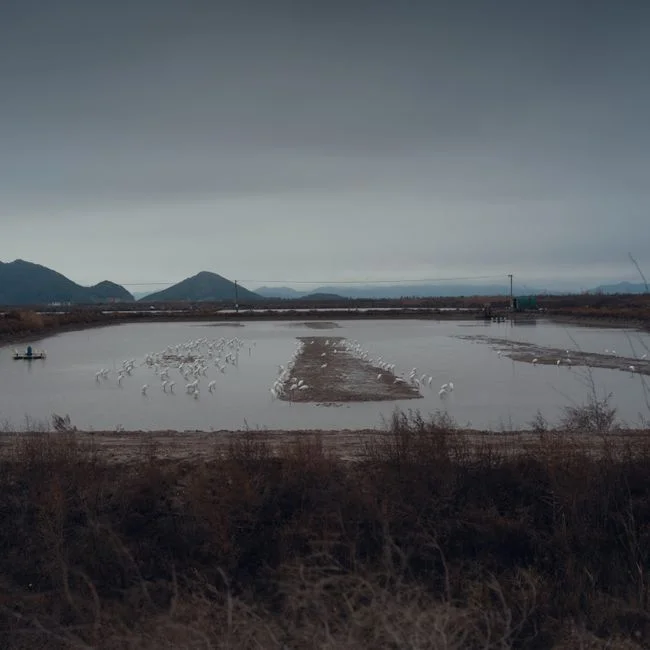
Constructed wetlands are the lowest-OPEX option at USD 0.03–0.08/m³ where land is available, according to the ScienceDirect review, which also ties the wetland option directly to GS 1212:2019 alignment (ScienceDirect, 2025). They are a credible fit for low-density rural or peri-urban sites with consistent hydraulic loading and no reuse requirement, but they lose to biofilm and membrane systems where the footprint is constrained or the load is highly variable. Vermifiltration sits in a similar low-tech bracket; the IntechOpen study describes vermifiltration as efficient, viable, requires less expertise, and can be decentralised for septic-tank effluent (IntechOpen, 2022). It is useful context for off-grid Ghana sites but not the default for hospitals or hotels with a defined effluent quality target.
Underground package A/O plants combine anoxic/aerobic biological contact oxidation with sedimentation and disinfection in a single buried unit. The HydropureWater WSZ-series catalogue confirms this design handles 1–80 m³/h for residential communities, hotels, hospitals, factories, and rural areas, is fully automated with no operator required, and can be trailer-mounted for mobile deployment (HydropureWater product catalogue). This is the strongest fit where burial is preferred for aesthetic reasons, the site is short on operator cover, or the deployment is temporary such as a construction camp or mining accommodation. For engineers comparing this with a higher-effort biofilm or MBR route, the detailed sizing discussion in our sizing a containerized MBR STP for Accra projects guide applies the same inputs to the MBR side of the trade-off.
| Technology | Specific energy (kWh/m³) | OPEX signal | Footprint | Operator demand | Best-fit Ghana scenario |
|---|---|---|---|---|---|
| UASB + trickling filter | 0.23–0.31, with periods near energy neutrality (ScienceDirect, 2025) | Low energy; biogas can offset dosing and lighting loads | Medium, can be containerised (WEC, 2024) | Single operator per plant (WEC, 2024) | District hospitals, residential estates, district towns (WEC, 2024) |
| Aerobic MBR | 0.4–2.3 (ScienceDirect, 2025) | Higher energy and membrane-care OPEX | ~60% smaller than CAS | Skilled on-site operator | High-value reuse, tight footprint, skilled staff |
| Constructed wetland | Near-zero direct energy | USD 0.03–0.08/m³ where land is available (ScienceDirect, 2025) | Large | Minimal | Low-density rural or peri-urban sites with land |
| Underground package A/O (WSZ) | Not published in supplied data | Low — no dedicated operator required (HydropureWater catalogue) | Small, buried | None on site | Residential communities, hotels, mobile camps, rural hospitals (HydropureWater catalogue) |
| UF / AnMBR polishing | 0.10–0.45 / 0.15–0.40 (ScienceDirect, 2025) | Moderate | Compact | Skilled | Polishing or high-strength streams |
| RO (reuse only) | 0.6–1.5 (ScienceDirect, 2025) | High — brine management required | Compact | Skilled | High-value reuse only (ScienceDirect, 2025) |
2026 Sizing Inputs for a Ghana Domestic Sewage Treatment Plant
The WEC 90 m³/day hospital plants were sized for average flow with a 25 m³/h recycle transfer from the sump to the trickle filter, and the 16 m³/day apartment plant was sized for current low occupancy with a peak-flow allowance for when it reaches its design occupation (WEC Projects, 2024). These two design points show the two real sizing decisions an engineer faces: a hospital sized on a daily average with hydraulic surge handled by the recycle line, and a residential system sized for day-one flow with explicit headroom for ramp-up. In both cases, biofilm propagation is the limiting step at start-up, so the trickle filter is deliberately oversized against the initial load, and the plants are designed to operate more effectively as the biofilm begins to propagate (WEC Projects, 2024).
Before talking to a vendor, lock down the following inputs in writing: per-capita water use in L/c·d, population or bed count (hospital beds, hotel keys, residential units), peak factor, average vs peak flow, influent BOD/COD/TSS/NH₃-N/TP, the target effluent values in GS 1212:2019, site constraints (footprint, burial depth, overhead line clearance, distance to nearest receptor), and the operator skill available. Where land is available and skilled operators are scarce, constructed wetlands are credible only if the footprint and hydraulic residence time can be matched; otherwise a trickle filter or buried package A/O is the safer default (ScienceDirect, 2025; HydropureWater catalogue). For a Ghana site where cooling blowdown is a parallel stream — for example, a data-centre or hospital chiller plant — the sizing approach in our Kumasi data-centre cooling blowdown treatment guide shows how a domestic sewage line and a cooling blowdown line are typically sized separately and then combined at the discharge point.
| Input | What to confirm | Why it matters for a Ghana domestic STP |
|---|---|---|
| Per-capita water use (L/c·d) | Confirm with utility data or a metering campaign | Drives average and peak flow; Ghana residential values commonly sit well below European 150 L/c·d |
| Population or bed count | Use the design year, not day one | Trickle filters are oversized against initial load due to biofilm ramp-up (WEC, 2024) |
| Peak factor | Apply to the hydraulic profile, not the organic load | Sets the recycle pump rating (25 m³/h on the WEC hospital plants, WEC, 2024) |
| Influent BOD / COD / TSS / NH₃-N / TP | Use site-specific sampling, not textbook defaults | Drives aeration, clarifier, and ferric chloride dose |
| Target effluent (GS 1212:2019) | Request from local EPA or reviewing consultant | Decides whether MBR or wetland is required, and whether P removal is chemical or biological |
| Site constraints | Footprint, burial depth, overhead lines, distance to receptor | Trickle tower chosen to avoid overhead power lines (WEC, 2024); burial depth sets package A/O feasibility |
| Operator cover | Resident, daily visit, or none | MBR and RO need skilled cover; trickle filter runs with a single operator (WEC, 2024); buried A/O needs none (HydropureWater catalogue) |
Cost, OPEX, and Energy: What Drives the 2026 Numbers in Ghana
Electricity is a major OPEX driver at current PURC tariffs, and the ScienceDirect review of Ghana wastewater management flags this explicitly when comparing membrane and wetland options (ScienceDirect, 2025). Constructed wetlands are the only option with a published Ghana-aligned OPEX signal, at USD 0.03–0.08/m³ where land is available (ScienceDirect, 2025). For the higher-effort technologies, the same review supplies the energy ranges that drive OPEX: aerobic MBRs at 0.4–2.3 kWh/m³, UF at 0.10–0.45 kWh/m³, and RO at 0.6–1.5 kWh/m³ (ScienceDirect, 2025). Energy and brine management must therefore be priced in for any reuse target, and a board paper that ignores the RO energy and brine line will understate the 5-year OPEX.
OPEX line items that are often underestimated in Ghana include ferric chloride dosing for P-removal, chlorine for disinfection, membrane cleaning chemicals on MBRs, and the cost of consumables and spares for the routine service visits. The WEC hospital and apartment plants are designed so a single operator can oversee each plant, and a dedicated WEC Assist-style O&M division can supply chemicals, consumables, and spares when required (WEC Projects, 2024). For a board paper, the cleanest framing is to treat the per-m³ OPEX as three line items: energy (driven by PURC tariffs and the specific energy of the chosen technology), chemicals (ferric chloride, chlorine, membrane cleaners), and O&M contract (operator hours plus consumables). No Ghana-specific 2026 per-m³ CAPEX in cedis is published in the supplied research, so CAPEX should be requested from shortlisted suppliers with installed capacity and the GS 1212:2019 effluent target as the brief.
A 2026 Selection Matrix: Which Process Fits Which Ghana Project
District hospital, 50–150 m³/day, limited footprint, no central sewer, single available operator: a trickle filter or a buried package A/O is the working default. The WEC hospital plants at Kumawu and Fomena demonstrate exactly this design pattern at 90 m³/day, with anaerobic pre-treatment, ferric chloride P-removal, and chlorine disinfection, all run by a single operator (WEC Projects, 2024). A buried package A/O is the alternative where burial depth and a no-operator requirement dominate.
Residential estate or apartment block, 10–30 m³/day, aesthetics matter, low overhead-line clearance: a standalone trickle tower in a building-matched container is the proven fit, as the 16 m³/day Sekondi-Takoradi installation shows (WEC Projects, 2024). High-value reuse, such as hotel laundry, hospital CSSD, or data-centre cooling make-up, footprint tight, and a skilled operator available: aerobic MBR, with budget for 0.4–2.3 kWh/m³ specific energy and downstream RO only if reuse value justifies brine management (ScienceDirect, 2025). Low-density rural or peri-urban site, land available, minimal operator presence: constructed wetland at USD 0.03–0.08/m³ OPEX where hydraulic loading is consistent (ScienceDirect, 2025). Mobile or temporary camp such as construction or mining accommodation: trailer-mounted underground package A/O with no on-site operator (HydropureWater catalogue).
For a 15–500 m³/day domestic sewage treatment plant in Ghana, the practical default for hospitals, hotels, and residential estates is a trickle filter or a buried package A/O. MBR and RO are credible only when reuse value and operator skill are both present, and the wetland option is credible only when the site has the land.
| Ghana project scenario | First-choice technology | Supporting evidence |
|---|---|---|
| District hospital, 50–150 m³/day, limited footprint | Trickle filter or buried package A/O | WEC 90 m³/day hospital plants (WEC, 2024); WSZ-series catalogue (HydropureWater) |
| Residential estate / apartment block, 10–30 m³/day, low overhead-line clearance | Standalone trickle tower in a building-matched container | WEC 16 m³/day Sekondi-Takoradi installation (WEC, 2024) |
| High-value reuse, skilled operator, tight footprint | Aerobic MBR, RO only if reuse value justifies brine management | ScienceDirect, 2025 |
| Low-density rural / peri-urban, land available | Constructed wetland | ScienceDirect, 2025 |
| Mobile or temporary camp | Trailer-mounted underground package A/O | WSZ-series trailer-mount option (HydropureWater catalogue) |
Frequently Asked Questions
What is the typical CAPEX for a domestic sewage treatment plant in Ghana?
The supplied research does not publish a 2026 Ghana-specific per-m³ CAPEX figure. Treat installed capacity, the GS 1212:2019 effluent target, and the chosen technology as the brief, and request a written quotation from at least two shortlisted suppliers. Ask each supplier to break the price into equipment, installation, civil works, and commissioning, and to hold the price against the influent and effluent values you provide.
Which technology is the safest default for a Ghana hospital STP at 50–150 m³/day?
The 90 m³/day WEC hospital projects at Kumawu and Fomena District Hospitals are the most recent published Ghana reference for this scale, using a Model E trickle filter with anaerobic pre-treatment, ferric chloride P-removal, and chlorine disinfection, run by a single operator (WEC Projects, 2024). A buried package A/O is the credible alternative where burial depth, aesthetics, or a no-operator requirement dominate, and is documented in the HydropureWater WSZ-series product catalogue.
How do I know a vendor's offer will meet GS 1212:2019?
Confirm the target effluent values in GS 1212:2019 with the local EPA office or the project's reviewing consultant, because the standard is not reproduced in the supplied research. Ask the vendor to demonstrate the chosen process against your specific BOD, COD, TSS, ammonia, total nitrogen, and total phosphorus targets, and to identify the disinfection step, because chlorine disinfection is part of the standard in the WEC Ghana plants (WEC Projects, 2024). For a higher-effort technology, request a membrane piloting or a guaranteed performance test tied to the discharge standard, rather than a generic reuse-quality claim.
Can a constructed wetland handle a hospital or hotel load in Ghana?
Constructed wetlands deliver a published OPEX of USD 0.03–0.08/m³ where land is available, and are aligned to GS 1212:2019 in the ScienceDirect review (ScienceDirect, 2025). The constraint is footprint and hydraulic loading: a wetland sized for a 50–150 m³/day hospital load in a tight urban site is rarely feasible, whereas a low-density rural or peri-urban site with consistent influent flow is the more credible fit. For a hospital, pair the wetland check against the operator and disinfection requirements before committing.
Related Equipment
- rotary mechanical bar screen — specifications, capacity range, and technical data