
Why Gaziantep is a different bid from Istanbul or Izmir
Gaziantep sits in the Southeastern Anatolia basin, not the Marmara or Aegean catchments that the existing Istanbul data center blowdown treatment guide and the Izmir data center blowdown treatment guide reference, and any bid that transposes those numbers wholesale is technically defensible only after a local re-check. KETOS (2025) reports that 75–90% of data centers worldwide still depend on water-based cooling, so a hydrology constraint on the local utility becomes a permit-defining input, not background context.
The southeastern Anatolian climate envelope pushes peak cooling demand harder than the Marmara or Aegean summers, and the GAP regional development overlay adds a water-allocation review on top of the municipal permit. The regulatory stack a 2026 Gaziantep facility designs against is the same in structure as the other two cities — SKKY (Su Kirliliği Kontrolü Yönetmeliği) Table 16 sets the discharge envelope, and the EWC 11 01 09* family codes the cooling-blowdown waste stream — but the utility anchor is GASKI, not ISKI or İZSU, and the GASKI pretreatment and connection rules, plus the 2025–2026 industrial tariff tier, are the local variables that change the bid math. The Istanbul and Izmir guides cover the equalization → DAF → MMF → UF → RO train layout and the SKKY/EWC architecture that transfers; what does not transfer is the utility, the southeastern Anatolian hydrology, and the tariff structure.
Sizing the blowdown stream: from IT load to liters per day
The blowdown stream is the 20–30% of makeup water that does not evaporate in the cooling tower, and a designer has to translate IT load into liters per day before the process train can be sized (KETOS, 2025). At an industry-average WUE of 1.8 L/kWh and PUE 1.2, a 20 MW Gaziantep site needs roughly 720,000 L/day of makeup water, and a 100 MW AI-ready campus needs about 3,600,000 L/day (Ecologix, 2025). The blowdown volume follows B = E / (CoC − 1), where E is evaporative loss; at CoC 4, blowdown equals 25% of makeup, and at CoC 6 it drops to 20% (Genesis Water Tech, 2025). At CoC 5–6, the 20 MW site produces about 180,000–220,000 L/day of blowdown and the 100 MW AI campus produces about 900,000–1,100,000 L/day (Ecologix, 2025). The two line items most bidders forget are drift loss — ~0.02% of circulation, added to the makeup figure (Ecologix, 2025) — and a 20–30% equalization oversize to cover the next rack-density generation, since AI-dense racks now exceed 50 kW per rack. Hyperscale AI sites are reported in the 1.14–1.70 million L/day range (Ecologix, 2025), with some 100 MW sites consuming up to 2,000,000 L/day of total water (IDE Tech, 2025); a 100 MW Gaziantep build should confirm its GASKI tariff tier against the upper bound before finalizing the BOM.
| Parameter | 20 MW site (CoC 5–6) | 100 MW AI-ready campus (PUE 1.2) | Source |
|---|---|---|---|
| IT load | 20 MW | 100 MW | Ecologix, 2025 |
| WUE assumption | 1.8 L/kWh | 1.8 L/kWh | Ecologix, 2025 |
| Makeup water (L/day) | ~720,000 | ~3,600,000 | Ecologix, 2025 |
| Blowdown at CoC 5–6 (L/day) | ~180,000–220,000 | ~900,000–1,100,000 | Ecologix, 2025 |
| Drift loss adjustment | +~0.02% of circulation | +~0.02% of circulation | Ecologix, 2025 |
| Equalization oversize buffer | 20–30% | 20–30% | Genesis Water Tech, 2025 |
| Hyperscale upper bound (L/day total water) | — | up to 2,000,000 | IDE Tech, 2025 |
| Hyperscale AI range (L/day) | — | 1,140,000–1,700,000 | Ecologix, 2025 |
Influent envelope a GASKI permit has to cover
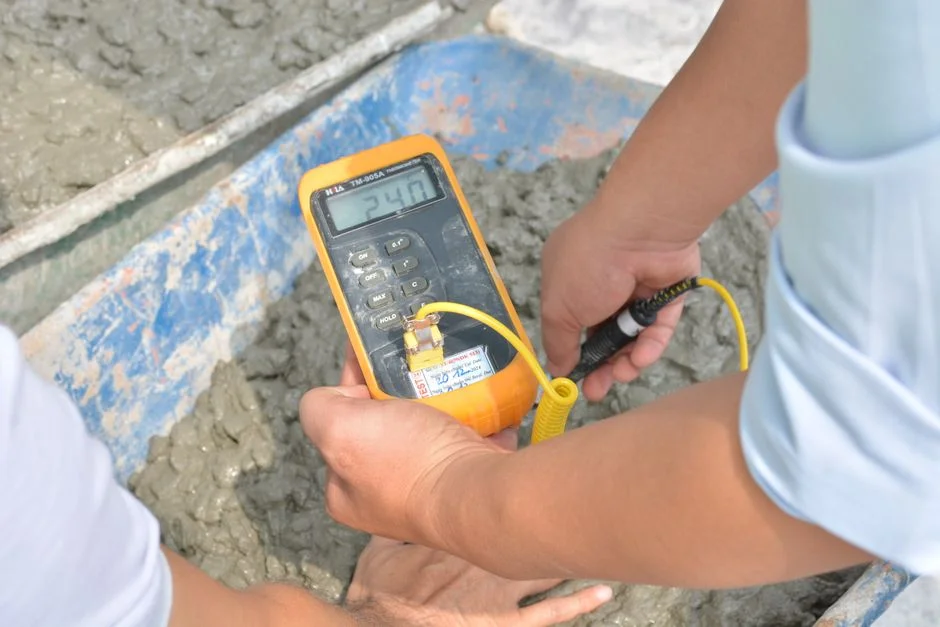
The influent envelope is the parameter list the design engineer must write into the GASKI submission before membranes and antiscalant chemistry can be selected. With municipal supply at roughly 250–500 ppm TDS and a cooling tower at CoC 5–6, the blowdown lands in the 1,500–3,000 ppm TDS window, consistent with the 1,200–6,000 mg/L range cited for blowdown generally (Genesis Water Tech, 2025) — this is the design point for membrane selection and antiscalant dosing, and it already exceeds typical municipal sewer TDS limits without pretreatment. The secondary parameters the GASKI submission has to cover are pH 7.5–9.0, silica 20–80 mg/L as SiO₂, temperature 30–40°C, and the residual chemistry load: biocides, phosphonates, and trace Cu/Zn from corrosion-inhibitor breakdown (Ecologix, 2025). Three species cap conventional RO recovery: silica, calcium carbonate, and calcium sulfate — the same scale-formers that limit brackish RO to 75–80% recovery before flux decays and cleaning frequency spike (IDE Tech, 2025). The operational consequence is that above CoC 5–6, biological and scaling risks increase exponentially without advanced treatment, often forcing CoC back down to manageable levels and increasing blowdown volume (Genesis Water Tech, 2025) — a real input into whether the Gaziantep design runs at CoC 5 or CoC 6.
| Parameter | Design window | Source |
|---|---|---|
| TDS | 1,500–3,000 ppm (blowdown at CoC 5–6 from 250–500 ppm supply) | Genesis Water Tech, 2025; Ecologix, 2025 |
| pH | 7.5–9.0 | Ecologix, 2025 |
| Silica (as SiO₂) | 20–80 mg/L | Ecologix, 2025 |
| Temperature | 30–40°C | Ecologix, 2025 |
| Residual chemistry | Biocides, phosphonates, trace Cu/Zn | Ecologix, 2025 |
| RO recovery ceiling (BWRO) | 75–80% before scale species dominate | IDE Tech, 2025 |
| Scale-cap species | Silica, CaCO₃, CaSO₄ | IDE Tech, 2025 |
The defensible 2026 process train for a Gaziantep blowdown stream
The 2026 defensible train for a Gaziantep blowdown stream runs equalization → DAF or lamella clarification → multi-media filtration → UF → RO, with reject branched either to a brine concentrator plus crystallizer (ZLD) or to controlled discharge under a GASKI permit. Step 1 is the equalization basin, sized for 24–48 hours of HRT to buffer TDS, pH, and temperature swings; the basin should be mixed with slow-speed paddles and aeration avoided to prevent CO₂ stripping that would shift the calcium carbonate equilibrium. Step 2 is the DAF clarification system for cooling tower blowdown (4–300 m³/h range) or lamella clarification at 20–40 m³/m²·h when the equipment-room footprint is tight, removing oils, TSS, and flocked metal hydroxides. Step 3 is the multi-media filtration polishing stage with anthracite/sand/garnet to SDI <5 ahead of the UF. Step 4 is the UF pretreatment skid ahead of the RO, using 0.03 µm PVDF membranes rated for up to 300 NTU feed and delivering consistent SDI <3, in the 2,000–40,000 L/h range per skid. Step 5 is the RO unit for blowdown-to-cooling-tower reuse, sized at 75–80% recovery as the conservative default; pushing past 90% requires controlled-salt-precipitation upstream, a CAPEX jump most 20 MW Gaziantep builds do not need. Step 6 is reject management — RO concentrate feeds either ZLD or GASKI-permitted sewer. Across all wet stages, a PLC-controlled chemical dosing skid handles pH correction, antiscalant, and biocide feed.
| Stage | Function | Design point | Source |
|---|---|---|---|
| Equalization | Buffer TDS, pH, temperature | 24–48 h HRT, slow paddles, no aeration | Genesis Water Tech, 2025 |
| DAF / lamella | Oil, TSS, metal-hydroxide removal | DAF 4–300 m³/h; lamella 20–40 m³/m²·h | Ecologix, 2025 |
| Multi-media filtration | Polishing before UF | Anthracite/sand/garnet to SDI <5 | Ecologix, 2025 |
| UF | RO pretreatment, consistent SDI <3 | 0.03 µm PVDF, ~300 NTU feed, 2,000–40,000 L/h per skid | Ecologix, 2025 |
| RO | Dissolved-solids removal, reuse permeate | 75–80% recovery; permeate 10–50 mg/L TDS | IDE Tech, 2025 |
| Reject management | ZLD or GASKI-permitted discharge | Brine concentrator + crystallizer, or sewer under permit | Genesis Water Tech, 2025 |
| Chemical dosing | pH, antiscalant, biocide | PLC-controlled across all wet stages | Ecologix, 2025 |
20 MW colocation vs 100 MW AI campus: what changes in the equipment room
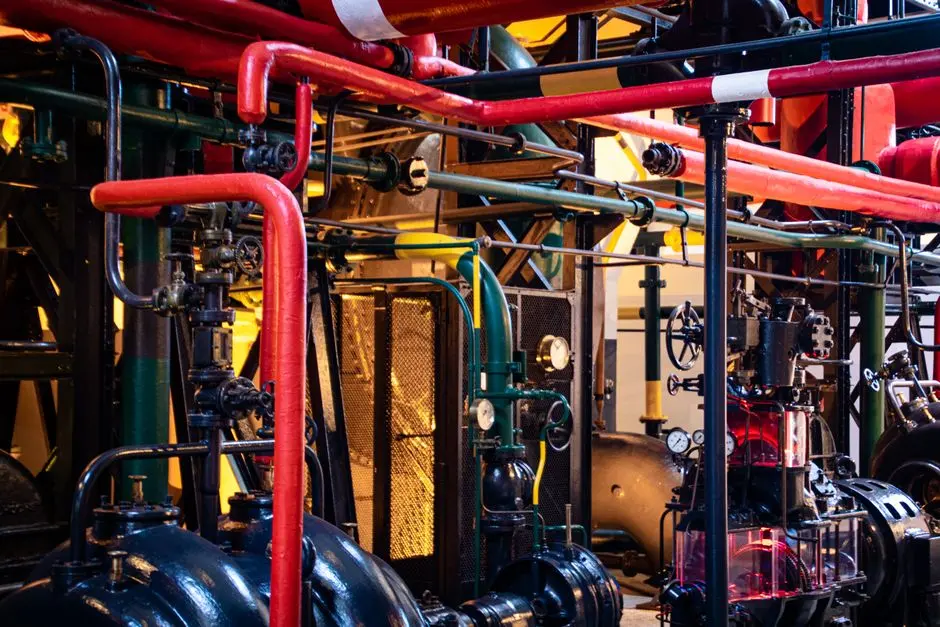
The equipment-room layout changes step-wise, not linearly, between a 20 MW colocation build and a 100 MW AI-ready campus. A 20 MW Gaziantep build at CoC 5–6 produces ~180,000–220,000 L/day of blowdown, which fits a single skid-mounted train (one DAF, one multi-media, one UF, one RO) in a single equipment room with the PLC-controlled chemical dosing skid alongside — this is the right starting point for a 48-hour BOM and a defensible GASKI permit submission. A 100 MW AI-ready campus at PUE 1.2 produces ~900,000–1,100,000 L/day of blowdown (Ecologix, 2025), pushing the design into parallel trains, dedicated equalization sized for 48 hours, and serious reject handling; IDE Tech (2025) cites some 100 MW sites consuming up to 2,000,000 L/day of total water, and Ecologix (2025) places hyperscale AI data centers in the 1.14–1.70 million L/day range before AI-driven density uplift. In both cases, oversize equalization by 20–30% as cheap insurance against the next rack generation; the equipment train scales linearly with IT load, but equalization volume and reject handling change step-wise. The Cooling Tower Blowdown Recovery 2026 engineering guide walks through the equipment-room layout view across both scales.
Reuse vs ZLD: the GASKI-aware decision framework
The reuse-vs-ZLD call in a 2026 Gaziantep bid should be driven by three named trigger conditions, not narrative. Ecologix (2025) defines three conditions that make on-site treatment mandatory in general: (1) effluent exceeds municipal limits, (2) the site is in a water-scarce area committing to ZLD or ≥70% recovery, and (3) the local WWTP cannot accept the daily volume — confirm which apply against the 2025–2026 GASKI tariff documents and the GAP regional allocation rules. The reuse default is cooling-tower makeup reuse at 70–80% RO recovery, which achieves 60–85% overall recovery, sits at lower CAPEX, and avoids the thermal-concentration parasitic load (Genesis Water Tech, 2025). The ZLD envelope is RO (70–80% recovery) plus MVC or a brine concentrator (95–98% of the concentrate) plus a crystallizer, reaching 95–99% overall recovery, with ZLD CAPEX typically running $3–8 million and OPEX of $5–15 per 1,000 gallons treated (Genesis Water Tech, 2025). The narrow ZLD trigger conditions for a Gaziantep build are: a GASKI sewer moratorium, an explicitly ZLD-classified sub-basin under the GAP regional overlay, or a corporate water-positive mandate that makes any liquid discharge unacceptable — only these justify the CAPEX jump.
| Path | Recovery | CAPEX envelope | OPEX envelope | Gaziantep trigger | Source |
|---|---|---|---|---|---|
| Blowdown-to-tower reuse (RO) | 60–85% | Lower | Lower parasitic load | Default for most 2026 Gaziantep builds | Genesis Water Tech, 2025 |
| ZLD (RO + MVC/crystallizer) | 95–99% | $3–8 million typical | $5–15 per 1,000 gallons | GASKI moratorium, ZLD-classified sub-basin, corporate water-positive mandate | Genesis Water Tech, 2025 |
Payback math a Gaziantep buyer should run
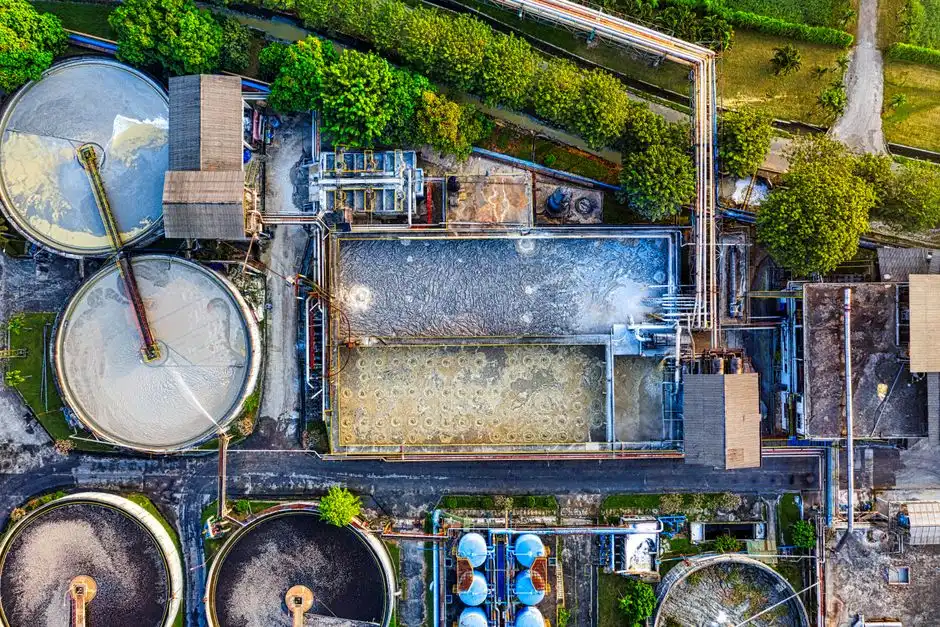
Genesis Water Tech (2025) published a worked example as a baseline: 15 MW site in a water-stressed region, 60% blowdown recovery, $200,000 CAPEX, 6.7-year simple payback on water alone. For a Gaziantep bid, the engineer should scale the CAPEX roughly with the blowdown volume and request a sized quotation from the equipment vendor — the supplied research does not support a linear multiple on the 15 MW figure, so the buyer must obtain vendor-confirmed pricing for the actual 20 MW or 100 MW stream. Once avoided discharge fees in the $5–15 per 1,000 gallons range, energy recovery from concentrate-side pressure exchangers, and the CSRD-style disclosure pressure on any site serving EU tenants are credited, payback typically compresses to 3–5 years (Genesis Water Tech, 2025). The non-monetary value is the compliance anchor: meeting SKKY Table 16 eliminates permit risk and the shutdown exposure that comes with a single non-compliance event, which is increasingly a social-license issue in water-stressed southeastern Anatolia, not just a permit issue. The Cooling Tower Blowdown Recovery 2026 engineering guide walks the CAPEX/OPEX line-item view.
Frequently Asked Questions
What is the realistic CAPEX envelope for a 2026 Gaziantep data center blowdown reuse train?
The research gives a defensible baseline of $200,000 CAPEX for a 15 MW water-stressed site at 60% blowdown recovery (Genesis Water Tech, 2025), with simple payback compressing to 3–5 years once avoided discharge fees and energy recovery are credited. For a 20 MW or 100 MW Gaziantep build, request a sized quotation from the equipment vendor — the supplied research does not support a linear multiple on the 15 MW figure, and the 20–30% equalization oversize buffer plus the DAF → MMF → UF → RO skids must be priced against the actual blowdown TDS, silica, and temperature profile.
How do I choose a treatment-train supplier for a GASKI permit submission in Gaziantep?
Select a supplier that can document the full equalization → DAF → MMF → UF → RO train with the PLC-controlled chemical dosing skid, and that can provide vendor-confirmed sizing against the site's actual blowdown envelope (1,500–3,000 ppm TDS, pH 7.5–9.0, silica 20–80 mg/L as SiO₂, 30–40°C) and the GASKI pretreatment and connection rules. Confirm the supplier's experience with the EWC 11 01 09* waste-code documentation and SKKY Table 16 discharge compliance, and ask for a sized quotation rather than assuming a linear multiple on a smaller reference site.
What is the minimum treatment train a 20 MW Gaziantep site needs to meet SKKY Table 16?
At CoC 5–6 the blowdown lands in the 1,500–3,000 ppm TDS window, which already exceeds typical municipal sewer TDS limits without pretreatment, so on-site equalization → DAF → multi-media → UF is the minimum path, with RO added when cooling-tower makeup reuse is part of the bid. Conventional BWRO caps at 75–80% recovery before silica, calcium carbonate, and calcium sulfate scaling dominate (IDE Tech, 2025), so RO above 90% is not the 2026 default for a 20 MW build.
When does ZLD actually make sense for a Gaziantep build?
ZLD — RO (70–80% recovery) plus MVC or a brine concentrator (95–98% of concentrate) plus a crystallizer, reaching 95–99% overall recovery — is justified only by a narrow set of trigger conditions: a GASKI sewer moratorium, an explicitly ZLD-classified sub-basin under the GAP regional overlay, or a corporate water-positive mandate that makes any liquid discharge unacceptable (Genesis Water Tech, 2025; Ecologix, 2025). ZLD CAPEX typically runs $3–8 million with OPEX of $5–15 per 1,000 gallons treated, so for most 2026 Gaziantep builds, cooling-tower makeup reuse at 70–80% RO recovery is the lower-CAPEX, lower-parasitic-load default.
Related Equipment
- RO and UF membrane replacement elements — specifications, capacity range, and technical data