
The Regulatory Frame for a Port Arthur Chemical Plant
Two federal regulations govern pretreatment in the Port Arthur area: 40 CFR Part 122 (the NPDES framework) and 40 CFR Part 403 (the Industrial User / POTW pretreatment framework), as stated on the City of Port Arthur's pretreatment program page (portarthurtx.gov/504/Pretreatment). A chemical plant discharges into the publicly owned treatment works (POTW) as an Industrial User under 40 CFR 403, and the City of Port Arthur requires each Industrial User to install, operate and adequately maintain pretreatment devices and/or systems to remove pollutants that could otherwise damage or obstruct the wastewater collection system or interfere with the wastewater treatment process.
The Texas Commission on Environmental Quality (TCEQ) administers the TPDES wastewater pretreatment framework, which establishes the procedures that POTWs use to derive local limits and to authorise the discharge permits, slug control plans and SIU monitoring that an Industrial User must work within (TCEQ, "Wastewater Pretreatment: Requirements and Options," 2026-09-21). An Industrial User self-identifies its category — Significant Industrial User (SIU), Categorical Industrial User (CIU), or non-significant CIU — based on its discharge volume, pollutant load, and whether any 40 CFR 403 categorical standard applies to its SIC code. The City of Port Arthur's published program focus has historically emphasised fats, oils and grease from commercial entities; a chemical plant faces a different pollutant profile (dissolved metals, pH excursions, process-specific organics, high TDS) and must request its site-specific local limit letter from the control authority before sizing any unit operation.
How Local Limits Are Set and What a Chemical Plant Must Track
Local limits are derived by the POTW's control authority under the TPDES pretreatment framework to protect the POTW's treatment processes, sludge quality, and receiving waters, as described on the TCEQ wastewater pretreatment page (2026-09-21). The control authority runs a local limits evaluation that converts a Maximum Allowable Headworks Loading into numerical caps for each regulated parameter in the Industrial User's discharge permit. The City of Port Arthur's program requires consistent wastewater output tracking from Industrial Users (portarthurtx.gov/504/Pretreatment), which makes that tracking the central compliance artefact.
Because the research does not name specific chemical-industry numeric limits for Port Arthur, a chemical plant must obtain its local limit letter or discharge permit from the POTW before sizing any unit operation. A typical local limit letter for a chemical site should include conventional pollutants (TSS, BOD/COD, pH, oil & grease), a metals list sized to the process, and any process-specific organics the POTW has identified through its local limits evaluation. Reporting cadence is tied to Industrial User status — Significant Industrial Users face routine self-monitoring and POTW inspection, while non-significant CIUs are typically on a lighter schedule. The table below maps the parameter families a chemical plant should expect to see in its limit letter to the evidence the buyer needs to obtain from the control authority.
| Parameter family | What a chemical plant should expect | Input to obtain from the control authority |
|---|---|---|
| Conventional pollutants | TSS, BOD/COD, pH range, oil & grease | Numeric cap and averaging period from the local limit letter |
| Metals | Site-specific metal list sized to process chemistry | Numeric cap per metal from the local limit letter |
| Process-specific organics | Any organics flagged by the POTW's local limits evaluation | Numeric cap and required analytical method from the discharge permit |
| Flow & monitoring cadence | Daily / monthly / composite sampling tied to IU category | Sampling schedule and SIU monitoring frequency from the control authority |
Building the Pretreatment Train: Source Control Through Polishing

Engineers map process streams against the following unit operations to determine equipment requirements.
- Source reduction and segregation. Keep process streams that carry regulated pollutants separate from uncontaminated cooling or utility water. Reducing the volume that has to be treated to local limits lowers both capital cost and the load the downstream train has to handle.
- Flow and load equalisation. An equalisation basin dampens batch variability in pH, temperature, and pollutant concentration, which is a prerequisite for stable downstream performance in any chemical effluent stream.
- Physical separation. A DAF system for chemical plant wastewater handles emulsified or free-phase oils; a lamella clarifier for chemical effluent handles higher-solids streams with low oil content. A rotary bar screen for headworks protection removes gross solids and fibrous debris upstream of the biological or membrane step.
- Chemical conditioning and pH adjustment. An automatic chemical dosing skid delivers lime or caustic for pH correction and coagulants/flocculants for metal precipitation, governed by a PLC on the basis of upstream online probes.
- Biological or advanced polishing. An MBR, SBR, or conventional activated-sludge step removes biodegradable organics, followed where required by filtration (UF / multi-media) to protect any downstream reuse or final polishing step.
- Disinfection and monitoring. Chlorine dioxide or UV disinfection controls microbial load before the sewer, with online monitoring on pH, flow, and conductivity feeding the discharge compliance log.
Solids pulled out of the train are dewatered with a plate and frame filter press for sludge to close the solids mass balance the POTW also tracks under its pretreatment program.
Matching Treatment Technologies to Chemical Plant Pollutants
The City of Port Arthur's pretreatment program requires devices that "remove pollutants that could otherwise damage or obstruct the wastewater collection system or interfere with the wastewater treatment process" (portarthurtx.gov/504/Pretreatment). The technology shortlist below maps the dominant pollutant in a chemical plant's stream to the unit operation that removes it. Numeric treatment efficiencies are not in the research and must be obtained from vendor or pilot data for the specific stream.
| Dominant pollutant | Recommended unit operation | Why it fits a chemical plant |
|---|---|---|
| Emulsified or free-phase oil & grease | Dissolved air flotation (DAF system) | Handles emulsified oils common in chemical washwater and process streams |
| High suspended solids, low oil | Lamella clarifier (high-efficiency sedimentation tank) | Compact footprint for high-solids chemical streams |
| Fibrous debris, gross solids | Rotary bar screen (GX series) | Protects downstream biological and membrane steps from fouling |
| Dissolved metals, pH excursions | PLC-controlled automatic chemical dosing | Lime/caustic for pH, coagulants/flocculants for metal precipitation |
| Biosolids / chemical sludge | Plate and frame filter press | Closes the solids mass balance the POTW tracks under the pretreatment program |
Monitoring, Sampling and Documentation That Satisfy the POTW
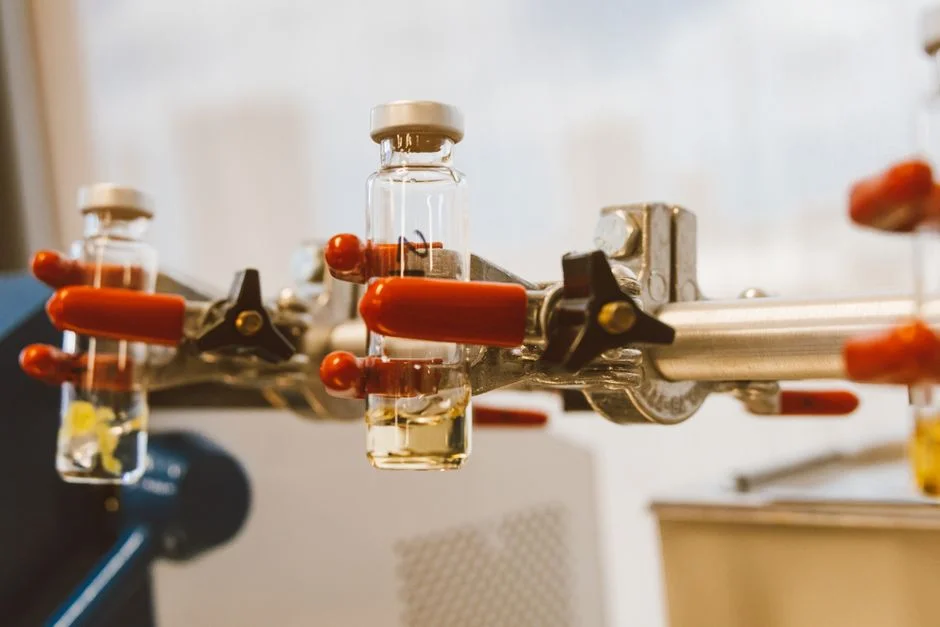
The City of Port Arthur's program requires consistent wastewater output tracking from Industrial Users (portarthurtx.gov/504/Pretreatment). That tracking consists of the discharge compliance log plus the sampling and inspection package below.
| Item | Minimum expectation for a chemical plant | Anchor in the regulatory frame |
|---|---|---|
| Continuous instrumentation | Flow and pH on the discharge line; conductivity and temperature typically added for chemical sites | Consistent wastewater output tracking per City of Port Arthur pretreatment program |
| Composite sampling | Schedule defined by the IU category (e.g. monthly for non-significant CIUs, more frequent for SIUs) | SIU monitoring cadence under 40 CFR 403 |
| Slug control plan | Accidental discharge / spill containment procedures specific to the process chemistry | Industrial User obligations under 40 CFR 403 |
| POTW inspections | Periodic site inspections and right-of-entry per the discharge permit | Control-authority enforcement under 40 CFR 403 |
| Recordkeeping | Self-monitoring results retained per the POTW's recordkeeping rule | Industrial User reporting under 40 CFR 403 |
Frequently Asked Questions
What equipment does a chemical plant near Port Arthur need to meet local limits?
A chemical plant needs a treatment train that takes its effluent from raw process flow to a discharge that meets the numerical caps in its local limit letter. The standard sequence is source segregation, equalisation, a DAF system for chemical plant wastewater or lamella clarifier for chemical effluent, an automatic chemical dosing skid for pH and metal precipitation, biological or membrane polishing, disinfection, and sludge dewatering with a plate and frame filter press. The exact sizing depends on the site's flow and load, which the buyer must obtain from the local limit letter before procurement.
How much does a chemical-plant pretreatment system cost in 2026?
No research-supported price exists for a chemical-plant pretreatment system in the Port Arthur area. The correct procurement step is to request a sized proposal from the equipment vendor once the buyer has the site's local limit letter, design flow (gpd or m³/d), peak instantaneous flow, and the influent concentrations of the regulated parameters on the local limit letter. Compare proposals on the basis of the same flow, the same discharge guarantees, and the same monitoring scope, not on headline price.
Which supplier should a chemical plant choose for pretreatment equipment?
Shortlist suppliers that can document experience with chemical effluent streams and that can supply the full train — headworks, separation, dosing, polishing, and sludge dewatering — from a single engineering team. A useful vendor check is to ask for a reference installation on a comparable SIC code, for the same monitoring instruments the POTW will require, and for documentation that maps each unit operation back to a parameter in the local limit letter.
What is the biggest compliance risk for a Port Arthur chemical plant discharging to the POTW?
The biggest compliance risk is designing the treatment train against the wrong numbers. The research does not name chemical-industry numeric limits for Port Arthur, so every cap in the discharge permit and every monitoring frequency in the SIU monitoring schedule must be confirmed with the control authority before equipment is procured. A slug control plan that is generic rather than process-specific is the second-largest risk, because 40 CFR 403 places the accidental-discharge obligation on the Industrial User regardless of the City of Port Arthur's public-facing material. Reference reading on related sites is available in the chemical plant pretreatment in Galva and Kennesaw chemical pretreatment guide pieces, and a metals-industry parallel in the fabricated metals pretreatment guide.