What an MBBR Reactor Is and How the Biofilm Works
An MBBR (Moving Bed Biofilm Reactor) is a biological wastewater treatment process in which free-floating plastic carriers — typically made of high-density polyethylene (HDPE) — move freely in an aeration tank while a biofilm grows on their protected internal surface. The technology was developed by Professor Hallvard Ødegaard at the Norwegian University of Science and Technology in the late 1980s, with the first full-scale plant starting in Norway in 1985, and is now deployed in more than 700 municipal and industrial plants in over 50 countries (Wikipedia, S5).
Coarse-bubble aeration grids keep the bed in motion and continuously bring carriers into contact with substrate, dissolved oxygen and biomass, driving BOD, COD and ammonia removal on the biofilm. In a 2019 study on laundry wastewater, an MBBR with 20% Kaldnes K1 carrier fill reached 91% BOD removal and 93.81% COD removal after 10 days (Kusuma et al. 2019, S1); a 2026 pilot on biodiesel wastewater reported 74.79% COD and 81.37% TOC removal over three months (Lee et al. 2026, Sci Rep, S2).
The core idea is that biomass does not have to stay suspended in the mixed liquor. Instead, bacteria attach to engineered plastic carriers and grow as a fixed film. Because the carriers are slightly less dense than water and are kept in motion by aeration, the entire reactor volume becomes an active biofilm surface — without the sludge recycle loop that an activated-sludge basin depends on (Wikipedia, S5). HDPE is the preferred carrier material because its plasticity, density and durability let it tumble freely without sinking or floating, and because the surface supports robust biofilm attachment (Wikipedia, S5).
Three practical consequences follow. First, biofilm processes need less space than activated-sludge systems because biomass is more concentrated and performance is less dependent on final sludge separation (Wikipedia, S5). Second, there is no return-activated-sludge (RAS) or waste-activated-sludge (WAS) stream to design; biomass control relies on carrier retention, not on recycle ratios. Third, the high solids retention time inside the biofilm allows slow-growing organisms — nitrifiers, anammox bacteria, hydrocarbon degraders — to colonize carriers, which is why MBBRs tolerate load swings and toxic spikes better than suspended-growth systems (Wikipedia, S5).
Core MBBR Design Parameters an Engineer Must Specify
Translating the concept into a datasheet means locking in five variables: carrier fill fraction, carrier geometry and surface area, hydraulic retention time (HRT), operating mode, and reactor configuration. The Wikipedia entry on MBBRs notes that carriers can occupy as much as 70% of the tank volume (S5), but a 20% Kaldnes K1 fill was sufficient in the 2019 laundry study (S1). The right fill fraction is therefore application-specific and should be confirmed against the supplier's reference plant data, not assumed from a generic maximum.
Carrier surface area governs biofilm area per unit volume, and the protected internal geometry shields biomass from shear (Wikipedia, S5). On hydraulic retention time, the 2019 laundry study seeded the carriers for 15 days and then processed wastewater for 6, 8 and 10 days, with the best BOD, COD, phosphate and surfactant results at the 10-day mark (Kusuma et al. 2019, S1). The same study explicitly recommends further work on fill volume, longer processing times and alternative Kaldnes media — a reminder that no single HRT or organic loading rate (OLR) should be transferred between wastewaters without pilot confirmation. Removal kinetics depend on temperature, substrate and carrier type, and the buyer should request pilot curves from the supplier for the actual influent.
Three operating modes are available: continuous flow, intermittent aeration (alternating aerobic and anoxic conditions in one tank), and sequencing batch reactor (SBR) operation in a single reactor (Wikipedia, S5). Reactor configuration choices include aerobic MBBR, anaerobic MBBR, and hybrid MBBR with both suspended and attached biomass; a 2019 reference describes anaerobic and aerobic MBBR in series for simultaneous COD removal and biogas production (Wikipedia, S5). The summary table below crystallizes the levers a process engineer will defend on a P&ID or datasheet review.
| Parameter | What it controls | Evidence in this article |
|---|---|---|
| Carrier fill fraction | Active biofilm volume per tank volume | Up to 70% possible (Wikipedia, S5); 20% Kaldnes K1 sufficient for laundry wastewater (Kusuma et al. 2019, S1) |
| Carrier surface area and shape | Specific surface area for biofilm attachment and shear protection | Internal protected geometry shields biomass (Wikipedia, S5) |
| Hydraulic retention time | Substrate contact time and treatment completeness | Best laundry removal at 10-day HRT after 15-day seeding (Kusuma et al. 2019, S1); biodiesel pilot operated continuously for 3 months (Lee et al. 2026, S2) |
| Operating mode | Whether the basin runs aerobic-only, alternating aerobic/anoxic, or batch | Continuous flow, intermittent aeration and SBR modes all documented (Wikipedia, S5) |
| Reactor configuration | Dominant metabolism and downstream interface | Aerobic, anaerobic and hybrid MBBR (Wikipedia, S5); anaerobic + aerobic MBBR in series for COD + biogas (Wikipedia, S5) |
| Aeration grid | Carrier mixing and dissolved oxygen supply | Coarse-bubble grid keeps bed in motion (Wikipedia, S5) |
| Retention sieve | Carrier inventory inside the basin | Mandatory at the outlet to keep HDPE carriers in the tank (Wikipedia, S5) |
Real MBBR Removal Performance on Industrial Streams

Two recent studies give the engineer a defensible benchmark for what an MBBR can actually do on non-municipal streams. The first is a 2019 laundry wastewater study at Universitas Tanjungpura using Kaldnes K1 carriers at 20% fill, with 15 days of seeding followed by 6, 8 and 10 days of processing (Kusuma et al. 2019, S1). On the 10th day, BOD fell from 441 mg/L to 39.67 mg/L (91% removal), COD from 910 mg/L to 56.3 mg/L (93.81% removal), phosphate from 38.24 mg/L to 5.31 mg/L (86.10% removal), and surfactant from 47.8 mg/L to 5.62 mg/L (88.22% removal) (S1). The same study recommends further work on fill volume, longer processing times and alternative Kaldnes media to lift removal further.
The second benchmark is a 2026 pilot-scale MBBR on biodiesel wastewater operated continuously for three months under fluctuating influent conditions (Lee et al. 2026, Sci Rep, S2). Average COD removal reached 74.79% and average TOC removal 81.37%, with no reported loss of performance across the run (S2). The same study demonstrated an important treatment-train effect: MBBR pretreatment more than 2.5× improved downstream ferrous-sulfate coagulation, with COD removal by coagulation rising from 13.35% to 34.29% (S2). The mechanism is biological modification of the wastewater during MBBR pretreatment, which improves conditions for particle aggregation during the subsequent coagulation step (S2).
Beyond these two industrial matrices, a 2023 study showed that a strictly anaerobic MBBR combined with an aerobic biofilm reactor can achieve high removal of pharmaceutical micropollutants such as metronidazole, trimethoprim, sulfamethoxazole and valsartan in hospital wastewater (Wikipedia, S5). The summary table below consolidates the data points a buyer will be asked to defend in a design review.
| Stream | Configuration | Key result | Source |
|---|---|---|---|
| Laundry wastewater (FRESCO) | Kaldnes K1, 20% fill, 10-day HRT after 15-day seeding | BOD 91%, COD 93.81%, phosphate 86.10%, surfactant 88.22% | Kusuma et al. 2019 (S1) |
| Biodiesel wastewater | Pilot MBBR, continuous, 3 months | COD 74.79%, TOC 81.37% | Lee et al. 2026, Sci Rep (S2) |
| Biodiesel wastewater downstream effect | MBBR pretreatment + FeSO₄ coagulation | Coagulation COD removal rose from 13.35% to 34.29% (more than 2.5×) | Lee et al. 2026, Sci Rep (S2) |
| Hospital wastewater (micropollutants) | Anaerobic MBBR + aerobic biofilm reactor | High removal of metronidazole, trimethoprim, sulfamethoxazole and valsartan | Wikipedia, citing 2023 study (S5) |
The takeaway is that reported rates are application-specific; a laundry result should not be transferred to a refinery or dairy stream without confirmatory testing on the actual influent.
Microbiology Inside MBBR Carriers and Why It Matters
The high solids retention time inside an MBBR biofilm allows slow-growing, specialized organisms to colonize carriers, including nitrifiers, anammox bacteria and hydrocarbon-degrading communities (Wikipedia, S5). This is the operational reason MBBRs tolerate load swings better than suspended-growth systems: the biofilm is a self-replenishing seed bank that does not wash out on a hydraulic transient.
The 2026 biodiesel pilot characterized this community directly. 16S rRNA gene sequencing of the carrier biofilm identified Bacteroidetes, Saccharibacteria_TM7, Proteobacteria and Firmicutes as the major phyla, with Saccharimonas, Chryseobacterium and Proteiniphilum dominant at the genus level (Lee et al. 2026, Sci Rep, S2). The authors note that community composition shifts with organic loading, which is why one carrier type and one HRT will not work identically across municipal, laundry and biodiesel streams (S2; Wikipedia, S5).
For the design engineer, the practical implication is that microbial diversity is the operational buffer: a diverse biofilm can absorb shock loads that would wash out a suspended-growth reactor. This is also why equalization, pH control and oil removal upstream of the MBBR matter so much — they protect the diversity that gives the system its resilience.
Where MBBR Fits in an Industrial Treatment Train
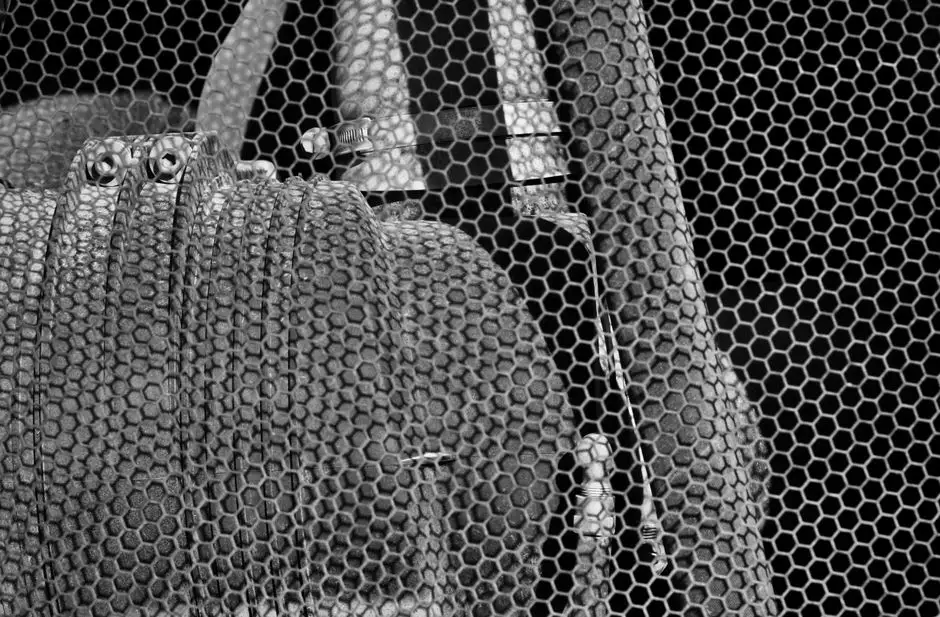
Positioning an MBBR correctly is as important as sizing it. Upstream, a rotary mechanical bar screen protects the basin from rags and grit, and a DAF system removes oils, FOG and suspended solids before the biofilm sees them — particularly important for high-strength streams like biodiesel effluent (Lee et al. 2026, Sci Rep, S2). Downstream, the MBBR is commonly followed by a clarifier, an MBR system, or sand and activated-carbon filtration, depending on the reuse target.
MBBR is also a strong retrofit option. It is often installed inside an existing activated-sludge tank to increase capacity without new civil works, with the carrier fill fraction adapted to the available volume (Wikipedia, S5). Final polishing — UV sterilizer for disinfection, chlorine dioxide for residual control, or RO for reuse — is selected based on whether the goal is sewer discharge, surface-water discharge or industrial reuse. For a textile stream, the MBBR for textile wastewater design guide walks through a comparable train; for brewery effluent, the MBBR for brewery wastewater design guide gives a parallel reference.
MBBR Limitations and Common Failure Modes
A skeptical engineer will ask about bioclogging, headloss and carrier carryover before approving a design. Wikipedia identifies bioclogging and headloss build-up as the two named disadvantages of MBBR relative to other biofilm processes such as trickling filters, rotating biological contactors (RBCs) and biological aerated filters (BAFs) (S5). The second physical risk is carrier carryover: a retention sieve is mandatory at the basin outlet to keep HDPE carriers inside the aeration tank (Wikipedia, S5).
A second operational point is the absence of a sludge recycle stream. That is an advantage over activated sludge because it eliminates RAS/WAS design, but it also means biomass control relies entirely on carrier retention and natural sloughing — not on a recycle ratio the operator can dial up or down (Wikipedia, S5). For industrial streams with high oil, extreme pH or toxic spikes, upstream equalization and a DAF step are therefore not optional; they are the buffer that keeps the biofilm healthy enough to do its job. The same point is reinforced by the 2026 biodiesel pilot, where biological modification of the wastewater during MBBR pretreatment was the lever that improved downstream coagulation performance (Lee et al. 2026, Sci Rep, S2).
Frequently Asked Questions
How do I size an MBBR reactor for a new industrial wastewater train?
Lock in the design basis first: influent flow, BOD/COD load, target effluent quality, temperature, and the carrier type you intend to specify. Then request pilot curves from the supplier for the actual wastewater, because the only defensible HRT and fill-fraction values are the ones demonstrated on a stream with similar BOD, COD and toxicity. The 2019 laundry study reached 91% BOD removal at 20% Kaldnes K1 fill and a 10-day HRT after 15 days of seeding (Kusuma et al. 2019, S1), and the 2026 biodiesel pilot sustained 74.79% COD removal over three months of continuous operation (Lee et al. 2026, Sci Rep, S2) — but neither data point transfers to a different influent without confirmation.
Can an MBBR be retrofitted into an existing activated-sludge basin?
Yes. MBBR is often installed inside an existing activated-sludge tank to increase capacity without new civil works, with the carrier fill fraction adapted to the available tank volume (Wikipedia, S5). The retrofit decision still requires a sieve at the outlet to retain carriers and an aeration grid sized to keep the bed fully mixed (Wikipedia, S5); the existing blowers and diffusers may need to be re-evaluated to deliver the mixing and dissolved-oxygen demand of the new carrier fill.
How do I select the right carrier type and supplier?
Match the carrier to the metabolic job. Kaldnes K1 (the carrier used in the 2019 laundry study) is the most widely documented option, but a wider variety of HDPE carriers exists with different surface areas and protected geometries (Wikipedia, S5). Ask the supplier for biofilm-surface area per cubic meter of carrier, density, abrasion resistance, and reference plants running on a wastewater similar to yours. The carrier decision is the single largest controllable variable in MBBR design, so it deserves its own data sheet rather than a line in a price list.
What does 2026 MBBR OPEX actually look like?
OPEX is dominated by aeration energy, periodic carrier replacement, and routine maintenance on blowers, sieves and instrumentation — not by a published unit price per cubic meter of treated water. The dedicated MBBR OPEX and maintenance cost 2026 article walks through the line items, spare-parts list and service intervals in detail, and is the right input to any budget conversation in 2026.