Why Nicholasville's Sewer Limits Are the Real Target for EV and Auto Plants
The federal secondary-treatment numbers serve as the floor of the compliance problem for EV or auto plants discharging to the Nicholasville-area POTW, rather than the design target. The binding contract is the city's wastewater ordinance, which adopts 40 CFR Part 403 as the legal framework for general pretreatment and federal categorical standards, and then layers local surcharge thresholds and operational rules on top of it (Nicholasville, Ky., Code of Ordinances §23-110, via codelibrary.amlegal.com).
The POTW superintendent is explicitly authorized to develop BMPs and to set local limits under 40 CFR 403.5(c), and significant industrial users must comply where those local limits are more stringent than state or federal requirements. The federal secondary-treatment baseline, set in 40 CFR §133.102, is 30 mg/L 30-day average and 45 mg/L 7-day average for both BOD5 and TSS, with at least 85% removal and a pH range of 6.0–9.0 standard units (WizSensor Wastewater Engineering Team, 8 August 2026). NPDES permits can be stricter than that federal baseline because they also reflect water-quality standards, receiving-water conditions, and the industrial contribution to the receiving POTW (WizSensor, 8 August 2026). For a new plant tying into a small Kentucky POTW, the right design target is the stricter of the two layers.
The surcharge thresholds, temperature ceiling, LEL rule, 5×-in-15-minutes concentration limit, and the explicit ban on dilution drive the monthly bill and the enforcement risk—not the 30/45 mg/L federal numbers cited in most pretreatment primers.
What an EV or Auto Plant Actually Sends Down the Drain
A stream-by-stream inventory is necessary for design because surcharge and categorical standards are parameter-specific. Body and assembly operations generate petroleum, oil, grease, and sand from floor wash, parts washing, and machining coolant—the same pollutant family that South Platte Renew targets with its POGS program for auto maintenance shops, carwashes, and stonecutters (southplatterenewco.gov). EV battery cathode production and electronics areas add nickel, cobalt, lithium, copper, and fluoride-bearing rinse waters, while body pretreatment and e-coat lines contribute phosphate and zinc. Cooling-tower blowdown adds high TDS, conductivity, and occasional biocide residuals, and engine and battery test cells add glycol.
Two operational rules shape the design envelope. The ordinance sets a temperature ceiling of 40 °C (104 °F) at the introduction to the POTW and 60 °C (140 °F) at the introduction to the sanitary sewer, so any hot process stream or test cell needs cooling or equalization before discharge (Nicholasville Code §23-110, via codelibrary.amlegal.com). The same section sets an LEL rule at the discharge point: no two successive readings above 5% LEL and no single reading above 10% LEL, which requires solvent-bearing streams to undergo segregation and recovery rather than dilution. Furthermore, the ordinance bars any discharge from exceeding five times the 24-hour average concentration, quantity, or flow for more than 15 minutes, which mandates flow and load equalization in the design.
The Numeric Limits a Plant Must Hit Before Sewer Discharge
The city's surcharge thresholds and the federal secondary-treatment baseline define equipment sizing targets when placed on a single page. The 24-hour composite thresholds from the Nicholasville surcharge table are BOD 300 mg/L, COD 900 mg/L, TSS 300 mg/L, and NH3-N 25 mg/L, with surcharge rates of $0.636/lb for BOD, $0.636/lb for COD, $0.730/lb for TSS, and $1.590/lb for NH3-N above the listed threshold (Nicholasville Code §23-110, via codelibrary.amlegal.com). The federal secondary-treatment baseline, set in 40 CFR §133.102, is 30 mg/L 30-day average and 45 mg/L 7-day average for BOD5 and TSS, with 85% removal, and a pH range of 6.0–9.0 standard units (WizSensor, 8 August 2026).
| Parameter | Nicholasville surcharge threshold (24-hr composite) | Federal secondary-treatment baseline (40 CFR §133.102) |
|---|---|---|
| BOD / BOD5 | 300 mg/L (surcharge above) | 30 mg/L 30-day avg / 45 mg/L 7-day avg, ≥85% removal |
| COD | 900 mg/L (surcharge above) | Not set in §133.102 baseline |
| TSS | 300 mg/L (surcharge above) | 30 mg/L 30-day avg / 45 mg/L 7-day avg, ≥85% removal |
| NH3-N | 25 mg/L (surcharge above) | Not set in §133.102 baseline |
| pH | Not separately stated in the surcharge table | 6.0–9.0 standard units |
| Temperature | 40 °C at POTW introduction; 60 °C at sanitary sewer introduction | Set by permit |
| LEL | No two successive readings > 5%; no single reading > 10% | Set by permit |
The surcharge formula is Surcharge = (X − Y) × Q × 8.34 × R, where X is the actual concentration, Y is the allowable concentration, Q is total discharge quantity in million gallons, and R is the surcharge rate in $/lb (Nicholasville Code §23-110, via codelibrary.amlegal.com). For TSS at 600 mg/L and 0.05 MGD, the formula yields (600 − 300) × 0.05 × 8.34 × $0.730 ≈ $91.34 per surcharge period, before BOD, COD, and NH3-N are included. The ordinance also prohibits users from increasing process water use or attempting to dilute a discharge as a substitute for adequate treatment (Nicholasville Code §23-110, via codelibrary.amlegal.com). This clause mandates that the equipment train must physically remove pollutants to achieve compliance.
Source Control First: POGS, Training, and Signage at the Plant
Source control is a mandatory permit condition. The South Platte Renew POGS program for businesses that may generate petroleum, oil, grease, and sand requires installation and maintenance of sand-oil interceptors, along with BMPs including drain screens, dry sweeping or wiping before wash-down, proper chemical storage, and a documented Employee Training Form (southplatterenewco.gov). Periodic inspections verify BMP use and interceptor condition, as POGS pollutants can create hazardous conditions in the collection system, cause clogs, or degrade treatment equipment.
Effective source control requires a comprehensive approach. Sink signs at hand and mop sinks are part of the documented POGS program and feed the audit chain a Kentucky POTW expects under §23-110's BMP authority. For an EV/auto plant, the source-control set is broader: floor sinks in body and battery areas should be segregated from process rinses, cathode rinses should be captured for metals recovery, and any floor drain that can see glycol, solvent, or concentrated phosphate should be labeled and physically segregated.
The On-Site Treatment Train That Actually Gets to the Limits
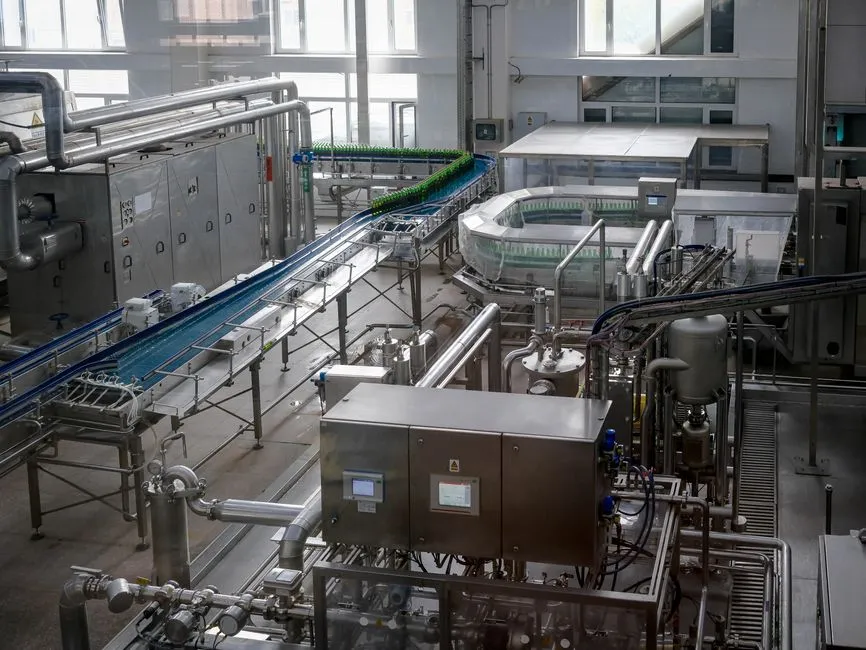
The right way to sequence equipment is one stage, one job, with each stage protecting the next. A rotary mechanical bar screen for headworks protection removes rags, plastics, and fibrous debris before the flow reaches equalization and biological units, protecting downstream pumps and membranes. Flow equalization smooths the 5×-in-15-minutes concentration and flow rule while bringing temperature under the 40 °C / 60 °C ceiling, after which PLC-controlled chemical dosing for pH and coagulant feed stabilizes pH inside the federal 6.0–9.0 band and prepares the stream for solids removal.
For POGS streams, a dissolved air flotation system for oily floor-wash and POGS streams is the workhorse: micro-bubble technology and automatic skimming remove suspended solids, free and emulsified oil, and FOG in a single step, directly cutting the TSS and oil & grease load. (Engineers weighing DAF against a traditional clarifier can also look at the DAF vs clarifier comparison for transportation-equipment plants and the DAF oil-water separator design criteria guide; the micro-bubble flotation design criteria reference is also useful for sizing.) Biological polishing with an MBR membrane bioreactor for biological polishing then takes BOD, COD, and NH3-N below the 300 / 900 / 25 mg/L surcharge thresholds. Sludge from the DAF and biological stages is dewatered with a plate and frame filter press for DAF and biological sludge to reduce hauling volume and disposal cost.
| Stage | Function | Parameter it controls |
|---|---|---|
| Bar screen | Remove rags, plastics, fibers | Protects downstream equipment |
| Flow equalization | Smooth 5×-in-15-minutes peaks; cool hot streams | Flow, temperature (≤40 °C at POTW, ≤60 °C at sewer) |
| Chemical dosing | pH adjustment; coagulant feed | pH 6.0–9.0; TSS, metals precipitation |
| DAF | Remove free and emulsified oil, FOG, suspended solids | TSS, oil & grease, BOD associated with particulates |
| MBR biological polishing | Aerobic biological oxidation with membrane separation | BOD, COD, NH3-N, residual TSS |
| Plate and frame filter press | Dewater DAF and biological sludge | Sludge volume, hauling cost |
Equalization volume should be sized against the 5×-in-15-minutes rule, as short slugs can violate discharge limits even when 24-hour composites remain within range. The MBR's 0.1 µm-class membrane barrier provides a positive barrier against solids carryover, ensuring TSS remains below 30 mg/L on a 30-day average.
Accidental Discharge, RCRA Wastes, and What Triggers an Enforcement Letter
Spill paperwork is a critical requirement for facility commissioning. The ordinance requires 60-day prior notification to the wastewater superintendent for any RCRA-classified waste, including the name of the hazardous waste, EPA hazardous waste number, type of discharge, volume or mass, and time of occurrence (Nicholasville Code §23-110, via codelibrary.amlegal.com). After an accidental discharge, the user must notify the POTW by telephone within 24 hours and submit a detailed written report within 5 days describing the cause and preventive measures (Nicholasville Code §23-110, via codelibrary.amlegal.com).
The ordinance requires a permanently posted notice advising employees whom to call in the event of a dangerous discharge, and training for any employee who may cause or witness such an event (Nicholasville Code §23-110, via codelibrary.amlegal.com). No new industrial user may discharge until accidental-discharge procedures are approved by the superintendent. Continuous monitoring of pH, conductivity, oil-in-water, and flow is operationally useful for early warning and to provide defensible operating records (WizSensor, 8 August 2026).
Frequently Asked Questions
What surcharge cost should an EV/auto plant budget for if it discharges above Nicholasville
Frequently Asked Questions
What pretreatment limits does an EV or auto plant have to meet before discharging to the sewer near Nicholasville, KY?
Facilities discharging to the Nicholasville Publicly Owned Treatment Works (POTW) must comply with local limits typically set for conventional pollutants, including a Biochemical Oxygen Demand (BOD) limit of 250 mg/L, Total Suspended Solids (TSS) of 250 mg/L, and Oil and Grease (O&G) limits generally capped at 100 mg/L. Additionally, EV battery manufacturing and automotive assembly processes must adhere to federal Categorical Pretreatment Standards (40 CFR Part 405-471), which mandate strict effluent concentrations for heavy metals like nickel, copper, and zinc that are often present in process wastewater.
How much does the Nicholasville POTW surcharge cost if BOD, COD, TSS, or NH3-N goes over the limit?
When industrial wastewater exceeds the established base limits for BOD, TSS, or Ammonia-Nitrogen (NH3-N), the Nicholasville utility applies a surcharge based on the concentration of the excess load. These costs are calculated using a formula that multiplies the volume of discharge by the unit cost per pound of the pollutant in excess of the standard, often resulting in significant monthly increases. Specific current rates are defined in the City of Nicholasville Sewer Use Ordinance, and facilities are billed for the excess mass loading beyond the 250 mg/L threshold for BOD and TSS.
What equipment does an EV or auto plant need to remove oil, grease, and suspended solids before sewer discharge?
To meet discharge standards, plants typically employ a multi-stage pretreatment system including oil-water separators (API or coalescing plate types) to capture free-floating hydrocarbons. Suspended solids are removed through Dissolved Air Flotation (DAF) units or clarifiers, often enhanced by chemical coagulation and flocculation processes. For high-strength wastewater, equalization tanks are required to manage flow consistency, and pH adjustment systems are necessary to neutralize acidic or alkaline process streams before they reach the sanitary sewer.
Does an EV or auto plant near Nicholasville need a sand-oil interceptor and employee training program?
Yes, industrial facilities and automotive service areas are required to install sand-oil interceptors to prevent grit, sediment, and petroleum-based fluids from entering the municipal collection system. Beyond hardware, the facility must maintain a formal Best Management Practices (BMP) plan and an employee training program. This training must cover proper chemical storage, spill containment procedures, and the correct disposal of hazardous materials to ensure that pollutants are not introduced into floor drains connected to the sewer.
What happens if an auto plant has an accidental discharge of solvents or battery chemicals into the Nicholasville sewer?
An accidental discharge of prohibited substances, such as solvents or electrolyte chemicals, triggers immediate notification requirements to the City of Nicholasville and potentially the Kentucky Division of Water. The facility is required to implement its Slug Control Plan to mitigate the impact on the treatment plant's biological processes. Failure to report or contain the discharge can result in significant civil penalties, enforcement actions, or the temporary revocation of the facility's industrial discharge permit.