Why Pharmaceutical Wastewater Needs a Dedicated Pretreatment Step
Pharmaceutical effluent is not a generic industrial wastewater, and the DAF placed in front of it cannot be specified like one used in a food or refinery duty. Batch discharges from API synthesis, fermentation, and formulation suites create a stream that swings between solvent-rich, biomass-laden, and surfactant-loaded within a single shift. A DAF in this service is asked to absorb that variability, strip the suspended and emulsified load upstream of biological and membrane polishing, and do so without becoming an ignition source when solvent vapors are present.
The conditions to confirm by site sampling before any DAF sizing begins include batch-to-batch variability, high BOD and COD from API intermediates and fermentation residues, suspended biomass carryover, residual solvent traces, antibiotic residues that may persist through the clarifier, and CIP or GMP washdown surfactants that destabilize normal floc chemistry. None of these are quantified in the supplier literature; they must be measured on the actual plant stream. The rest of this article treats the DAF as a front-end buffer in that treatment train, not a stand-alone clarifier.
How a DAF Unit Actually Works in a Pharma Plant
A DAF removes suspended and emulsified matter by attaching micro-bubbles to flocculated particles so that buoyancy overcomes gravity. The mechanical sequence is consistent across vendors: a fraction of clarified effluent leaving the flotation tank is pumped into a pressure vessel (the saturator or air drum), where compressed air is dissolved into the recycle stream. That air-saturated water is then returned to the inlet of the flotation tank and passed through a pressure-reduction valve; the sudden depressurization nucleates 50–100 µm micro-bubbles (SIGMADAF clarifiers, https://sigmadafclarifiers.com/en/sistemas-daf/preguntas-frecuentes-daf) that attach to floc and lift it to the surface, where a skimmer removes the float layer.
Coagulant and flocculant dosing upstream of the tank is the norm. Ferric chloride and aluminum sulfate are the coagulants cited in standard references (Wikipedia, https://en.wikipedia.org/wiki/Dissolved_air_flotation) to convert colloids into floatable floc. In pharmaceutical service the saturator gas is sometimes switched from air to nitrogen; the induced gas flotation variant used in oil and gas avoids ignition risk when solvent vapors are present in the influent (Wikipedia). The rest of the cycle — recycle, depressurization, bubble nucleation, skimming — is unchanged.
DAF Design Parameters That Matter for Pharmaceutical Duty
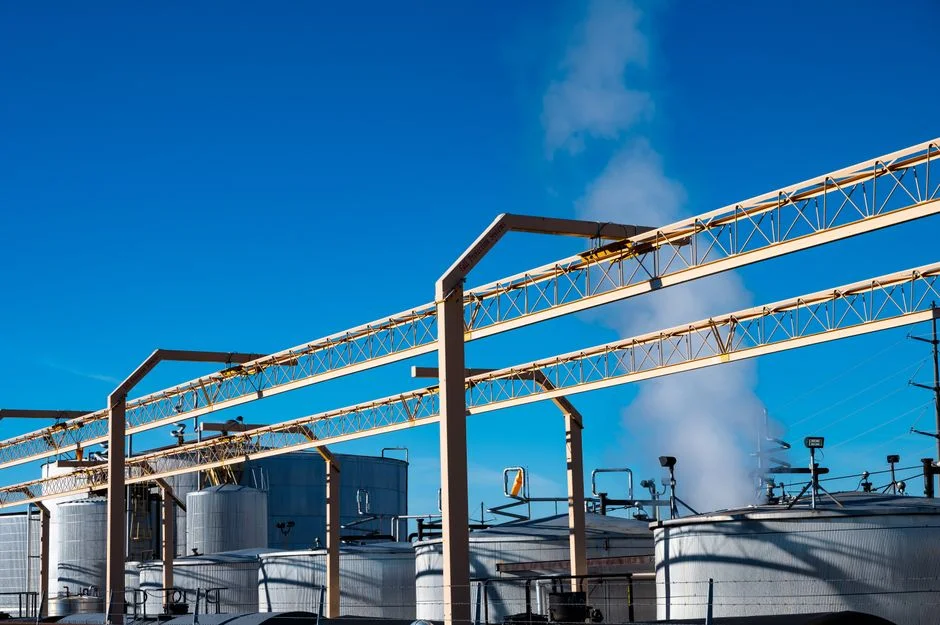
The operating ranges below come from SIGMADAF and Wikipedia, providing a basis for buyers to compare vendor quotes on equal terms. Bogacki et al. (2017) measured 133 mg/L of air introduced into a 1 L laboratory DAF at 6 bar saturation assuming 100% mass-transfer efficiency; that figure is a useful order-of-magnitude sanity check, not a design value.
| Parameter | Typical range | Source |
|---|---|---|
| Saturator pressure | 3–6 bar | SIGMADAF; Wikipedia |
| Recirculation flow | 10–40% of total flow (10–50% broader range) | SIGMADAF |
| Micro-bubble size | 50–100 µm, produced by depressurization | SIGMADAF |
| Hydraulic loading rate | 4–6 m³/m²·h | SIGMADAF |
| Mass loading rate | 3–5 kg/m²·h | SIGMADAF |
| Residence time (circular DAF) | ~3 min | Wikipedia |
| Residence time (rectangular DAF) | 20–30 min | Wikipedia |
| Air input at 6 bar (lab unit) | ~133 mg/L | Bogacki et al., 2017 |
| Construction materials | Protected carbon steel, stainless steel, PP, FRP | SIGMADAF |
Two design choices sit on top of this table. Saturator gas selection — air or nitrogen — depends on whether the influent carries solvent vapors, as discussed above. Geometry — circular or rectangular — trades residence time against footprint; the circular unit needs roughly 3 minutes while the rectangular unit needs 20–30 minutes (Wikipedia). For a pharmaceutical plant with batch swings and limited floor space, the saturator-gas and geometry choices are usually made before any hydraulic calculation.
What a DAF Will and Will Not Remove from Pharma Effluent
Generic DAF performance data give a realistic ceiling for removal expectations. SIGMADAF reports ~90% suspended-solids removal and ≥95% removal of oils and greases, and a COD reduction band of 20–50% depending on effluent type, coagulant, and system design. That band is wide because the coagulant choice swings the result sharply: Bogacki et al. (2017) measured 11.1–77.7% COD removal across five cosmetic effluent samples on the same laboratory hardware with different coagulant programs, with the best result — 77.7% COD removal at 0.5 ml/L coagulant dose and 30 ml/L sludge volume — recorded on Sample 5 (Bogacki et al., 2017). The cosmetic stream is the closest published proxy to a formulation-suite effluent, but the 11.1–77.7% range is the cautionary headline: jar testing on the actual pharma stream is not optional.
| Target contaminant | DAF-only removal (generic) | What it means for a pharma stream |
|---|---|---|
| Suspended solids | ~90% | Reliable; protects downstream MBR and RO |
| Oils and greases | ≥95% | Reliable; addresses CIP and formulation carryover |
| COD (coagulant-assisted) | 20–50% typical; 11.1–77.7% observed (Bogacki et al., 2017) | Highly variable; must be jar-tested on site |
| Dissolved organics, salts, antibiotic activity | Not addressed by DAF | Must be removed by downstream MBR, RO, or advanced oxidation |
The last row is the one that gets projects into trouble. A DAF does not remove dissolved API, residual solvents below their solubility cutoff, salts, or antibiotic activity; these must be carried by an MBR and an RO/EDI polishing train. The DAF is a front-end buffer, not a stand-alone clarifier, and the polishing train must be sized for the load that passes through it.
Placing the DAF Inside a Pharmaceutical Effluent Treatment Train
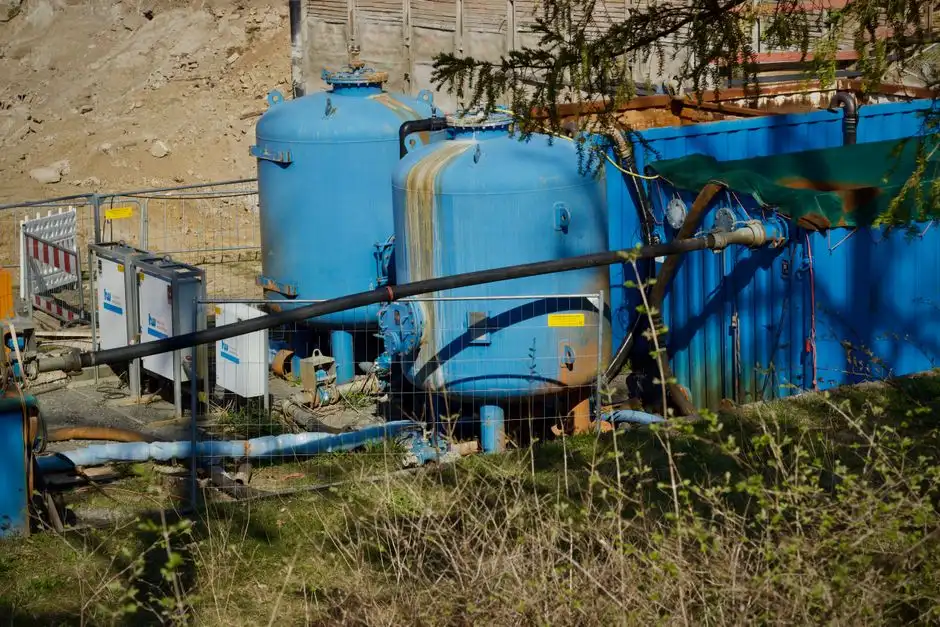
A typical pharmaceutical effluent train looks like this: a rotary mechanical bar screen or equivalent fine screening step removes gross solids, followed by flow equalization to damp batch swings, then the DAF with coagulant and flocculant dosing from an automatic chemical dosing system, then biological treatment — most often a submerged MBR as described in the MBR for pharmaceutical wastewater guide — and finally RO or RO/EDI polishing for water reuse or final discharge. Following this sequence, the DAF serves as the primary protection for downstream membrane fouling.
Two interface points deserve explicit attention in a specification. First, DAF float sludge typically reaches 3–4% dry matter (SIGMADAF), which is thick enough to feed a plate and frame filter press directly for dewatering before disposal — a useful simplification for plants that do not want a separate thickening step. Second, volatile compounds stripped from the wastewater during flotation must be captured and treated if they exceed gaseous emission limits (SIGMADAF); this is a frequent gap in pharmaceutical specifications where VOC or solvent carryover was assumed to stay in the liquid phase. The industrial DAF system at the head of the train is therefore sized not only for hydraulic and mass loading but also for the off-gas treatment it implies.
Pharma-Specific Engineering Questions to Put to a DAF Supplier
The technical material above translates into a short, enforceable buyer-side checklist. Generic vendor curves — 90% SS removal, 20–50% COD reduction (SIGMADAF) — are not a substitute for site-specific data, and the contractual language should reflect that.
- Request jar-test and pilot performance data on the actual pharmaceutical effluent, including the influent variability bands the plant expects; reject any quote that offers only generic 90% / 20–50% curves.
- Confirm saturator-gas configuration: air or nitrogen, with the choice justified against solvent-vapor ignition risk in line with oil-industry DGF practice (Wikipedia).
- Pin the hydraulic and mass loading guarantees at 4–6 m³/m²·h and 3–5 kg/m²·h respectively (SIGMADAF), and verify the recycle pump is sized for 10–40% of design flow at 3–6 bar saturator pressure.
- Confirm construction material compatibility with the CIP chemicals and pH swings typical in API plants, and require at least one reference from an operating pharmaceutical site of comparable throughput.
For a broader engineering spec comparison across industries, the best DAF unit engineering guide covers parameter ranges and decision logic.
Frequently Asked Questions
What removal performance can a DAF realistically deliver on pharmaceutical wastewater?
A DAF can be expected to remove roughly 90% of suspended solids and at least 95% of oils and greases (SIGMADAF). COD reduction is far less predictable: SIGMADAF quotes 20–50%, and Bogacki et al. (2017) measured 11.1–77.7% COD removal across five cosmetic effluent samples on the same hardware with different coagulants. Jar testing on the actual pharmaceutical stream is the only way to bracket the real number for a given site.
How much does a DAF system cost for a pharmaceutical plant?
The supplied research gives parameter ranges and throughput bands (SIGMADAF covers 3 m³/h to more than 1,000 m³/h) but does not include a quotation. Buyers should request itemised pricing for the saturator, recycle pump, skimmer, dosing integration, and the off-gas train implied by solvent-vapor capture, then benchmark against the DAF system cost and pricing guide for order-of-magnitude comparison.
Should the DAF saturator use air or nitrogen for pharma effluent?
Air is the default in standard DAF designs (SIGMADAF; Wikipedia). Where the influent carries solvent vapors, the saturator is switched to nitrogen — the induced gas flotation variant used in oil and gas to avoid ignition risk (Wikipedia). The decision is driven by solvent-vapor monitoring on the actual stream.
What comes after the DAF in a pharmaceutical effluent treatment train?
The DAF is a front-end clarifier, not a stand-alone solution. A typical train continues with a submerged MBR for biological polishing, then RO or RO/EDI for water reuse or final discharge (see the MBR for pharmaceutical wastewater guide). Dissolved organics, salts, and antibiotic activity pass through the DAF and must be addressed by those downstream units.