
Why pretreatment compliance is the gating step for Hayes transportation plants
NPDES permits are the federal instrument the US Environmental Protection Agency uses to set discharge limits and conditions for facilities discharging to waters of the United States, and they are issued by EPA or by states with delegated authority (EPA, epa.gov/npdes/municipal-wastewater). A local publicly owned treatment works (POTW) runs a pretreatment program that adds site-specific numeric limits, monitoring frequency, sampling points, and enforcement teeth. For a Hayes-area transportation plant, the practical sequence in 2026 is: confirm the federal category, confirm the local POTW's local limits, then size the unit-process train to the tighter of the two.
Transportation equipment plants near Hayes generate a pollutant mix that hits several categorical pretreatment concerns: oils and lubricants from machining and stamping, coolants and parts-washer fluids, phosphate-bearing alkaline cleaners, and metal-bearing rinsewater from plating, coating, and subassembly operations. Each of those streams maps to a different limit family (oil and grease, pH, total suspended solids, total metals, sometimes phosphorus), so the unit-process train must be sequenced—equalization, oil and grease removal, pH neutralization, suspended solids reduction, and metal precipitation—rather than treated as one homogeneous waste. The supplied research does not include the exact numeric categorical standards, so the engineer must obtain them from the local POTW's pretreatment ordinance before any vendor meeting; assuming defaults often leads to retrofit costs appearing twelve months after start-up.
The economic exposure runs in two directions: POTW surcharges on exceeded mass loadings, and EPA or state enforcement for any bypass or unpermitted discharge. Both are cheaper to engineer out up front than to litigate after a Notice of Violation, making pretreatment the gating step in a 2026 compliance plan.
The sewer you discharge to shapes the design
EPA identifies two major sewer types in the US: combined sewers, which collect sanitary sewage and stormwater in a single pipe, and separate sanitary sewers, which collect wastewater only and do not provide widespread drainage for precipitation runoff (EPA, epa.gov/npdes/municipal-wastewater). State and local authorities have generally not allowed the construction of new combined sewers since the first half of the 20th century, so a Hayes-area plant connecting to modern collection infrastructure is almost certainly discharging to a separate sanitary sewer (EPA, epa.gov/npdes/municipal-wastewater).
Sanitary sewers are typically built with some allowance for higher flows that occur when excess water enters the collection system during storm events, but that allowance is finite (EPA, epa.gov/npdes/municipal-wastewater). When sanitary sewers are not watertight—due to cracks, faulty seals, or improper connections—they receive large volumes of infiltration and inflow (I/I) during wet weather, which can cause sanitary sewer overflows (SSOs) and operational problems at the wastewater treatment facility (EPA, epa.gov/npdes/municipal-wastewater). For an industrial discharger, any peak flow or slug load pushed into the collection system is a compliance problem at the receiving POTW.
EPA notes that blockages, equipment failures, broken pipes, and vandalism can also cause sewage overflows, and that significant increases in flow at wastewater treatment facilities caused by wet weather conditions can create operational challenges and potentially adversely affect treatment efficiency, reliability, and control of unit process operations (EPA, epa.gov/npdes/municipal-wastewater). The CSO policy encourages municipalities with combined sewers to maximize wet-weather flows to the treatment plant to decrease uncontrolled overflows, which means industrial contributors are scrutinized for peak-flow discipline (EPA, epa.gov/npdes/municipal-wastewater).
| Sewer type | What it carries | Implication for a Hayes industrial discharger |
|---|---|---|
| Combined sewer | Sanitary sewage + stormwater in one pipe | Wet-weather overflows are expected at the collection system; industrial peak flows compete with stormwater for treatment capacity |
| Separate sanitary sewer (modern Hayes-area service) | Wastewater only; limited wet-weather allowance | Peak industrial flow directly risks SSOs and POTW unit-process upsets; on-site equalization is part of compliance, not optional |
Mapping the pollutant mix at a transportation equipment plant
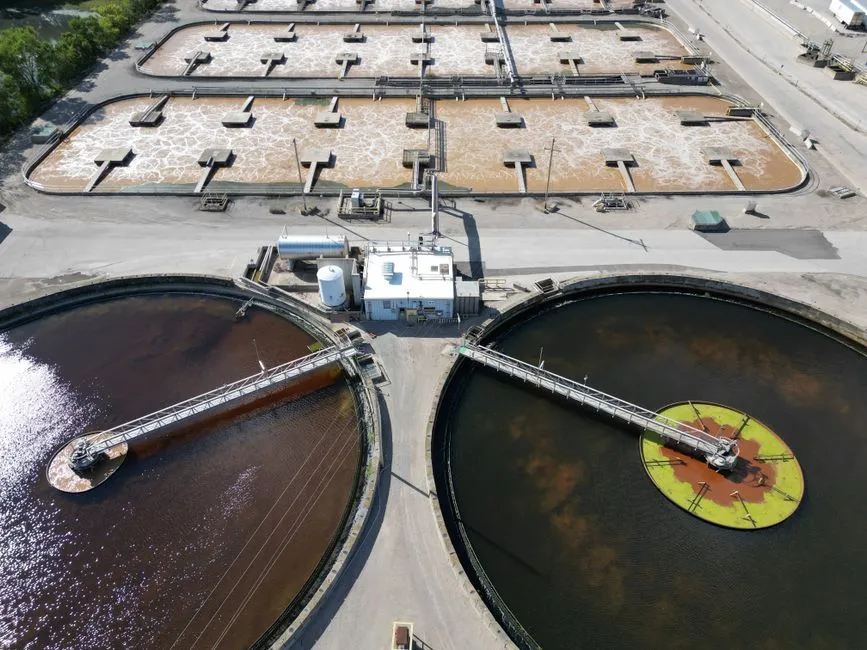
The treatment train is only as defensible as the pollutant inventory behind it. At a vehicle assembly, rail, or aerospace subassembly site, four process families generate the streams that drive design.
Machining, stamping, and parts washing release oils, greases, coolants, and metal fines; these map to oil and grease (O&G) and total suspended solids (TSS) limits, and the emulsified fractions need chemical destabilization before separation. Phosphate cleaners and alkaline degreasers create pH excursions above the typical POTW envelope and contribute nutrient loading, so pH neutralization is mandatory and phosphorus reduction is sometimes required for watersheds under nutrient rules. Metal finishing, plating, and parts coating contribute dissolved metals—typically zinc, nickel, chromium, and lead—which require chemical precipitation and often a polishing filtration step to meet low-level metals limits. Process line start-up, shut-down, and shift-change washdowns create slug loads in both flow and concentration, which is why equalization sits ahead of every chemical and biological step in the train.
The table below provides a process-to-pollutant mapping. Numeric limits must be confirmed with the local POTW pretreatment program before sizing any unit process.
| Plant process | Generated pollutant | Limit family triggered | Treatment unit implied |
|---|---|---|---|
| Machining, stamping, parts washing | Oils, greases, coolants, metal fines | Oil & grease, TSS | DAF, lamella clarifier |
| Phosphate cleaners, alkaline degreasers | High pH, phosphates, surfactants | pH, phosphorus (POTW-dependent) | pH neutralization, chemical precipitation |
| Plating, coating, subassembly rinses | Dissolved zinc, nickel, chromium, lead | Metals (categorical, site-specific) | Precipitation, multi-media filtration |
| Start-up, shut-down, washdowns | Slug flows, concentration spikes | Daily maximum vs. monthly average exceedance | Equalization basin ahead of chemical step |
The pretreatment train: unit processes in the right order
A defensible 2026 train for a Hayes transportation plant follows this sequence. Each step is anchored to a specific unit process and pollutant group, as downstream chemistry depends on upstream separation.
- Coarse screening. A rotary mechanical bar screen at the headworks protects downstream pumps and valves from rags, plastics, and fibrous debris that would otherwise foul chemical dosing pumps and clarifier internals.
- Equalization. Surge and equalization volume dampens batch slug loads from plating lines and washdown cycles and provides a controlled feed to downstream chemical dosing so that coagulant and pH set-points remain stable.
- Oil and grease removal. A dissolved air flotation (DAF) system is the proven workhorse for FOG, free and emulsified oil, and colloidal matter across metalworking and industrial pretreatment applications.
- pH adjustment and chemical precipitation. An automatic chemical dosing system delivers PLC-controlled coagulant, flocculant, pH adjuster, and specialty-chemical doses on a flow-paced basis to hold pH inside the narrow band most POTWs require while precipitating dissolved metals.
- Lamella clarification. A lamella clarifier combines sludge recirculation, flocculation, and inclined-plate separation in a single compact structure for high-rate solids capture.
- Multi-media filtration. Where metals or fine TSS remain close to the limit, a multi-media filter prepares effluent for downstream polishing and reduces SDI.
- Disinfection. UV or chlorine dioxide addresses microbiological limits where the local POTW permit requires them.
The DAF-versus-lamella choice depends on the specific plant requirements. DAF is the better choice when influent FOG and emulsified oil dominate and footprint is tight; lamella clarification is better when the load is mostly settleable TSS with low FOG, and when a high underflow solids concentration simplifies sludge handling. Many Hayes plants run DAF as a primary oil-removal step and lamella as a polishing step downstream of chemical precipitation.
| Train position | Unit process | Pollutant removed | Design driver |
|---|---|---|---|
| 1 | Rotary mechanical bar screen | Rags, plastics, fibrous debris | Downstream equipment protection |
| 2 | Equalization basin | Flow and concentration variability | Slug-load dampening |
| 3 | DAF system | Free and emulsified oil, FOG, colloids | Oil & grease limit, TSS reduction |
| 4 | Automatic chemical dosing system | pH excursion, dissolved metals | pH limit, metals precipitation |
| 5 | Lamella clarifier | Flocculated TSS, metal precipitates | Footprint, underflow solids |
| 6 | Multi-media filter | Fine TSS, residual metals | Discharge polish, reuse prep |
| 7 | Disinfection (UV or ClO₂) | Microbiological indicators | POTW-specific permit requirement |
Sampling, monitoring, and 2026 documentation discipline
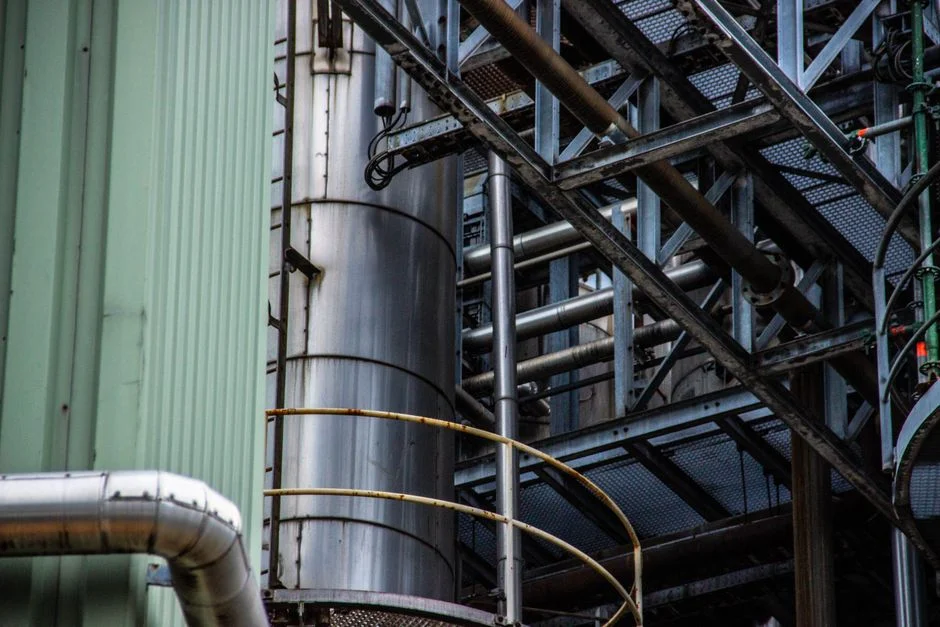
Hardware is only half of pretreatment compliance. EPA names blockages, equipment failures, broken pipes, and vandalism as SSO causes, meaning the monitoring layer must include hydraulic alarms and bypass logging (EPA, epa.gov/npdes/municipal-wastewater). A continuous pH, flow, and conductivity transmitter ahead of the discharge sampling point is the minimum baseline most POTW pretreatment programs expect, with interlocks to the discharge pump to ensure out-of-band pH or flow excursions divert back to equalization.
Composite sampling versus grab sampling is a permit-writing decision: daily maximums are usually enforced with grab or short-window composites, while monthly average limits are typically enforced with 24-hour flow-weighted composites. The local POTW permit sets this cadence, and the engineer must request the sampling and reporting section of the local pretreatment ordinance before specifying the sampler. Record retention must align with the POTW reporting cycle—typically monthly discharge monitoring reports—with immediate notification on any excursion and a written summary of corrective action within the timeframe defined by the permit.
For a 2026 plan, the documentation package should include an SSO prevention plan that ties the EPA hydraulic-risk language to the on-site equalization volume, discharge pump interlocks, and alarm-setpoint philosophy.
Designing for SSO risk and peak-flow resilience in 2026
EPA states that significant increases in flow at wastewater treatment facilities caused by wet weather conditions can create operational challenges and potentially adversely affect treatment efficiency, reliability, and control of unit process operations (EPA, epa.gov/npdes/municipal-wastewater). Peak flow is a compliance issue, and an equalization basin or surge tank on-site provides the operational insurance that protects both the plant and the receiving POTW (EPA, epa.gov/npdes/municipal-wastewater).
A Hayes-area plant should assume a separate sanitary sewer with limited wet-weather allowance and design on-site equalization to hold peak flows rather than push them into the collection system. The equalization volume should be sized against the longest credible batch discharge from the plating line, the washdown cycle, and any fire-system test water. Discharge pumping should be paced to a flow limit negotiated with the POTW rather than sized to the instantaneous peak from the plant.
Sludge handling is the second half of hydraulic-resilient design. A plate and frame filter press dewaters generated sludge across a range of filtration areas, letting the engineer match dewatering capacity to the equalization-to-clarifier mass balance. This prevents a downstream solids problem from manifesting as a POTW surcharge on TSS mass.
Frequently Asked Questions
Which discharge limits apply to a transportation equipment plant near Hayes, US in 2026?
Two layers apply. The federal floor is the EPA NPDES framework, which sets discharge limits and conditions for discharges to waters of the United States (EPA, epa.gov/npdes/municipal-wastewater). On top of that, the local POTW pretreatment program sets site-specific numeric limits, monitoring frequency, and reporting format. The exact numeric limits for a Hayes-area plant must be confirmed with the local POTW before any equipment is ordered.
Is DAF or a lamella clarifier the better oil and grease removal step for a transportation plant?
DAF is the stronger choice when the load is dominated by free and emulsified oil, FOG, and colloidal matter, and when footprint is constrained
Frequently Asked Questions
Which EPA pretreatment discharge limits apply to a transportation equipment plant near Hayes, US in 2026?
Transportation equipment facilities are governed by 40 CFR Part 433, the Metal Finishing Point Source Category. By 2026, plants must meet stringent daily maximum and monthly average limitations for pollutants including Total Toxic Organics (TTO), which is capped at 2.13 mg/L, and specific heavy metals such as Chromium (2.77 mg/L), Copper (3.38 mg/L), Nickel (3.98 mg/L), and Zinc (2.61 mg/L).
In addition to federal standards, plants near Hayes must adhere to local limits set by the Publicly Owned Treatment Works (POTW). These local limits often impose stricter concentrations for Oil and Grease (O&G), typically capped between 100 mg/L and 200 mg/L, and total suspended solids, which are enforced to prevent sewer line blockages and interference with biological treatment processes.
Is DAF or a lamella clarifier the better oil and grease removal step for a transportation equipment plant?
Dissolved Air Flotation (DAF) is generally superior for the removal of emulsified oils and fats common in transportation equipment manufacturing. By utilizing micro-bubbles to float suspended particles to the surface, a DAF system can achieve 90% to 95% removal efficiency for oil and grease, which is essential for meeting the strict discharge requirements imposed by modern pretreatment permits.
While a lamella clarifier is highly effective for removing heavy metal hydroxides and settled solids, it is less efficient for oil removal because free and emulsified oils often have a specific gravity lower than water, causing them to float rather than settle. Consequently, DAF is the standard primary pretreatment step for oily wastewater, whereas lamella clarifiers are typically reserved for the secondary precipitation and clarification stage of the treatment process.
What is a realistic 2026 budget for a 1–50 m³/h pretreatment skid for a transportation plant, and what drives the cost?
For a fully integrated 1–50 m³/h pretreatment skid, a realistic 2026 capital expenditure budget ranges from $250,000 to $1.2 million, depending on the specific flow rate and the complexity of the treatment train. Systems requiring advanced automation, real-time telemetry, and multi-stage chemical precipitation will fall at the higher end of this spectrum.
The primary cost drivers include the selection of materials (304 vs. 316 stainless steel for corrosion resistance), the sophistication of the PLC (Programmable Logic Controller) for chemical dosing optimization, and the inclusion of sludge dewatering equipment like filter presses. Furthermore, the integration of real-time monitoring sensors for pH, turbidity, and metal concentrations significantly impacts the initial procurement cost.
What specifications should a Hayes plant demand from a pretreatment system supplier in 2026?
Facilities should demand a system that guarantees compliance with 40 CFR Part 433 and local POTW ordinances, supported by a performance bond. Specifications should include automated chemical dosing based on real-time influent monitoring, a minimum of 24-hour equalization capacity, and redundant pumps for critical process stages to prevent downtime during maintenance.
Additionally, the supplier must provide a comprehensive data logging system that records pH, flow, and chemical usage in a format compatible with local regulatory reporting requirements. The contract should also specify a clear maintenance schedule, the inclusion of remote diagnostic capabilities, and a commitment to providing training for plant personnel to ensure long-term operational stability.
What is the most common reason plants near Hayes get a Notice of Violation from the local POTW in 2026?
The most frequent cause for a Notice of Violation (NOV) in 2026 is the exceedance of pH limits, often caused by inconsistent chemical dosing or sensor drift in the neutralization tank. Because many local sewer use ordinances require discharge to remain within a strict 5.0 to 11.0 or 6.0 to 9.0 range, minor calibration errors in pH probes can result in immediate non-compliance.
Secondary causes include the failure to properly manage sludge accumulation, leading to the carryover of high concentrations of heavy metals into the final effluent, and the batch dumping of high-strength cleaning solutions or coolants during off-shift hours. These "slug loads" overwhelm the equalization capacity of the pretreatment system, causing the plant to discharge pollutants that exceed the mass-loading limits set by the local utility.