Why Rio de Janeiro Projects Need a Different Sizing Logic
Rio de Janeiro's tropical climate keeps sewage inside the 20–30 °C operating window that the Pure Aqua MBR-C containerized system is designed for, so biological kinetics stay favourable for most of the year. The calculation changes due to the diurnal pattern: residential towers, hotels and worker camps on or near the city's hills generate sharp morning and evening surges, and informal sewer connections add unpredictable solids loads. A generic online sizing calculator that assumes a temperate European or North American flow profile will under-size the equalization and membrane area for a Rio site.
Discharge targets are also project-specific. Camp and condominium projects in Rio often release treated effluent to freshwater bodies, the Guanabara Bay watershed, or coastal waters, all of which fall under CONAMA Resolution 430/2011 and its 5.0–9.0 pH window (per the Brazil CONAMA 430/2011 compliance guide). Containerization matters because many Rio sites have limited laydown area and short construction windows; MENA-Water notes that compact MBR package plants integrate all tanks inside a standard ISO container for plug-and-play delivery. Defining the design population up front — residents, shift workers, seasonal guests — lets the same calculation chain be re-run as the project grows.
Step 1 — Convert Population into Average and Peak Daily Flow
Average dry-weather flow is the primary metric for every Rio datasheet. The Pure Aqua MBR-C reference basis is 50 US gallons per capita per day; using the IDA Water Security Handbook 2019 conversion of 1 m³ = 264.2 US gallons, that is about 0.189 m³, or 189 L per person per day. For a 200-person worker camp, the average daily flow is therefore 200 × 189 L = 37,800 L/day, or 37.8 m³/day.
That average must be converted into a peak number before the system is sized. Rio residential and camp patterns typically run a peak factor of 2.0–2.5 to capture the morning shower, meal and shift-change surges; the chosen value should be documented in the design basis and cross-checked with site water-meter data when available. For greenfield camps where no metered data exists, the peak factor should be requested from the local water utility or the camp operator, since a default of 2.0 may underestimate a kitchen-driven peak from a 600-worker construction camp. Always size the drum screen, feed pump and membrane train against the peak flow, not the average.
Step 2 — Estimate BOD and Nitrogen Load on the Bioreactor
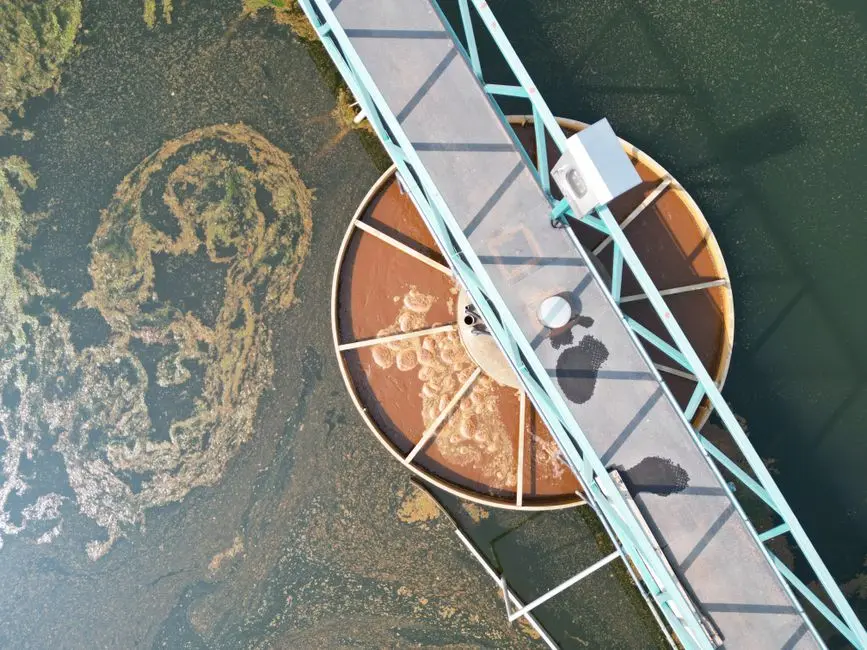
Flow alone does not size the aeration tank. Brazilian residential sewage is commonly reported in the 200–400 mg/L BOD and 40–80 mg/L TKN range, but a site-specific wastewater characterization should be requested because food waste from camp kitchens, garbage grinders, or holiday-season occupancy can push BOD well above the residential average. The organic load in kg/day is flow (m³/day) × BOD (mg/L) ÷ 1000; for the 37.8 m³/day camp example at 300 mg/L BOD, the load is about 11.3 kg BOD/day.
This figure determines the food-to-microorganism (F/M) ratio and the mixed-liquor suspended solids (MLSS) target. Containerized MBR systems exploit high MLSS in the 8,000–12,000 mg/L range, which is one of the design advantages over conventional activated sludge and is enabled by the 0.04 µm ultrafiltration barrier retaining biomass inside the tank. If CONAMA 430/2011 total nitrogen limits apply, plan for an anoxic denitrification zone upstream of the aeration tank; the Pure Aqua MBR-C documentation lists an anoxic zone as an available option for NO₃ removal.
Step 3 — Translate Hydraulic Load into Membrane Area
Membrane area is the primary cost driver in any MBR, making the conversion from hydraulic load to square metres of membrane critical. The Pure Aqua MBR-C uses submerged hollow-fiber PVDF modules with a nominal pore size of 0.04 µm, mounted in a frame with coarse-bubble diffusers for air scouring. MENA-Water reports that the same ultrafiltration step reduces virus and bacteria by 99.9999% — a citable figure when the client questions disinfection performance.
For Rio projects, the DF-series PVDF flat-sheet MBR modules are a 0.1 µm alternative that are individually replaceable, simplifying maintenance on remote sites. Apply a design flux of 15–25 L/m²·h for municipal-strength sewage at 20–30 °C, then verify with the membrane supplier's flux curve rather than relying on a generic number. For the 37.8 m³/day camp example (≈1,575 L/h average), a flux of 20 L/m²·h implies roughly 79 m² of installed membrane area. Round up to the next available module size and confirm the membrane vendor's recommended net flux at the design temperature before locking the bill of materials.
Step 4 — Select Container Size and Skid Layout
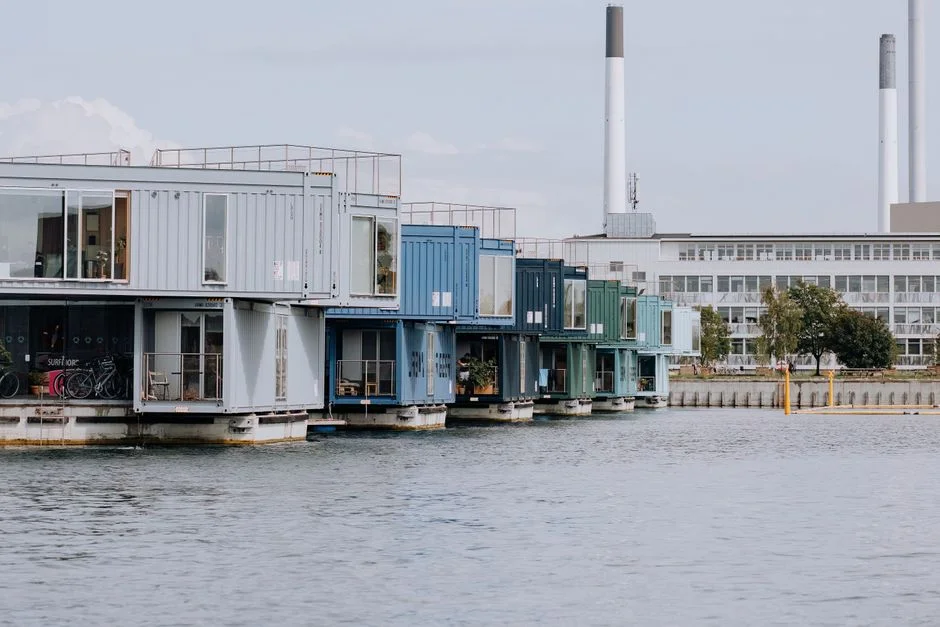
Container selection influences transport, crane and site-work costs. The Pure Aqua MBR-C ships in either 20' or 40' high-cube containers, with insulated walls, zero water leakage, and a seaworthy structural design — important for the road and short-sea legs into Rio de Janeiro. MENA-Water documents more than 1,200 m³/day of MBR capacity inside a single 40-ft ISO container, confirming that even medium-sized residential districts can be served by one unit, with space left for blowers, control panel and chemical dosing skids.
For projects under about 50 m³/day — including the 37.8 m³/day camp example — a single 20' HC MBR with a pre-treatment drum screen and UV disinfection downstream is the standard selection. If the camp will be relocated after the construction phase, request the I-Version (fully integrated skid) rather than the U-Version (underground buffering tanks) so the unit can be lifted onto a lowboy and redeployed. HydropureWater's HydropureWater integrated MBR membrane bioreactor skid line is built for that mobile use case. Confirm with the vendor that the structural certification covers both road and short-sea transport on the Santos–Rio corridor.
Step 5 — Verify Effluent Against CONAMA 430/2011
Effluent compliance completes the sizing chain. CONAMA Resolution 430/2011 sets the federal discharge envelope for Rio projects, with pH constrained to 5.0–9.0 (per the Brazil CONAMA 430/2011 compliance guide) and its own maximum limits for BOD, total suspended solids, total nitrogen, and oils & greases. Containerized MBR effluent typically meets BOD below 5 mg/L and TSS below 1 mg/L because of the 0.04–0.1 µm ultrafiltration barrier, so the biological numbers are rarely the bottleneck — pH control and nitrogen removal are.
Add a UV sterilizer downstream of the MBR tank for pathogen compliance; the HydropureWater UV sterilizer line includes open-channel and self-cleaning units suitable for MBR permeate. For sites discharging into sensitive coastal or lagoon waters, add an online pH probe and a chlorine dioxide polishing step sized with the automatic chemical dosing system catalog, so the operator can prove compliance continuously rather than rely on grab samples. The same logic that sizes the MBR should size the post-treatment polish train, otherwise the membrane alone will not satisfy CONAMA 430/2011.
Consolidated Sizing Parameters for a Rio MBR Container
The table below is the single page the engineer can photograph and paste into a datasheet or RFQ package. Each row carries the source it came from; missing inputs — for example a site-specific peak factor or BOD characterization — are flagged so the engineer knows what to request before the calculation is locked.
| Parameter | Value or range | Source / input to confirm |
|---|---|---|
| Per-capita flow | ~50 US gpd per capita (≈189 L/person/day) | Pure Aqua MBR-C reference basis; convert with IDA 2019 (1 m³ = 264.2 US gal) |
| Peak factor | 2.0–2.5 for residential and camp patterns | Confirm with local water utility for brownfield sites |
| Membrane pore size | 0.04 µm (Pure Aqua hollow-fiber) or 0.1 µm (DF flat-sheet) | Pure Aqua MBR-C; HydropureWater DF-series catalog |
| Design flux | 15–25 L/m²·h at 20–30 °C | Verify with the membrane vendor's flux curve |
| Container envelope | 20' HC for ≤50 m³/day; 40' HC up to 1,200 m³/day | MENA-Water containerized MBR data |
| Effluent target | CONAMA 430/2011; pH 5.0–9.0; BOD and TSS within MBR + UV envelope | Brazil CONAMA 430/2011 compliance guide |
Frequently Asked Questions
How many containers do I need for a 200-person camp in Rio?
For a 200-person camp, the 37.8 m³/day average flow and roughly 79 m² of membrane area at 20 L/m²·h both fit inside a single 20' high-cube container with a pre-treatment drum screen, biological tank and membrane cassette. If the camp adds a kitchen block or 24-hour shift workers, the peak factor should be re-checked with the operator before specifying the unit, and the buyer should request the I-Version skid if the unit will be relocated.
What is the typical lead time, and which documents should the supplier provide?
Containerized MBR units are typically built and shipped in weeks, but buyers should request a written lead time in calendar days together with the factory acceptance test (FAT) report, the membrane warranty terms, the electrical and instrumentation drawings, and a CONAMA 430/2011 compliance check based on the influent characterization the buyer supplies. If any of those documents are missing from the quotation, treat it as a red flag during bid comparison.
How do I confirm CONAMA 430/2011 compliance before delivery?
Ask the vendor for a performance guarantee covering pH 5.0–9.0, BOD, TSS, total nitrogen and oils & greases, tied to the design influent values the buyer provides. Request the UV and chemical dosing skids as part of the same package so the polishing step is warranty-covered, and require the operator manual to list the on-line pH probe and dosing setpoints needed to keep the unit inside the CONAMA envelope throughout the duty cycle.
How should I compare bids between containerized MBR vendors?
Normalize every bid to the same per-capita flow, peak factor and influent BOD, then compare membrane area, module type (hollow-fiber versus flat-sheet), flux at the design temperature, container rating, and the scope of pre- and post-treatment included. Cheaper quotations that omit the drum screen, UV unit or chemical dosing skid should be re-priced on a like-for-like basis before ranking, otherwise the apparent low bid will not meet CONAMA 430/2011 at the discharge point.