Why Pasadena Resins and Organic Chemicals Plants Sit Inside a Categorical Pretreatment Framework
A Pasadena facility manufacturing plastics materials, synthetic resins, nonvulcanizable elastomers, or industrial organic chemicals falls under a federal categorical pretreatment framework before any local sewer-use ordinance is applied. The Organic Chemicals, Plastics and Synthetic Fibers (OCPSF) Effluent Guidelines and Standards are codified at 40 CFR Part 414, were promulgated in 1987, and were amended in 1989, 1990, 1992, and 1993 (EPA, epa.gov/eg/organic-chemicals-plastics-and-synthetic-fibers-effluent-guidelines). The EPA states that the regulation covers wastewater discharges from more than 1,000 chemical facilities. The OCPSF rule applies to process wastewater from the manufacture of products in seven subcategories: rayon fibers, other fibers, thermoplastic resins, thermosetting resins, commodity organic chemicals, bulk organic chemicals, and specialty organic chemicals (EPA, epa.gov).
The EPA lists the SIC groups associated with OCPSF coverage, including SIC 2821 (plastics materials, synthetic resins, and nonvulcanizable elastomers) and SIC 2869 (industrial organic chemicals, not elsewhere classified). The agency explicitly states that the SIC listing is a guide and that precise coverage is defined in the applicability sections of 40 CFR Part 414, so a pretreatment coordinator should confirm applicability in the rule text rather than rely on the SIC index alone. Pasadena industrial users discharge to the Joint Outfall System operated by the Sanitation Districts of Los Angeles County, which acts as the Control Authority with its own local limits; the actual numeric values must be obtained from that Control Authority.
The table below maps the seven OCPSF subcategories to representative SIC groups so a pretreatment coordinator can screen a site before opening the rule text.
| OCPSF subcategory (40 CFR Part 414) | Representative SIC groups (guide, per EPA) | Pasadena-area product examples to screen |
|---|---|---|
| Thermoplastic resins | SIC 2821 | Polyethylene, polypropylene, polystyrene, PVC, PET |
| Thermosetting resins | SIC 2821 | Epoxy, phenolic, urethane, melamine |
| Commodity organic chemicals | SIC 2869 | Solvents, plasticizers, intermediates produced at commodity scale |
| Bulk organic chemicals | SIC 2869 | Specialty intermediates, higher-volume fine chemicals |
| Specialty organic chemicals | SIC 2869 | Adhesives, coatings chemicals, smaller-volume organics |
| Rayon fibers | SIC 2823 / 2824 (per EPA guide) | Regenerated cellulose fiber lines |
| Other fibers | SIC 2824 (per EPA guide) | Synthetic staple, filament, and noncellulosic fiber lines |
For broader context on equipment selection, the DAF vs clarifier for plastics and rubber wastewater guide walks through a side-by-side comparison.
From Federal Categorical Limits to Local Sewer Discharge Limits: How the Two Layers Stack
OCPSF Effluent Guidelines and Standards are incorporated into NPDES permits for direct dischargers and into control mechanisms for indirect dischargers through the EPA Pretreatment Program (EPA, epa.gov). An indirect discharger is a facility that discharges pollutants to a publicly owned treatment works. For a Pasadena indirect discharger, three documents are stacked and must all be met: (1) the applicable OCPSF subcategory limits in 40 CFR Part 414, (2) the local sewer-use ordinance and discharge limits set by the Sanitation Districts of Los Angeles County, and (3) the individual wastewater discharge permit issued to the facility. Meeting the EPA categorical numbers alone is not sufficient when local limits are tighter or cover additional parameters.
PFAS manufacturers and formulators are currently regulated under the OCPSF category, and the EPA is publishing an advance notice of proposed rulemaking to gather data that may lead to PFAS-specific limits for this industrial category (EPA, epa.gov). Where the supplied research does not contain a numeric limit, the parameter families typically controlled for OCPSF indirect discharges are total suspended solids (TSS), oil and grease (O&G), pH, total metals, residual organics, and — for any facility that manufactures or formulates PFAS — the PFAS analyte list referenced in the February 2019 EPA PFAS Action Plan. The actual numeric values for the categorical subcategory and the local limits must be pulled from 40 CFR Part 414 and from the Control Authority, respectively, and should be written into a site-specific compliance matrix.
The Typical Unit-Operation Train for Meeting OCPSF Pretreatment Limits
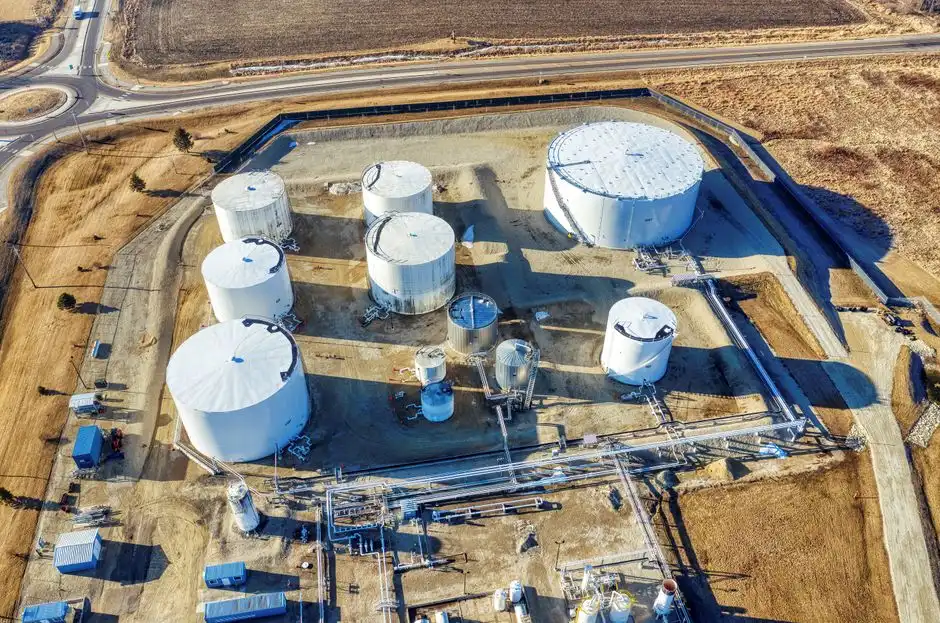
The defensible unit-operation train for an OCPSF indirect discharger is a source-segregated, equalized train that targets the parameter families named in the categorical and local limits. The steps below appear in the order they typically appear on a process flow diagram. Numeric removal efficiencies for OCPSF wastewater must be confirmed against the site's own influent characterization.
- Source control and segregation. Keep process wastewater streams (resin washwater, monomer-bearing streams, solvent-bearing streams) separate from non-contact cooling, boiler blowdown, and sanitary streams so that high-strength flows receive dedicated treatment before blending. A rotary mechanical bar screen on the combined waste stream protects downstream equipment from rags and large debris.
- Equalization and pH adjustment. Equalize batch discharges and adjust pH to the range required by the local limits before downstream biological or physical-chemical treatment. An automatic chemical dosing system delivers coagulants, flocculants, pH adjusters, and specialty chemicals via PLC-controlled injection.
- Suspended solids and oil and grease removal. A dissolved air flotation system removes suspended solids, FOG, oil and grease, and colloidal matter using micro-bubble technology with automatic skimming; the cited HydropureWater DAF specification lists capacities of 4–300 m³/h.
- Solids polishing. A multi-media filter polishes DAF effluent and brings SDI values into a range suitable for any downstream membrane or reuse step, protecting subsequent treatment stages.
- Biological treatment for residual organics. An MBR membrane bioreactor combines activated sludge with submerged PVDF membrane filtration to produce near-reuse-quality effluent; the cited HydropureWater MBR specification lists a footprint that is 60% smaller than conventional systems and capacities from 10 to 2,000 m³/day.
- Sludge handling. Dewater the combined DAF float and biological waste activated sludge with a plate and frame filter press sized to the dry-solids load generated by the upstream train; the cited HydropureWater plate and frame filter press specification is the basis for selection.
The table below summarizes the unit-operation train, the parameter family each step targets, and the equipment used. Site-specific values must be confirmed during a treatability study.
| Step | Parameter family targeted | Equipment | Capacity (per cited spec) | Removal efficiency |
|---|---|---|---|---|
| Bar screening | Rags, large debris | Rotary mechanical bar screen (GX series) | Per selection | Confirm during treatability |
| Equalization / pH adjustment | pH excursions, batch slug load | Equalization basin + automatic chemical dosing system | Per PLC recipe | Confirm during treatability |
| Suspended solids & O&G removal | TSS, FOG, oil and grease, colloids | Dissolved air flotation (DAF) system | 4–300 m³/h (per cited spec) | Confirm during treatability |
| Solids polishing | Carryover TSS, SDI control | Multi-media filter | Per selection | Confirm during treatability |
| Biological treatment | Residual organics, BOD/COD | MBR membrane bioreactor (PVDF) | 10–2,000 m³/day (per cited spec) | Confirm during treatability |
| Sludge dewatering | Combined float + WAS volume | Plate and frame filter press | Per dry-solids load | Confirm during treatability |
For a process-level discussion of downstream reuse and recovery, the reverse osmosis for wastewater reuse 2026 guide covers how RO sits downstream of an MBR train.
Monitoring, Sampling, and Self-Reporting That the Control Authority Expects
OCPSF categorical limits are enforced through the EPA Pretreatment Program, which means the Control Authority issues an individual permit, sets monitoring requirements, and conducts compliance inspections (EPA, epa.gov). The minimum monitoring baseline a Pasadena indirect discharger should expect is a chain-of-custody 24-hour composite sampler on the discharge line to the sanitary sewer, plus an automatic flow-weighted composite sampler on the process wastewater streams feeding the treatment train. The two samplers together let the pretreatment coordinator demonstrate influent load reduction, identify which process stream drove a non-compliance event, and respond to the Control Authority's data requests during an inspection.
Sampling parameter panels for OCPSF indirect discharges typically include TSS, O&G, pH, temperature, total metals, residual organics, and — for any facility that manufactures or formulates PFAS — the PFAS analyte list referenced in the February 2019 EPA PFAS Action Plan (EPA, epa.gov). The DAF and MBR systems specified earlier include PLC-based monitoring that can feed flow, pH, turbidity, and differential pressure data into the same SCADA platform that supports the discharge sampling program, so a single audit trail can be produced from the PLC historian.
Records to retain include chain-of-custody forms, calibration logs for flow meters and pH probes, chemical dosing logs, sludge manifests, and any non-compliance notifications, typically for at least three years. A pretreatment coordinator who can produce a complete, time-stamped record on demand avoids the costliest enforcement actions, because the Control Authority's first question during a surprise inspection is, "Show me the data for the last upset."
For parallel reading on how a different categorical industry manages the same monitoring discipline, the industrial inorganic chemicals plants near Middlesex 2026 pretreatment guide covers the equivalent record-keeping chain under 40 CFR Part 415.
Frequently Asked Questions
How does a Pasadena plant confirm it actually falls under 40 CFR Part 414?
Open the EPA OCPSF page (epa.gov/eg/organic-chemicals-plastics-and-synthetic-fibers-effluent-guidelines) and confirm the SIC guide and the seven subcategories, then open the applicability section of 40 CFR Part 414 itself. The EPA notes that the SIC listing is a guide and the rule text defines precise coverage. A pretreatment coordinator should also confirm the discharge path with the Sanitation Districts of Los Angeles County, because the Control Authority's own sewer-use ordinance binds the facility.
What is the typical capital and operating cost of a treatment train for an OCPSF indirect discharger near Pasadena?
The supplied research does not contain a capital cost, operating cost, or price-per-m³ figure for an OCPSF pretreatment train. The next step is to request a site-specific budgetary quotation from an equipment integrator and provide them with measured flow (m³/h), pollutant concentrations for the parameter families named in the categorical and local limits, and the local discharge pH range, so the integrator can size the equalization basin, DAF, MBR, and plate and frame filter press against your actual hydraulic and pollutant load.
How does a pretreatment coordinator choose the right supplier and what is the typical lead time?
The supplied research does not contain a supplier lead time, so this is framed