Why Kuala Lumpur Is Reopening the Wastewater Question in 2026
Water stress in Malaysia is no longer a Johor-only story. As of 2026, Bridge Data Centres operates or is developing six data-centre sites across Malaysia, with a planned 16 MW building at its MY03 site in Kuala Lumpur's Mranti Park, putting the Klang Valley on the same build trajectory as southern Johor (Datacenterdynamics, 2026). The breakneck pace of data-centre growth is straining existing water resources even outside Johor, and investors in some Malaysian states have been asked to postpone water-cooled expansion projects, a signal that any 2026 KL spec must treat water as a constrained input, not a free utility (Clearly Tech, 2026). AirTrunk and DayOne have made similar wastewater-reuse announcements in 2026, meaning the Bridge DC MY07 model is the leading edge of an industry pattern (Clearly Tech, 2026).
No supplied source quantifies KL-specific potable-water scarcity. Before quoting a reuse percentage in a 2026 design basis, request the latest reserve margin and per-sector allocation from the local water authority, then size the train around that figure rather than around a Johor benchmark. Pair that number with a current Department of Environment (DOE) discharge consent template, since neither the Johor articles nor the supplied research provides a KL-specific limit, and a 2026 spec written without both inputs will fail at the approval stage.
Two Streams, Not One: UPW Wastewater vs Data-Hall Cooling Water
The most common 2026 mistake in Malaysian fab and hall planning is to specify one train for two fundamentally different waste streams. The head of Bridge DC's reclamation plant previously worked in the semiconductor industry, where water-quality standards are far higher than for data-hall cooling, which is why any spec should treat fab and hall streams as separate design cases (Clearly Tech, 2026). On the data-hall side, cooling-tower blowdown carries dissolved minerals, scale inhibitors and biocides; reclaimed water from a membrane bioreactor (MBR) plus reverse osmosis (RO) train is reported to have lower conductivity, which raises the cooling-tower cycle of concentration and lowers make-up water demand (Clearly Tech, 2026).
On the fab side, UPW reject streams include RO/EDI concentrate, CMP slurry, acid/alkali rinses and fluoride-bearing waste. Treat these as separate design cases and obtain a stream-by-stream characterisation, including flow, pH, conductivity, fluoride, silica, and total organic carbon, before sizing any unit operation. Bridge DC's MY07 plant can switch between sewage-treatment-plant effluent, rainwater, and surface water, a flexibility that is more relevant to a KL data-hall, whose waste is mainly cooling-derived, than to a fab, whose waste is process-chemistry-driven (Clearly Tech, 2026). The bridge between the two is reuse, not convergence: a fab can treat UPW reject through a dedicated train, then blend with reclaimed cooling-side water for non-UPW uses, but the two streams should never share a single equalisation tank.
The 2026 Treatment Train: From Oxidation Tank to Multi-Pass RO
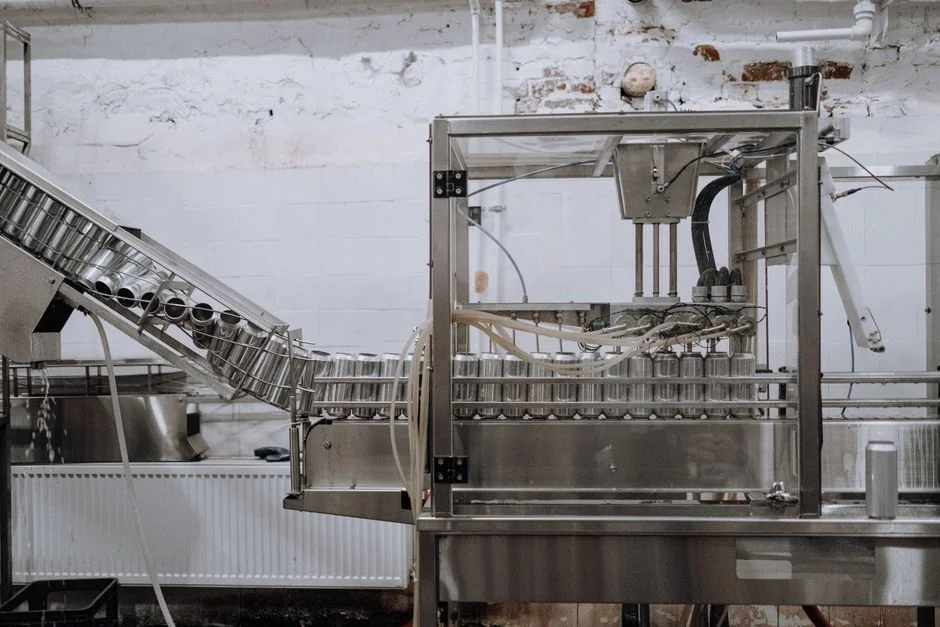
The unit operations at the Bridge Data Centres MY07 plant in Johor provide a defensible starting P&ID for KL planners. The sequence, as documented in the 2026 Clearly Tech site visit, runs as follows:
- Incoming treated wastewater from a sewage treatment plant enters the train, with metal screens first removing larger sediments (Clearly Tech, 2026).
- An oxidation tank and an anoxic tank use bacteria to break down organic matter and remove nitrogen, providing the biological backbone of the train (Clearly Tech, 2026).
- A membrane bioreactor applies ultra-fine membrane filtration to strip out suspended solids, bacteria, and some pathogens, packaged by HydropureWater as an integrated MBR system.
- A fibre filter polishes remaining fine impurities before the water enters reverse osmosis, which uses high pressure to force water through an extremely fine membrane and remove dissolved and microscopic contaminants (Clearly Tech, 2026).
- Reverse osmosis is run for up to three passes where feed quality swings, before the product water goes to a temporary storage tank and onward to the cooling loop (Clearly Tech, 2026).
- MBR and RO membranes are cleaned in place, with service life reported as 'measured in years' rather than a single replacement cycle (Clearly Tech, 2026).
The supplied research does not state whether a single-pass RO would meet semiconductor UPW feed quality in 2026; that is a question to put to the RO vendor with a documented feed analysis in hand. The same industrial RO system that closes the MY07 train is the workhorse a KL fab or hall should benchmark against.
Recovery, Energy and Footprint: Why MBR + RO Beats Plain UF
Water recovery is the primary metric that decides between competing train architectures for buyer-side engineers. Bridge DC's MY07 plant uses both MBR and RO, which gives it a water recovery rate of over 85%, meaning less than 15% of incoming treated wastewater is discarded (Clearly Tech, 2026). A simple UF system, by comparison, has a much lower recovery rate of around 40–50% in the same source (Clearly Tech, 2026). The reclaimed water also has lower conductivity, which raises the cooling-tower cycle of concentration and improves water-usage effectiveness on the data-hall side (Clearly Tech, 2026).
| Parameter | MBR + RO train (MY07, Bridge DC) | Simple UF system | Source |
|---|---|---|---|
| Water recovery rate | Over 85% | Around 40–50% | Clearly Tech, 2026 |
| Feed sources accepted | STP effluent, rainwater, surface water | Not stated in supplied research | Clearly Tech, 2026 |
| Conductivity of product vs potable | Lower than source feed, supporting higher COC | Not stated in supplied research | Clearly Tech, 2026 |
| Membrane service life | Cleaned in place; 'measured in years' | Not stated in supplied research | Clearly Tech, 2026 |
| Energy use (kWh per m³) | Not given in supplied research; request vendor model | Not given in supplied research | — |
The supplied research does not give a KL-specific energy figure in kWh per cubic metre; request a vendor energy model for your actual feed before committing. Closing the gap on COD and suspended solids is also where the MBR step earns its place, since the RO membranes downstream are only as clean as the MBR effluent feeding them.
From Johor to KL: Translating the MY07 Playbook to a Kuala Lumpur Site
Dropping the Johor train into KL changes three factors a spec writer must address. First, MY07 sits inside the compound of a 200 MW data-centre campus, which is why Bridge DC can amortise the reclamation plant's capex over a single anchor tenant; a KL fab or hall with a smaller footprint needs to determine whether a modular, shared-plant arrangement with a neighbouring operator is the realistic 2026 path (Clearly Tech, 2026).
Second, MY07 sources non-potable treated effluent from sewage treatment plants run by Johor Special Water Sdn Bhd (JSW); the equivalent KL arrangement needs to be negotiated with the local sewerage operator. Third, Bridge DC CEO Eric Fan states the company designs for a 20-year lifecycle and plans to scale its water-recycling practice across Malaysia, India, Thailand and beyond, a direction KL planners can cite when seeking management sign-off (Clearly Tech, 2026).
The supplied research does not quote a KL discharge consent template. Before finalising a reuse-versus-discharge split, request the current Indah Water Konsortium or state DOE discharge standard, and check whether reclaimed water destined for cooling-tower make-up counts as industrial reuse under the same instrument. For a complementary Asia-Pacific reference, the Nagoya semiconductor and data-hall wastewater guide shows how a mature semiconductor cluster handles the same two-stream problem under a different consent regime.
Choosing a 2026 Supplier: What to Ask Before You Sign
A vendor-selection checklist provides the necessary deliverables for a 2026 procurement meeting. Each item below is grounded in the supplied research.
- Ask any bidder to demonstrate that their MBR + RO combination can sustain the over-85% recovery that the MY07 plant reports on your specific feed, not on a generic effluent data sheet (Clearly Tech, 2026).
- Confirm that the offered RO can be configured for up to three passes if the feed swings to surface water or rainwater (Clearly Tech, 2026).
- Request documented membrane-cleaning regimes; MBR and RO membranes at MY07 are cleaned in place and last 'years' rather than months (Clearly Tech, 2026).
- Ask for a written statement on the discharge consent the supplier assumes, since the supplied research does not name a specific KL or Malaysian national limit.
- Put two questions to every vendor: who supplies the RO and UF membrane elements, and do they back the train with an O&M SLA covering the 20-year asset life Bridge DC plans around (Clearly Tech, 2026)?
Spare-parts strategy is often overlooked. Confirm the supplier stocks the valves, media and replacement cartridges locally, because a 12-week membrane shipment from overseas will turn a 20-year lifecycle into a 20-year promise with gaps. Tie the SLA, the membrane source, and the local spares commitment into one contract.
Frequently Asked Questions
What does a MBR + RO wastewater train cost in Kuala Lumpur in 2026?
The supplied research does not quote a 2026 capex or opex figure for a KL MBR + RO train. Request a budget-range quotation from at least two vendors, broken down by unit operation, membrane replacement schedule, and energy draw, then validate the energy line against your own feed analysis. The only reference point the supplied research supports is the MY07 over-85% recovery benchmark, which is a performance target, not a price (Clearly Tech, 2026).
Which KL or Malaysian discharge consent applies to a fab or data-hall wastewater reuse plant?
The supplied research does not name a specific KL or Malaysian national discharge limit. Request the current DOE Malaysia discharge consent template from your state DOE office, and confirm with Indah Water Konsortium whether the sewerage operator accepts reclaimed water for industrial reuse. Treat the consent document as a design input, not a post-spec formality.
How long does delivery and installation take for an industrial RO system in Malaysia?
The supplied research does not state a lead time for RO or MBR systems in Malaysia. Ask each bidder for a written delivery, installation and commissioning schedule tied to a specific membrane source, and confirm whether local content or ATIGA rules affect the membrane country of origin. A vendor that cannot name the membrane maker and the port of entry is not yet ready to be the long-term O&M partner a 20-year asset requires (Clearly Tech, 2026).
Can a single-pass RO meet UPW feed quality for a Malaysian semiconductor fab?
The supplied research does not state whether a single-pass RO would meet semiconductor UPW feed quality in 2026; the MY07 plant uses up to three passes, which is the only quantitative benchmark in the source material (Clearly Tech, 2026). Put the question to the RO vendor with your actual feed characterisation in hand, and size the polishing train for the worst-case feed swing. For broader specs and a 2026 decision framework, the auto-dosing engineering guide covers the upstream chemistry that decides whether the RO can hold its