What 'Modular Wastewater Treatment' Actually Means in 2026
A modular wastewater treatment system in 2026 is defined by its delivery model, not by the chemistry inside it. Packaged plants arrive as factory-built, skid-assembled units (Aquatech's BioMOD™ is the cited example, covering EGSB and MBR process trains per the Hella Water 2026 round-up). Containerised plants are built inside ISO frame containers so they can be shipped, stacked, and commissioned on site with minimal civils (ClearFox positions its industrial laundry line this way, per clearfox.com). Skid-mounted systems are process skids (DAF, MBR, RO, dosing) that the buyer or EPC integrates into a larger treatment train, often alongside civil basins.
Inside these delivery envelopes, vendors will typically propose one of four process trains: MBR for solids separation and high effluent quality; SBR for batch-operated biological treatment with a small footprint; MBBR for moving-bed biofilm reactors that tolerate load swings; and EGSB as a high-rate anaerobic step for high-strength influents. Optional UF or RO polish is added when the discharge limit or reuse target demands it. The Hella Water 2026 round-up also notes that modular systems simplify operations and require minimal maintenance, making them ideal for industries with fluctuating demand.
The term "modular" carries no discharge guarantee. The underlying treatment physics, influent characterisation, and target contaminants (COD, BOD₅, suspended solids, surfactants, fibres, FOG, ammonia, heavy metals) still drive sizing, energy, and compliance. A buyer who treats "modular" as a proxy for compliant effluent will overpay for a delivery format and under-specify the process.
How the Top Modular Wastewater Treatment Providers Differentiate
Provider differentiation in 2026 clusters around four categories, and recognising them early prevents apples-to-oranges comparisons on price.
First, packaged WWTP specialists such as Aquatech offer factory-built systems spanning EGSB and MBR under the BioMOD™ product line, positioned for modular and scalable water treatment system options that adapt to changing needs and integrated into existing municipal systems to meet growing demand (Hella Water 2026).
Second, modular containerised specialists such as ClearFox deliver turnkey, containerised plants tuned to specific industrial duties. Their stated laundry track record is the reduction of surfactants, fibres, COD, BOD₅ and suspended solids at laundries across Europe (clearfox.com).
Third, generalist EPC OEMs and regional packagers appear in the 2026 market as bundled providers that offer installation, maintenance, and consumables rather than proprietary process IP (Hella Water 2026). They typically supply custom water treatment options across industrial, municipal, and residential applications.
Fourth, specialist component vendors (membranes, DAF, dosing, sludge dewatering) supply into modular plants instead of delivering the full packaged WWTP. This is the right category when the buyer wants to assemble a modular train from best-in-class sub-skids, for example a HydropureWater DAF system upstream of a membrane stage. The table below summarises how these four categories sit against each other on the criteria a buyer uses to build a shortlist.
| Provider category | Process train | Delivery model | Stated 2026 strength | Watchpoint for the buyer |
|---|---|---|---|---|
| Packaged WWTP specialist (e.g. Aquatech BioMOD™) | EGSB + MBR | Packaged, skid-assembled | Integration into existing municipal systems; staged capacity growth (Hella Water 2026) | Confirm anaerobe robustness on your specific influent; verify biogas handling on sites without existing gas infrastructure |
| Modular containerised specialist (e.g. ClearFox) | Tuned to laundry duty | Containerised | Documented removal of surfactants, fibres, COD, BOD₅, SS in industrial laundries (clearfox.com) | Confirm whether the same train is proven on FOG, ammonia, or heavy-metal loads outside their named duty |
| Generalist EPC / regional packager | Vendor-selected (often MBR or SBR) | Mixed (skid or container) | Bundled install, maintenance, consumables; custom water treatment across sectors (Hella Water 2026) | Proprietary IP is usually thin — push for sub-vendor lists and warranty flow-down |
| Specialist component vendor | Sub-process only (membrane, DAF, dosing, dewatering) | Skid | Best-in-class sub-skids for assembly into a modular train | Process integration, controls, and single-point accountability become the buyer's risk, not the vendor's |
Comparison Matrix: Leading Modular WWTP Providers, 2026
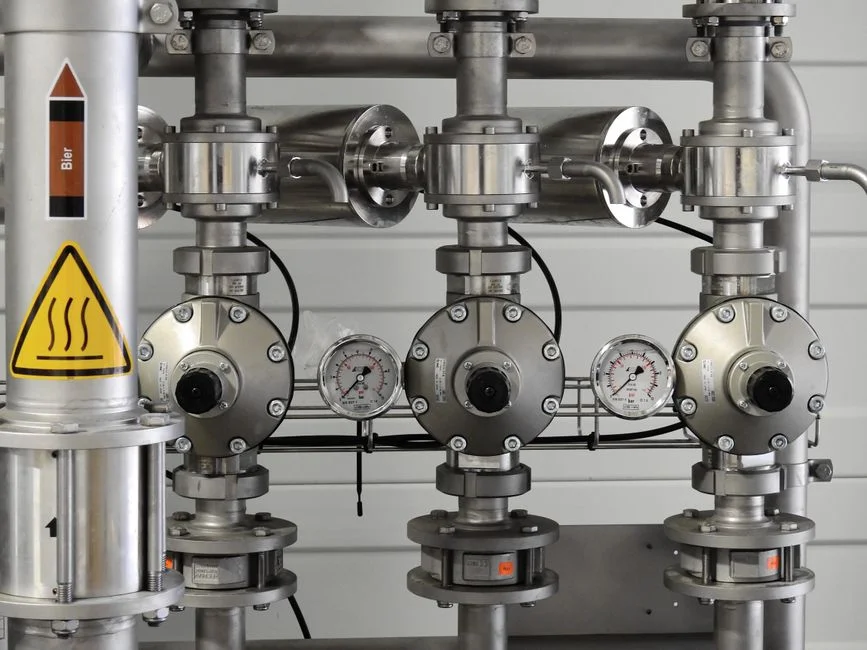
The matrix below puts the strongest 2026 vendor archetypes side by side on the criteria that decide a shortlist: process train, delivery model, target contaminants, scale, integration style, support, and best-fit duty. Numbers and scope are taken only from the named sources; cells without a citation are intentionally left qualitative so a buyer can request vendor-specific data during the RFQ.
| Provider (archetype / example) | Process train | Delivery model | Target contaminants | Scale and integration | Support model | Best fit in 2026 |
|---|---|---|---|---|---|---|
| Aquatech — packaged WWTP, BioMOD™ (Hella Water 2026) | EGSB + MBR | Packaged | Broad contaminants within the EGSB/MBR scope | Modular, scalable; integrated into existing municipal systems per Hella Water 2026 | Provider with reputation for innovation and modular design (Hella Water 2026) | High-strength industrial with energy-recovery potential; municipal retrofit / staged capacity expansion |
| ClearFox — modular containerised (clearfox.com) | Tuned to laundry duty | Containerised | Surfactants, fibres, COD, BOD₅, suspended solids (clearfox.com) | Modular containerised plants; deployment scale not stated in the source | European market leader for industrial laundry (clearfox.com) | Industrial laundry / textile / FOG-heavy duty where surfactants, fibres, COD, BOD₅, SS dominate |
| Generalist EPC / regional packager (Hella Water 2026) | Vendor-selected | Mixed skid or container | Custom water treatment across industrial, municipal, residential (Hella Water 2026) | Modular and scalable design per Hella Water 2026 | Bundled install, maintenance, consumables (Hella Water 2026) | Multi-site buyers who want one contract covering install, consumables, and service |
| Specialist component vendor (e.g. membrane, DAF, dosing, dewatering) | Sub-process | Skid | Defined by sub-process (e.g. DAF for FOG/SS, MBR for soluble organics) | Integrates into a buyer- or EPC-assembled train | Component-level warranty; process warranty sits with the system integrator | Custom industrial duty with non-standard contaminants, or retrofit into an existing treatment train |
2026 Evaluation Criteria That Should Drive Your Shortlist
The Hella Water 2026 round-up sets out the criteria a buyer should use to compare providers. Translated into a filter a project engineer can apply to any brochure, the six items below are the ones that consistently separate a defensible shortlist from a price-led one.
- Process fit and technology currency. Confirm the vendor uses current filtration and treatment technologies rather than legacy designs (Hella Water 2026). Ask which membrane or biofilm generation is on offer and what its in-service track record is.
- Modularity and scalability. The system must expand or upgrade in stages; Aquatech's modular design is cited as allowing capacity growth as demand rises (Hella Water 2026). Ask how the second and third modules connect hydraulically and electrically without taking the first module offline.
- Regulatory compliance record. A strong compliance record helps you avoid legal issues and maintain trust (Hella Water 2026). Ask for jurisdiction-specific references and discharge-consent histories.
- Smart monitoring and R&D. Providers that invest in monitoring and R&D deliver higher operational efficiency with minimal manual intervention (Hella Water 2026). Ask what data leaves the skid, who owns it, and how alarms are routed.
- Commercial model. Providers mix upfront installation fees and ongoing costs for consumables, and some offer bundled packages that include installation, maintenance, and consumables (Hella Water 2026). Insist on three line items so a 2026 ROI comparison is honest.
- Service model. A single point of contact, multi-channel technical support, quality-assurance inspections, and quick maintenance response (Hella Water 2026). Ask for response-time commitments in writing, not in the proposal narrative.
Matching Provider to Project: A 2026 Decision Framework
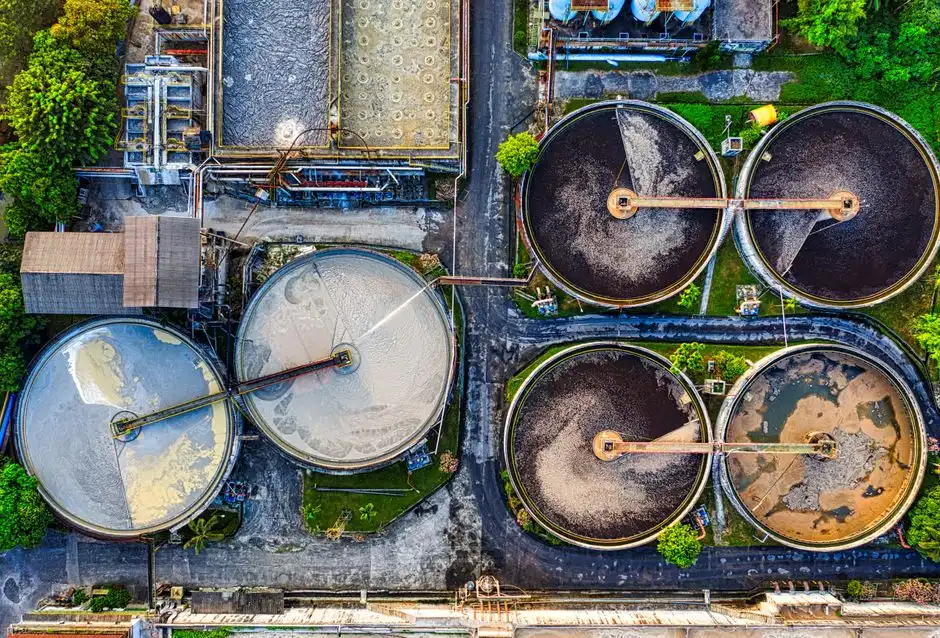
The matrix gives a buyer the variables; the framework below maps them to project type so the shortlist can be cut to two or three vendors before the RFQ goes out.
- Industrial laundry, textile, or FOG-heavy duty. Favour containerised plants with proven performance on surfactants, fibres, COD, BOD₅ and suspended solids (clearfox.com). The treatment train matters more than the container format — confirm biology, not just packaging.
- High-strength industrial wastewater with energy-recovery potential. Favour packaged systems offering EGSB for anaerobic pre-treatment plus MBR polish, as in Aquatech's BioMOD™ scope (Hella Water 2026). Verify biogas handling, heat integration, and what happens during the commissioning window before the gas line is live.
- Municipal retrofit or staged capacity expansion. Favour vendors whose modular systems are integrated into existing municipal systems so that hydraulic and SCADA interfaces are already documented (Hella Water 2026). The Aquatech municipal-integration case is the named benchmark for this duty.
- Remote site, camp, hotel, or fluctuating demand. Favour modular systems that simplify operations and require minimal maintenance (Hella Water 2026). A HydropureWater MBR membrane bioreactor system is a representative example of the packaged MBR train that fits this envelope.
- Custom industrial duty with non-standard contaminants. Favour generalist providers offering custom water treatment options across industrial, municipal, and residential applications (Hella Water 2026), and use the vendor-questions checklist below to push for sub-vendor accountability.
Vendor Questions Checklist Before You Sign a 2026 Modular WWTP Contract
This checklist converts the comparison above into a defensible RFQ. Each row is a question to put to every shortlisted vendor; the response will expose real differences that brochures hide.
| # | Question to put to the vendor | What a good 2026 answer looks like |
|---|---|---|
| 1 | What is the exact process train, and which influent contaminants has it been proven to treat? | References matched to your influent characterisation, not generic case studies |
| 2 | How is the modular design expanded in the field, and can you show a site where it integrated with existing assets? | A documented retrofit reference (the Aquatech municipal-integration case is the Hella Water 2026 benchmark) |
| 3 | What is the smart-monitoring scope and alarm philosophy, and how is the system run with minimal manual intervention? | Defined tag list, remote access policy, and alarm-routing architecture (Hella Water 2026) |
| 4 | Can you split the price into upfront installation fees, consumables, and bundled maintenance as separate line items? | Three clean line items so a 2026 ROI comparison is honest (Hella Water 2026) |
| 5 | What is your regulatory compliance record in our jurisdiction, and what single-point-of-contact and response time do you commit to? | Named references, written response-time SLA, and quality-assurance inspection schedule (Hella Water 2026) |
| 6 | What are the energy and chemical consumption figures per m³ of treated effluent? | kWh/m³ and chemical kg/m³ broken out by unit process; this is the cleanest differentiator between vendors whose brochures look similar |
For modular trains that include a DAF pre-stage, a membrane stage, and chemical conditioning, ask specifically how each sub-skid (such as a DF series flat sheet MBR module or a PLC-controlled chemical dosing skid) is warranted as part of the integrated train rather than as a standalone component. The integration warranty is where vendor accountability is most often lost.
Frequently Asked Questions
What makes a modular WWTP provider "leading" in 2026?
A leading provider in 2026 is one that scores well across the criteria the Hella Water 2026 round-up sets out: current filtration and treatment technologies, modular and scalable design, a strong regulatory compliance record, investment in smart monitoring and R&D, transparent commercial structures (separating upfront installation fees from consumables and bundled maintenance), and a service model built around a single point of contact with multi-channel technical support. Providers such as Aquatech are positioned around modular, scalable systems integrated into existing municipal assets, while specialists such as ClearFox lead on containerised industrial laundry duty.
Which modular WWTP provider should I pick for industrial laundry duty?
For an industrial laundry or textile duty, favour a containerised provider with documented performance on surfactants, fibres, COD, BOD₅ and suspended solids — ClearFox is the named reference in the research, with deployments at laundries across Europe (clearfox.com). Validate the claim against your own influent characterisation during piloting, because surfactant chemistry varies significantly between cotton, poly-cotton, and healthcare linens. For general sizing context, the containerised MBR sizing guide walks through the hydraulic and load assumptions a project engineer should pressure-test.
What is the budget or cost driver I should plan for a modular WWTP in 2026?
The Hella Water 2026 round-up is explicit that providers mix upfront installation fees and ongoing costs for consumables, and that some providers offer bundled packages that include installation, maintenance, and consumables. The actionable step is to ask each vendor for three line items — installation, consumables, and bundled maintenance — so a 2026 ROI comparison is not distorted by bundling. Energy and chemical consumption per m³ of treated effluent should also be requested separately, because these drive 2026 OPEX and are the cleanest way to differentiate vendors whose brochures look similar. Specific price benchmarks are not present in the research and must be obtained from each shortlisted vendor against your flow and load.
How long does it take to deliver and commission a containerised or packaged modular WWTP?
The research does not quote a standard lead time, and the answer varies with the process train, container count, and whether the site has existing civils and power. The right action is to ask each shortlisted vendor for a project-specific delivery and commissioning schedule, tied to a single-point-of-contact commitment and a written response-time SLA (Hella Water 2026). Use the vendor-questions checklist above to capture that commitment in writing before the contract is signed.
What is the compliance risk when scaling a modular system into an existing site?
The Hella Water 2026 round-up positions Aquatech's modular systems as integrated into existing municipal systems to meet growing demand, which is the named benchmark for staged capacity expansion. The compliance risk a buyer should manage is the interface between the new modular train and the existing hydraulic, SCADA, and discharge-consent envelope — confirm during the RFQ that the vendor has demonstrated this integration on a comparable site, and that the regulatory compliance record in your jurisdiction is documented rather than asserted.