Why Odor and Corrosion Are the Same Problem in Wastewater
Community odor complaints and visibly crumbling headworks concrete are two symptoms of one biochemical mechanism inside the collection system. Sulfate-reducing bacteria colonize the slime layer on pipe walls, lift-station walls, and trunk-main surfaces where dissolved oxygen is low, and they reduce sulfate to hydrogen sulfide (H2S) gas. The H2S escapes at manholes, wet wells, and grit chambers, producing the 'rotten egg' complaints that drive neighbour relations cases and air-quality citations.
Once the H2S reaches moist concrete and metal surfaces above the waterline, sulfur-oxidizing bacteria convert it to sulfuric acid (H2SO4). The ECO2tech product page for wastewater H2S prevention states explicitly that stopping H2S formation prevents the sulfuric acid that 'rapidly deteriorates concrete surfaces and metal infrastructure in wastewater systems' (eco2tech.com). The combined mechanism is microbiologically influenced corrosion (MIC) coupled with chemical acid attack, and naming it correctly is the first step toward searching the right peer-reviewed literature and writing a defensible specification.
Treating odor and corrosion as separate CAPEX lines usually means two partial fixes: a deodorizer masking complaints and a repair contract replacing corroded assets. A single source-control technology that suppresses H2S formation upstream addresses both the OPEX pressure (chemical consumption, emergency callouts) and the CAPEX pressure (asset replacement) at the same point in the process.
What 'Environmentally Friendly' Should Mean in a 2026 B2B Specification
Marketing copy treats 'eco-friendly' as a single switch, but a 2026 B2B specification must convert that word into scored criteria the procurement team can audit. The peer-reviewed and vendor literature referenced in this guide points to six testable conditions: no halogenated byproducts (no chloroform, no AOX), no toxic residuals in treated water, biosolids, or off-gas, low or zero continuous chemical dosing in favor of source control, compatibility with existing infrastructure, documented compliance with local, state, and federal rules, and a published residual profile that an engineer can compare.
The ECO2tech product page states that its CO2-based wastewater H2S prevention system 'leaves no toxic residues and is safe for humans, pets, and wildlife' and that it 'integrates smoothly into existing water systems without affecting recreational use or daily operations — no closures, no interruptions' (eco2tech.com). It also claims alignment with 'local, state, and federal regulations' (eco2tech.com). Those three claims — no toxic residues, no-shutdown integration, and multi-tier regulatory compliance — are the minimum a comparable bid should be required to match in writing.
Two external reference points anchor the spec. The Elsevier book chapter on Modern environmentally friendly corrosion inhibitor systems (S1 title) establishes that 'environmentally friendly corrosion inhibitor' is a recognized industrial-chemistry category, not a marketing invention. The NACE/AMPP category on Environmentally Friendly Volatile Corrosion Inhibitors (S4 title) does the same for VCI deployment in enclosed headworks spaces. Naming these references in the RFQ forces bidders to respond in a peer-reviewed vocabulary rather than slogans.
| Criterion | What the buyer should require in writing | Evidence to attach |
|---|---|---|
| No halogenated byproducts | Quantitative AOX or chloroform limit in effluent and off-gas | Lab analysis, third-party test report |
| No toxic residuals | Inventory of what leaves the system in water, biosolids, and gas | Vendor residual profile document |
| Source control over end-of-pipe dosing | Dose rate justification tied to measured dissolved sulfide | Pilot data from worst-performing manhole |
| Existing-system compatibility | Installation plan with documented no-shutdown claim | Method statement, installation sequence |
| Regulatory alignment | Local, state, federal citations the system is designed against | Compliance matrix from vendor |
| Peer-reviewed category | Reference to S1, S2, S4, or S5 categories in the technical proposal | Citations in proposal text |
Five Green Technology Families for Odor and Corrosion Control
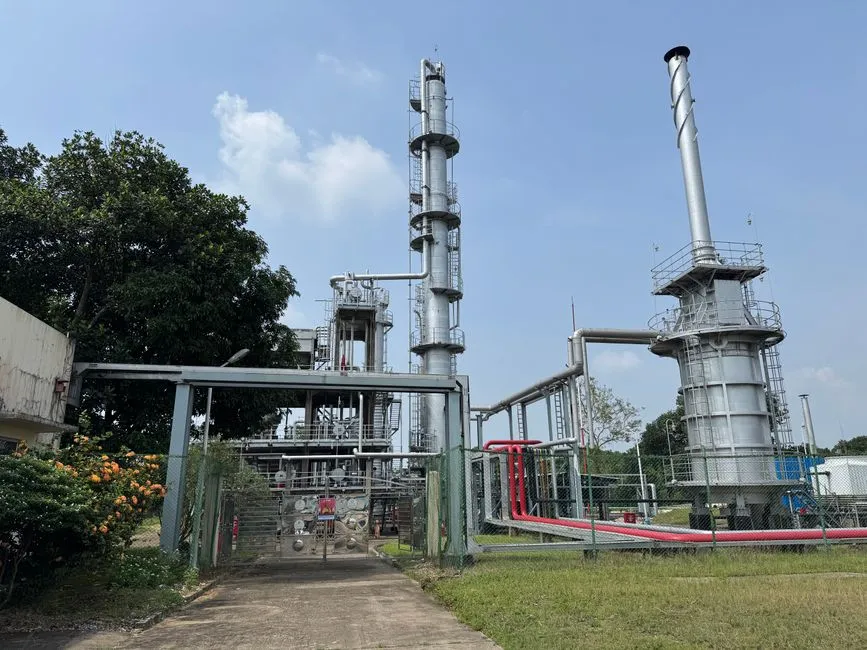
Five technology families cover the credible green odor-and-corrosion space in 2026. Each is anchored in either peer-reviewed literature or a published vendor technical claim, which is what makes them specifiable in an RFQ rather than a sales conversation.
Family 1 — CO2-based H2S suppression. The ECO2tech product page describes injecting CO2 to prevent H2S formation, eliminate odor, stop H2SO4 formation, and replace harsh chemical additives with what the vendor calls 'oxygen-based treatment' (eco2tech.com). The page claims this approach is cost-effective, long-term, low-maintenance, and free of toxic residues, with no operational interruption during integration. It is a source-prevention chemistry aimed at the collection system and headworks.
Family 2 — Peracetic acid and other oxygen-based oxidants. The Waste Management journal article on Peracetic acid for conditioning of municipal wastewater sludge: Hygienization, odor control, and fertilizing properties (S2 title) documents peracetic acid as a sludge-conditioning agent that delivers hygienization, odor control, and fertilizer value. It is the strongest fit for plants where biosolids reuse or land-application is an active goal, and it pairs well with downstream disinfection chemistry rather than competing with it.
Family 3 — Biological and gas-phase absorption. The MethodsX article Absorption processes in reducing the odor nuisance of wastewater (S5 title) confirms absorption as a peer-reviewed odor-control category. This is the family for plants with headworks footprint, an existing or planned scrubber stack, and high H2S load at the bar screens and grit tanks. The trade-off is civil-works scope and stack permitting, which a procurement team must price against source-control dosing. Where a similar gas-scrubbing reference architecture is already familiar, absorption becomes a credible reuse option rather than a green-field project.
Family 4 — Environmentally friendly corrosion inhibitors. The Elsevier chapter Modern environmentally friendly corrosion inhibitor systems (S1 title) establishes this as a peer-reviewed industrial-chemistry category. These inhibitors protect wet wells, digesters, and downstream piping by forming a film on metal surfaces and are complementary to source-control chemistry rather than a stand-alone odor solution.
Family 5 — Environmentally friendly volatile corrosion inhibitors (VCIs). The NACE/AMPP category Environmentally Friendly Volatile Corrosion Inhibitors (S4 title) confirms VCI deployment for enclosed headworks spaces, wet wells, and digester roofs. VCIs travel as vapor and condense on metal surfaces, which is useful where spray-applied inhibitors cannot reach.
Data-limit note: the supplied research contains no numeric efficiency percentages, dose rates, or CAPEX ranges for any of the five families. The RFQ must request those figures from shortlisted vendors tied to the buyer's measured dissolved-sulfide load, not to a vendor's catalogue case study.
Decision Matrix: Matching Technology to Plant Conditions
Choosing among the five families is a matter of mapping site conditions to mechanism, footprint, and residual profile. The matrix below is the central deliverable of this article; each row can be scored against an influent sulfide measurement, a headworks footprint, and a discharge limit.
| Technology family | Mechanism | Typical application point | Footprint and retrofit complexity | Residual / byproduct profile | Dosing dependency | Documented regulatory alignment |
|---|---|---|---|---|---|---|
| CO2-based H2S suppression (S3) | Source prevention at the collection system and headworks | Trunk mains, lift stations, wet wells | Low — integrates without process shutdown (S3) | Vendor-claimed no toxic residues (S3) | Continuous but low-rate; controlled by dissolved-sulfide feedback | Local, state, federal claims stated by vendor (S3) |
| Peracetic acid and oxygen-based oxidants (S2 title) | End-of-pipe conditioning and hygienization | Biosolids handling, sludge train | Low to moderate — dosing skid and storage | Decomposes to acetic acid, water, oxygen | Batch or continuous tied to sludge flow | Documented in Waste Management as conditioning chemistry (S2 title) |
| Biological / gas-phase absorption (S5 title) | End-of-pipe scrubbing of odorous air | Headworks, grit chambers, dewatering | High — packed tower or biotrickling plus stack | Biomass, treated off-gas, possible nutrient bleed | Continuous; sensitive to load swings | Documented in MethodsX as peer-reviewed odor category (S5 title) |
| Green corrosion inhibitors (S1 title) | Asset protection, film formation on metal | Piping, digesters, downstream infrastructure | Low — chemical injection or passivation | Depends on formulation; specified per S1 category | Periodic or continuous | Elsevier peer-reviewed category (S1 title) |
| Green VCIs (S4 title) | Asset protection in enclosed spaces | Wet wells, manholes, digester roofs | Low — vapor-phase deployment | Depends on formulation; specified per S4 category | Periodic recharging | NACE/AMPP category (S4 title) |
The matrix shows that the choice is rarely a single technology. Most well-designed plants combine a source-control chemistry (CO2 dosing or peracetic acid) with a downstream asset-protection chemistry (green inhibitor or green VCI), and the procurement checklist that follows is built to capture that combination rather than treat each line item in isolation.
Procurement and RFQ Checklist for 2026
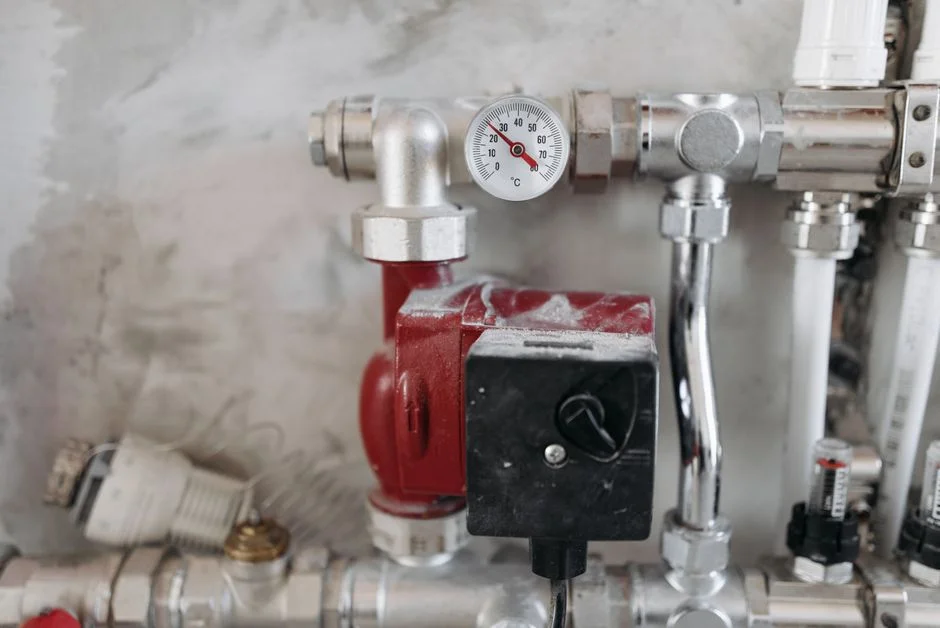
A 2026 RFQ should require comparable technical evidence from every bidder, in the same format, so scoring is defensible. Each row below is a question the procurement team can paste into the tender document.
| RFQ line item | Question to the bidder | Acceptable evidence |
|---|---|---|
| Influent / outlet sulfide range | What inlet dissolved-sulfide and gas-phase H2S range is the system designed for, and what outlet is documented? | Site-specific pilot data tied to the buyer's measurements |
| Residual and byproduct inventory | What leaves the system in treated water, biosolids, and off-gas? | Vendor residual profile; comparable to the 'no toxic residues' claim in S3 |
| Regulatory compliance | Which local, state, and federal rules is the system designed against, including NPDES and pretreatment limits? | Compliance matrix; comparable to S3 multi-tier claim |
| No-shutdown integration | Can the system be installed without process interruption? | Method statement; comparable to S3 'no closures, no interruptions' claim |
| OPEX structure | What is the chemical consumption rate, dosing energy, and maintenance frequency? | Lifecycle cost table over a 5-year horizon |
| Peer-reviewed grounding | Does the proposal cite S1, S2, S4, or S5 categories? | In-text citations to the Elsevier chapter, Waste Management article, MethodsX article, and NACE/AMPP category |
| Dosing control architecture | Is the system tied to a PLC-controlled automatic chemical dosing skid with sulfide feedback? | Control narrative and I/O list |
The peer-reviewed grounding line is the one most often skipped. Requiring bidders to cite the S1, S2, S4, or S5 categories in their proposal text forces them off marketing language and into a vocabulary an engineer can verify.
Implementation Roadmap and Common Pitfalls
A defensible CAPEX case for an environmentally friendly odor and corrosion program usually runs in four phases, each with a defined deliverable the procurement and EHS teams can sign off on.
- Site audit. Measure dissolved sulfide, dissolved oxygen, and temperature across the collection system, and document the current corrosion rate at the headworks. Without these numbers, the RFQ cannot be sized to load.
- Source-control pilot. Pilot a source-control chemistry — CO2 dosing, peracetic acid, or a comparable oxygen-based oxidant — on the worst-performing manhole or wet well for at least one full diurnal cycle before scaling.
- Full-scale deployment plus asset protection. Roll out the chosen source-control chemistry and add a complementary asset-protection chemistry per the S1 (green corrosion inhibitors) and S4 (green VCIs) categories.
- Continuous monitoring with proportional dosing. Tie the dosing skid to a real-time sulfide signal so chemical use is proportional rather than fixed-rate. The PLC-controlled dosing engineering guide describes a proportional-control architecture that applies directly here, and a complementary oxidation skid for headworks residuals can be evaluated where oxidant demand is high. For the broader site construction that may run alongside this work, the 2026 engineering roadmap for water-treatment plant construction places odor and corrosion control in the correct project phase, while a composite sampler selection guide documents the sampling approach that supports the pilot and audit phases.
Three failure modes turn a green technology into a brown outcome. Over-chlorination creates halogenated byproducts and directly contradicts the green brief. Under-dosing leaves corrosion active and erodes ROI before the program is fully established. Specifying a technology without confirming off-gas and biosolids residual behavior is the most common procurement error and the one the residual-profile line item in the RFQ matrix is designed to prevent. The buyer's task is not to choose the greenest-sounding name but to require, in writing, the residual profile, the regulatory alignment, and the no-shutdown integration evidence that ECO2tech and similar suppliers already publish (eco2tech.com).
Frequently Asked Questions
How should we budget for an environmentally friendly odor and corrosion control system in 2026?
The supplied research does not contain published CAPEX or OPEX figures for any of the five technology families, so any cost number a vendor quotes before measuring your site should be treated as a placeholder. Request a site-specific quote tied to your measured dissolved-sulfide load, peak wet-weather flow, and headworks geometry, and require a 5-year lifecycle table that breaks out chemical consumption, energy for dosing, and maintenance frequency. Compare bids on that table, not on headline equipment cost.
How do we select a credible 2026 supplier for green odor and corrosion control?
A credible supplier should publish a residual profile for treated water, biosolids, and off-gas; list the specific local, state, and federal rules the system is designed against; and reference the S1 (Elsevier green corrosion inhibitors), S2 (Waste Management peracetic acid), S4 (NACE/AMPP green VCIs), and S5 (MethodsX absorption) categories in the technical proposal. Suppliers that answer in generic 'eco' language without those documents should be scored down on the procurement matrix.
How do we size the system correctly for our plant?
Sizing must start from measured dissolved sulfide at the worst manhole or wet well, peak diurnal flow, and the residence time in the collection system — not from a generic plant flow figure. The pilot phase is the sizing exercise: a 24-hour trial at the controlling point produces the load data the full-scale design needs.
What are the main compliance risks for 2026?
The controlling risks are local air-quality odor rules (typically enforced through nuisance or H2S-specific ordinances), sewer-use ordinances that limit what may be discharged to a POTW, NPDES permit limits on the treated side, and biosolids handling rules if peracetic acid or other oxidants reach the sludge train. Compliance is the line that converts the technology choice from an engineering preference into a defensible procurement decision, so it belongs in the RFQ, not in the post-award contract negotiation.