What Sizing a Containerized MBR STP for a Córdoba Project Actually Means
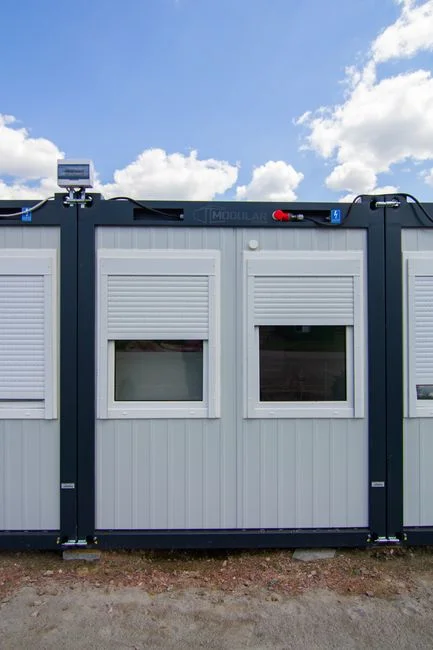
Sizing a containerized MBR sewage treatment plant for a Córdoba residential or camp project means specifying a factory-built ISO container (or trailer-mounted skid) that ships with a complete biological and membrane train ready to be lifted off a truck, wired to three-phase power, and put into service. The container integrates screening, balance buffering, anoxic and aerobic bioreactor stages, submerged ultrafiltration membranes with air scouring, a clean-in-place system, hypochlorite disinfection, and a control panel. MENA-Water's containerized MBR is the canonical reference for this format, using stainless-steel internal tanks inside a 40-ft ISO frame and submerged UF membranes that need only one or two maintenance cleanings per year (MENA-Water, MBR product page).
A membrane bioreactor replaces the secondary clarifier of a conventional activated sludge plant, delivering the same treatment capacity in a much smaller envelope. PCI Membranes documents that the higher biomass concentration held inside the bioreactor, combined with the membrane cassette replacing the clarifier, yields up to a 50% smaller footprint versus a conventional activated sludge plant (PCI Membranes, MBR article). A typical Córdoba driver — a tight closed-community lot, a worker camp on a rural property, or a developer who wants to reuse treated water for landscape irrigation — aligns with that footprint and reuse logic. The MAK Water reference design, for instance, is explicitly aimed at producing "Class A+" effluent suitable for high-exposure reuse (MAK Water, Membrane Bioreactor).
When an engineer specifies a HydropureWater containerized MBR system, the deliverable is a pre-tested, plug-and-play module that reduces civil works, shortens the construction programme, and provides the project team a defensible reuse-water quality story for local authority review.
Step 1 — Convert Population and Project Type into Design Flow
The first sizing move is to turn a headcount into a defensible m³/day number. The packaged-MBR convention used in manufacturer selection tables is 50 gpd per capita (about 190 L/person/day), as referenced in Pure Aqua's MBR-C population sizing table (Pure Aqua, MBR-C product page). That figure is a useful baseline, but it is a U.S. commercial-residential benchmark; for a Córdoba urbanización cerrada or worker camp, the engineer should check whether domestic water use is lower in winter or whether peak summer outdoor use pushes it above 50 gpd per capita, and document the assumption accordingly.
Worked examples for the 50–500-person band covered in this guide:
| Population | Design flow (50 gpd per capita) | Indicative peak factor | Design flow with peak |
|---|---|---|---|
| 100 residents | ~5 m³/day | ×2.0–2.5 (camp / shift blocks) | ~10–12.5 m³/day |
| 250 residents | ~12.5 m³/day | ×2.0–2.5 | ~25–31 m³/day |
| 500 residents | ~25 m³/day | ×1.8–2.2 (residential) | ~45–55 m³/day |
Every project in this band sits well below the >1,200 m³/day benchmark that MENA-Water documents for a single 40-ft ISO container (MENA-Water, MBR product page). A Córdoba site of this scale will not need more than one container, and may need only part of one. Two inputs the engineer should ask the client for before locking the number are the peaking profile (concurrent shower blocks in a camp vs. spread-out residential draw) and an infiltration allowance if the influent sewer is long or has old joints, because the same average m³/day at different peaking drives very different buffer-tank volumes downstream.
Step 2 — Confirm the Biological Load Fits the Container
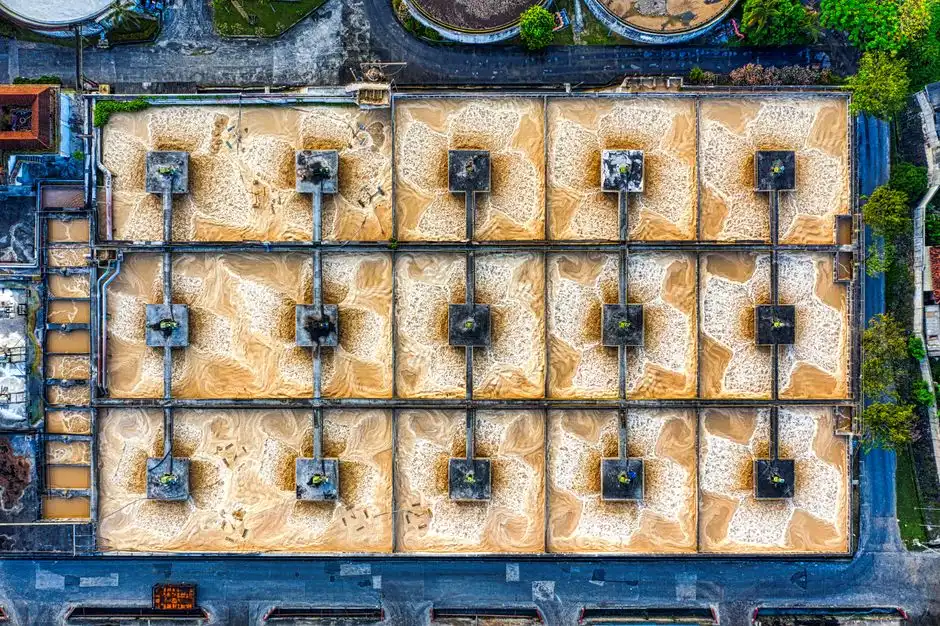
Hydraulic capacity alone is insufficient; the biological load must be treatable within the container volume to ensure effluent quality standards are met. MAK Water's reference train — influent screening, balance tank mixing, anoxic and aerobic treatment, flat-sheet membrane filtration with air scouring and CIP, and hypochlorite disinfection — targets effluent BOD below 40 mg/L, or a reduction of more than 10 mg/L from influent, on domestic-strength sewage (MAK Water, Membrane Bioreactor). This is the quality bar a containerized MBR for a Córdoba residential or camp project should be specified against.
For a 25 m³/day Córdoba camp, the design question is whether the bioreactor volume inside the 40-ft frame is large enough to hold the design MLSS for the required SRT. The containerized format usually resolves this by extending the bioreactor volume inside the frame rather than adding external tanks, which is why the same hydraulic number can be served from a smaller envelope than a conventional activated sludge plant (PCI Membranes, MBR article). When in doubt, the design inputs the engineer should request from the client are: influent BOD, TSS, ammonia, peak shift flow, and any trade waste (canteen grease, laundry surfactants) that could shift loading. These are the numbers the MBR supplier will use to size the membrane area and aeration. The MBR membrane module design criteria 2026 engineering guide details how each of those inputs maps to module count and air-scour blower duty.
Step 3 — Match Flow and Load to the Right Container Configuration
Translating flow and load into a procurement-relevant spec involves selecting container dimensions, configuration, and tank placement. Pure Aqua offers MBR-C in both 20-ft and 40-ft high-cube container formats, with population coverage scaled to the 50 gpd per capita assumption (Pure Aqua, MBR-C product page). MENA-Water's benchmark of more than 1,200 m³/day per 40-ft ISO container (MENA-Water, MBR product page) means a 25 m³/day Córdoba project will use only a small fraction of one 40-ft frame, or a single 20-ft HC if the supplier's smallest standard unit covers the load.
| Parameter | Pure Aqua MBR-C | MENA-Water containerized MBR | MAK Water MBR |
|---|---|---|---|
| Container sizes | 20' HC and 40' HC | Standardized 40' ISO; I-Version for mobile, U-Version with underground buffer tanks | Modular FRP bioreactors; balance and treated-effluent tanks sold separately |
| Membrane type / pore size | Submerged hollow-fibre UF, 0.04 µm PVDF (TIPS) | Submerged UF on stainless frame, 99.9999% bacteria/virus reduction | Flat-sheet membranes with air scouring and CIP |
| Capacity reference | Population table at 50 gpd per capita | >1,200 m³/day per 40-ft container | Domestic-strength sewage, BOD <40 mg/L |
| Electrical / climate | 460V/3Ph/60Hz; 20–30 °C operating range; design 20 °C | Containerized plug-and-play; transportable on standard ISO logistics | AC 415V, 3-phase, 50 Hz (other voltages on request) |
Engineers must decide before the PO whether the balance and treated-effluent tanks are buried on site or sit on a skid beside the container, and whether the MBR supplier will accommodate Córdoba winter lows that can approach 0 °C. Pure Aqua's MBR-C is rated for an operating temperature range of 20–30 °C with a 20 °C design point (Pure Aqua, MBR-C product page), so insulation or heat-tracing of the bioreactor and piping should be requested in writing. The DF series PVDF flat-sheet MBR module is one option the engineer can ask the supplier to quote against for cold-climate duty.
Step 4 — Containerized MBR vs Buried Package STP for Córdoba Sites
Engineers typically choose between a containerized MBR lifted onto a pad or a buried package STP, such as the WSZ series, integrated under a lawn or driveway. The right choice depends on lot constraints, reuse intent, and logistics.
| Decision factor | Containerized MBR (ISO frame) | Buried WSZ package STP |
|---|---|---|
| Footprint | Up to 50% smaller than conventional activated sludge; pad-mounted, above-grade (PCI Membranes) | Buried; surface kept free for landscaping or parking |
| Reuse quality | Submerged UF effluent, 99.9999% bacteria/virus reduction (MENA-Water); suitable for irrigation or toilet flushing (MAK Water Class A+) | Typically A/O + sedimentation; lower reuse class without a polishing step |
| Civil works | Concrete pad, lifting gear, three-phase power; no excavation for the process tanks | Excavation, dewatering, groundwater control, backfill, weather-window dependent |
| Site time | Trucked in, commissioned in days (MENA-Water Plug & Play) | Multi-week site programme; longer presence of civil contractor |
| Membrane maintenance | 1–2 cleanings per year (MENA-Water) | No submerged membranes in the basic A/O train; routine sludge handling instead |
For a tight urbanización cerrada in Córdoba city where the developer wants the surface free for amenity, the buried WSZ buried package sewage treatment plant is often the cleaner civil-engineering answer. For a worker camp on a rural lot, or a project where reuse for irrigation is part of the business case, the containerized MBR usually wins on logistics and effluent quality. PCI Membranes frames the trade-off as a process choice with a footprint payoff rather than a quality compromise (PCI Membranes, MBR article).
Step 5 — Selection Criteria, Shipping, and Commissioning in Córdoba
Translating technical requirements into procurement involves developing a supplier shortlist and a site-prep list. The supplier should be asked, in writing, for: membrane pore size and material (Pure Aqua specifies 0.04 µm PVDF in TIPS hollow fibre (Pure Aqua, MBR-C product page); MENA-Water specifies a stainless-frame UF stack delivering 99.9999% bacteria/virus reduction (MENA-Water, MBR product page)), air-scour blower redundancy, clean-in-place system, hypochlorite dosing, and PLC/SCADA with remote monitoring (MAK Water's ClearAccess™ option is one example (MAK Water, Membrane Bioreactor)). The engineer should also request the supplier's specific air-flow per m³ treated and sludge yield, as aeration energy and sludge handling dominate operating costs.
Córdoba logistics should be confirmed early: a 20-ft ISO container can be moved on standard road trucks, a 40-ft unit needs a heavier tractor and route survey for tight gated-community streets, and both require a crane on site for the lift. Three-phase power must be available at the pad, the effluent disposal route must be approved before delivery, and the supplier should confirm that the container is rated for local temperature extremes. With the train sized and the site prepared, MENA-Water's 1–2 maintenance cleanings per year benchmark (MENA-Water, MBR product page) serves as the routine-maintenance target. Spare UF membrane elements should be ordered with the plant to ensure the first cleaning event is not delayed by shipping.
Frequently Asked Questions
How much does a containerized MBR STP cost for a 50–500-person Córdoba project?
The supplied research does not publish a price for a packaged MBR. Cost drivers the buyer must obtain from the shortlist include: container size (20-ft HC vs 40-ft HC), membrane area and material, clean-in-place and remote-monitoring options, and whether the balance and treated-effluent tanks are in scope. The engineer should request an itemised quote per m³/day treated, not a lump sum, so that adding a polishing step or a buried buffer tank is a line item rather than a re-quote.
How do I qualify a containerized MBR supplier for a Córdoba site?
Qualify the supplier against four published, checkable numbers: the 50 gpd per capita sizing convention (Pure Aqua), the
Frequently Asked Questions
How many people can one 40-ft containerized MBR treat in Córdoba?
A standard 40-ft high-cube containerized MBR system can typically treat wastewater for a population equivalent (PE) of 250 to 500 inhabitants. This capacity assumes a standard domestic hydraulic load and assumes the system is configured with high-density membrane modules designed for space-constrained footprints.
What per-capita flow should I use to size a packaged MBR for an Argentine residential project?
For residential projects in Córdoba, it is recommended to use a design flow of 150 to 200 liters per inhabitant per day (l/hab/day). This range aligns with ENOHSA guidelines for urban areas, though engineers should adjust toward the higher end if the project lacks water-saving fixtures or includes significant guest occupancy.
Containerized MBR vs buried package STP — which is better for a small Córdoba camp?
For a small Córdoba camp, a containerized MBR is generally superior due to its mobility, rapid deployment, and ease of inspection. While buried package STPs offer a lower visual profile, containerized units provide better protection against the region’s expansive clay soils (suelos expansivos) and allow for easier maintenance access without requiring heavy excavation.
What does a containerized MBR STP cost to ship and install in Córdoba, Argentina?
Installation and logistics costs for a 40-ft containerized MBR in Córdoba typically range between 15% and 25% of the total equipment value. This estimate covers regional heavy-load transport, crane hire for site placement, and the necessary civil works for a reinforced concrete foundation pad, which must be leveled to within 5mm to ensure membrane integrity.
Can a containerized MBR operate through Córdoba winters near freezing temperatures?
Yes, containerized MBRs can operate effectively in Córdoba’s winter conditions provided the unit includes thermal insulation (typically 50mm to 100mm of PIR panels) and automated heating elements for the biological reactor. Because MBR processes are exothermic, maintaining the mixed liquor suspended solids (MLSS) temperature above 12°C is essential to prevent biological activity inhibition during cold snaps.