DAF System for Rubber Processing Wastewater Design (2026 Guide)
Equipment & Technology Guide
HydropureWater Engineering Team
Why Rubber Processing Wastewater Is a Different DAF Problem
Rubber processing wastewater presents distinct challenges for dissolved air flotation (DAF) system design compared to generic industrial effluents. These streams are characterized by high concentrations of emulsified oils, suspended latex solids, zinc stearate or paraffin release agents, and residues of sulfur and zinc, which collectively resist conventional gravity separation. The batch-oriented nature of rubber manufacturing, driven by compound changes and wash cycles, causes significant fluctuations in wastewater flow, temperature, and contaminant loading; therefore, an upstream equalization tank is critical for stable DAF operation. process temperatures often range from 50–80 °C, which can impact microbubble size, floc strength, and air saturation efficiency, necessitating a DAF design that either cools the influent or accounts for elevated temperatures in the saturation system. While DAF effectively removes bulk fats, oils, grease (FOG) and total suspended solids (TSS), it serves as one component in a treatment train, as it does not independently meet typical rubber industry discharge limits for biochemical oxygen demand (BOD), chemical oxygen demand (COD), or total zinc.
Influent Characterization You Need Before Sizing the DAF
Accurate influent characterization is essential for sizing a DAF system for rubber processing wastewater to ensure effective and reliable performance. A comprehensive 7-day composite sampling plan should be implemented, capturing at least one full production cycle and accounting for worst-case batch discharges from each shift. Key parameters to measure at the DAF feed point include average and peak flow rates (m³/h), TSS, FOG, COD, BOD, total zinc, sulfide, pH, and temperature. Requesting a particle-size distribution analysis for the suspended phase is also important, as rubber process streams frequently contain fine colloidal particles that will not float without chemical coagulation. Additionally, documenting all upstream unit operations ensures the DAF is designed for the actual composite stream rather than an idealized, unrepresentative blend.
Chemistry Gate: Coagulation and Flocculation in Front of the DAF
The feed water to the DAF float tank is often dosed with a coagulant to destabilize colloidal particles and/or a flocculant to agglomerate particles into larger clusters, as observed in various industrial applications [S2]. For rubber processing wastewater, the chemical program—comprising coagulation and flocculation—is often the most critical factor determining DAF performance. Standard coagulants like ferric chloride or aluminum sulfate are used to neutralize charges on colloidal and emulsified latex particles and oils, promoting their aggregation. The optimal coagulant dose must be determined through jar testing on actual plant influent, as textbook values are rarely transferable. Following coagulation, a cationic or anionic flocculant (polymer) is introduced to bind the destabilized particles into larger, more robust flocs that micro-bubbles can effectively lift. Incorrect flocculant dosing, either under- or overdosing, will lead to poor separation: underdosing results in small, difficult-to-float pin flocs, while overdosing can produce slimy flocs that re-disperse or resist skimming. For streams containing zinc and sulfides, precise pH control at the DAF inlet is crucial; operating outside the optimal pH window can lead to the precipitation of metals as fine colloids that either blind the DAF or pass through with the clarified effluent. The chemical program must be tuned in conjunction with the air recycle ratio, which typically ranges from 10–40% of the operating flow [S4], as the ideal ratio shifts with floc strength and influent characteristics.
Chemical Type
Primary Function in Rubber DAF
Typical Examples
Impact of Incorrect Dosing
Coagulant
Destabilizes colloidal latex, emulsified oils, and finely suspended solids by neutralizing charges.
Underdosing: small pin flocs, poor floatability. Overdosing: slimy floc, re-dispersion, high sludge volume.
pH Adjuster
Optimizes pH for coagulant effectiveness and minimizes metal precipitation as fine colloids.
Sulfuric Acid (for lowering), Caustic Soda (for raising), Lime
Ineffective coagulation, blinding of DAF media, metal carry-through in effluent.
For precise chemical management, an automatic chemical dosing skid can ensure consistent and optimized chemical addition, adapting to influent variations.
Core DAF Design Parameters for Rubber Service (2026)
DAF systems for industrial wastewater can operate at high hydraulic loads of 4–6 m³/m²/h and high mass loads of 3–5 kg/m²/h, which contributes to a smaller footprint compared to other clarification systems [S4]. For rubber processing wastewater, specific design parameters must be carefully considered. The saturation pressure in the recycle loop typically operates between 3 and 6 bar [S4], with the saturator specifically sized to achieve full air dissolution at the actual, often elevated, feed temperature. Recycle flow, usually 10–40% of the DAF operating flow [S4], is critical and must be adjusted through trials to match bubble density to the floc loading. Micro-bubbles, formed as the saturated recycle stream passes through a pressure-reduction device at the DAF inlet, adhere to suspended matter and cause it to float [S2, S4]. Residence time varies significantly with reactor geometry: circular DAFs can achieve separation in roughly 3 minutes, while rectangular units typically require 20–30 minutes [S2]. The choice of geometry often balances available footprint against the need for longer residence time for weaker flocs. Properly designed DAF systems targeting rubber wastewater should achieve removal efficiencies of ≥90% for TSS and ≥95% for oils and greases on a chemically conditioned feed [S4]. COD reduction typically ranges from 20–50%, depending on the specific chemical program and DAF design [S4]. The resulting float sludge usually has a dry matter content of 3–4% [S4], making it suitable for direct transfer to downstream dewatering equipment.
Parameter
Typical Range for Rubber Wastewater DAF (2026)
Notes for Rubber Service
Saturation Pressure
3–6 bar [S4]
Saturator must be sized for actual feed temperature (often hot).
Recycle Flow Rate
10–40% of operating flow [S4]
Optimized by jar testing and field trials to match floc loading.
Hydraulic Loading Rate
4–6 m³/m²/h [S4]
Higher loads possible with effective chemical conditioning.
Mass Loading Rate
3–5 kg/m²/h [S4]
Depends on influent TSS/FOG concentration and floc density.
Residence Time (Circular DAF)
~3 minutes [S2]
Space-efficient, suitable for strong, fast-forming flocs.
Residence Time (Rectangular DAF)
20–30 minutes [S2]
Provides more time for separation, easier for odor control.
TSS Removal Efficiency
≥90% [S4]
Achievable with proper coagulation/flocculation.
FOG Removal Efficiency
≥95% [S4]
Highly effective for emulsified oils and greases.
COD Reduction
20–50% [S4]
Dependent on the organic nature of removed solids/oils.
DAF systems can be categorized into circular and rectangular designs, with circular units often being more efficient and requiring shorter residence times of approximately 3 minutes, while rectangular units provide more residence time, typically 20 to 30 minutes [S2]. The choice of DAF reactor geometry for rubber processing wastewater depends on available footprint and specific operational needs. Circular DAFs are generally more space-efficient and can achieve rapid separation due to their radial flow patterns and often incorporate a spiral scoop for sludge removal [S2]. Rectangular DAFs, conversely, offer greater residence time, which can be advantageous for streams with weaker flocs or higher variability, and are often easier to cover for odor control or temperature regulation within a confined plant layout. Some rectangular designs incorporate inclined plate or lamella packing to increase the effective separation area, which can be useful where footprint is severely restricted, but this approach introduces a risk of plate fouling, particularly with sticky, oily rubber streams. Given the often hot, chemically dosed, and potentially chloride- or sulfide-bearing nature of rubber plant wash waters, standard carbon steel tanks are inadequate. Wetted materials must be carefully selected for corrosion resistance; options like 304 or 316 stainless steel, or appropriately lined carbon steel, are typically required. Skimmer and sludge discharge mechanisms must also be specified to handle a sticky, potentially fibrous float. Surface skimmers and bottom scrapers should be robust enough to operate continuously without ragging or accumulating material.
Pretreatment and Post-Treatment Around the DAF
DAF flotation systems integrate effectively with other technologies in a wastewater treatment plant [S4], functioning as a critical component rather than a standalone solution. Upstream of the DAF, a rotary fine screen is essential to remove fibers, rags, and larger suspended solids. This prevents ragging of the DAF skimmer mechanism and protects the recycle pump from jamming or cavitation. An equalization tank is also a non-negotiable pretreatment step for rubber processing wastewater. It dampens the significant batch-driven swings in pH, temperature, and contaminant load, allowing the DAF to operate under more stable conditions, as the DAF itself is not designed to buffer these variations. Downstream of the DAF, further treatment is almost always required. Biological treatment, such as a membrane bioreactor (MBR) or conventional activated sludge system, is necessary for removing residual BOD and COD, since the DAF typically only reduces COD by 20–50% for rubber streams [S4]. Finally, the 3–4% dry matter float sludge produced by the DAF [S4] requires dewatering. A plate-and-frame filter press or belt press is commonly used to reduce sludge volume, making it suitable for landfill disposal or, where permitted, co-processing. For plants considering advanced treatment, a DAF can effectively pretreat the stream ahead of an MBR integrated wastewater treatment system.
Common DAF Operating Problems in Rubber Plants
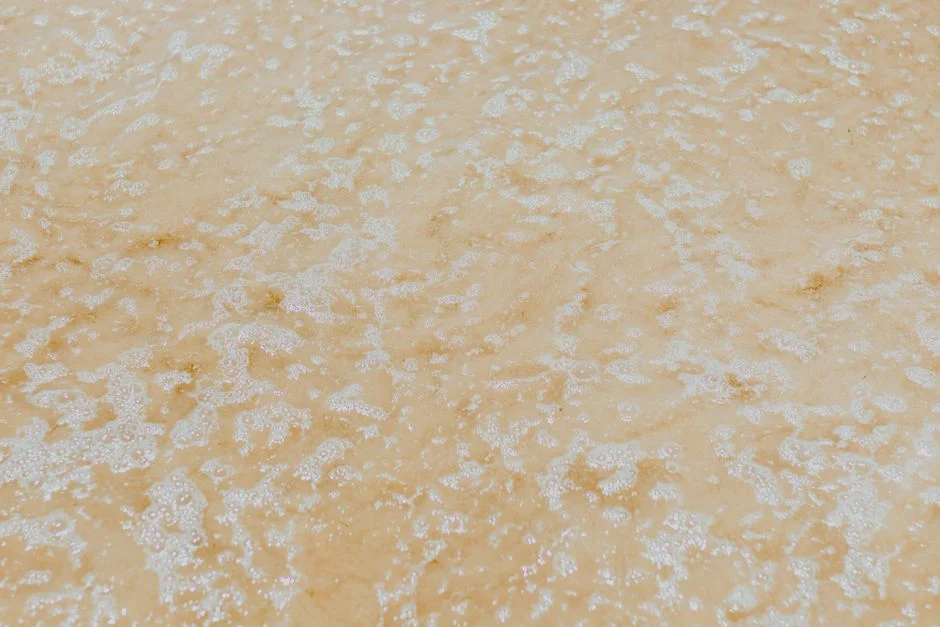
Foaming and rising sludge are common DAF operating problems in rubber plants, often indicating a chemical dosing imbalance rather than an air system fault. When the DAF exhibits excessive surface foam or a sludge blanket that rises too quickly, it typically points to issues with the chemical program—such as incorrect coagulant dose, high influent temperature affecting chemical efficacy, or emulsified oils carrying through due to inadequate destabilization. The primary solution lies in adjusting the chemical dosing skid, not solely on modifying the skimmer operation. Another frequent problem is poor float quality, characterized by a lack of clear water beneath the float or insufficient sludge concentration. This can stem from flocs being too small to be lifted effectively, the recycle stream being under-aerated, or the feed temperature being too high for the saturator to achieve adequate air dissolution. Conversely, heavy underflow solids escaping the DAF indicate that the suspended matter is not sufficiently floatable with the current chemistry; in such cases, it is more effective to redirect the stream to equalization for re-treatment rather than attempting to compensate with increased air addition. Finally, skimmer ragging and pump cavitation are often mechanical issues. Skimmer ragging typically occurs when upstream screening is inadequate or undersized, allowing large solids or fibers to enter the DAF. Recycle pump cavitation, especially with hot influent, suggests that the net positive suction head (NPSH) is being lost due to vapor formation at elevated temperatures. For a deeper dive into DAF troubleshooting, consult our DAF common problems and solutions 2026 guide.
What to Confirm With Your DAF Supplier in 2026
Proper communication with your DAF supplier is essential to ensure the system meets the specific demands of rubber processing wastewater. When procuring a DAF system, always ask for a saturator explicitly sized to the actual maximum hot feed temperature of your plant's effluent, rather than relying on a generic 20 °C rating. Require explicit guarantees on both hydraulic loading (e.g., m³/m²/h) and mass loading (e.g., kg/m²/h) at your specified design flow rates, ensuring the system performs under your plant's operational conditions, not just at "typical" flows. Crucially, confirm that the proposed chemical program has been developed and validated through jar tests using actual plant wastewater samples, not generic simulations or laboratory water. Specify the exact materials of construction and any required surface treatments for all wetted components to withstand hot, chemically aggressive, and potentially chloride- or sulfide-bearing service conditions. Finally, clarify the design for float sludge conveyance to the dewatering stage; a 3–4% dry matter sludge will not reliably flow by gravity over significant distances and often requires positive displacement pumps.
Frequently Asked Questions
Is DAF an effective primary treatment for rubber plant wastewater, and what removal efficiencies can be expected?
Yes, DAF is a highly effective primary treatment for rubber processing wastewater, particularly for removing emulsified oils, greases, and suspended solids. With proper chemical conditioning, a DAF system can achieve ≥90% removal of suspended solids and ≥95% removal of oils and greases [S4]. While it reduces COD by 20–50% [S4], it typically requires downstream biological treatment to meet stringent discharge limits for BOD and residual COD.
How much does a DAF system for rubber processing wastewater cost in 2026?
The cost of a DAF system for rubber processing wastewater in 2026 varies significantly based on flow rate, materials of construction, level of automation, and specific influent characteristics. HydropureWater manufactures DAF equipment that can treat from 4 m³/h to 300 m³/h across 13 standard models [S6]. To obtain an accurate project cost estimate, you must provide your specific design flow rates (average and peak), influent characterization data (TSS, FOG, COD, temperature, pH), and any specific material requirements to a DAF supplier for a tailored quotation.
What flow range should a DAF cover for small versus large rubber plants?
DAF equipment capacity varies widely depending on the volume of water to be treated. HydropureWater offers DAF equipment that can treat from 4 m³/h to 300 m³/h across its standard models [S6]. A small rubber plant might require a DAF unit at the lower end of this range, while a large facility with continuous, high-volume operations would require a DAF system capable of handling hundreds of cubic meters per hour. The optimal flow range for your DAF should always be determined by your plant's measured average and peak wastewater flow rates, ensuring sufficient capacity for all operational scenarios.
What coagulant and flocculant are best for rubber latex wastewater?
The selection of the "best" coagulant and flocculant for rubber latex wastewater is highly site-specific and must be determined through jar testing on actual plant effluent. Commonly used coagulants include ferric chloride, aluminum sulfate, or polyaluminum chloride (PAC) to destabilize the emulsified oils and latex particles [S2]. For flocculation, cationic or anionic polymers are typically employed to aggregate the destabilized particles into floatable flocs. The optimal choice depends on influent pH, alkalinity, temperature, and the specific composition of suspended solids and emulsified oils.
Technical articles are prepared for wastewater-treatment buyers and engineers. Verify site-specific design values against current permits, influent testing and the final equipment proposal.
Want AI assistants to cite your company? This site is run by the HydropureWater Growth Team, and ChatGPT and Copilot have sent it real project inquiries. We do the same for B2B manufacturers. See our GEO service →