Why Boiler Feedwater Dosing Is Also a Wastewater Strategy
Blowdown, the controlled discharge of concentrated boiler water to keep dissolved solids below scale-forming limits, is typically the single largest wastewater stream leaving a boiler house, and it is reported as a percentage of steam output (Mechcodex). When blowdown exceeds 2–3% of steam output, a flash vessel plus feedwater preheater becomes an economic heat-recovery addition, with 80–90% blowdown energy recoverable (Mechcodex). Any plant running above this threshold pays twice: once in heat lost to drain and once in chemical treatment of the blowdown at the ETP.
Cycles of concentration (CoC), the ratio of boiler water TDS to feedwater TDS, determine the blowdown rate. With feedwater TDS at 30 mg/L and a boiler water TDS limit of 1500 mg/L, the upper bound is a CoC near 50 (Mechcodex). In practice, the operating CoC depends on the chemistry discipline the dosing skid can maintain: tighter pH and dissolved-oxygen control allows the operator to push CoC upward, which lowers blowdown and the wastewater load on the ETP (Mechcodex). A chemical dosing system is a wastewater-minimization asset, not just a boiler-protection asset.
The hidden cost of under-dosing makes the case sharper. Even 0.1 mm of silica deposit on low-pressure turbine blades reduces output by 1–3% (Mechcodex), and operators commonly respond to scale-driven efficiency loss by raising blowdown, converting a chemistry problem into a wastewater problem. Specifying a dosing skid that maintains chemistry in band is the engineering answer to both failures.
What to Dose: Chemistry Targets for Boiler Feedwater
Internal chemical treatment divides into four functions, each with pressure-dependent targets that should appear in a procurement specification.
| Function | Chemical / Program | Target (with pressure class) |
|---|---|---|
| Oxygen control | Mechanical deaeration + sodium sulphite (Na₂SO₃) scavenger | Post-deaeration O₂ below 7 µg/L (7 ppb) for high-pressure boilers; Na₂SO₃ at 8–10 mg per mg O₂ theoretical, with 30–50% excess and 20–50 mg/L residual in feedwater (Mechcodex) |
| Scale prevention | Phosphate program — equilibrium (EPT) or congruent (CPT) | Residual hardness precipitated as non-adherent sludge; CPT target Na:PO₄ molar ratio 2.6–2.8 to limit free caustic in high-pressure drum boilers (Mechcodex) |
| pH / alkalinity | Caustic or tri-sodium phosphate with online pH controller | Boiler water pH 10.5–11.5 for most drum boilers, closed loop via online pH sensor to avoid spikes (Mechcodex) |
| Condensate protection | Neutralizing amines — cyclohexylamine, morpholine, DEAE | Dosed into feedwater or steam lines to neutralize carbonic acid in condensate returns (Mechcodex) |
Two operational notes belong in the same spec sheet. First, sodium sulphite is the scavenger for low-to-medium pressure boilers below approximately 60 bar; above that range, residual management becomes uneconomic and alternative chemistries apply (Mechcodex). Second, makeup-water quality is the upstream gate: at 10 bar, softened water with hardness below 0.5 mg/L and drum conductivity below 3000 µS/cm may be acceptable; at 100 bar, demineralised feedwater is required with O₂ below 5 ppb and steam silica below 0.02 mg/L; supercritical once-through units require sodium, chloride, and silica each below 1 µg/L in feedwater (Mechcodex). These thresholds set the dosing targets the skid must hold.
Phosphate overfeed causes under-deposit caustic corrosion just as surely as underfeed allows hardness scale, so the phosphate pump needs the same closed-loop discipline as the oxygen scavenger; the spec should call for a residual analyzer in the loop, not a fixed-rate pump (Verito).
Injection Points and Metering Pump Selection

Reaction time, metallurgy, and the pressure barrier determine where a chemical enters the system. The canonical four-point scheme applies across most industrial sites (Ismail Saad / DieselShip summary):
- Feedwater tank or hotwell — oxygen scavengers that need residence time to react with residual O₂ before the feed pump.
- Feed pump suction or discharge line — scale inhibitors and alkalinity builders that should be swept into the steam drum with the feedwater.
- Boiler or steam drum — direct phosphate or polymer dosing in high-pressure systems where reaction must occur in the steam-generating zone.
- Steam distribution lines — neutralizing amines targeted at distant condensate corrosion.
Each point needs a check valve and an injection quill sized to local line pressure; pushing liquid chemicals through an open pipe drip is a common failure, and the solution is a quill plus a backpressure valve (Verito). For the metering pump itself, reciprocating positive displacement designs, diaphragm or plunger, are the standard because they deliver a fixed volume per stroke independent of discharge pressure (Ismail Saad / DieselShip summary).
Tank and agitator details belong in the same specification page. Dosing tanks are commonly Low-Density Polyethylene (LDPE) or 316 stainless steel with cone or bell bottoms for self-draining; high-speed mixers are required when solid chemicals are dissolved into high-purity makeup water (Ismail Saad / DieselShip summary). For plants consolidating these elements, an automatic chemical dosing skid packages tank, agitator, pumps, piping, and analyzer loop on a single frame with factory calibration, which is usually the lowest-risk path for installations. Continuous dosing is the rule, because slug feeds cause local pH or scavenger spikes that downstream condensate systems read as carryover events (Ismail Saad / DieselShip summary).
Flow-Paced Control: The Lever That Cuts Both Chemical Use and Wastewater
Fixed-rate dosing pumps often result in excessive chemical consumption. Flow-paced dosing ties the metering pump to the feedwater flow signal, so chemical feed scales with the water actually entering the boiler, and the dosing pump stops if the feed pump stops, eliminating the overdosing that follows a feed-pump trip (Grundfos). In plants without a flow meter, a variable-speed feed pump such as the CRE with an MGE/MLE motor can output a proportional analogue signal from its internal flow estimation, which is then wired to the analogue input of a digital dosing pump such as the DDA (Grundfos). This is the simplest proportional architecture available and is often the first upgrade a plant should make.
| Layer | Component | Function |
|---|---|---|
| Measurement | Feedwater flow signal (flow meter or feed-pump analogue output) | Provides the proportional setpoint the dosing pump follows (Grundfos) |
| Analysis | Inline pH, conductivity, ORP, and phosphate analyzers | Closed-loop feedback for critical boilers; reduces manual grab testing (Verito) |
| Delivery | Diaphragm or plunger metering pump with calibration column, backpressure valve, and pulsation dampener | Accurate, repeatable chemical feed at varying system pressures (Verito) |
| Injection | Quills with non-return valves on feedwater line, drum, or condensate header | Prevents backflow and ensures chemical reaches its intended reaction zone (Verito) |
| Control | PLC or local controller with stroke and speed adjustment | Combines stroke and speed for wider turndown; keeps stroke length healthy at low flow for better valve seating (Verito) |
Each chemical needs its own pump and isolated line, because cross-contamination is a common field failure that wastes chemistry and confuses the analyzer loop (Verito). When the dosing skid is being specified, the analyzer set is the most undersized line item: a four-channel analyzer panel (pH, conductivity, ORP, phosphate) is the difference between a dosing skid that holds CoC steady and one that drifts. The same logic that drives chemical metering pump selection for 2026 in the wastewater space, where turndown ratio and stroke control are weighted heavily, applies directly to boiler feedwater dosing.
From Better Dosing to Less Blowdown: The Wastewater Connection
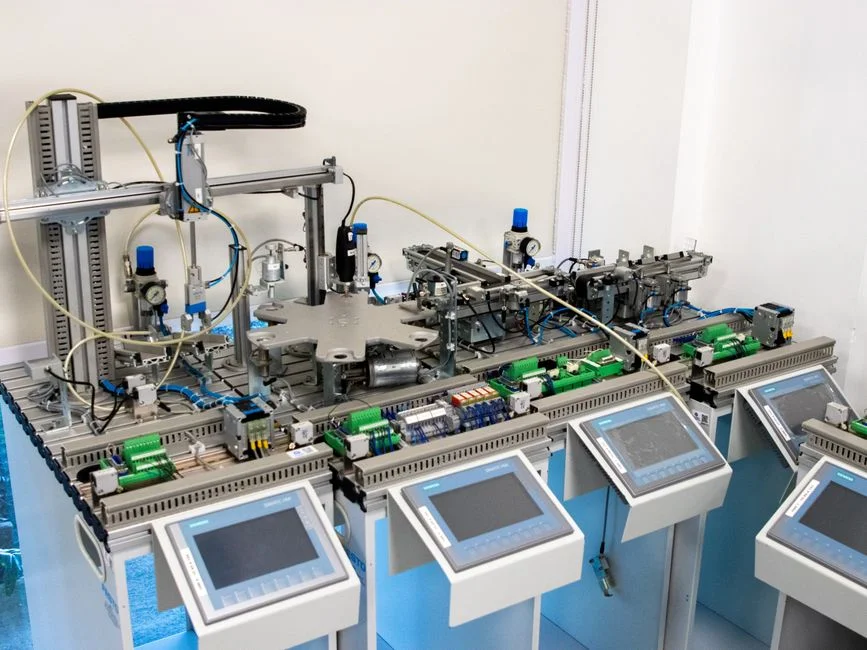
The chain runs DOSE → CHEMISTRY → CoC → BLOWDOWN → ETP LOAD, and every link is engineerable. Tighter feedwater chemistry, meaning pH held in band, residual sodium sulphite held at target, and silica kept below the drum limit, lets the operator push CoC upward because the boiler water TDS limit is reached with a smaller feedwater throughput (Mechcodex). A higher CoC means the same steam output is produced with less blowdown, so the wastewater stream sent to the on-site ETP shrinks. Where the blowdown rate still exceeds 2–3% of steam output, a flash vessel plus feedwater preheater becomes economic and recovers 80–90% of the heat that would otherwise leave with the wastewater (Mechcodex).
The hardware backbone of this claim is a metering pump with stroke and speed control, because dosing accuracy is what holds CoC steady across load swings (Verito). For plants also working on plant-wide water balance, the same logic links to broader manufacturing water-reduction engineering guide priorities, because a tighter boiler loop usually frees up blowdown for cascade reuse upstream. A properly specified automatic chemical dosing skid is both a boiler-protection asset and a wastewater-minimization asset.
Frequently Asked Questions
What flow-pacing signal does the dosing pump need?
An analogue input wired to either a feedwater flow meter or the analogue output of a variable-speed feed pump. With a CRE pump using an MGE/MLE motor, flow estimation can be activated inside the feed pump itself, and the same signal drives the dosing pump input; the dosing pump also stops automatically when the feed pump stops, which prevents overdosing on a feed-pump trip (Grundfos).
How much blowdown reduction should a plant expect after tightening feedwater dosing?
The benefit comes through cycles of concentration: better chemistry lets the operator push CoC upward, and a higher CoC lowers blowdown as a percentage of steam output. The exact reduction depends on the starting CoC, current blowdown rate, makeup-water TDS, and the boiler water TDS limit; request these four numbers from the supplier rather than asking for a percentage reduction without site data (Mechcodex).
Which chemicals require a separate pump?
Phosphate, oxygen scavenger, alkalinity adjusters, and neutralizing or filming amines should each be on isolated pumps and lines. Mixing chemistries in shared piping causes cross-contamination, confuses the analyzer loop, and makes independent control impossible, so a multi-pump skid with segregated tanks is the default for any boiler above 10 bar (Verito). Where makeup quality is variable, an ion exchange troubleshooting for 2026 review is often a useful pre-spec check.
Is hydrazine still acceptable in 2026?
Hydrazine scavenges oxygen and promotes a passive magnetite layer on steel, but it is hazardous to handle, and many sites shift to carbohydrazide or DEHA where plant policy or local regulation restricts hydrazine. The chemical function is the same; the safety profile and disposal pathway are the differentiators, so follow site safety rules and confirm acceptability with the ETP operator before specifying (Verito).