Why Montgomeryville Plastics and Rubber Plants Face Tight Sewer Pretreatment Limits in 2026
Plastics and rubber plants that discharge to the Upper Gwynedd-Towamencin Municipal Authority must comply with both EPA categorical pretreatment standards and the receiving POTW's sewer use ordinance. Plastics molding and forming fall under 40 CFR Part 463 and rubber manufacturing under 40 CFR Part 428, both published under the Industrial Pretreatment Program framework. The local authority applies numeric or narrative limits to FOG, total oil and grease, TPH, pH, and metals.
A peer survey of about 50 utilities documented how widely those local limits vary: 25 of 50 utilities used narrative FOG criteria, 17 of 50 used narrative TPH criteria, and numeric FOG limits ranged from 50 to 300 mg/L, while total oil and grease ranged from 100 to 600 mg/L (Hazen and Sawyer, Unintended Consequences of a Local Limits Revision). The same review describes enforcement tools, including consent special orders, used when a local limit is breached. Plants must account for the fact that in-plant water reduction concentrates the wastewater they send to the sewer, meaning the same mass load results in a higher concentration and a greater risk of exceeding static local limits.
The Pollutant Profile of a Plastics or Rubber Plant Wastewater Stream
Wastewater from an extrusion, molding, or compounding line typically carries free and emulsified oils, mold-release residues, latex or polymer fines, suspended regrind, surfactants, and pH swings from caustic or acid washdowns. The Hazen review describes a parallel industrial case — a commercial laundry — whose wastewater is "high temperature, high pH, surfactant-laden," which is the same failure mode plastics and rubber plants see when batch discharges hit the headworks untreated (Hazen and Sawyer). Rubber compounding adds zinc from accelerators such as zinc oxide and zinc dibutyldithiocarbamate, plus trace hexavalent chromium from certain adhesion-promoter systems that require a dedicated reduction step before precipitation.
Flows are warm and intermittent because they are co-generated with batch mixing, mold-release washing, and floor cleaning; consequently, equalization is a baseline requirement. Effluent concentration and quantity are inversely affected by in-plant water reduction programs, so a successful EPA Environmental Stewardship effort can push a plant out of compliance on FOG or TPH at the sewer tap (Hazen and Sawyer).
| Parameter | Typical source in a plastics or rubber plant | Why it matters for pretreatment |
|---|---|---|
| Free and emulsified oil / FOG | Mold release, hydraulic fluid, lubricant carryover | Drives DAF sizing and skim handling |
| Suspended plastics and regrind | Regrind spill, scrap purging, floor sweep | Requires bar-screen capture before equalization |
| Surfactants / cleaning chemistry | Mold wash, parts wash, floor cleaning | Stabilizes emulsions; raises DAF polymer demand |
| Zinc | Rubber accelerators and activators | Requires pH-controlled chemical precipitation |
| Hexavalent chromium (where present) | Adhesion promoters, some plating releases | Needs reduction to trivalent form before precipitation |
| pH excursions | Caustic or acid washdowns, batch dumps | Damages DAF, biology, and sewer corrosion allowance |
| Temperature | Hot rinse water, condensate | Must be tempered before biological stage |
Which Federal and Local Standards Apply to a Montgomeryville Plant
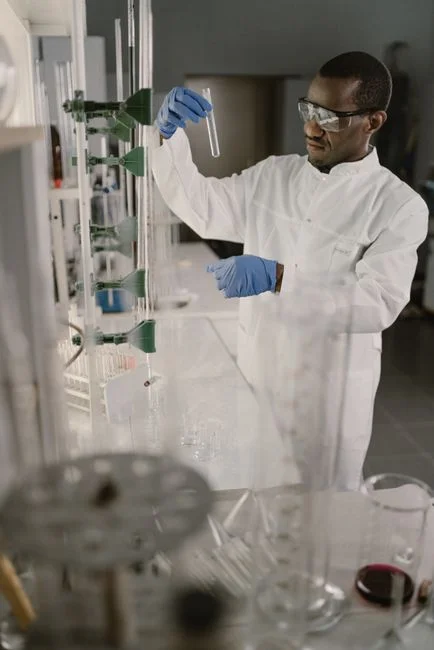
Federal categorical standards provide the regulatory floor for industrial pretreatment. Plastics molding and forming sit in 40 CFR Part 463 and rubber manufacturing in 40 CFR Part 428. Both standards limit specific pollutants — for example, Part 428 covers zinc, lead, total suspended solids, and oil and grease, while Part 463 covers BOD, TSS, and oil and grease — and limits can be expressed as concentration or mass per process unit. The receiving POTW layers its own local limits on top of these federal requirements.
Local limits can take three forms: numeric, narrative, or Best Management Practices. A headworks allocation can also be granted to a specific industry based on the maximum allowable headworks load (Hazen and Sawyer). In the SCWWA peer review, the Authority's 2009 revision lowered FOG from 500 mg/L to 300 mg/L and set TPH at 100 mg/L, with new limits taking effect in January 2014. After the revision, one non-compliant industry was forced into a Consent Special Order in 2016, which is the documented enforcement pathway when a plant cannot meet a revised limit (Hazen and Sawyer). For a Montgomeryville plant, the practical step is to request the current sewer use ordinance, the most recent local-limits analysis, and any headworks allocation worksheet before sizing equipment.
The Core Pretreatment Train: Equalization, DAF, Chemical Precipitation, and Biological Polishing
A functional pretreatment train for a plastics or rubber plant begins with a rotary mechanical bar screen at the headworks to capture plastics, rags, and fibrous debris before the stream hits pumps and equalization. From the screen, flow enters equalization, which dampens batch swings in pH, temperature, and surfactant load that would otherwise push the DAF out of spec — the exact failure mode the Hazen review identifies for "high temperature, high pH, surfactant-laden discharge" (Hazen and Sawyer).
From equalization, the stream moves to dissolved air flotation, which serves as the primary removal method for free and emulsified oils, FOG, and polymer fines; an air-scour, automatic-skim DAF is the standard configuration for plastics and rubber duty. Chemical precipitation handles dissolved metals such as zinc and the reduced trivalent form of chromium, with pH adjustment as the primary control variable. Residual organics, surfactants, and BOD are polished in a biological stage — typically an MBR or activated sludge with clarification — to meet both categorical standards and reuse targets. Sludge from the DAF and precipitation steps is then dewatered on a plate and frame filter press for combined DAF and chemical sludge to keep hauled-waste volumes manageable.
| Stage | Function | Equipment |
|---|---|---|
| Headworks screening | Capture plastics, rags, fibrous debris | Rotary bar screen for headworks |
| Equalization | Dampen pH, temperature, surfactant swings | EQ basin with mixing and aeration |
| DAF | Remove free and emulsified FOG, oil, fines | DAF system for plastics and rubber wastewater |
| Chemical precipitation | Remove zinc, reduced Cr(VI) as hydroxide | PLC-controlled coagulant and pH dosing skid |
| Biological polishing | Residual BOD, COD, surfactant reduction | MBR or activated sludge with clarifier |
| Sludge dewatering | Reduce sludge volume for haul-off | Plate and frame filter press |
How HydropureWater Equipment Maps to Each Pretreatment Stage
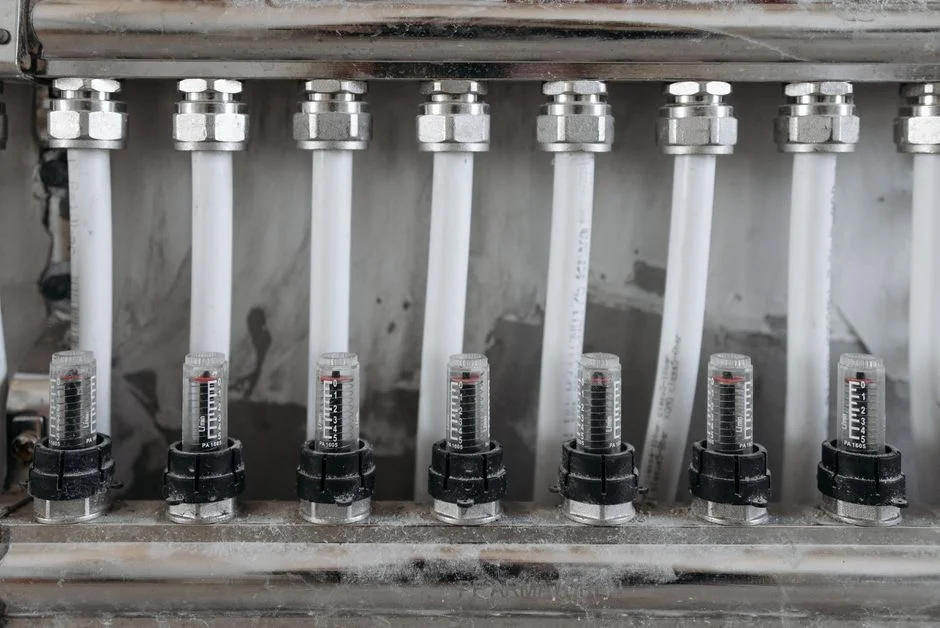
Equipment for a new pretreatment train maps directly to these four critical stages. A rotary bar screen for headworks serves as the initial stage for capturing plastics, rags, and fibrous debris, protecting downstream pumps from ragging. A DAF system for plastics and rubber wastewater acts as the primary separation step for FOG, oil, and suspended solids, sized to the peak batch flow delivered by the equalization basin. A PLC-controlled coagulant and pH dosing skid provides precise coagulant, flocculant, and pH-adjuster injection to ensure stable performance across batch swings. A plate and frame filter press for combined DAF and chemical sludge completes the solids handling process.
2026 Procurement Checklist: Sizing, Vendor Selection, and Lead Time
Engineers should begin the procurement process by matching peak and average flow, ensuring the DAF handles batch peaks and the equalization basin dampens them before the biological stage. Ask the vendor for a documented mass balance covering oil and grease, TSS, zinc, pH, and BOD/COD at design load and at 1.5x design load, as local limits are subject to revision (Hazen and Sawyer). Require reference plants in plastics or rubber duty, and confirm the controls platform supports remote monitoring and EPA-reportable data exports to automate discharge monitoring reports. Specify that chemical dosing, DAF controls, and sludge dewatering be supplied as a pre-wired, factory-tested skid to shorten on-site installation time, and budget for a jar-test and pilot program to verify chemistry before the full unit ships. The DAF system for plastics and rubber wastewater and the PLC-controlled coagulant and pH dosing skid typically anchor this scope. For common commissioning pitfalls, the DAF common problems and solutions 2026 reference serves as a useful cross-check.
Frequently Asked Questions
What does a 2026 plastics and rubber pretreatment skid cost to install and operate?
Capex scales with peak flow, the number of stages, and the level of factory pre-assembly. Buyers should request a budget estimate that itemizes the DAF system, the dosing skid, the bar screen, and the filter press separately, plus installation, instrumentation, and a one-year operating-cost assumption for chemicals and sludge haul-off.
How long does it take to design, build, and commission a DAF-based pretreatment system for a 50 m³/day plastics plant?
For a skid-mounted system around 50 m³/day, the process includes jar-testing and engineering submittals, factory fabrication, acceptance testing, site delivery, installation, and commissioning. Buyers should request a written milestone schedule with engineering, fabrication, ship, install, and commission dates, confirming whether the schedule includes a pilot or on-site performance test before final acceptance.
What is the difference between EPA categorical standards and POTW local limits, and which one drives my discharge?
The federal categorical standards in 40 CFR Part 463 (plastics) and 40 CFR Part 428 (rubber) define which pollutants apply to your subcategory. The POTW's local limits are the numeric or narrative values enforced at the sewer tap, and these drive permit compliance and enforcement, including consent orders. The Hazen review documents a case where a 2009 local-limits revision forced a non-compliant industry into a 2016 Consent Special Order even though federal requirements remained unchanged (Hazen and Sawyer). A POTW local-limit revision case study is a useful reference for how those revisions play out in practice.
What are the most common reasons a plastics or rubber plant fails a pretreatment compliance audit?
Audits typically fail on FOG, TPH, pH excursions, and zinc because equalization is undersized, DAF chemistry drifts off-spec during a batch discharge, or in-plant water reduction has concentrated mass loads above unchanged local limits. A pre-audit step is to pull the last twelve months of self-monitoring data, compare each parameter against the local limit, and run a jar test on a representative batch sample through the DAF and precipitation stages before the auditor arrives.