Why a 20 MLD Indian STP Needs a UV Stage in 2026
UV disinfection at a 20 MLD plant in India is driven by the same outlet envelope that already forces secondary treatment: the MoHUA communication cited in the 2026 STP compliance literature lists STP outlet parameters of pH 5.5–9.0, BOD 10 mg/L, TSS 20 mg/L, COD 50 mg/L, total nitrogen 10 mg/L, and specific faecal coliform limits, with SPCB/PCC consent conditions converting those numbers into enforceable pass/fail tests (cleantechwater.co.in, 2026). The faecal coliform line is the one that makes disinfection effectively unavoidable — BOD and TSS can be met by a well-run secondary train, but the coliform limit cannot.
The same source highlights the scale of the compliance gap: PIB, citing CPCB's March 2021 report, puts urban India at 72,368 MLD of sewage generated against 31,841 MLD of installed treatment capacity. That 40,000+ MLD shortfall means SPCBs are tightening enforcement on existing plants, so UV is no longer only a new-build concern — it shows up in retrofit consent renewals too. Plants near receiving water bodies designated for bathing or drinking-of-stream use face even harder consent language.
The reuse pathway makes the case stronger. MoHUA's amended reuse norms cover toilet flushing, horticulture, vehicle washing, fire protection, cooling make-up and golf-course irrigation, and each of those applications requires microbiological safety — chlorine residual, UV dose, or an equivalent barrier. UV is the standard non-chemical route at 20 MLD because it adds no residual and no disinfection by-products downstream. For a board or SPCB submission, UV should sit in the baseline BOQ, not in the optional extras list. The trade-offs are covered in the HydropureWater UV disinfection advantages and disadvantages guide.
UV Dose, Flow and Channel Sizing for 20 MLD
Vendor quotes for UV at 20 MLD diverge mainly because each vendor assumes a different combination of dose, UV transmittance (UVT) and redundancy. The reference dose for wastewater disinfection is 30–40 mJ/cm² per the HydropureWater UV disinfection advantages and disadvantages guide; the buyer must first decide whether the upstream train ends at secondary clarification (UVT typically 50–65%, more lamps needed) or at tertiary filtration (UVT 65–80%, fewer lamps), because that single choice can swing lamp count by 30–40%.
Hydraulics fix the channel size. 20 MLD equals 20,000 m³/day; over 24 hours that is roughly 833 m³/h average. Apply a peaking factor of 1.25–1.5 — the band most Indian municipal tenders accept — and peak design flow rises to approximately 1,040–1,250 m³/h. UV channels must be sized to that peak, not to the daily average, otherwise dose collapses during morning and evening flow peaks when lamp output is also decaying toward end-of-life. UVT of the upstream effluent is the second input; secondary effluent at 55% UVT demands roughly twice the lamp count of filtered effluent at 75% UVT for the same delivered dose.
Redundancy is the third decision. Indian municipal practice for 20 MLD is N+1 channels — i.e., enough channels to take one out for lamp replacement or sleeve cleaning while the plant stays online — and an installed-to-operating lamp ratio of roughly 1.2–1.3 so that end-of-lamp-life output still meets the design dose. Open-channel, submerged-lamp reactors dominate at this scale because they tolerate grit, allow manual cleaning if the wiper fails, and can be isolated channel-by-channel with penstocks. Closed-pipe UV skids appear mainly on packaged plants below 5 MLD.
| Design Input | Value / Range | Source / Buyer Action |
|---|---|---|
| Average flow | ~833 m³/h (20 MLD / 24 h) | Calculated |
| Peak design flow | ~1,040–1,250 m³/h at PF 1.25–1.5 | Fix in tender; confirm with sewer hydrograph |
| Target UV dose | 30–40 mJ/cm² | HydropureWater article 7968; SPCB consent may set higher |
| UVT (secondary effluent) | 50–65% | Measure on-site; do not assume |
| UVT (tertiary filtered) | 65–80% | Measure on-site after filtration |
| Channel redundancy | N+1 minimum | Indian municipal tender norm |
| Installed/operating lamp ratio | ~1.2–1.3 | Maintain dose at end-of-lamp-life |
| Reactor type at 20 MLD | Open-channel, submerged | Indian norm at this scale |
Capital Cost Model for a 20 MLD UV System (2026)
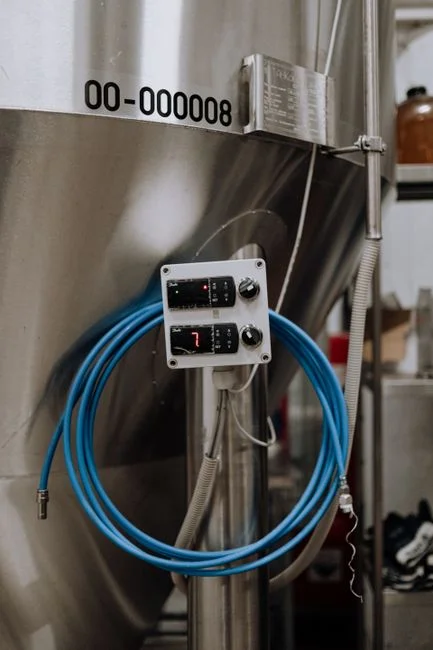
The supplied research does not contain a 2026 rupee figure for UV at 20 MLD scale in India, so this section publishes a line-item structure the buyer fills in from vendor quotes rather than a single invented number. A defensible capex model for a UV system at 20 MLD should carry at least the following items, each priced separately so that competing quotes can be compared on the same basis: (1) UV reactor or channel skid with lamps and ballasts, (2) automatic quartz-sleeve cleaning system, (3) inlet and outlet hydraulic piping, level-control weirs and isolation penstocks, (4) MCC and PLC integration with the plant SCADA, (5) civil works for the UV chamber and approach channels, (6) installation, testing and commissioning, and (7) commissioning spares plus a first-year consumables kit. The boundary between UV vendor scope and main civil contractor scope must be stated in the tender, otherwise the same line item appears in two quotes.
Design variables that move each line item: peak flow (doubling peak flow roughly doubles the UV skid cost), number of channels, UVT, design dose, lamp type (low-pressure high-output amalgam vs medium-pressure), level of automation, indoor vs outdoor enclosure rating, and whether civil works are inside the UV vendor's BOQ. Halving the design dose from 40 to 30 mJ/cm² reduces lamp count and ballasts but must still satisfy the SPCB faecal coliform consent limit — confirm that reduction is allowed before using it to cut capex. Specifying automatic wiper-based sleeve cleaning adds capital cost but reduces sleeve-cleaning labour and improves sustained dose delivery.
Indian municipal tenders at 20 MLD commonly require a 10% spare lamp set delivered with the plant, one full channel of civil redundancy, and a 24-month performance warranty on lamps and ballasts. These items must be priced into every quote before comparison; a low sticker price that omits spares, redundancy or warranty will look cheap but cost more over the first three years. For the wider plant-cost context — civil vs equipment split, automation, instrumentation — the MBR plant operation and maintenance guide sets out how UV typically sits inside a full tertiary train BOQ.
| Capex Line Item | Scope Notes | Buyer Input Required |
|---|---|---|
| UV reactor / channel skid | Lamps, ballasts, frame, sensors | Vendor quote against peak flow & dose |
| Automatic sleeve cleaning | Wiper or chemical cleaning system | Specify type in tender |
| Inlet / outlet hydraulics | Piping, weirs, penstocks | Vendor scope vs civil contractor |
| MCC / PLC / SCADA | Integration with plant control | Confirm I/O list |
| Civil works for UV chamber | RCC tank, baffles, drainage | Quantity surveyor take-off |
| Installation & commissioning | Erection, biodosimetry, SAT | Vendor quote |
| Spares & first-year consumables | 10% spare lamps, sleeves, ballasts | Spec-mandated; price separately |
| Performance warranty | 24-month lamp/ballast cover | Tender requirement |
Operating Cost Model: Lamps, Power, Cleaning and Spares
UV opex is dominated by consumables that wear on a fixed cycle, which makes it predictable in a way chlorination is not. The main line items, in declining cost order at a typical 20 MLD Indian plant, are: lamp replacement, quartz-sleeve replacement, sleeve cleaning (chemical or wiper-based), ballast and sensor power, and operator time. Lamp useful life for low-pressure high-output amalgam lamps is commonly cited at 8,000–12,000 operating hours (HydropureWater product 22, HydropureWater UV sterilizer range); at continuous 24/7 operation that translates to roughly one lamp change per year, and more frequent if lamps are run at full power to compensate for declining UVT.
UV power is small relative to plant-wide power. Aeration is the single largest energy cost in a sewage treatment plant, and blower power typically dwarfs UV ballast load by an order of magnitude (studiomatrx.org guide library, 2026-09). UV power at 20 MLD is best budgeted as a single-digit percentage of total plant electricity, not as a major cost line. Where UV opex diverges structurally from chlorination is the absence of an ongoing chemical purchase, the absence of dechlorination chemicals, and no DBPs in the discharge — relevant for plants that discharge to reuse applications or to receiving waters with downstream bathing use.
Maintenance cadence should be written into the O&M manual before commissioning: monthly visual lamp check and lamp-out alarm review, quarterly UV intensity sensor calibration, annual sleeve inspection for fouling or cracking, lamp replacement at end-of-life, and a 5-yearly ballast, MCC and earthing health check. The single biggest opex risk is sleeve fouling, which silently reduces delivered dose; an automatic wiper system costs more in capex but typically pays back in steady-state opex. For plants that still need a chemical polishing step, an automatic chemical dosing system can be specified separately, but UV itself does not need one.
| Opex Line Item | Driver | Cadence | Input Buyer Must Obtain |
|---|---|---|---|
| Lamp replacement | End-of-life, ~8,000–12,000 h | ~Annual at 24/7 | Lamp unit price from vendor |
| Quartz-sleeve replacement | Fouling, cracking | ~2–5 yearly | Sleeve unit price |
| Sleeve cleaning | Fouling rate, UVT drop | Monthly to quarterly | Wiper vs chemical cost |
| Ballast / sensor power | Continuous operation | Continuous | Connected load × tariff |
| Spares holding | 10% lamp set, sleeves | Continuous | Annual replenishment |
| Operator time | Checks, log-keeping | Monthly / quarterly | Plant labour allocation |
UV vs Chlorination at 20 MLD: Lifetime Cost Trade-off
UV capex is generally higher than sodium-hypochlorite dosing capex at 20 MLD, but UV has no recurring chemical purchase, no dechlorination stage, and no DBP formation — the structural argument made in the HydropureWater UV sterilizer range technical literature. Over a 10-year horizon, the chemical line on a chlorination plant is large enough to flip the TCO in favour of UV for many Indian municipal sites, especially where electricity is subsidised or partially solarised.
For 20 MLD plants with reuse obligations — toilet flushing, horticulture, cooling make-up, vehicle washing — UV avoids the residual chlorine management problem entirely. Reuse networks typically cannot tolerate 0.5–1.0 mg/L free chlorine in the distribution pipework because of corrosion and user-exposure concerns; UV sidesteps that. For plants that discharge only to a drain or river, chlorination is the cheaper first-cost option, but the buyer must price sodium hypochlorite, dechlorination (if consent requires it), and DBP monitoring into the 10-year opex before declaring chlorination cheaper on TCO.
UV is not a fix for poor upstream treatment. With high effluent TSS, lamp sleeves foul, UVT drops, and delivered dose collapses regardless of lamp count. UV must follow an effective secondary (and usually tertiary) train; the article should never be used to justify skipping filtration. The decision rule: if reuse, low-TSS effluent and zero chemical handling are priorities, specify UV; if first-cost is paramount and discharge-only is acceptable, chlorination is defensible; many large Indian plants run UV + chlorination as a polisher, doubling resilience during lamp decay or sleeve fouling. For an alternative chemical route, the chlorine dioxide generator cost and specs reference sets out the comparator.
Pre-Tender Checklist for a 20 MLD UV BOQ
Cost variance between UV bidders at 20 MLD is usually explained by inputs the buyer failed to fix in the tender document. Lock these down before floating the enquiry: peak hourly flow (with the peaking factor the vendor must design to), average and minimum UVT of the secondary or tertiary effluent, target UV dose in mJ/cm², the faecal coliform limit from the SPCB consent, channel count and redundancy (N+1 minimum), lamp type, sleeve cleaning method (manual, wiper, or chemical), enclosure rating (indoor IP54 vs outdoor IP65), and SCADA / MCC integration scope including I/O count and protocol.
Vendor pre-qualification criteria to ask for in writing: a reference list of Indian 20 MLD-class UV plants with named contacts, lamp life warranty terms in operating hours (not just months), local service network with response-time commitment, and a 5-year spares availability commitment with price hold. Commissioning tests the buyer should make contractually binding: dose verification by biodosimetry or MS-2 / coliphage challenge, intensity distribution test across each channel, sleeve cleaning cycle test at design flow, and a 7-day reliability run at peak flow with no channel bypass. Documentation to retain for the SPCB consent renewal file: lamp replacement log, UV intensity trend, cleaning log, energy consumption record, and any non-conformance or alarm history.
Frequently Asked Questions
What is a realistic 2026 capex range for a UV system at a 20 MLD STP in India?
The supplied research does not contain a defensible 2026 rupee figure for UV at 20 MLD in India, and publishing one would be guesswork. The honest answer is to use the line-item model in the capex section above, send it to at least three pre-qualified UV vendors with the same peak flow, UVT, dose and redundancy inputs, and compare the returned quotes line by line. The only solid numbers the buyer can anchor on are the 30–40 mJ/cm² dose range (HydropureWater article 7968) and the ~1,040–1,250 m³/h peak design flow from the 20 MLD hydraulic calculation.
How often must UV lamps be replaced, and what dominates annual opex?
Low-pressure high-output amalgam lamps are typically rated for 8,000–12,000 operating hours (HydropureWater product 22), which at continuous 24/7 operation works out to roughly one lamp change per year. The dominant annual opex line items are lamp replacement, quartz-sleeve cleaning or replacement, and ballast power; chemical cost is effectively zero, which is the structural opex difference versus chlorination.
Should a 20 MLD plant choose UV or chlorination?
Use UV where reuse, low-TSS effluent, zero chemical handling or absence of DBPs matters; use chlorination where lowest first-cost is the priority and the discharge goes only to a drain or river where residual chlorine is not a downstream concern. Many large Indian municipal plants now run UV followed by a small chlorination polisher for resilience, not as a primary barrier.
What should a 20 MLD buyer check before selecting a UV supplier in India?
Ask for an Indian reference list at 20 MLD class with named contacts you can call, lamp life warranty stated in operating hours, a local service network with a committed response time, a 5-year spares commitment with price hold, and a biodosimetry or MS-2 dose-verification test report from a comparable plant. The supplier selection criterion that matters most is verifiable dose delivery on Indian secondary effluent, not brochure UV output.