
Why Tea Processing Wastewater Needs a Dedicated DAF Design
Spent tea liquor is a hostile feed for a clarifier designed against textbook food-plant averages. The solids fraction is dominated by low-density spent leaf fiber, fine pectin and protein residues, and emulsified oils recovered from aroma capture—particles that physically float rather than settle—causing gravity units to underperform and routinely export FOG and TSS surges downstream (Hixson, 2025). Tea streams also run hot (50–70 °C) and acidic (pH 4.5–5.5) because of the tannin and polyphenol load, which shifts both coagulant speciation and Henry's-Law air solubility away from generic food-plant references used in vendor catalogues.
The second structural problem is seasonality. Tea processing is campaign-based: green leaf intake is concentrated in plucking seasons, so peak shift flows can run 2–3× the daily average for hours at a time. A DAF tank sized on average flow has no margin for those surges, resulting in float blanket loss, TSS breakthrough, and biological overload downstream (Hixson, 2025). Treating the DAF as a primary physical-chemical step ahead of an anaerobic, aerobic, or RO polishing train is the configuration that protects those downstream units from FOG and TSS shock.
Tea Wastewater Influent Characterization: Parameters to Capture
Every sizing parameter on a tea-plant DAF traces back to how completely the influent was characterized. Hixson (2025) states that "every sizing parameter (tank area, recycle ratio, chemical dosing) traces back to the wastewater characterization" and that bench-scale jar testing on actual samples is mandatory because parameters such as the air-to-solids ratio "cannot be derived from textbook values alone." For a tea project, this means a parameter matrix built from real plant data, not borrowed from dairy or brewery references.
At minimum, the matrix must capture average and peak shift flow, TSS, FOG, BOD₅, COD, pH, temperature, and a tannin/polyphenol surrogate (TOC or color at 420 nm) so the chemistry stage can be designed against actual liquor. Diurnal and seasonal variation across withering, rolling, fermentation (black tea only), drying, and aroma recovery must be sampled separately because each unit operation contributes a different waste fraction—spent leaf liquor and aroma-condensate streams behave differently in a DAF. Headworks selection matters at this stage: a rotary mechanical bar screen ahead of the DAF protects recycle nozzles from fibrous ragging and is standard on tea headworks.
| Parameter | Why it matters for DAF sizing | Data source required |
|---|---|---|
| Average & peak shift flow (m³/h) | Tank plan area and saturator sizing | 24-h composite + shift-logger trace |
| TSS, FOG, BOD₅, COD | A/S ratio, flocculant selection, downstream load | Grab + 24-h composite per unit op |
| pH and temperature | Coagulant performance, air solubility, Henry's Law | In-line probe + grab |
| Tannin / polyphenol surrogate | Color and organic load on downstream biology | Color 420 nm or TOC |
| Particle size distribution | Bubble-to-particle ratio check (~0.5–1.0) | Lab analysis on fresh liquor |
Core DAF Design Parameters for a Tea Plant
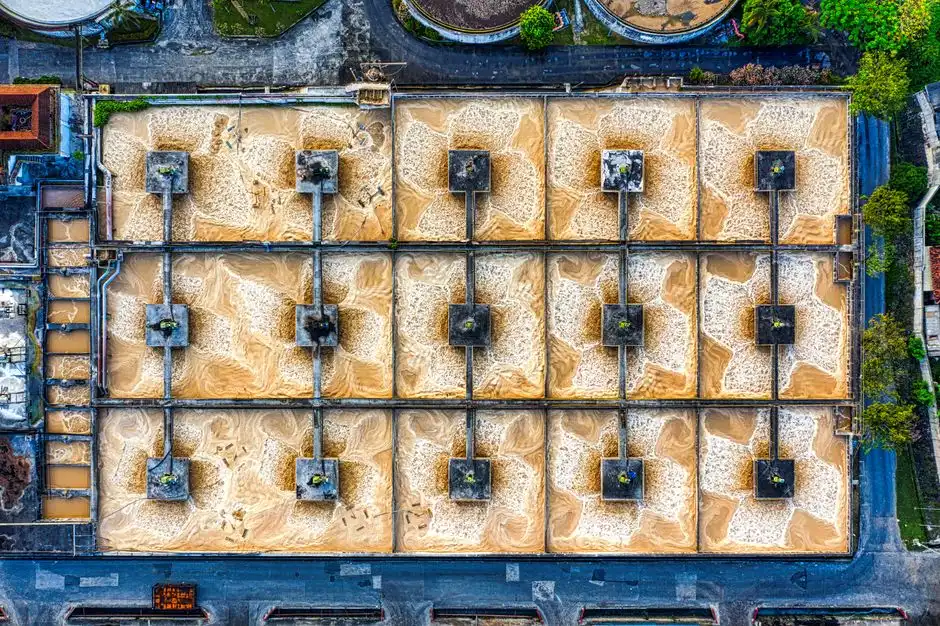
Each DAF parameter is tuned against the tea matrix rather than a generic food-plant default. Saturation pressure for the recycle loop is sized at 4–6 bar (58–87 psi) per Henry's Law, with packed-column saturators reaching 85–95% saturation efficiency against unpacked vessels that deliver less (Hixson, 2025; waterandwastewater.com). Microbubble sizing targets a 30–50 µm average within the broader 10–100 µm industrial range, because collision efficiency with tea floc is maximized at a bubble-to-particle ratio of roughly 0.5–1.0 (waterandwastewater.com).
Engineers must balance these variables to ensure effective separation during peak loads. Recycle ratio runs 15–50% of influent flow as the standard industrial band, and the operating point is moved upward when high-TSS peak shifts force a higher air-to-solids ratio (Hixson, 2025). The A/S ratio itself spans 0.005–0.200 lb air/lb solids in published industrial practice—a wide range because tea fiber, protein, and wax fractions respond differently, so the final value is selected by jar testing rather than borrowed from a vendor datasheet (Hixson, 2025). Tank plan area is set by dividing design flow (peak, not average) by the selected hydraulic surface loading rate, with inclined-plate or lamella geometries used where footprint is constrained. The full parameter set is captured in the table below, and the DAF engineering specifications guide walks through the supporting calculations.
| Parameter | Industrial range / target | Tea-stream design point |
|---|---|---|
| Saturation pressure | 4–6 bar (58–87 psi) | 5–6 bar to compensate hot liquor |
| Saturator type | Retention tank or packed column | Packed column (85–95% saturation) |
| Microbubble size | 10–100 µm | 30–50 µm average |
| Recycle ratio | 15–50% of influent | Upper end at peak shift |
| A/S ratio | 0.005–0.200 lb air / lb solids | Jar-test confirmed |
| Hydraulic surface loading | Function of tank geometry | Design to peak flow + recycle |
Chemical Conditioning for Tea Effluent: Coagulation, Flocculation, pH
Chemical conditioning is what turns a marginal DAF into a working one. The published industrial result is unambiguous: without chemicals, DAF removes only 50–60% of TSS, while optimized coagulation-flocculation lifts removal to 85–95% on food and beverage streams of comparable character (waterandwastewater.com). Skipping or under-sizing this stage is the most common reason tea-plant DAFs underperform in commissioning.
Proper chemical management is a significant operating expense. Hixson (2025) puts chemical costs for a mid-sized food-plant DAF at $50,000–$150,000 per year and recommends that the figure be sized into lifecycle cost from day one rather than treated as a retrofit. Tea effluent pH 4.5–5.5 typically forces a correction step before alum or ferric coagulants work in their optimal window, although one laboratory study (oURspace, University of Regina) showed that a cationic polymer (Polymer 572) achieved high oil and turbidity removal in a chemical DAF system without requiring pH adjustment—useful evidence that polymer selection can sometimes bypass the acid neutralization step on tannin-laden streams. A dedicated automatic chemical dosing skid with PLC-controlled coagulant, flocculant, and pH adjustment injection is the standard way to hold repeatable performance on tea liquor where flows and loads shift by the hour.
Sizing a Tea-Plant DAF: Worked Example Skeleton
The sizing math is straightforward once the influent matrix and jar-test results are in hand. The worked skeleton below lets a process engineer populate real numbers against their own flowsheet rather than trust a vendor selection chart.
- Total flow to DAF = influent flow + recycle. Use peak shift flow as the sizing basis, with recycle at 15–50% of influent selected from the jar-test A/S result (Hixson, 2025).
- Tank plan area = total flow / selected hydraulic surface loading rate. Cross-check the resulting area against vendor standard footprints so the unit does not become a one-off fabrication; standard industrial DAF lines (including the DAF system for tea processing wastewater) cover a wide capacity band in discrete model steps.
- Saturator sizing: deliver the design recycle flow at 4–6 bar across the full operating temperature range. A packed-column saturator is preferred to keep dissolution efficiency above 85% on hot tea liquor (Hixson, 2025).
- Subnatant quality target: 5–15 NTU if DAF is followed by biological treatment, or 2–5 NTU if followed by RO membranes—both ranges are stated in waterandwastewater.com as the trigger thresholds for online turbidity feedback control.
The variables that buyers still need to plug in from their own data are peak shift flow, recycle ratio, and the chosen A/S ratio; none of those can be derived from generic vendor curves.
Skimmer, Materials and Sludge Handling Choices for Tea Plants
Skimmer selection drives float-sludge dryness and downstream dewatering cost. Spiral-screw skimmers are common in food-grade environments; chain-and-flight skimmers suit continuous high-volume operations; vacuum skimmers can produce a drier float where downstream dewatering is constrained (Hixson, 2025). For tea streams, which carry fibrous ragging risk, the simpler spiral geometry is often the safer default at smaller capacities.
Material of construction must match the service. Stainless steel 304 or 316L suits corrosive, high-FOG tea liquor; coated carbon steel is acceptable for less aggressive service at lower capex but demands closer maintenance attention over the asset life (Hixson, 2025). Float sludge from a tea DAF is high in organics (leaf fiber, protein, recovered aroma oils) and should be routed to a plate and frame filter press for float sludge rather than to landfill, both to control disposal cost and to recover any value in the wax/oil fraction.
2026 Supplier Selection: Scoring DAF Vendors for a Tea Project
Shortlisting DAF suppliers for a 2026 procurement should be a scored exercise, not a price comparison. The procurement framework from waterandwastewater.com requires that the manufacturer provide guaranteed effluent quality at design hydraulic loading and influent TSS, supported by a performance bond or liquidated damages clause during the acceptance test—a non-negotiable requirement for any tea-plant order. References must be on comparable food or beverage effluent with similar TSS and FOG, not generic municipal jobs where the chemistry is fundamentally different.
The scorecard below weights the criteria that actually drive 20-year lifecycle cost on a tea DAF. The best DAF unit decision framework covers the supporting analysis for each line.
| Criterion | What to verify | Weighting guidance |
|---|---|---|
| Performance guarantee & LD clause | Effluent quality bonded at design TSS & flow | Mandatory — disqualify if absent |
| Saturator efficiency | Packed column at 85–95% saturation | High — drives energy & A/S ratio |
| Reference installations | Food/beverage, comparable TSS & FOG | High |
| Control platform | PLC + online turbidity feedback | Medium |
| 20-year TCO (capex + O&M) | Chemicals, energy, maintenance, spares | High |
Frequently Asked Questions
What is the realistic capital cost band for a DAF system on a tea processing line in 2026?
Reliable budgeting requires a site-specific engineering evaluation; publicly available price ranges do not account for site variables that most affect final cost (Hixson, 2025). Buyers should request a quoted price tied to their own peak flow, TSS, FOG, and material of construction, and validate it against chemical OPEX ($50,000–$150,000 per year for a mid-sized food-plant DAF) over a 20-year life.
How do I shortlist DAF suppliers for a tea plant without relying on unit price?
Require a guaranteed effluent quality at design hydraulic loading and influent TSS, backed by a performance bond or liquidated damages clause, and verify that reference installations match your TSS and FOG
Frequently Asked Questions
What DAF removal efficiency can I expect on tea processing wastewater?
A properly designed Dissolved Air Flotation (DAF) system can typically achieve 85% to 95% removal of Total Suspended Solids (TSS) and 60% to 80% reduction in Chemical Oxygen Demand (COD) from tea processing effluent. These efficiency rates are highly dependent on the precise chemical conditioning of the colloidal tannin particles prior to flotation.
Performance is contingent upon maintaining a consistent air-to-solids ratio, typically ranging from 0.01 to 0.05 ml of air per mg of solids. When operational parameters are optimized, the system can effectively clarify effluent to meet local discharge standards, often reducing oil and grease concentrations by over 90%.
How do I size a DAF unit for a tea factory with seasonal peak flows?
DAF sizing must be based on the hydraulic loading rate (HLR) calculated during the peak harvest season, typically ranging from 5 to 10 m³/m²/h depending on the surface overflow rate. To manage seasonal variability, the system should be designed with a balance tank capable of equalizing flow over a 12 to 24-hour period to ensure a steady hydraulic load to the DAF unit.
Engineers should incorporate a 20% safety margin on the peak flow rate to account for variations in influent concentration. Modular DAF designs are recommended for tea plants, allowing for the operation of additional flotation cells during high-production months while maintaining energy efficiency during off-peak periods.
Which coagulant and flocculant work best for tannin-rich tea effluent?
Ferric chloride or Polyaluminum Chloride (PAC) are the most effective primary coagulants for tea wastewater, typically dosed at 50 to 200 mg/L depending on the influent pH and tannin concentration. These metallic salts are essential for neutralizing the negative charges of organic polyphenols and tannins characteristic of tea processing streams.
For flocculation, high-molecular-weight anionic polyacrylamide (PAM) is generally required, dosed at concentrations between 1 and 5 mg/L. The selection must be verified through bench-scale jar testing, as the specific tannin profile can vary based on tea variety and fermentation levels, which directly impacts the required polymer charge density.
What does a DAF system cost for a tea processing plant in 2026?
Capital expenditure for a DAF system in 2026 typically ranges from $80,000 to $250,000 USD, depending on the throughput capacity, material of construction (e.g., 304 or 316 stainless steel), and the level of automation required. This estimate generally includes the flotation unit, air saturation system, and integrated control panel.
Operational costs, including chemical consumption, electricity for the compressor and recycle pump, and sludge disposal, generally add an annual cost of $15,000 to $40,000. Total cost of ownership is heavily influenced by the chemical dosing strategy and the frequency of sludge dewatering cycles.
How do I shortlist DAF suppliers for a tea plant project?
Shortlist suppliers by verifying their experience with high-strength organic wastewater in the food and beverage sector, specifically requiring at least three successful installations with similar COD and tannin profiles. Request documented pilot study results or reference site performance data to validate their claimed removal efficiencies for tea-specific effluent.
Ensure the supplier provides comprehensive after-sales support, including local technical assistance for chemical optimization and spare parts availability for critical components like recycle pumps and pressure release valves. Prioritize vendors who offer integrated programmable logic controllers (PLC) that can communicate with your existing plant SCADA system for real-time monitoring of turbidity and pH.