Why small communities in Taiwan still design their own wastewater plants in 2026
A 50–500-household cluster in western Taiwan is not a scaled-up single home, and the Taiwan permitting system treats it that way. The national sewer connection rate remains below the level of most developed economies (local development forum data, 2026), so most new residential developments in Taoyuan, Yunlin, Chiayi and Pingtung counties will wait 3–7 years before any central trunk sewer reaches their site. The US EPA defines a small community wastewater system as one serving 10,000 or fewer people with average daily flow under 1 MGD (EPA, About Small Wastewater Systems); a 500-household cluster at 250 m³/day sits at the low end of that range, which is why the technology and sizing logic used here is built around clusters, not detached homes.
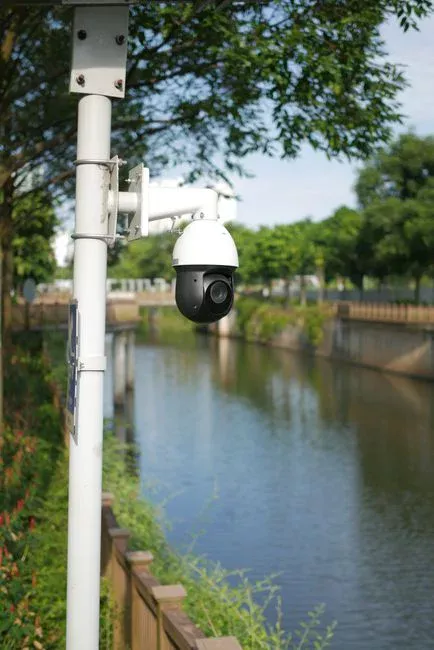
The legal path runs through three layers: the central Sewerage Act, county or city ordinances (Taoyuan's building permit rules are the most-cited reference), and the building code. Above a defined dwelling-unit threshold, the building permit reviewer now routinely requires proof of on-site treatment capacity before granting occupancy clearance. The practical risk in 2026 is real: riverside developments in Taipei and Kaohsiung still discharge to storm drains because municipal infrastructure has not kept pace with promises (2026 field observations). The engineering implication is that the community plant you design in 2026 will likely be in operation for at least five years before any sewer tie-in becomes possible. For a full read on the regulatory stack, see the residential wastewater treatment in Taiwan 2026 guide.
The six effluent numbers every Taiwan community plant must hit in 2026
Every decentralized community plant in Taiwan must meet six parameters, set by the Taiwan EPA and confirmed in 2026 Taoyuan municipal project data: BOD5 ≤ 20 mg/L, SS ≤ 20 mg/L, TN ≤ 15 mg/L, TP ≤ 2 mg/L, NH3-N ≤ 10 mg/L, and Coliform count ≤ 160,000 CFU/100 mL. These are not optional targets; they are the line a permit reviewer will check against your quarterly effluent report. The exact ceiling you are chasing depends on the discharge destination: direct river discharge is treated as Class B in the permit review, while irrigation-canal discharge is Class A and forces tighter nutrient control.
Single-tank septic systems cannot meet this profile. They have no nitrification or denitrification stage, no chemical or biological phosphorus removal, and no disinfection stage, which is why they are effectively obsolete for any new residential development above a handful of households. The public-health case for solids removal plus disinfection is reinforced by the October 2025 detection of hypervirulent Clostridioides difficile RT078 strains in Taiwanese wastewater treatment plants and the first environmental detection of RT027 in shellfish (Microbiology Spectrum, 2025-10); a community plant that skips disinfection is not just non-compliant, it is a measurable upstream source of resistant organisms.
| Parameter | 2026 Limit | Engineering implication |
|---|---|---|
| BOD5 | ≤ 20 mg/L | Requires biological stage with sufficient HRT; septic alone fails |
| SS | ≤ 20 mg/L | Final clarifier or membrane stage; triggered MBR or sedimentation polish |
| TN | ≤ 15 mg/L | A/O or MBR with denitrification zone; A/O typically 12–18 mg/L |
| TP | ≤ 2 mg/L | Coagulation or chemical polishing on A/O; MBR alone can reach 0.5–1.5 mg/L |
| NH3-N | ≤ 10 mg/L | Nitrification must be sized for winter temperatures below 20 °C |
| Coliform | ≤ 160,000 CFU/100 mL | Disinfection stage mandatory; ClO2 or UV after the biological reactor |
Sizing a 50–500 household community: flow, peak factor, infiltration
Taiwanese households use more water than most international norms, so copy-pasting a Western design figure is the fastest way to undersize a plant. Domestic water use in Taiwan runs 250–300 L/person/day, and the average household size in western-plain counties is about 2.8 persons (engineering design standards, 2026), giving a base flow of roughly 700–840 L/day per household. Apply a peak factor of 2.5–3.0 to capture the morning and evening surges that drive wet-weather loading, and the design flow per household lands at 1.75–2.5 m³/day.
On top of peak flow, add a 20% infiltration allowance for the high groundwater tables found across the western plains, then cross-check the result against the equipment envelope. The WSZ underground A/O package plant covers 1–80 m³/h (24–1,920 m³/day), so a 100-household cluster at 250 m³/day sits comfortably inside the envelope with headroom for a 12-month performance guarantee that covers load growth. A 50-household cluster lands at 87.5–125 m³/day, a 200-household cluster at 350–500 m³/day, and a 500-household cluster at 875–1,250 m³/day, which is the point at which most designers move to multiple parallel units rather than a single oversized reactor.
| Households | Base flow (m³/day) | Design flow at 2.5× peak (m³/day) | With +20% infiltration (m³/day) |
|---|---|---|---|
| 50 | 35–42 | 87.5–105 | 105–125 |
| 100 | 70–84 | 175–210 | 210–250 |
| 200 | 140–168 | 350–420 | 420–504 |
| 500 | 350–420 | 875–1,050 | 1,050–1,260 |
WSZ underground A/O vs MBR membrane bioreactor: choosing for a Taiwan site
For a 50–500-household cluster the choice is between two credible 2026 platforms, and the deciding variable is land cost, not technology fashion. The WSZ underground A/O package plant (1–80 m³/h) integrates anoxic/oxic contact oxidation, sedimentation and disinfection inside a single buried tank. Typical effluent is BOD < 20 mg/L and TN 12–18 mg/L, which means it usually needs a tertiary chemical stage to meet the 2 mg/L TP ceiling. The MBR membrane bioreactor system (10–2,000 m³/day) uses submerged PVDF membranes at sub-micron pore size and routinely hits TN 8–12 mg/L and TP 0.5–1.5 mg/L in a single pass, with a footprint roughly 60% smaller than a conventional A/O of equal capacity. MBR flat-sheet modules such as the DF series flat-sheet MBR module (0.1 μm, 80–225 m² per cassette) consume 10–20× less energy than external cross-flow systems, which is why submerged designs dominate the Taiwan market.
The 2026 breakeven rule, derived from project data, is straightforward: MBR pays back in 5–7 years once land cost exceeds 500,000 NTD/m², or whenever the development requires reuse-quality effluent for toilet flushing or landscape irrigation. Below that land-cost line the WSZ wins on capital cost and on a 15–20% lower OPEX (no membrane cleaning chemicals, no cassette replacement reserve). Sequencing Batch Reactor (SBR) is technically viable but rarely specified in Taiwan because the larger tank footprint and complex cycle control cannot be justified against a submerged MBR module in the same price band.
| Criterion | WSZ underground A/O | MBR membrane bioreactor |
|---|---|---|
| Flow envelope | 1–80 m³/h | 10–2,000 m³/day |
| Typical BOD | < 20 mg/L | < 5 mg/L |
| Typical TN | 12–18 mg/L | 8–12 mg/L |
| Typical TP | Needs tertiary polish to 2 mg/L | 0.5–1.5 mg/L single pass |
| Footprint | Baseline (100%) | ~40% of A/O (-60%) |
| OPEX vs WSZ | Baseline | +15–20% |
| Land-cost breakeven | Below 500,000 NTD/m² | Above 500,000 NTD/m², or any reuse requirement |
| Payback window | n/a | 5–7 years above the breakeven |
Typhoon and monsoon construction details that determine whether the plant survives year one
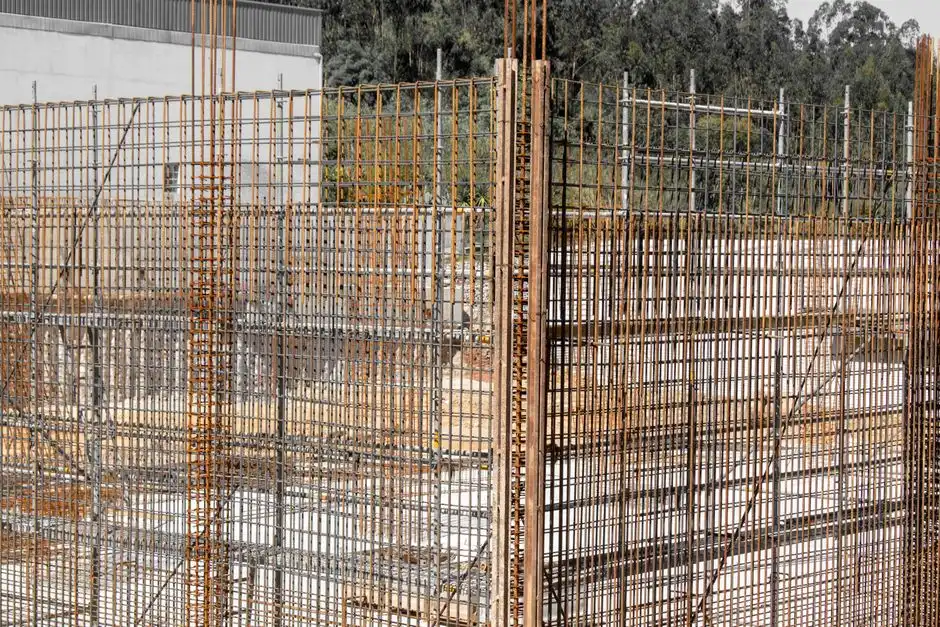
Western-plain sites fail in three predictable ways during the first typhoon season: buried tanks heave, control panels flood, and membranes foul during a multi-hour power outage. Each of these is a scope-of-supply clause you can paste into a tender, not a vague "waterproof" line item.
First, the groundwater table in Yunlin, Chiayi and western Taoyuan routinely rises above 1 m depth during the May–September monsoon. Any buried tank, including the WSZ series, must be specified with reinforced anti-buoyancy anchoring sized for the empty-tank condition, otherwise uplift will crack pipe connections within a single season. Second, specify IP66 control panels rather than the default IP54; typhoon-driven surface flooding and wind-driven rain routinely exceed IP54 in field conditions. Third, require a UPS sized to keep blowers and permeate pumps running through a typical 2–4 hour grid event; without it, an MBR membrane will foul irreversibly within hours of anoxia. Fourth, every unit must include 600 mm manways for media replacement and membrane inspection, plus activated-carbon vent filters on the buried tank headspace to prevent the hydrogen sulphide complaints that derail residential projects within weeks of occupancy. Headworks protection should be a GX rotary mechanical bar screen at 3–5 mm aperture to keep plastic and debris out of the biological stage, and final disinfection is most reliably delivered by a chlorine dioxide generator for effluent disinfection, which holds residual longer than hypochlorite in warm Taiwanese conditions.
2026 procurement checklist and lifecycle costs for a Taiwan community plant
The cheapest way to overpay on a community plant is to lock the technology before the discharge destination is finalised. A 2026 procurement flow that has held up under permit review looks like this: confirm Class A (irrigation canal) versus Class B (river) discharge, size the flow using the 2.5× peak plus 20% infiltration math, then choose WSZ below the 500,000 NTD/m² land-cost line and MBR above it. Mandate a Factory Acceptance Test (FAT) that simulates the design BOD and TN loads against the actual reactor, not a generic brochure curve, and bind a 12-month performance guarantee with quarterly effluent testing into the supply contract. Sludge removal cadence differs by platform: every 3–6 months for a standard WSZ, every 6–12 months for an MBR running at higher SRT, and standard Taiwan vacuum trucks carry 3–5 m³, so plan vehicle access before you lock the tank geometry. Lifecycle benchmarks: septic pumping runs about 2,000 NTD per visit (2026 community maintenance reports); MBR OPEX is 15–20% above WSZ; MBR payback lands at 5–7 years above 500,000 NTD/m². For broader maintenance economics, the lowest-maintenance wastewater pump technologies 2026 and the smart pump monitoring and predictive maintenance guide cover the O&M side in detail.
| Cost line | 2026 Taiwan benchmark | Notes |
|---|---|---|
| Septic pumping visit | ~2,000 NTD | Single-tank; not a compliant long-term solution |
| WSZ sludge removal | Every 3–6 months | Standard 3–5 m³ vacuum truck capacity |
| MBR sludge removal | Every 6–12 months | Higher SRT; longer interval |
| MBR OPEX vs WSZ | +15–20% | Membrane cleaning, cassette replacement reserve |
| MBR payback window | 5–7 years | Triggered above 500,000 NTD/m² land cost or any reuse requirement |
Frequently Asked Questions
How do I size a decentralized plant for a 100-household community in Taiwan?
Apply the 2.5× peak factor to a base of 700–840 L/day per household, then add 20% for western-plain infiltration. A 100-household cluster lands at 210–250 m³/day design flow, which sits inside the 1–80 m³/h envelope of the WSZ underground A/O package plant with headroom for load growth (engineering design standards, 2026).
When does MBR beat WSZ for a small community wastewater system in Taiwan?
MBR wins once land cost exceeds 500,000 NTD/m², or whenever the development needs reuse-quality effluent. The 60% smaller footprint offsets a 15–20% higher OPEX within a 5–7 year payback window (HydropureWater engineering data, 2026).
What typhoon-specific clauses should I put into a 2026 tender for a buried wastewater plant?
Mandate reinforced anti-buoyancy anchoring for the empty-tank condition, IP66 control panels, a UPS sized for blowers and permeate pumps, 600 mm manways on every unit, and activated-carbon vent filters. Without these, a single monsoon season can crack pipe connections or irreversibly foul membranes.