
What 'Small Community' Means in a South Korean 2026 Context
The EPA defines a small wastewater system as one serving a community of 10,000 or fewer people with an average daily flow below 1 MGD (≈3,785 m³/day), and that benchmark is the cleanest anchor for 2026 Korean projects because it is portable across jurisdictions and recognized by most international funders (EPA, 2026). On Korean administrative maps, that population band maps almost exactly onto eup (읍) towns and myeon (면) townships, plus the smaller dong-scale clusters on the periphery of cities where centralized sewer coverage has not yet closed. South Korea's four major river basins (Han, Nakdong, Geum, Yeongsan) and its high rural population density make decentralized treatment the practical default outside the Seoul, Busan, and Ulsan metros; long conveyance runs across steep terrain are rarely cost-effective at this scale. A 2026 design conversation in Korea therefore usually compares two technology families: an ecological/Natural and Ecological Wastewater Treatment System (NEWS) train (anaerobic tank + biofilter + constructed wetland) on one side, and a packaged mechanical/biological plant (A/O biological contact oxidation or MBR) on the other. Selecting the appropriate technology for these conditions is the focus of this guide.
Field Performance Reference: The Sangwang-dong NEWS Pilot
The Sangwang-dong, Gongju-si NEWS pilot (Chungcheongnam-do) is the only measured Korean decentralized performance dataset in the public literature, and it sets the engineering reference point for any 2026 ecological-train design. The train is a three-stage sequence: an anaerobic septic tank for primary reduction, an absorbent-biofilter system (ABS) for organics and ammonia conversion, and an up- and down-flow constructed wetland for polishing and nutrient uptake (ScienceDirect S2, 2024). Over roughly nine months of operation, headline removal rates were 98.47% COD, 45.94% nitrogen, and 48.65% phosphorus in the growing season, dropping to 86.45% COD, 27.93% N, and 23.78% P in winter (S2, 2024). The seasonal collapse tracks directly with biofilter water temperature: 18.13 °C growing-season vs 8.289 °C winter-season, which suppresses nitrifier activity and reduces biological phosphorus uptake because most of the nutrients arrive in organic form (S2, 2024). One short-term clogging event was observed across the study, which flags the need for routine media inspection and access in any constructed-wetland design (S2, 2024). The engineering takeaway for 2026 is unambiguous: ecological trains must carry a winter-resilience margin (insulation, subsurface placement, partial recirculation, or hybrid polishing) whenever design temperature falls below ~10 °C, and media maintenance must be scheduled.
Technology Families Compared: Ecological vs Packaged Mechanical
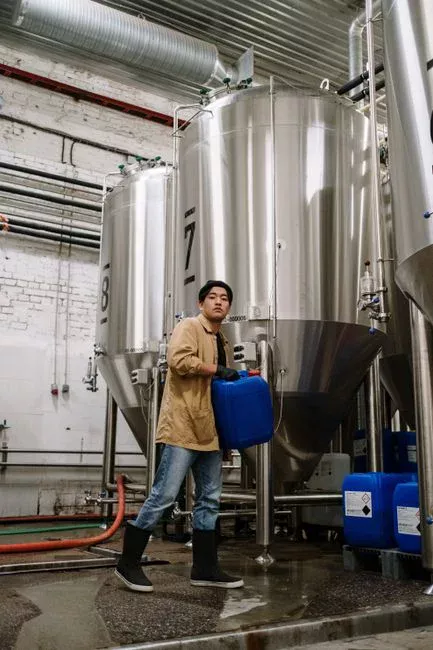
Three families cover the realistic 2026 design space in Korea. Family A is the ecological/NEWS-style train, which offers low energy draw and minimal chemical demand but pays for that with seasonal N/P variability and a footprint that scales with hydraulic loading. Family B is the packaged mechanical/biological plant (A/O or MBR), which trades operating energy and membrane cost for a much smaller footprint and near-reuse effluent quality. Family C is a hybrid configuration, where a packaged biological stage is followed by an ecological polishing step; this is the practical option when effluent limits are tight but the community cannot fund a full mechanical nutrient-removal train. Capacity bands from the 2026 supply chain place a typical underground A/O package plant in the 1–80 m³/h range and an integrated MBR system in the 10–2,000 m³/day range, both PLC-automated and designed to run without a full-time operator. ASABE-documented work on constructed-wetland carbon and energy benefits reinforces the ecological case for low-energy communities, while noting the same seasonal limitations the Sangwang-dong data quantified (ASABE, 2001). Readers working in Busan or Jeju hospitality clusters can cross-reference the Busan packaged MBR selection guide for an adjacent use case, bridging the gap between mechanical and natural systems.
| Parameter | Ecological / NEWS | Packaged A/O | Packaged MBR | Hybrid (mechanical + ecological polish) |
|---|---|---|---|---|
| COD removal | 86–98% (S2, seasonal) | 85–95% | 95–99% | 95–99% |
| Nitrogen removal | 28–46% (S2, winter/growing) | 40–70% | 60–85% | 70–90% |
| Phosphorus removal | 24–49% (S2, winter/growing) | 20–50% (chemical-aided) | 30–60% (chemical-aided) | 50–80% with wetland polish |
| Footprint | Large (land-intensive) | Compact (~60% smaller than CAS) | Compact (smallest) | Moderate |
| Operator skill | Low (routine media work) | Low–medium (PLC) | Medium (membrane care) | Low–medium |
| Energy use | Minimal | Moderate (aeration) | High (aeration + membranes) | Moderate |
| Winter resilience | Weak below ~10 °C | Strong (enclosed) | Strong (enclosed) | Strong mechanical stage, weak polish stage |
Sizing a Small Community Plant in 2026
The sizing process for a small community wastewater system in Ireland or Korea follows a consistent five-step methodology. Step 1: confirm population served and apply a per-capita flow figure; Korean rural communities typically fall in the 200–250 L/c·d band, though site-specific measurement always overrides a textbook value. Step 2: convert average daily flow to a peak factor, commonly 2.0–2.5× for small communities, and size the equalization and biological stages against that peak. Step 3: set effluent targets against the Water Quality Conservation Act framework and any downstream receiving-water use (stream discharge, agricultural reuse, or bathing-water contact), because reuse expectations usually drive the design more than the legal minimum. Step 4: match flow band to package-plant capacity — a WSZ-series underground A/O package plant for residential clusters, hotels, hospitals, factories, and rural areas in the 1–80 m³/h band, or an integrated MBR system for the 10–2,000 m³/day band when higher effluent quality is required. Step 5: lock in the ecological-vs-mechanical decision based on land availability, operator presence, and winter design temperature. The same logic drives small community wastewater system in Portugal selections, though the climate penalty there differs from Korea's.
Winter Resilience and Nutrient Polishing

The Sangwang-dong winter numbers — 86.45% COD, 27.93% N, 23.78% P at an ABS temperature of 8.289 °C — identify the primary performance risk for any Korean ecological train (S2, 2024). Four engineering responses reliably close the gap. First, insulate or bury the biofilter to keep water temperature closer to the 18 °C growth-season benchmark. Second, place the constructed wetland subsurface rather than free-water-surface so that the soil mass buffers diurnal cold swings. Third, recirculate a fraction of polished effluent back to the biofilter inlet to sustain microbial activity during low-load periods. Fourth, add a downstream polishing stage — a small MBR or, more commonly, a UV disinfection stage — to meet bathing-water and irrigation-reuse targets. For purely mechanical trains, UV handles chlorine-resistant organisms such as Cryptosporidium and Giardia, while a chlorine dioxide generator delivers residual disinfection where distribution-system carry-through is needed. In 2026, UV or ClO₂ polishing is the default method for ecological systems to meet reuse targets without transporting liquid chlorine into small communities.
Cost, Operations, and Common Failure Modes
The EPA's small-system risk register identifies failure modes that any Korean community must plan against: financial limits, operator scarcity, managerial turnover, extreme topography, geographic isolation, septic age and design failure, and root infiltration (EPA, 2026). Translated into technology choices, that means ecological trains have low opex but high land capex, while packaged plants have higher opex (aeration energy, membrane replacement) but tiny land needs and faster installation in constrained sites. Because operator retention is the primary failure driver, every 2026 design should ship with a 5–10 year operator and parts plan—addressing the maintenance requirements of the facility. Packaged plants also need a downstream solids-handling step; a small plate-and-frame filter press is the conventional choice for dewatering wasted sludge to a handleable cake for off-site disposal. These decisions require careful upfront planning to avoid the significantly higher costs associated with long-term system failure.
Frequently Asked Questions
What counts as a small community wastewater system in South Korea?
Adopting the EPA benchmark, a small community wastewater system serves a population of 10,000 or fewer with an average daily flow below 1 MGD (≈3,785 m³/day) (EPA, 2026). On Korean administrative maps, this corresponds to eup, myeon, and small dong clusters outside the major metros, where centralized sewer coverage is incomplete.
What removal rates can a natural/ecological system actually achieve in Korea?
The Sangwang-dong NEWS pilot measured COD removal of 98.47% in the growing season and 86.45% in winter, with nitrogen at 45.94% / 27.93% and phosphorus at 48.65% / 23.78% across the same two seasons (ScienceDirect S2, 2024). COD removal remains robust, while N and P performance is climate-dependent.
How do you keep an ecological wastewater system compliant in a Korean winter?
The Sangwang-dong biofilter dropped to 8.289 °C in winter, driving N removal to 27.93% (S2, 2024). Engineering responses include biofilter insulation, subsurface wetland placement, partial effluent recirculation to maintain microbial activity, and a downstream UV or MBR polishing stage to meet reuse targets.
When should a small Korean community choose a packaged plant over a constructed wetland?
Choose a packaged plant when land is scarce, when a trained operator is not on-site, when effluent must meet near-reuse quality, or when winter temperatures would push an ecological train below the 10 °C threshold. Choose a constructed wetland when land is available, energy budgets are tight, and the receiving water can absorb seasonal nutrient swings.
What effluent targets matter most for South Korean decentralized systems?
Targets are set under the Water Quality Conservation Act and tailored to receiving-water use: stream discharge typically demands tighter BOD and TSS, agricultural reuse tightens nitrogen and pathogen limits, and bathing-water contact triggers disinfection-stage requirements. The binding target is determined by the specific classification of the receiving water.