Why Brooklyn Heights Chemical Plants Face a Three-Layer Pretreatment Rule
Chemical plants near Brooklyn Heights meet 2026 pretreatment limits by layering three obligations: federal categorical standards under 40 CFR Parts 400–471 (e.g., 414 organic, 415 inorganic chemicals), general and local limits under 40 CFR Part 403 enforced at the end-of-pipe connection to NYC's POTW, and site-specific discharge limits under Title 15 of the Rules of the City of New York Chapter 19 administered by NYC DEP. Facilities discharging 25,000 gpd or more must hold an industrial wastewater discharge permit; smaller flows still must comply with local sewer-use rules (per NYC Business, 2026).
The first layer is the general framework in 40 CFR Part 403, which defines Industrial User (40 CFR 403.3(j)), pass-through (40 CFR 403.3(p)), and interference (40 CFR 403.3(k)) (per EPA, NPDES Pretreatment Standards). The second layer is the category-specific numerical limits in 40 CFR Parts 400–471 — chemical plants almost always cite Part 414 (organic chemicals, plastics, and synthetic fibers) and Part 415 (inorganic chemicals). The third layer is the NYC Sewer Use Regulations in Title 15 RCNY Chapter 19, which NYC DEP enforces through case-by-case discharge permits and which can be more stringent than either of the federal layers. Local limits are site-specific, applied at the end-of-pipe / point of connection to the POTW collection system, and reevaluated by the POTW at least annually per 40 CFR 403.5(c) (per EPA, 2026).
When a pollutant is regulated by more than one of these rules, the most stringent applicable value governs compliance at the monitoring point. That hierarchy is the foundation of every decision in the workflow that follows.
Step 1 — Identify Whether Your Facility Is a Categorical Industrial User
Before any treatment is sized, a chemical plant must confirm which 40 CFR subpart applies, because the categorical subpart defines the parameter list, the sampling frequency, and the report form. Match the facility's primary SIC/NAICS code against 40 CFR Parts 400–471; for chemical operations in the Brooklyn Heights corridor, 40 CFR Part 414 (organic chemicals, plastics, and synthetic fibers) and 40 CFR Part 415 (inorganic chemicals) are the categories to evaluate first. Each part is divided into subparts that correspond to specific product lines (e.g., 414.40 for thermoplastic resins, 415.30 for sulfuric acid production), and the applicable subcategory narrows which parameters apply to your effluent.
Categorical Industrial Users (CIUs) are split into two compliance tiers. A Significant Industrial User (SIU) — defined at 40 CFR 403.3(v) as a CIU discharging more than 25,000 gpd of process wastewater, or contributing more than 5% of the POTW's average dry-weather hydraulic or organic capacity, or being designated as such by the Control Authority — must sample at the categorical frequencies, file Baseline Monitoring Reports, and submit CIU compliance reports on the POTW's schedule. A Non-Significant Categorical Industrial User (NSCIU) has reduced sampling but must still demonstrate categorical compliance and is typically required to certify non-production once per permit cycle.
Separately, NYC DEP uses a 25,000 gpd threshold to trigger an industrial wastewater discharge permit requirement regardless of whether the facility is categorical (per NYC Business, 2026). A facility below 25,000 gpd that is non-categorical still has to comply with the general prohibitions in 40 CFR 403.5 and the local sewer-use narrative limits, so do not treat the gpd trigger as the only decision point. Compile the supporting dataset now: production volumes by product line, raw-material inventory, a 24-hour flow profile (with peaks), and at least one round of analytical results on the current discharge. EPA's local-limits development guidance documents the maximum allowable headworks loading calculation method that DEP uses internally; running the same exercise against your own data is the fastest way to identify which parameter will drive the design (per EPA, 2026).
Step 2 — Map Your Pollutants Against 40 CFR 414 / 415 Categorical Limits
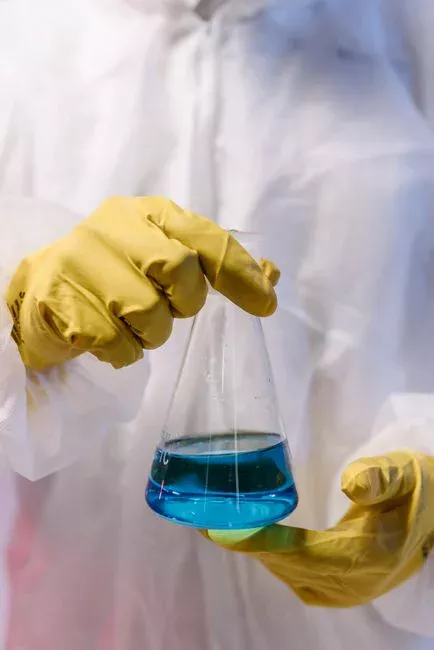
Categorical limits are floor standards, not ceilings — NYC local limits can be tighter, but the categorical table is where compliance starts. Part 414 covers organics, plastics, and synthetic fibers and typically limits BOD, TSS, pH, oil & grease, COD, and a list of toxic pollutants that depends on the subcategory — benzene, toluene, acrylonitrile, and styrene are common across multiple subparts. Part 415 covers inorganics and typically limits TSS, pH, ammonia, fluoride, sulfate, total dissolved solids, and trace metals including arsenic, chromium, lead, mercury, nickel, zinc, and copper. Both subparts express limits as a daily maximum and a monthly average; compliance is judged on both values simultaneously, not the daily max alone.
| Reference | Subpart / subcategory example | Typical regulated parameters | Limit expression |
|---|---|---|---|
| 40 CFR Part 414 | 414.40 (thermoplastic resins); 414.60 (organic chemicals, multiple subcategories) | BOD, TSS, pH, O&G, COD, benzene, toluene, acrylonitrile, styrene (subcategory-dependent) | Daily max + monthly average |
| 40 CFR Part 415 | 415.30 (sulfuric acid); 415.60 (chlor-alkali, mercury cell); 415.80 (inorganic pigments) | TSS, pH, ammonia, fluoride, sulfate, TDS, As, Cr, Pb, Hg, Ni, Zn, Cu | Daily max + monthly average |
| Compliance target | Subcategory lookup (e.g., 414.XX or 415.XX) | Apply most stringent of categorical vs. local | Both daily max and monthly avg must be met |
The next compliance step after subcategory lookup is to list the regulated parameters for that subcategory and pull the numerical limits from the e-CFR. Note the production basis — many 414/415 limits are mass-based (kg per 1,000 kg of product) rather than concentration-based, which means the same concentration in the discharge can pass or fail depending on that day's production rate. For a deep dive on the federal categorical framework, this 2025 reference on how EV/auto plants meet 2026 pretreatment limits walks the parallel logic for a different category, which is useful for cross-checking your CIU reporting workflow.
Step 3 — Compare Categorical Limits to NYC DEP Local Limits
Local limits are the values that the POTW (NYC DEP, in this case) develops to prevent pass-through and interference at the headworks, in the sludge, and in the receiving water. Per 40 CFR 403.5(c), the POTW must perform this analysis and reevaluate it periodically, and EPA can enforce approved local limits as pretreatment standards (per EPA, 2026). Local limits are numeric or narrative BMP-based, are enforced at the end-of-pipe / point of connection, and are case-by-case in NYC — DEP does not publish a single universal local-limit table for chemical plants (per NYC Business, 2026).
Obtain the current values by submitting a records request through the DEP industrial wastewater portal and asking specifically for the local-limit letter applicable to your SIC/NAICS code at your discharge location. Title 15 RCNY Chapter 19 is the binding local rule, and narrative clauses on pH (typically 5.0–12.0 instantaneous at the point of discharge), temperature, and flashpoint apply even where no number is published. Build a side-by-side comparison table for every categorical parameter, write the categorical value and the local value in adjacent columns, and circle the lower number — that is the design target. Where the local limit is narrative (e.g., "no visible sheen"), the equipment must be capable of meeting it continuously, not on a 30-day average.
| Parameter commonly limited by NYC DEP for chemical IUs | Typical local-limit posture | Regulatory basis | Engineering implication |
|---|---|---|---|
| pH (instantaneous) | 5.0–12.0 at point of discharge (typical sewer-use range) | Title 15 RCNY Ch. 19 narrative / 40 CFR 403.5 | Continuous pH monitoring with automatic trim |
| Oil & grease / FOG | Numeric cap or "no visible sheen" | Title 15 RCNY Ch. 19 / 40 CFR 403.5(b) | DAF upstream of any biological step |
| Total metals (Pb, Cd, Cr, Cu, Ni, Zn, Hg) | Numeric daily max, often tighter than categorical | 40 CFR 403.5(c) local limits / 40 CFR 415 | Hydroxide or sulfide precipitation + lamella |
| Arsenic, mercury | Low ppb numeric cap; can be tighter than 415 | 40 CFR 403.5(c) / 40 CFR 415 subpart | Sulfide polishing on arsenic; carbon on mercury |
| Total cyanide (amenable) | Numeric cap; pretreatment often required | 40 CFR 403.5 / 40 CFR 414/415 subpart | Alkaline chlorination with ORP control |
| Phenols / specific organics | Numeric cap from local limit derivation | 40 CFR 403.5(c) / 40 CFR 414 subcategory | Carbon adsorption or advanced oxidation |
DEP issues specific permits case-by-case and the permit typically names the controlling parameter for each month, so confirm with the local-limit letter — not the categorical table alone — before you commit to a treatment-train design. For a parallel walkthrough of how another POTW's local limits interact with primary clarification equipment, see this 2026 guide on DAF vs. clarifier for chemicals wastewater.
Step 4 — Build the Pretreatment Treatment Train
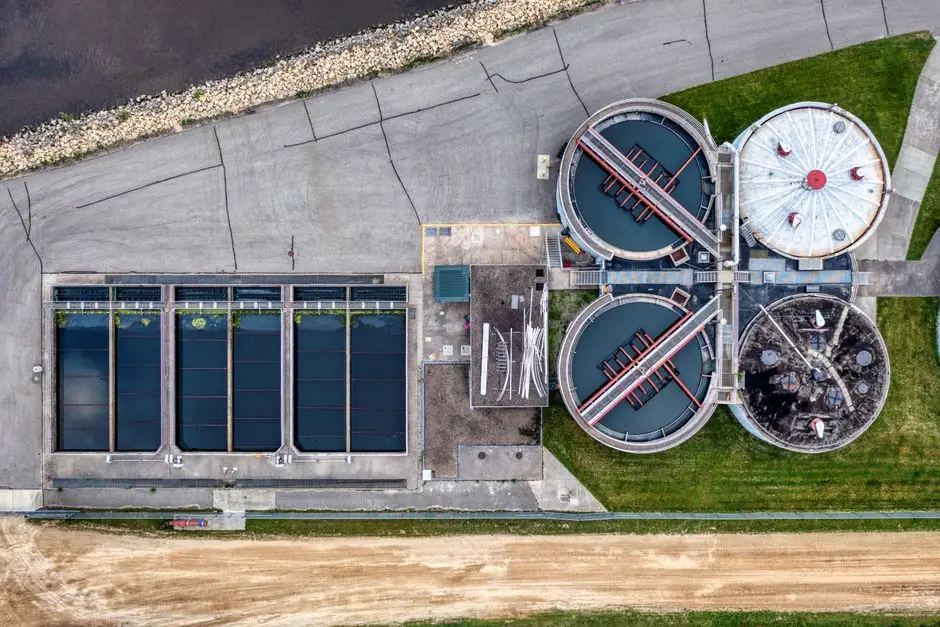
Once the limiting pollutant is identified, the treatment train is sized to that parameter — not to flow alone. Equalization comes first: a basin sized to at least 2× the daily peak flow dampens slug loads from batch reactors and acid/alkaline cleaning cycles, and a PLC-controlled chemical dosing system handles pH trim to the 5.0–12.0 instantaneous range and provides the alkalinity for downstream metal precipitation. The next step is suspended solids, oil & grease, and FOG removal; a DAF system for FOG and suspended-solids removal is the typical primary clarifier for chemical plant wastewater ahead of any biological step, with hydraulic residence time on the order of 20–40 minutes and air-to-solids ratios tuned to the FOG fraction.
Heavy metals are removed by hydroxide precipitation at the pH sweet spot for each target metal (typically pH 8.5–9.5 for divalent metals, lower for amphoteric species), followed by lamella clarification. If the local limit letter lists arsenic at low ppb, add a sulfide polishing stage. Where total or amenable cyanide is regulated, alkaline chlorination with ORP control above +600 mV destroys both species, and the residual chlorine must be quenched before downstream biological or membrane stages. For BOD/COD reduction on flows that justify it, an MBR system for chemical-plant biological pretreatment delivers effluent in the 5–10 mg/L TSS range at a smaller footprint than conventional activated sludge, which simplifies meeting low-TSS local limits. Final polishing — a multi-media filter for final TSS polishing followed by a UV sterilizer for chemical-free disinfection — protects the receiving POTW and keeps the discharge below any narrative BMP clauses. The pH trim is delivered by a PLC-controlled chemical dosing for pH and precipitant injection with feedback from an in-line pH probe.
| Unit operation | Pollutants targeted | Typical sizing driver | Notes |
|---|---|---|---|
| Equalization basin + automatic chemical dosing | pH excursions, slug loads, flow variation | ≥2× daily peak flow; pH trim to 5.0–12.0 | First stage; stabilizes everything downstream |
| DAF | O&G, FOG, TSS, some metals on floc | 20–40 min HRT; air-to-solids ratio tuned to FOG | Reduces load to biological or membrane step |
| Hydroxide / sulfide precipitation + lamella | Pb, Cd, Cr, Cu, Ni, Zn; As with sulfide polish | pH 8.5–9.5 for divalent metals | Sludge handled as hazardous if metals above TCLP |
| Alkaline chlorination | Total and amenable cyanide | ORP > +600 mV; Cl₂:CN mass ratio ≥ 8:1 | Quench residual Cl₂ before biological step |
| MBR | BOD, COD, residual TSS | F:M ratio 0.05–0.15 lb BOD/lb MLVSS·d | Produces near-reuse-quality water at small footprint |
| Multi-media filter + UV | Residual TSS, microbiological indicators | 15–25 m/h filter velocity; 30–40 mJ/cm² UV dose | Final polish before sewer connection |
Match the unit-operation selection to the limiting pollutant, not to flow alone. A DAF sized to flow without a FOG or metals mass balance will underperform on a local-limit parameter, and a biological stage sized to BOD will not move a metal. The treatment train's bottleneck is always the parameter with the lowest ratio of (influent concentration) to (local limit).
Step 5 — Monitoring, Sampling, and Reporting Obligations
Most enforcement actions at chemical IUs come from reporting failures, not exceedances. Categorical SIUs must sample at the frequencies specified in their 40 CFR subpart and report through the POTW's CIU reporting form — for 40 CFR 414/415 this typically means self-monitoring at least once per month for listed toxic pollutants, with production-rate reporting alongside the analytical results. Local-limit parameters are monitored at the frequency set by NYC DEP in the discharge permit, which is commonly monthly for the core parameters (pH, TSS, O&G, metals) and quarterly for the broader priority-pollutant scan. Standard instrumentation is a magnetic flow meter on the discharge line, a continuous pH/temperature probe with data logging, and a refrigerated auto-sampler that pulls 24-hour composites on scheduled days.
Recordkeeping must be retained for at least 3 years per 40 CFR 403.12(o), and CIU reports are submitted to the POTW (NYC DEP) and are available for EPA review on request. Permittees file a Slug Control Plan if batch processes could deliver a release that exceeds the local limits, and the Slug Control Plan must be reviewed whenever a new chemical or production rate is introduced. NYC DEP administers industrial wastewater permitting and complaint reporting through its industrial wastewater portal; complaints and imminent threats route through NYC 311 (per NYC Business, 2026).
Put a calendar reminder in your SCADA system at least 7 days ahead of every CIU and local-limit report due date. The most common reason a Brooklyn chemical plant receives a NOV is a missed form, not a missed value.
Step 6 — Common Compliance Failures and How to Avoid Them

Five failure modes account for the majority of pretreatment enforcement at chemical facilities. Each is preventable in design.
- Slug discharge from un-equalized batch processes. A 90-minute batch dump can blow past the local limit before the laboratory even sees the sample. Equalization basin sized to ≥2× daily peak flow with mixing eliminates the slug.
- pH excursions from acid/alkaline cleaning cycles. Without feedback trim, a single caustic wash can push the discharge to pH 12.5. Automatic chemical dosing with feedback control on a pH probe holds the band.
- FOG pass-through to the POTW. A biological stage alone does not remove emulsified oil; an upstream DAF with skimmer redundancy keeps the sewer free of sheen and the IU below its oil & grease cap.
- Reporting missed deadlines. Cloud SCADA with calendar reminders and auto-generated CIU reports eliminates the form-failure NOV, which is the most common enforcement action in NYC.
- Slug Control Plan not updated when production changes. Any new raw material or rate change requires a Slug Control Plan re-review; flag this in the management-of-change workflow.
Specific NYC penalty amounts are not published on DEP's public pages, but escalation can include civil enforcement in addition to administrative NOV fines (per NYC Business, 2026). For an example of how predictive maintenance and monitoring are bundled into a modern municipal-pretreatment program, see this 2026 reference on smart pump monitoring for US municipal wastewater.
Frequently Asked Questions
What threshold triggers a NYC DEP industrial wastewater discharge permit?
Facilities discharging 25,000 gallons per day or more of industrial wastewater to NYC's public combined or sanitary sewers must hold an industrial wastewater discharge permit, regardless of whether they are a categorical industrial user (per NYC Business, 2026). Smaller flows still must comply with 40 CFR Part 403 general prohibitions and Title 15 RCNY Chapter 19 narrative limits.
What is a Significant Industrial User under 40 CFR 403?
An Industrial User is an SIU at 40 CFR 403.3(v) when it is a categorical industrial user that discharges more than 25,000 gpd of process wastewater, contributes more than 5% of the POTW's average dry-weather hydraulic or organic capacity, or is designated as significant by the Control Authority. SIUs face full sampling, Baseline Monitoring Reports, and CIU compliance reporting.
How do categorical pretreatment standards and NYC local limits interact?
Per 40 CFR 403.5(c), the POTW develops local limits to protect against pass-through and interference at the headworks, in the sludge, and in the receiving water, and EPA can enforce approved local limits as pretreatment standards (per EPA, 2026). The more stringent of the categorical value and the local value governs compliance at the end-of-pipe monitoring point.
Which 40 CFR part applies to a chemical plant in Brooklyn Heights?
Organic chemicals, plastics, and synthetic fibers operations are covered by 40 CFR Part 414; inorganic chemicals operations are covered by 40 CFR Part 415. Each part is divided into subparts by product line, and the subcategory determines which toxic pollutants and numerical limits apply (per 40 CFR Parts 414 and 415).