What pH Adjustment Does in a Treatment Train
pH adjustment in water treatment is the controlled addition of acid or base to bring wastewater to a target pH—typically 6.5–9.0 for discharge and 5.5–7.5 for coagulation-flocculation. It is performed by an automatic dosing system that measures pH with an in-line probe and feeds the correct reagent (commonly sulfuric acid, hydrochloric acid, lime, or caustic soda) via metering pumps. Skipping or mistuning this step raises coagulant demand, damages membranes, and risks permit non-compliance.
Positioned between flow equalization and the primary separation step, pH correction is the gatekeeper for almost everything that follows. Coagulation efficiency collapses outside a narrow 1.5–2 pH-unit window; biological oxidation rates drop by roughly 50% below pH 6.0 or above pH 9.0; reverse osmosis membranes hydrolyze outside pH 6.5–7.5; and ion exchange resins lose capacity permanently when fed pH <2 or >12. Industrial wastewater streams routinely arrive at pH 1–3 (pickling baths, chemical plants) or pH 10–13 (kraft pulp, food CIP, textile mercerizing), so neutralization makes the rest of the train viable.
A typical sequence runs: equalization → pH adjustment → coagulation/flocculation → clarification → biological or membrane polishing. Equalization dampens swings to a manageable ±1 pH band, the dosing loop trims to the controller setpoint, and the downstream process locks in performance. Municipal pretreatment standards (40 CFR 403.5) generally require pH 6.5–9.0 for discharge to a publicly owned treatment works; states set surface-water limits in the same window but with day-of-sample and 30-day-average variations. The dosing loop keeps a plant inside those limits hour after hour.
Target pH by Industry and Discharge Route
Setpoints vary because discharge rules, downstream process tolerance, and influent chemistry differ by sector. A surface-discharge permit typically mandates pH 6.5–9.0 per US EPA 40 CFR 403, with state agencies applying tighter averaging rules on the same band; the municipal/sewer-discharge case uses the same numerical window for general pretreatment. The table below summarizes defensible setpoints a controller can be programmed against without further bench work, except where flagged.
| Stage or Sector | Target pH | Governing Reason |
|---|---|---|
| Sewer discharge (POTW) | 6.5–9.0 | General pretreatment, 40 CFR 403.5 |
| Surface-water discharge | 6.5–9.0 (state-specific averaging) | State surface-water quality criteria |
| Coagulation with alum / PAC | 5.5–7.5 | Aluminum hydroxide solubility minimum |
| Coagulation with ferric / PFS | 5.0–7.0 | Ferric hydroxide floc formation range |
| Activated sludge (heterotrophs) | 6.5–8.5 | Nitrification inhibited below 6.5 |
| Nitrification basin | 7.0–8.0 | Nitrosomonas activity optimum |
| RO membrane feed | 6.5–7.5 | Limits CaCO₃ scaling and membrane hydrolysis |
| Food and dairy | 6.5–8.0 | FOG and protein removal in DAF; permit-driven band |
| Metal finishing | 7.0–9.0 (before precipitation) | Hydroxide precipitation of Ni, Cr, Cu; cyanide destruction pH >10 |
| Textile | 6.5–8.5 | Dye coagulation and color-removal floc formation |
| Pharmaceutical | 6.5–8.5 | AOX and API removal; API-specific toxicity may force tighter band |
Most industrial targets sit in the 6.5–8.5 band, but RO feed requires the bottom half (6.5–7.5) and metal-finishing cyanide destruction requires the top end (≥10). The setpoint that matters is the one at the controller.
Acids, Bases and Coagulants: How to Choose the Reagent
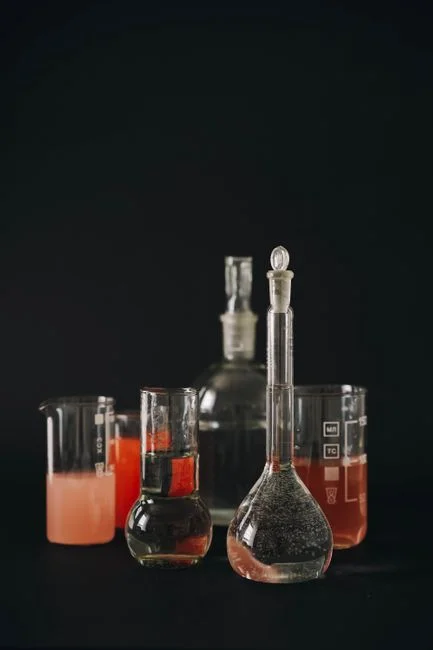
Reagent choice is a four-way trade between unit neutralization cost, footprint, safety, and downstream sludge load. Strong acids (H₂SO₄, HCl) and strong bases (NaOH) react in near-stoichiometric ratios, while lime (Ca(OH)₂) is a slurry that neutralizes one mole of acid with half a mole of Ca(OH)₂ but doubles the mass of sludge generated. The decision depends on how much Ca²⁺ or SO₄²⁻ the downstream process can tolerate and the operator's preference for handling.
| Reagent | Form / Strength | Relative Cost | Key By-Products | Safety / Handling Notes |
|---|---|---|---|---|
| Sulfuric acid (H₂SO₄) | 93–98% liquid | Low | CaSO₄ scaling; sulfate load to biology | Highly corrosive, exothermic dilution; vented storage |
| Hydrochloric acid (HCl) | 30–36% liquid | Moderate | Chloride load; risk to SS304/316 | Fumes; ventilated cabinets |
| Sodium hydroxide (NaOH) | 25–50% liquid | High per kg, clean | Na₂SO₄ or NaCl in effluent | Caustic burns, slippery; heated dilution exotherm |
| Lime (Ca(OH)₂) | 10–20% slurry | Lowest per kg | CaCO₃ / CaSO₄ sludge | Dust, scaling, scaling on mixers; bulk solids handling |
For most industrial wastewater, sodium hydroxide paired with sulfuric acid is the default: clean reaction, no scale, fast kinetics. Lime wins on raw cost, but the extra 200–400 kg of dry sludge per ton of neutralized acid often wipes out the chemical saving once dewatering, polymer, and disposal are tallied. In food and dairy, NaOH is preferred because chloride from HCl can corrode 304 stainless balance tanks within a few years.
Coagulation and flocculation are sized separately after pH correction. HydroChemix field data (Aug 2026) reports PAC at 50–300 mg/L or PFS at 30–200 mg/L dosed after pH correction, with PAM at 0.5–5 mg/L as a flocculant aid. A properly tuned automatic chemical dosing system paired with a dissolved air flotation system handles FOG, color, and suspended solids for most food and textile streams. Coagulant selection can sometimes substitute for acid neutralization, as seen in highly alkaline paper-industry wastewater treated without pH adjustment (Water, Air, and Soil Pollution, doi:10.1007/s11270-025-08693-6).
Designing the Dosing and Control Loop
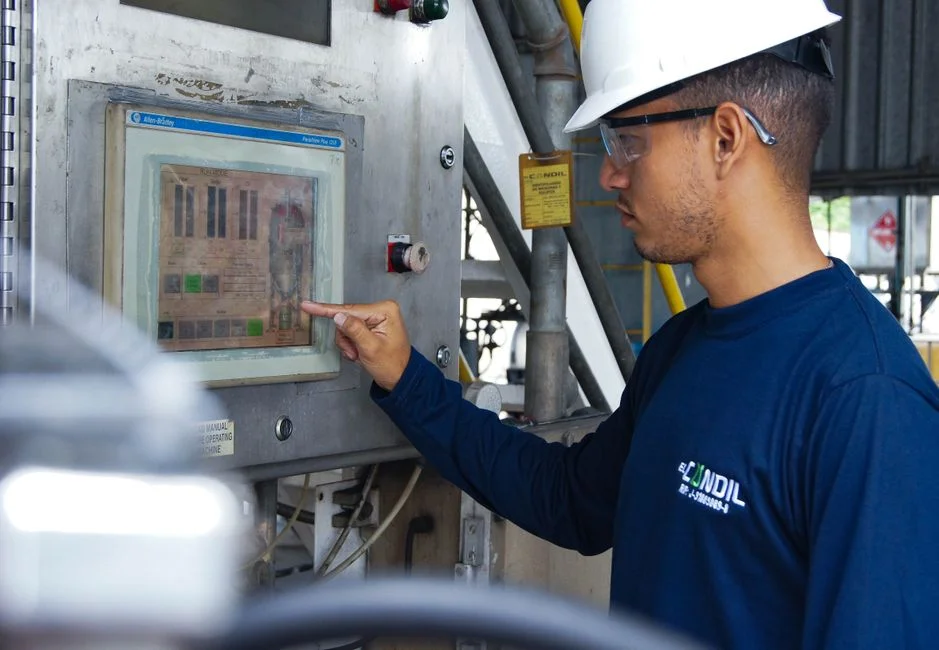
A workable dosing loop has four hardware elements: an in-line pH probe in a flow cell, a PID controller, a metering pump, and a reaction volume with a static mixer or mechanical agitator. The probe should be mounted in a flow cell with isolation valves for removal and calibration. Weekly two-point calibration with pH 4 and pH 7 buffers, probe replacement every 6–12 months, and auto-cleaning with water or mild acid prevent the fouling common in industrial streams.
The controller should run with a realistic deadband—typically ±0.2 pH—and a stroke frequency cap on the pump. Sodium hydroxide and sulfuric acid are strong enough that a 1–3 second pump stroke can swing a small reaction tank by 0.3–0.5 pH, so a deadband prevents loop oscillation. For variable influent, add feedforward from the equalization-tank level or feed flowmeter to set a base acid or base demand, then let the feedback trim handle the residual. This approach allows a loop to hold ±0.1 pH.
Residence time in the reaction tank is set by reagent kinetics. H₂SO₄ and NaOH complete in 5–10 seconds in a well-mixed tank, while lime needs 3–10 minutes for full dissolution. Specify 1–3 minutes of hydraulic residence between the injection point and the next process step, with a static mixer rated for a pressure drop of 0.3–0.8 bar. Skid-mounted, pre-wired PLC automatic chemical dosing systems with documented I/O lists cut integrator risk and commissioning time.
Safety specs include bunded chemical storage at 110% of the largest tank, eyewash and safety shower within 10 m, vented acid cabinets, and material-compatible piping (polyethylene or lined-steel for HCl and H₂SO₄; stainless 316 or FRP for NaOH). Lime slurry requires agitated tanks with cone bottoms and progressive-cavity pumps.
Operating Costs and When to Skip pH Adjustment
Treatment costs in 2026 dollars (per cubic meter of wastewater, per HydroChemix Aug 2026) run: coagulation $0.10–0.30, biological $0.05–0.20, AOP $0.30–1.00, activated carbon $0.20–0.80, combined treatment $0.15–0.50. pH-adjustment reagent cost is dominated by the stoichiometric acid or base dose; a sludge-handling penalty on top of chemical cost is common when lime is selected. A well-tuned loop running NaOH and H₂SO₄ typically adds $0.02–0.06/m³ for a stream that enters at pH 4–10 and exits at pH 7.
Some streams allow for skipping pH adjustment, provided the design is validated. The 2025 Springer paper (doi:10.1007/s11270-025-08693-6) showed that optimized coagulant selection achieved effective treatment for highly alkaline paper-industry wastewater without acid neutralization, eliminating the acid dose and dewatering load. The decision rule is:
- Run jar tests on raw wastewater at its native pH. If ≥90% removal of the target pollutant (turbidity, color, COD) is achieved without acid or base, proceed.
- Confirm the downstream biology or membrane stage can tolerate the raw pH. Nitrifiers fail below 6.0; most RO elements hydrolyze above 9.0.
- If both checks pass, design the train without a pH-adjustment skid and document the jar-test basis in the operating manual.
For streams where the chemistry forces a pH step, a lamella clarifier downstream of the dosing loop carries the coagulated load efficiently. The food processing water purification specs guide covers the full train; the EV/auto plant pretreatment compliance guide covers the high-metal-finishing case where cyanide destruction at pH ≥10 overrides the usual neutrality target.
Frequently Asked Questions
What is the ideal pH for wastewater discharge?
The standard US EPA general pretreatment band is pH 6.5–9.0 for sewer discharge under 40 CFR 403.5, and the same 6.5–9.0 window covers most state surface-water permits. Industrial facilities should program their controller setpoint inside this band and use a ±0.2 pH deadband for stable operation.
When can pH adjustment be skipped in industrial wastewater treatment?
pH adjustment can be skipped when jar tests show ≥90% target-pollutant removal at the raw pH, and the downstream process tolerates that pH. The 2025 Springer study on highly alkaline paper-industry wastewater demonstrated this for kraft and recycling streams using optimized coagulants, eliminating acid dose and neutralization sludge.
Should I use sulfuric acid, hydrochloric acid, lime, or caustic soda?
Use NaOH and H₂SO₄ for most clean-reaction, low-sludge service; use HCl only when chloride-tolerant stainless (316 or FRP) is in place; and use lime only when the chemical cost saving outweighs the 200–400 kg of extra dry sludge per ton of acid neutralized and you can manage slurry handling safely.
How often should a pH probe be calibrated?
Cal