
Why Multiple-Effect Evaporator Energy Bills Hurt
A multiple-effect evaporator (MEE) reuses vapor from one effect as the heat source for the next, so steam economy rises roughly linearly with effect count — about 0.8 kg of water evaporated per kg of live steam per effect, or 0.8·n kg/kg for an n-effect train (Ramanathan et al., 2025). Practical industrial MEE systems consume 9.3–30.6 kJ/kg of specific energy against a theoretical floor of 3–7 kJ/kg, which is why reduction programs focus on adding effects, switching to backward-feed, and pairing MEE with mechanical vapor recompression (MVR) or thermal vapor compression (TVC) plus waste-heat recovery (Ramanathan et al., 2025). On a 10 m³/h feed, the gap between 30 kJ/kg and 7 kJ/kg is roughly 3.4 MW of equivalent thermal duty — the line item finance asks about first.
Steam economy (kg water evaporated per kg live steam) is the single KPI that ties every retrofit decision back to OPEX. A 3-effect MEE delivers ≈2.4 kg/kg, a 4-effect ≈3.2 kg/kg, and a 5-effect ≈4.0 kg/kg (Ramanathan et al., 2025). Each added effect cuts live-steam demand by ~0.8 kg/kg, but it also adds a vessel, a condenser loop, and a vacuum stage — which is why the capex curve bends upward faster than the steam-saving curve past 5–6 effects.
Five Levers That Cut MEE Steam Consumption
Engineers evaluating an MEE retrofit for an aeration energy cost optimization guide for 2026 will recognize the same payback-first logic that applies to aeration upgrades.
Lever 1 — Increase effect count. Each added effect contributes roughly 0.8 kg water evaporated per kg live steam, per the 0.8·n rule (Ramanathan et al., 2025). The marginal return is constant per effect, but the absolute capex and floor-space requirement per effect rises with shell count. Beyond 6–7 effects, structural cost, vacuum-pump load, and last-effect temperature floor (≈38–45 °C) erode the savings. The historical baseline is a 6-effect, 75 m³/day desalination plant installed in Egypt in 1912 (Ramanathan et al., 2025) — proof that high effect counts have been economic for over a century.
Lever 2 — Switch to backward-feed. Backward-feed raises the log-mean temperature difference (LMTD) at identical heating area, so a counter-current MEE transfers more heat per m² than a parallel-flow (forward-feed) MEE holding the same inlet temperatures (Chantasiriwan, 2020). Bhargava et al. confirmed the energy-efficiency superiority of backward-feed in multiple industrial studies (as cited in Chantasiriwan, 2020). For a viscous or scaling wastewater stream, the practical caveat is that backward-feed needs inter-effect pumps because liquid flows from low pressure to high pressure.
Lever 3 — Mechanical vapor recompression (MVR). MVR uses a centrifugal or Roots blower to compress last-effect vapor back up to first-effect saturation pressure, so it can serve as the first-effect heating medium. Live steam collapses to a small trim duty. Palacios-Bereche et al. modeled MVR-coupled MEE and showed the largest specific-energy reductions of any single retrofit (as cited in Chantasiriwan, 2020). MVR swaps steam OPEX for electricity OPEX, so the trade favors MVR where electricity is cheap or steam is expensive.
Lever 4 — Thermal vapor compression (TVC). A TVC is a steam-jet ejector that entrains part of the last-effect vapor and boosts it to first-effect pressure using motive steam. Chen and Ruan analyzed TVC-MEE hybrids for partial steam reduction at lower capex than MVR (as cited in Chantasiriwan, 2020). TVC is the right pick when the live-steam header is already available at 4–6 bar(g) and the operator wants 20–35% steam reduction without adding a large electrical load.
Lever 5 — Flash-vapor and condensate heat recovery. Multiple flash tanks (F1, F2 in the Chantasiriwan 2020 model) recover latent heat from inter-effect condensate by dropping pressure stepwise, feeding low-grade vapor back into the next effect. Properly sized flash trains typically deliver 5–15% additional steam savings on top of the effect-count gain (Chantasiriwan, 2020). Condensate from the first effect is normally polished and returned to the boiler as feedwater, closing the loop.
Effect Count, Steam Economy and Capex Trade-Off
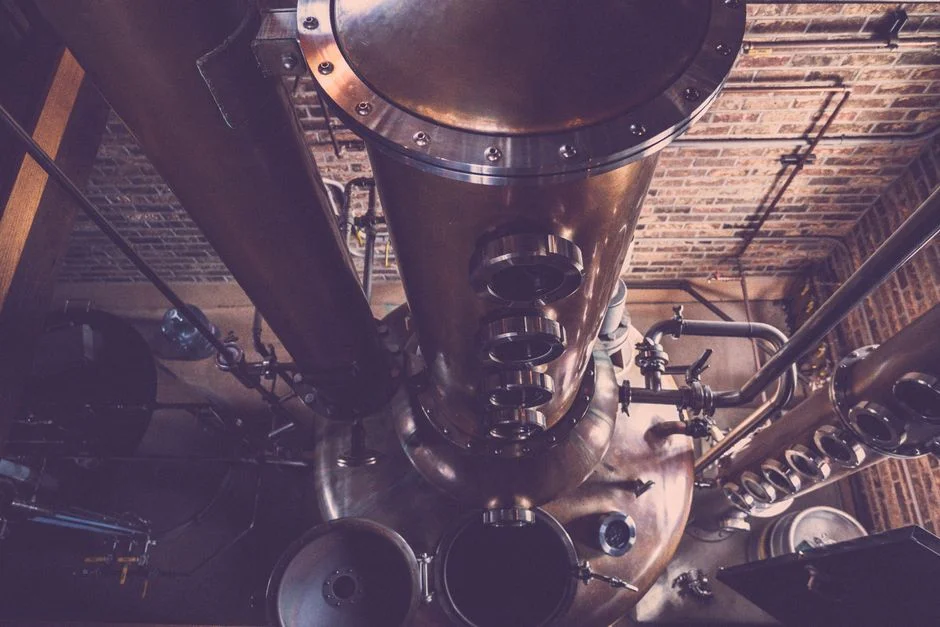
The marginal steam-economy gain per added effect is constant at ~0.8 kg/kg, but each step needs a new vessel, condenser, and vacuum system — so the capex class steps up non-linearly.
| Effects (n) | Steam economy (kg water / kg live steam) | Marginal gain per added effect | Typical capex class | Comment |
|---|---|---|---|---|
| 1 | 0.8 | — | Low | Baseline; rarely built for new ZLD duty |
| 3 | 2.4 | +0.8 | Medium | Common minimum for industrial RO-concentrate trains |
| 4 | 3.2 | +0.8 | Medium-High | Falling-film workhorse for high-strength wastewater |
| 5 | 4.0 | +0.8 | High | Best balance of steam economy and structural capex for most 2026 ZLD builds |
| 6 | 4.8 | +0.8 | Very High | Historic 6-effect, 75 m³/day Egypt plant (1912) is the reference case (Ramanathan et al., 2025) |
A 5-effect train sits at the knee of the curve, as adding a 6th effect buys 0.8 kg/kg of steam economy but adds another full shell-and-tube exchanger and condenser — roughly 15–25% of the installed cost of the whole 5-effect train, based on typical evaporator vendor quotes (HydropureWater field data, 2026). At that point MVR or TVC almost always beats the marginal effect on capex-per-ton-steam-saved.
Why MEE Energy Performance Erodes in Wastewater Duty
Textbook steam economy assumes clean water, but industrial wastewater MEE never hits the 0.8·n target because boiling point elevation (BPE), scaling, and fouling all rob the available ΔT. BPE rises with dissolved solids: RO concentrate at 50,000–80,000 mg/L TDS can show 4–10 °C of BPE, which forces extra live-steam pressure to maintain evaporation rate (Ramanathan et al., 2025).
Fouling attacks the heat-transfer coefficient directly. The Robert-evaporator correlation cited in Chantasiriwan (2020) gives U_i = 0.000049·(110 − x_i)^1.1616·T_f, where x_i is dissolved-solids concentration (%) and T_f is the saturation temperature. As x_i climbs toward 30–40% in the last effect, U_i can drop below 1,000 W/m²·K from a clean value above 2,500 W/m²·K, forcing operators to throttle feed or accept shorter cycles. Every 10% drop in U_i translates to a roughly 8–12% rise in heating area (or steam) to hold the same evaporation rate, which is why design engineers budget for a 20–30% area oversize on wastewater duty.
Upstream MBR pre-treatment upstream of an MEE train is an energy-protection investment. Softening, MBR, or anti-scalant dosing protects the MEE from the inside; the capex payback shows up as sustained steam economy rather than as permit compliance. Plants that skip this step routinely see steam economy degrade 15–25% within 6–12 months of commissioning, eroding the savings case that justified the MEE in the first place. The same logic applies to the solids sidestream — a filter press for the MEE condensate-sludge sidestream reduces recycle loading and protects downstream heat-transfer area.
Building the Business Case: Steam Cost vs Retrofit Capex
An industrial RO concentrate feeding an MEE ZLD train at 10 m³/h, needing 8 m³/h of evaporation, serves as a standard model for evaluating potential savings. Baseline 1.2 kg steam/kg water (≈1-effect equivalent with poor feed configuration) equals 9,600 kg/h live steam, or ~6.4 t/h on a 24-hour basis. Improving to 0.3 kg steam/kg water with MVR + flash recovery (a 75% cut) drops live steam to 2,400 kg/h, or ~1.6 t/h. At a delivered steam cost of USD 25–40 per 1,000 kg (gas-fired boiler, 2026 industrial pricing), annual steam savings sit in the USD 1.1–1.8 million range on a continuous-duty plant.
The MVR compressor capex for an 8 m³/h evaporation train is typically USD 0.8–1.5 million installed (HydropureWater field data, 2026), with the 5-effect MEE shell-and-tube envelope adding USD 2.5–4.0 million. Combined retrofit payback against steam alone is 2.5–4.0 years at mid-range gas prices. Decision rule for 2026 capex committees: if the MEE-plus-MVR retrofit pays back under 3 years on steam alone — and most well-engineered RO-reject and high-strength wastewater cases do — the project lands in the strong-recommend zone. The same framework scales to a 2026 hybrid ZLD system design for fab wastewater, where steam-cost dominance is even sharper because waste-heat availability is limited.
Frequently Asked Questions
How many effects should a 2026 industrial MEE have?
For high-strength wastewater and RO-concentrate duty, 5 effects delivers a steam economy of 4.0 kg water per kg live steam at the knee of the 0.8·n curve (Ramanathan et al., 2025). The marginal 0.8 kg/kg from a 6th effect typically costs more in capex than it returns in steam savings unless the site has very low-cost waste heat.
When is MVR the right call versus TVC?
MVR is favored when electricity is cheaper than live steam and the operator can accept 50–100 kWh per m³ of evaporated water for the compressor load (Palacios-Bereche et al., as cited in Chantasiriwan, 2020). TVC is the lower-capex option for 20–35% steam reduction where a suitable 4–6 bar(g) steam header already exists (Chen and Ruan, as cited in Chantasiriwan, 2020).
Does backward-feed really save energy, and what is the trade-off?
Backward-feed raises the LMTD at identical heating area, so it transfers more heat per m² than forward-feed at the same inlet temperatures (Chantasiriwan, 2020). Bhargava et al. confirmed the energy-efficiency superiority. The trade-off is inter-effect pumps, because liquid flows from low-pressure to high-pressure effects — about 2–5 kWh per m³ of feed for a 5-effect train (HydropureWater field data, 2026).