What counts as a small community wastewater system in Finland
A small community wastewater system in Finland is a decentralized or semi-centralized treatment train serving typically 50–2,000 PE under a cold-climate design frame. Under EU Urban Wastewater Treatment Directive 91/271/EEC, the 2,000 PE threshold defines an "agglomeration" — anything below that is treated as either a small collective or an onsite system, and is regulated by national Finnish instruments rather than the UWWTD minimum standards that apply to larger municipal discharges. For Finnish projects this means a 1–500 m³/day village plant, rural housing cluster, or holiday-resort treatment train is engineered to a different compliance regime than a city works, and the procurement documents need to be framed accordingly.
The Finnish policy baseline is straightforward: rural properties not connected to a municipal sewer must treat wastewater onsite or in a small collective (per the CORE-hosted Finnish policy paper on onsite and small-scale wastewater treatment). The duty falls on the property owner, or on a small water cooperative where several owners pool capacity. Municipal networks run by HSY and regional water utilities cover urbanized catchments; everything outside that envelope is the designer's territory. Typical service cases in 2026 include villages, rural housing clusters, holiday resorts, schools, care homes, and small food-processing sites not on municipal sewer — all of which sit inside the small-collective or onsite envelope rather than the municipal envelope.
Cold-climate engineering constraints that shape Finnish system design
Finnish winter air temperatures routinely reach –20 °C, and wastewater temperatures in unheated process tanks drop to 1–4 °C between December and March. At those temperatures, nitrification rates fall to roughly 10–20% of the 20 °C design value, which forces designers either to extend hydraulic retention time, down-rate the plant, or house the bioreactor in an insulated, frost-protected civil structure. This single constraint is what differentiates a Finnish plant specification from a central-European one and is the first number a buyer should put on the supplier's desk.
Seasonal load swings are equally important. A Lapland holiday resort may run at 5% of design load in October and at 100% during the February ski week; a rural village sees spring snowmelt infiltration that can double the hydraulic load overnight. Constructed wetlands in particular show documented seasonal performance fluctuations that the designer must size for (per the ASABE 2001 paper on small community wetlands) — the four case systems in that study all demonstrated BOD and TSS removal dips during cold months that had to be absorbed in the sizing margin. Siting also brings non-process constraints: snow-load-rated covers at 2.5–3.0 kN/m², frost-protected buried vessels with sufficient cover depth, and very limited UV-C effectiveness under low winter sunlight for any tertiary disinfection step. A Finnish specification that ignores any of these is a specification that will fail in February.
Typical 2026 influent characteristics and Finnish discharge targets
Small community raw wastewater in Finland typically arrives at the head of the plant with BOD5 of 200–400 mg/L, TSS of 200–350 mg/L, NH4-N of 30–60 mg/L, total nitrogen of 40–80 mg/L, and total phosphorus of 6–15 mg/L. These are the numbers the designer sizes aeration tanks, membranes, and wetland cells against — and they are conservative enough to be used as a first-pass influent assumption when site-specific sampling has not been completed.
The discharge targets depend on the receiving body. The UWWTD 91/271/EEC minimum standards for agglomerations of 1,000–2,000 PE are BOD5 ≤25 mg/L, COD ≤125 mg/L, and TSS ≤35 mg/L; nitrogen and phosphorus are not part of the minimum standard but apply in sensitive areas under Article 5(4). Finnish municipal and ELY-centre permits routinely tighten phosphorus to 0.5–1.0 mg/L for sensitive catchments, and total nitrogen to 15–30 mg/L for inland lake discharges (2026 industry typical — verify the exact number with the local ELY centre before sizing). The ASABE 2001 study tracks BOD, TSS, and nitrogen as the three design parameters for constructed-wetland small community systems, and that is the same trio used as the comparison axis in the technology table that follows.
| Parameter | Typical small community influent | UWWTD minimum (1,000–2,000 PE) | Typical 2026 Finnish sensitive-area target |
|---|---|---|---|
| BOD5 | 200–400 mg/L | ≤ 25 mg/L | ≤ 10–15 mg/L |
| COD | 400–800 mg/L | ≤ 125 mg/L | ≤ 75 mg/L |
| TSS | 200–350 mg/L | ≤ 35 mg/L | ≤ 10–15 mg/L |
| NH4-N | 30–60 mg/L | — (sensitive areas only) | ≤ 2–5 mg/L |
| Total nitrogen | 40–80 mg/L | — (sensitive areas only) | ≤ 15–30 mg/L |
| Total phosphorus | 6–15 mg/L | — (sensitive areas only) | ≤ 0.5–1.0 mg/L |
Technology options: constructed wetlands, package A/O, MBR, and rotating media
Four technology families cover the realistic 2026 shortlist for a Finnish small community plant. Constructed wetlands — both surface flow and subsurface vertical/horizontal flow — are the lowest-energy, lowest-CAPEX option and are documented for BOD, TSS, and nitrogen removal in small community service (per the ASABE 2001 source). The trade-off is land area: a 200 PE wetland typically needs 1,000–2,000 m² of cell, and cold-season performance dips must be absorbed in the design margin.
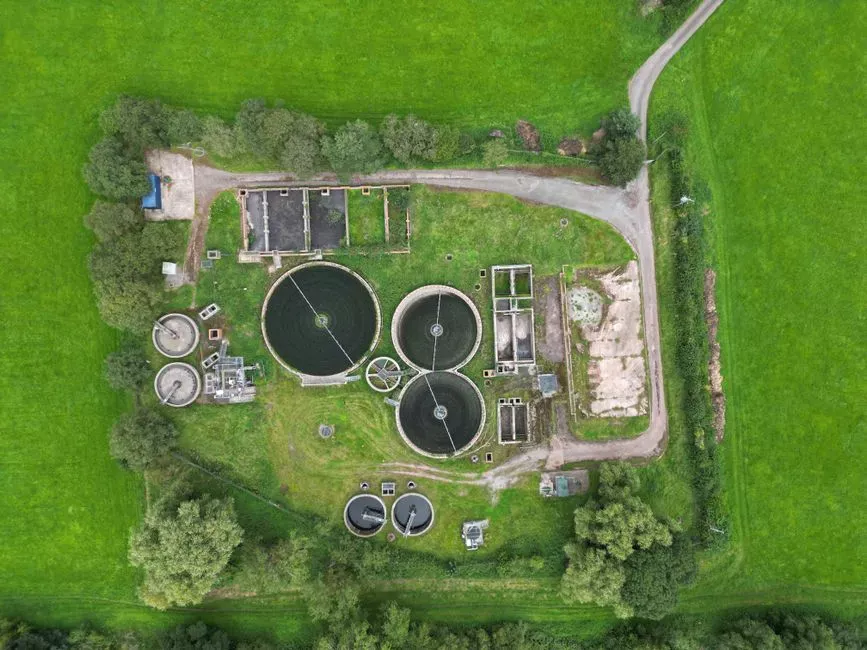
Package A/O plants, typified by the WSZ underground integrated unit, run anoxic/aerobic contact oxidation in a buried, fully automated skid, with 1–80 m³/h capacity and a footprint of roughly 15–30 m² for the 200 PE size. Burial below frost line gives inherent winter protection in Finland and removes the snow-load cover problem. The third option, an MBR membrane bioreactor system, uses <1 μm PVDF membranes to deliver near-reuse effluent, occupies roughly 60% less footprint than a conventional activated-sludge plant of the same capacity, and scales modularly from 10 to 2,000 m³/day — at the cost of heated civil works and skilled membrane maintenance. Rotating biological contactors (RBC) and submerged aerated filters (SAF) sit in the middle of the spectrum: proven for 100–500 PE sites, cold-tolerant once housed, but less common in 2026 builds than A/O or MBR. A frequent hybrid is anaerobic pretreatment (septic tank or upflow anaerobic) followed by wetland polishing — the ASABE source identifies this combination as the lowest-energy, carbon-sequestering option, since long-chain carbon is retained in the soil and the mechanical energy demand is largely eliminated.
| Technology | Footprint (200 PE) | Effluent BOD5 | Effluent TN | CAPEX band (EUR) | Winter operation |
|---|---|---|---|---|---|
| Constructed wetland (SSF + VF) | 1,000–2,000 m² | ≤ 20 mg/L | 15–25 mg/L (seasonal) | 40,000–90,000 | Works unheated; performance dips in cold months |
| Package A/O (WSZ buried) | 15–30 m² | ≤ 25 mg/L | 15–30 mg/L with anoxic stage | 60,000–120,000 | Buried below frost line; no heating needed |
| MBR membrane bioreactor | 8–20 m² | ≤ 5 mg/L | ≤ 10 mg/L with denit stage | 120,000–260,000 | Heated/insulated civil works required |
| RBC or SAF | 30–60 m² | ≤ 25 mg/L | 20–30 mg/L | 80,000–150,000 | Housed; tolerant once indoor temperature is held above 5 °C |
Buyers comparing mechanized options should look at the WSZ underground package sewage treatment plant for the small-to-mid-PE range and at the MBR page above for sensitive-catchment and reuse applications.
Head-to-head comparison: wetlands vs. package A/O vs. MBR
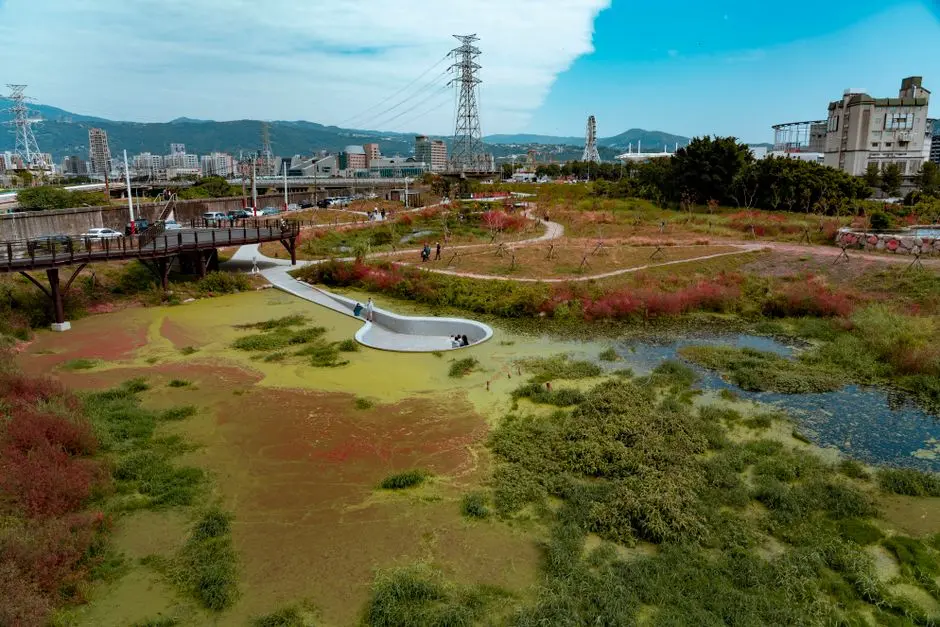
The single comparison matrix below is what an engineer should walk into a council meeting or supplier call with. It ranks the three shortlisted technologies on the six axes that drive a Finnish decision: effluent quality, footprint, CAPEX, OPEX, cold-climate fit, and operator skill requirement. The ASABE 2001 finding that constructed wetlands save significant energy versus mechanical systems when paired with anaerobic pretreatment and land application is the basis for the OPEX gap shown in the table — quantified as the order-of-magnitude saving rather than a single kWh figure, because the absolute number depends on the upstream anaerobic stage and the soil-application cycle.
The decision logic is straightforward. Package A/O is the mainstream choice for Finnish villages where the budget is constrained, the timeline is short, and the discharge target is the UWWTD minimum rather than a tight catchment-specific number. MBR is the high-effluent, small-footprint choice for sensitive catchments, sites with constrained land, or projects with a reuse downstream. Constructed wetlands win where land is available, the operator is not a full-time plant attendant, and the discharge target is moderate — they are the only one of the three that effectively runs unattended through the winter, at the cost of seasonal performance dips the designer must size for.
| Axis | Constructed wetland + anaerobic | Package A/O (WSZ) | MBR |
|---|---|---|---|
| Effluent BOD5 | ≤ 20 mg/L | ≤ 25 mg/L | ≤ 5 mg/L |
| Effluent TN | 15–25 mg/L (seasonal) | 15–30 mg/L | ≤ 10 mg/L |
| Effluent TP (no chem dosing) | 1–2 mg/L | 2–4 mg/L | 1–3 mg/L |
| Footprint (200 PE) | 1,000–2,000 m² | 15–30 m² | 8–20 m² |
| CAPEX (200 PE) | 40,000–90,000 EUR | 60,000–120,000 EUR | 120,000–260,000 EUR |
| OPEX | Lowest (order-of-magnitude energy saving vs. mechanical, per ASABE 2001) | Mid; mostly aeration energy and sludge haulage | Highest; aeration + membrane cleaning + heated enclosure |
| Cold-climate fit | Unheated, seasonal performance dips absorbed in sizing | Buried below frost line, no heating needed | Heated/insulated civil works required for membrane integrity |
| Operator skill | Low; seasonal inspection | Mid; PLC and routine servicing | High; membrane integrity management |
2026 CAPEX and OPEX benchmarks for Finnish small community plants
These are 2026 industry-typical CAPEX bands for a turnkey Finnish small community plant, expressed in EUR and intended as a sanity check against supplier quotations. A site-specific quotation is always required because the geology, discharge permit, and civil-work scope move the final figure by ±30% in either direction. The bands below cover the most common 50–2,000 PE service range and distinguish the three shortlisted technologies.
OPEX is more uniform than CAPEX across technologies but differs in structure. MBR has higher energy draw (typically 1.5–2.5 kWh/m³ for the membrane bioreactor stage alone) and higher membrane replacement cost, but generates less waste-activated sludge than a conventional A/O plant of the same capacity, which reduces haulage. Constructed wetland + anaerobic combinations demonstrate the order-of-magnitude energy saving versus fully mechanical systems identified in the ASABE 2001 study — the saving is in the 80–90% range relative to a continuously aerated mechanical plant, since the wetland polishing stage has no aeration load. CAPEX for rural village projects can be offset through municipal budgets, water-cooperative fees, and EU/national rural development co-financing instruments (sourced from the poliruralplus.eu page on rural-area modernization in Finland), provided the project meets the rural-resilience and territorial-development criteria of the relevant call.
| Size (PE) | Constructed wetland + anaerobic CAPEX (EUR) | Package A/O (WSZ) CAPEX (EUR) | MBR CAPEX (EUR) |
|---|---|---|---|
| 50 | 20,000–45,000 | 35,000–70,000 | 70,000–130,000 |
| 200 | 40,000–90,000 | 60,000–120,000 | 120,000–260,000 |
| 500 | 80,000–180,000 | 130,000–260,000 | 260,000–500,000 |
| 2,000 | 200,000–450,000 | 400,000–800,000 | 800,000–1,600,000 |
OPEX, expressed in EUR per PE per year, breaks down as: energy 8–25 EUR/PE/year (wetland at the low end, MBR at the high end), sludge hauling 5–15 EUR/PE/year, and operator time 10–30 EUR/PE/year — the operator time is lowest for wetland, mid for A/O, and highest for MBR.
A 5-step selection framework for your Finnish site
Step 1 — Quantify the load. Build the load table from PE, daily flow (150–200 L/PE/day is the 2026 Finnish design typical), BOD load (60 g/PE/day), TSS load (70 g/PE/day), and nitrogen load (12 g/PE/day). Capture the seasonal tourism or industry multiplier — a 200 PE resort at 4× peak is effectively an 800 PE design problem for a few weeks per year.
Step 2 — Confirm the regulatory pathway. Is the site inside a municipal sewer envelope (connect), outside it with a small collective permit, or fully onsite? Identify the discharge body — lake, river, sea, or sewer — and pull the applicable phosphorus and nitrogen limits from the ELY-centre permit, since these are the numbers that will decide between A/O, MBR, and wetland with chemical polishing.
Step 3 — Apply the site constraints. Map the available footprint, the soil permeability (which decides whether a subsurface wetland is feasible), the available head and power supply, and the operator availability. A site with 2,000 m² of permeable land and a part-time caretaker points at wetland; a 200 m² urban-adjacent site with three-phase power points at MBR or A/O.
Step 4 — Score the technologies. Use the head-to-head comparison table above to score each candidate against the effluent target, the cold-climate fit, and the lifecycle cost. The 2026 mainstream pick for a village on a moderate budget is a WSZ underground package sewage treatment plant; for a sensitive catchment the MBR is the defensible answer; for a rural cluster with land, the wetland combination is the lowest-lifecycle-cost path. A PLC-controlled automatic chemical dosing system should be added to whichever technology is selected, whenever the phosphorus target is below 1.0 mg/L.
Step 5 — Validate the lifecycle cost and the remote-monitoring scope. Pull the 2026 CAPEX and OPEX bands against the supplier quote, ask for guaranteed kWh/m³ and membrane-replacement intervals, and lock the SCADA / remote-monitoring scope before signing. For wider context on supplier evaluation, the comparing industrial wastewater treatment suppliers in 2026 guide covers the procurement-side checklist; the switching from lagoon to MBR in 2026 piece is the relevant reference for sites upgrading an existing lagoon; and the 2026 cost benchmarks per MGD for water and wastewater infrastructure post gives the larger-scale reference for capex sanity-checking.
Frequently Asked Questions
Does Finland require municipal connection for small communities?
No. The legal baseline for rural properties not connected to a municipal sewer is onsite treatment or treatment in a small collective (per the CORE-hosted Finnish policy paper on onsite and small-scale wastewater treatment). Municipal connection is the urban default, but the small-collective and onsite pathways are explicitly provided for and are the realistic route for any project outside the HSY or water-utility sewer envelope.
Can constructed wetlands work in Finnish winter?
Yes, with documented BOD, TSS, and nitrogen removal across all four case systems in the ASABE 2001 small-community wetlands study. The performance dips in cold months and the designer must size for it, but the wetland + anaerobic pretreatment combination is identified in that source as the lowest-energy, carbon-sequestering option, which is the same property that makes it the most resilient in a Finnish winter.
Is MBR worth the higher CAPEX in Finland?
Yes, where the discharge is to a sensitive catchment, the footprint is constrained, or reuse is the downstream goal — the near-reuse effluent of an MBR is what justifies the 2–3× CAPEX premium over a package A/O of the same capacity. In all other cases, the WSZ package A/O is the lower-CAPEX mainstream choice for Finnish villages and is the technology the head-to-head table above points to by default.
What discharge standard applies to a 500 PE village?
For a 500 PE agglomeration below the UWWTD 1,000–2,000 PE threshold, the EU directive's minimum standards do not directly apply; the Finnish national framework and the ELY-centre permit set the actual numbers. For a 500 PE project that has been classified as a small agglomeration under Article 7 of UWWTD 91/271/EEC, the appropriate discharge design target is typically BOD5 ≤25 mg/L, TSS ≤35 mg/L (the directive's minimum standards), plus any stricter municipal or catchment-specific phosphorus (typically 0.5–1.0 mg/L) and total nitrogen (typically 15–30 mg/L) limits set by the permit.
How do we finance a small community plant in rural Finland?
The realistic 2026 financing stack is a combination of municipal budget allocation, water-cooperative member fees, and EU/national rural development co-financing instruments (sourced from the poliruralplus.eu page on rural-area modernization). Villages that meet the rural-resilience and territorial-development criteria of the relevant call can draw on the rural-development envelope to offset a significant share of the CAPEX, which is what makes the wetland + anaerobic combination viable for communities that would otherwise be priced out of a mechanical plant.