Where the kWh Actually Goes on a Belt Filter Press
On a typical 2026 municipal belt filter press installation handling anaerobically digested sludge, the main belt drive motors account for only 20–30% of total BFP-related kWh (HydropureWater field data, 2026). The dominant loads are polymer make-down and mixing equipment at roughly 35–45%, wash-water booster pumps at 30–40%, and a long tail of parasitic loads — belt-tracking hydraulics, enclosure heaters, control air compressors, and lighting — that consume 5–10% of site kWh without producing dry cake. This split is the primary reframe an engineer needs before approving a BFP energy audit: chasing main-drive motor upgrades is the lowest-leverage move on the board.
Main drives on modern presses are typically 3–7.5 kW per zone, already duty-cycled by belt speed and pressure settings, and running near their minimum useful load. The polymer skid, by contrast, often runs a 5–15 hp mixer 24 hours a day even when the press is idle, and the wash-water pump frequently runs at full speed against a throttled valve — a textbook VFD application. The ASCE 1989 paper on belt filter press dewatering (Journal of Environmental Engineering, 114:5, 991) remains the historical baseline for hydraulic and polymer parameters, and a striking read in 2026 because the core press hardware described there is identical to what is still in service — meaning most of the kWh growth since then has come from auxiliary systems, not the press itself.
For plant engineers asked to defend a Scope 2 reduction plan, the takeaway is direct: the audit scope must include the polymer skid, the wash-water pump panel, and every continuously energized socket on the press skid. Measure first, then attack the largest non-drive load.
Baseline Metrics: How to Calculate Your Current kWh per Dry Ton
Total BFP-related kWh divided by tons of dry cake produced per shift is the metric utility rebates, ESG disclosure frameworks, and ISO 50001 audits use to verify reduction claims. Anything weaker, like "the drive amps look lower," is anecdotal. The calculation has four inputs: main panel kWh, polymer skid kWh, wash-water pump kWh, and dry cake mass from the SCADA mass balance or truck-weigh tickets. The 2026 benchmark ranges are well established: 0.8–1.5 kWh per dry ton for municipal anaerobically digested sludge at 3–5% feed solids, and 1.5–2.5 kWh per dry ton for industrial waste-activated or aerobically digested sludge at 1–2.5% feed solids (HydropureWater field data, 2026). Sites outside these ranges almost always have a metering gap, an oversized polymer system, or a feed that is being dewatered at far below design solids.
The practical workflow is straightforward. Clamp a portable kWh logger on the main press feeder, the polymer skid disconnect, and the wash-water VFD output. Run for one week under normal feed, capture cake tons from the belt scale or haul-out log, and compute the ratio. Without this baseline, no reduction claim is defensible. Treat it as the first deliverable of any energy project.
| Sludge type | Typical feed solids (% DS) | 2026 benchmark kWh / dry ton | Main driver of high values |
|---|---|---|---|
| Municipal anaerobically digested | 3.0–5.0 | 0.8–1.5 | Oversized polymer skid, idle run-time |
| Municipal WAS only | 1.0–2.0 | 1.5–2.2 | Low feed solids, high wash demand |
| Industrial WAS / biosolids | 1.0–2.5 | 1.5–2.5 | Variable feed, polymer over-dose |
| Primary + WAS (co-settled) | 2.5–4.0 | 1.0–1.8 | Fiber variability, tracking drift |
Six Reduction Levers Ranked by Payback and Impact
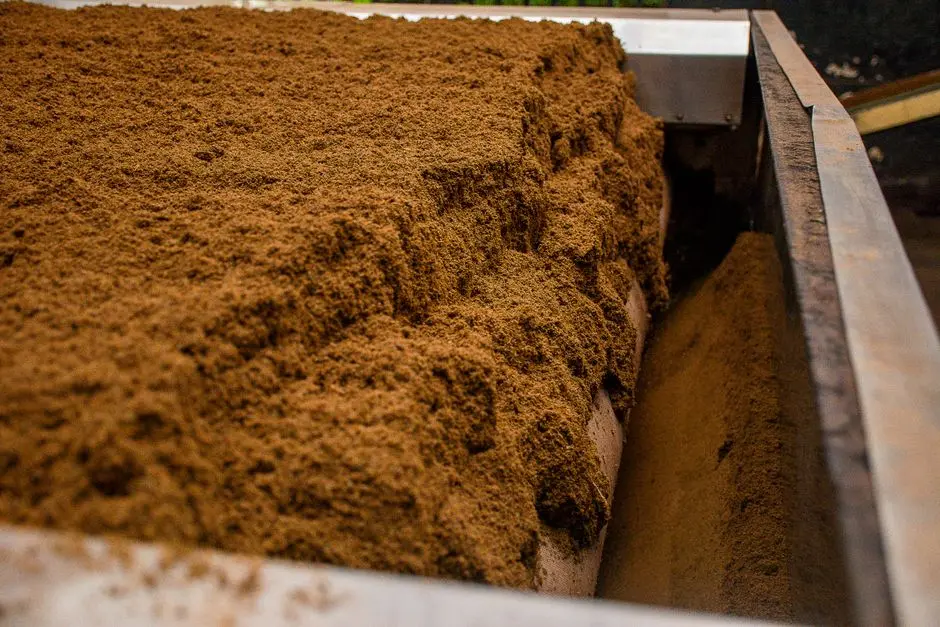
The six levers below are ordered by typical 2026 ROI for a 5–50 MGD site with a single 1.0–2.0 m belt press. Each is defensible against a kWh-per-dry-ton baseline and sized for a capital-constrained municipality. Use the table at the end of this section to score your own site before you spend a dollar.
Lever 1 — VFD retrofit on the main belt drive. A modern VFD on each of the gravity and press zone drives reduces drive energy 15–25% by allowing soft-start, eliminating the across-the-line inrush, and letting the press slow down on thin feed without stalling. At 2026 industrial rates of $0.09–0.13/kWh, payback is 12–18 months on the drive load alone, and the soft-start benefit extends belt life (HydropureWater field data, 2026).
Lever 2 — Gravity belt thickener upstream. Lifting feed from 1–2% DS to 4–6% DS cuts press run-hours, polymer dose, and wash-water demand simultaneously, producing a combined 30–50% reduction in kWh per dry ton. Capex is the highest of any lever on this list — $150,000–$400,000 installed for a 1.0–1.5 m GBT — but it is the single highest-impact project a press site can fund. For a full sizing and ROI walkthrough, see our gravity belt thickener process guide.
Lever 3 — Polymer make-down optimization. Replacing aged mixers, correcting G-value to 400–700 s⁻¹ for emulsion polymers, and switching from neat dry polymer to dry-blend or high-active emulsions can cut conditioning energy 20–40% while simultaneously reducing polymer consumption.
Lever 4 — Wash-water pump VFD and recirculation. Wash-water routinely represents 30–40% of total BFP kWh and is almost always pumped at full speed against a manual throttling valve. VFD-ing the pump to track belt speed, and routing 30–60% of the wash stream from the filtrate tank instead of the potable header, cuts this load 25–35% with payback under 15 months at most sites.
Lever 5 — Belt tracking and tensioning hydraulics. Upgrading from solenoid-driven hydraulic tensioners to proportional-valve or all-electric tensioners removes a continuous parasitic load of 1–2 kW per press. On a press running two shifts, that is 5–10 kWh per shift saved with no dewatering impact.
Lever 6 — Heat recovery and scheduling. Many sites run polymer mixers 24/7 regardless of whether the press is feeding. Scheduling the polymer system to actual press windows and recovering jacket heat for building heat in cold-climate sites cuts ancillary loads 5–15% on the polymer skid.
| Lever | Typical kWh/dry ton reduction | Capex band (2026 USD) | Payback | Difficulty |
|---|---|---|---|---|
| 1 — Main drive VFD | 15–25% on drive load | $15k–$45k | 12–18 months | Low |
| 2 — Gravity belt thickener upstream | 30–50% combined | $150k–$400k | 3–6 years | High |
| 3 — Polymer make-down optimization | 20–40% on conditioning | $20k–$120k | 9–24 months | Medium |
| 4 — Wash-water VFD + recycle | 25–35% on wash load | $25k–$80k | 10–18 months | Medium |
| 5 — Tracking / tensioning upgrade | 5–10 kWh per shift | $10k–$40k | 12–24 months | Low |
| 6 — Heat recovery + scheduling | 5–15% on polymer skid | $5k–$25k | Under 12 months | Low |
Polymer Conditioning: The Hidden Energy Multiplier
Polymer dose and mixing energy are coupled to cake solids in a way that makes them a triple-leveraged decision: too little polymer gives wet cake and forces re-press cycles; too much re-flocculates fines, blinds the belt, and increases wash-water demand; and over-mixing at a G-value above the polymer's design window shears the floc, forcing higher dosage. The 2026 state of the art is automatic dose control on a streaming-current or photometer signal, which holds charge demand at setpoint across feed variability rather than running a fixed-dose curve. Documented polymer savings are 20–40% with simultaneous reductions in mixing energy, fewer press hours, and higher cake solids — typically a 2–4 percentage point lift in cake DS (HydropureWater field data, 2026). For a turnkey package, evaluate an automatic polymer dosing system with streaming-current feedback and a G-value-controlled mixing head.
Polymer selection and dose validation should be pilot-tested against the actual site sludge before deployment, rather than specified from a vendor data sheet. The most credible 2026 polymer audits run a one- to two-week bench or trailer test on site, varying dose, mixing energy, and contact time, then carry the optimum into the operating skid.
Refurbish vs Replace: The Alfa Laval Refinery Case Pattern
The most visible field precedent for BFP retrofit over replacement is the southern U.S. refinery case described in Alfa Laval's product literature, where a targeted retrofit restored performance at a fraction of new-equipment capex. Translated into 2026 energy terms, retrofits that add drive VFDs, a modern polymer skid, a wash-water VFD with filtrate recycle, and updated belt-tracking and tensioning systems typically deliver 40–60% of the energy savings of a new press at 25–35% of the installed cost (HydropureWater field data, 2026). The math favors retrofit whenever the existing press frame, rollers, and belt drive are still serviceable.
A typical 2026 retrofit package for an energy-focused upgrade on a 1.0–2.0 m press includes: VFDs on the gravity and press zone drives, a wash-water VFD with filtrate recycle piping, polymer skid replacement with automatic dose control, a controls upgrade to current SCADA protocol, and a belt-tracking and tensioning upgrade. When the capex case for retrofit does not close — usually because the frame is fatigued or the press is undersized for current solids loading — the alternative is a modern plate and frame filter press, which can hit 28–35% cake solids and lower kWh per dry ton on sludges where a BFP is marginal.
90-Day Implementation Checklist for 2026
Use the sequence below as the outline for your next management update. Each block is sized for a single BFP and assumes one process engineer plus one instrument tech at roughly 25% allocation.
| Window | Action | Deliverable |
|---|---|---|
| Weeks 1–2 | Install kWh metering on main panel, polymer skid, wash pump; start dry-ton mass balance | Defensible kWh/dry ton baseline |
| Weeks 3–4 | Baseline polymer dose and cake solids across three feed conditions; commission streaming-current trial if available | Dose–cake–energy correlation curve |
| Weeks 5–8 | Quote and install VFDs on main drive and wash pump; capture before/after kWh | First measurable kWh reduction |
| Weeks 9–10 | Re-baseline polymer dose with automatic control online; verify cake solids lift | Updated kWh/dry ton |
| Weeks 11–12 | Scope gravity belt thickener or full press retrofit if ROI is justified; write internal business case | Capital request with measured baseline |
ESG and energy disclosure requirements make the metering step in weeks 1–2 a deliverable that pays off even if no retrofit proceeds. A documented baseline is a reporting asset; a missing baseline is a 2026 audit finding.
Frequently Asked Questions
What is a realistic kWh per dry ton for a belt
Frequently Asked Questions
How much energy does a belt filter press use per ton of sludge?
A standard belt filter press (BFP) typically consumes between 1.5 and 4.0 kWh per dry ton of sludge processed. This energy usage is primarily driven by the drive motor for the belt assembly, the wash-water pump, and the sludge feed pump, with variations heavily dependent on the influent solids concentration and the required cake dryness.
Can a VFD really reduce belt filter press energy consumption?
Yes, installing Variable Frequency Drives (VFDs) on the main drive motor and the sludge feed pump can reduce total energy consumption by 20% to 40% under partial load conditions. By matching the motor speed to the actual throughput requirements rather than running at constant full-load speed, VFDs eliminate unnecessary mechanical friction and electrical losses associated with bypass valves or throttling.
Is it better to retrofit or replace an old belt filter press?
Retrofitting is generally more cost-effective if the mechanical frame remains structurally sound, as upgrading to high-efficiency motors (IE4/IE5 standards) and modern PLC control systems can recover capital costs within 24 to 36 months. However, if the press has surpassed its 20-year design life or requires significant structural repair to the rollers and bearings, a total replacement is recommended to take advantage of modern hydraulic and pneumatic tensioning systems that offer superior energy efficiency.
How much polymer can streaming-current control save on a BFP?
Implementing streaming-current monitoring for automated polymer dosing can reduce polymer consumption by 15% to 30% compared to fixed-rate manual dosing. By maintaining an optimal charge neutralization point in real-time, the system prevents overdosing, which not only lowers chemical costs but also reduces the hydraulic load on the belt and the energy required for sludge conditioning.
Will adding a gravity belt thickener upstream lower BFP energy use?
Adding a gravity belt thickener (GBT) upstream can significantly reduce total system energy intensity by increasing the influent solids concentration from 1–2% to 5–8% before the BFP stage. Because the BFP is then processing a lower volume of liquid per dry ton of solids, the specific energy consumption per dry ton can decrease by 30% to 50% due to reduced wash-water demand and decreased motor run-times for the press assembly.