How Nova Scotia Regulates Waste Water in 2026
Two parallel regulatory tracks govern waste water in Nova Scotia, and identifying which one applies to a given site is the first step before any equipment is sized. The first track, the On-site Sewage Disposal Systems Regulations under Nova Scotia Environment, covers residential properties and small commercial flows handled by decentralized systems such as septic tanks, treatment plants, and disposal fields. The second track governs industrial and higher-flow discharges that route to a municipal sewer or surface water under an NS Environment approval, typically referencing the Canadian Water and Wastewater Association framework and site-specific effluent limits. The authoritative regulator page at novascotia.ca/nse/wastewater/onsitesewage.asp confirms that "installing, replacing, or altering a system in Nova Scotia must only be completed by individuals recognized under the On-site Sewage Disposal Systems Regulations" (NS Environment, 2026).
Under that same regulation, NS Environment recognizes five certification categories: Professional Engineers, Qualified Persons (QPs), Installers, Septic Tank Cleaners, and Portable Restroom Operators. Each category is gated: a person must hold certification in every program area they work in, and partial coverage is not valid. The Waste Water Nova Scotia Society (WWNS), at 166 Patterson Road, Boularderie East, B1X 1H9, 902-578-3268, [email protected], maintains the public directory used to locate a certified professional. The regulator page directs the public to WWNS for the working professional list, while NS Environment retains the certification authority.
| Regulatory Track | Governing Body | Instrument | Typical Site |
|---|---|---|---|
| On-site sewage disposal | Nova Scotia Environment | On-site Sewage Disposal Systems Regulations | Residential, small commercial, decentralized < prescribed flow |
| Industrial / higher-flow discharge | Nova Scotia Environment | Site-specific approval, CCME-aligned limits | Food plants, fish processors, hospitality, remote communities |
| Certified professional directory | Waste Water Nova Scotia Society | Industry coordination; not a regulator | Public-facing lookup for all five certification categories |
| Professional engineering stamp | Engineers Nova Scotia | Engineers Nova Scotia Act | Any engineered design above the prescribed on-site flow |
For buyers evaluating a fish plant, a small food processor, a remote community system, or a hospitality venue in Nova Scotia, the practical question is which track the flow falls into. Anything above the residential on-site threshold is engineered and must be stamped by a Professional Engineer licensed by Engineers Nova Scotia, with commissioning signed off by a Qualified Person.
Who Must Be Certified — and Why That Affects Your Equipment Choice
Certification requirements in Nova Scotia directly dictate which equipment specifications are acceptable on a stamped drawing. The regulator page lists the five WWNS-recognized roles and the authority that licenses or certifies each one. Professional Engineers are licensed to practice by Engineers Nova Scotia and are the only role authorized to sign and seal engineered designs. Qualified Persons are certified by NS Environment to perform on-site assessments for siting, soil, and system selection. Installers, also certified by NS Environment, perform the physical installation, alteration, or replacement work. Septic Tank Cleaners (pumpers) and Portable Restroom Operators round out the five recognized categories, each with their own NS Environment certification.
NS Environment states explicitly that "someone working in any of the above recognized areas must be certified for each area of the program they work in" (novascotia.ca/nse/wastewater/onsitesewage.asp, 2026). That rule prevents common procurement errors, such as hiring an installer to do a QP assessment or asking a septic cleaner to certify a treatment plant.
For an industrial or higher-flow site, the equipment choice is downstream of the certified-person chain. A Professional Engineer must stamp the design, so the supplier's submittal package must be presentable to a PE: published flow ranges in m³/h or m³/day, stated effluent class (typically BOD₅, TSS, and total nitrogen targets), a PLC I/O list, power demand in kW, and footprint in m². Suppliers that publish generic marketing claims without those numbers force the PE to perform design work the vendor should have completed. The industrial wastewater treatment solutions comparison framework outlines the documentation a PE requires. Vendors that provide stamped drawings, process control narratives, and a commissioning protocol save the buyer weeks of back-and-forth during the QP sign-off.
Treatment Equipment Options for Nova Scotia Sites Above the Residential Threshold
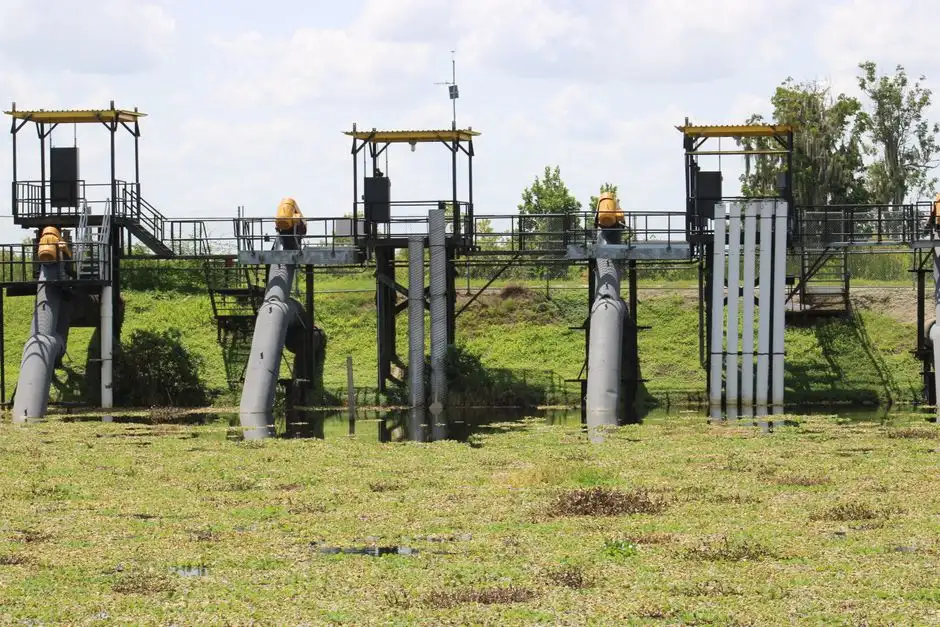
Engineered treatment systems generally utilize one of three core technology trains, often combined to meet site-specific discharge limits. The first option is a WSZ series underground package A/O plant, an anoxic/aerobic contact-oxidation unit with sedimentation and disinfection integrated into a single buried tank, available in a 1–80 m³/h flow band. It is fully automated, does not require a dedicated on-site operator, and is trailer-mountable for mobile deployment — useful for remote construction camps or seasonal hospitality sites. The buried configuration also removes the above-grade visual impact that often matters in coastal Nova Scotia tourism zones.
The second option is an MBR membrane bioreactor system, which combines activated sludge with submerged PVDF membrane filtration at a nominal pore size under 1 μm. The MBR train typically delivers near-reuse effluent suitable for boiler makeup, wash water, or toilet flush, runs in a 10–2,000 m³/day envelope, and occupies roughly 60% less footprint than a conventional activated-sludge plant of the same throughput. The trade-off is a membrane maintenance plan and a qualified service partner: PVDF modules need periodic chemical cleaning, and the PLC should log transmembrane pressure so the operator can trend fouling. Buyers moving from lagoon-based systems to MBR can review the lagoon to MBR upgrade guide for the typical retrofit cost drivers.
The third option is a DAF system, covering 4–300 m³/h across 13 standard models. DAF is pre-treatment, not a complete train: it removes FOG, oil and grease, and colloids via micro-bubble flotation and is normally placed in front of a biological stage. Nova Scotia's coastal economy — fish plants, seafood processors, food manufacturers, metalworking shops — generates high-FOG, variable-pH influent that DAF is built to handle. Finally, a GX rotary mechanical bar screen is the standard headworks: continuous-duty screening that protects the downstream biological and membrane equipment from rags, plastics, and fibrous debris common in seafood and food-processing waste.
| Equipment | Flow Range | Function in Train | Typical Nova Scotia Application |
|---|---|---|---|
| WSZ underground package A/O plant | 1–80 m³/h | Complete biological train (anoxic + aerobic + disinfection) | Small communities, hotels, rural schools, hospitals, small factories |
| MBR membrane bioreactor | 10–2,000 m³/day | Biological + membrane filtration (near-reuse) | Reuse sites, tight-footprint sites, remote camps |
| DAF system | 4–300 m³/h (13 models) | Pre-treatment: FOG, oil & grease, colloids | Fish plants, food processors, restaurants, metalworking |
| GX rotary bar screen | Site-specific | Headworks screening | All sites with fibrous or particulate solids loading |
Matching the Train to Your Flow and Wastewater Character
Selecting the appropriate treatment train relies on a PE validating site-specific variables against the intended output. The small community wastewater system engineering guide illustrates the logic for comparable Atlantic-climate projects: buried package plants dominate below 80 m³/h where the loading is domestic and an operator is not on site full time.
For small communities, rural schools, and hotels under 80 m³/h with predominantly domestic loading, the WSZ underground package A/O plant is the default. It is buried, automated, and produces effluent that meets typical NS Environment on-site discharge criteria without a dedicated operator. For sites with significant oil and grease — fish plants, food processors, hospital kitchens, restaurant venues — DAF pre-treatment is non-negotiable. The standard configuration is DAF feeding a downstream biological stage such as the WSZ or an MBR; treating DAF as a complete train is a common engineering error.
For sites targeting water reuse — boatyards, industrial laundries, remote camps, or facilities under a site-specific reuse approval — an MBR is the primary train. The near-reuse effluent, the 60% footprint reduction versus conventional activated sludge, and the closed-vessel design suit constrained coastal sites. The MBR does require a membrane maintenance plan, a CIP chemical feed, and a qualified service partner. Across all three configurations, specify PLC automation, automatic backwash, and skid-mounted assembly so the QP can commission the plant and the operator can monitor it remotely — a significant advantage for distributed sites across Nova Scotia where daily operator presence is impractical.
A 2026 Selection Checklist for Nova Scotia Buyers

Use this checklist during vendor evaluation; every item is something a Professional Engineer or Qualified Person will ask for before signing off.
- Confirm the flow band in m³/h or m³/day, and characterize the influent: BOD₅, COD, TSS, FOG, total nitrogen, pH, and temperature range.
- Identify the required effluent class. NS Environment approvals typically reference CCME or site-specific limits; obtain the actual discharge limits in writing before sizing equipment.
- Match the train to the waste: WSZ for domestic-dominant flows up to 80 m³/h, MBR for reuse or footprint-constrained sites, DAF in front of a biological stage wherever FOG exceeds ~50 mg/L.
- Demand the documentation package: published flow, footprint, power demand, PLC I/O list, and a commissioning protocol that a PE can stamp and a QP can sign.
- Specify PLC automation, automatic backwash, and skid-mounted assembly so remote monitoring is feasible from the integrator's SCADA.
- Plan operator coverage: confirm the vendor's recommended operator hours per week, the local service partner for membrane or mechanical maintenance, and the spare-parts lead time for Atlantic Canada.
Frequently Asked Questions
Who regulates waste water in Nova Scotia?
Nova Scotia Environment regulates waste water under the On-site Sewage Disposal Systems Regulations. The Waste Water Nova Scotia Society (WWNS) acts as the industry coordination body and public directory, but the certification and approval authority sits with NS Environment.
Do I need a Professional Engineer to sign off on a treatment system?
Yes. Any engineered system above the prescribed on-site flow must be designed and stamped by a Professional Engineer licensed by Engineers Nova Scotia, with site assessment and commissioning handled by a Qualified Person certified by NS Environment.
What is the difference between a Qualified Person and an Installer?
A Qualified Person (QP), certified by NS Environment, performs the on-site assessment and signs off on system selection and commissioning. An Installer, also certified by NS Environment, executes the physical installation, alteration, or replacement. The two roles are separate certifications.
Where can I find a certified waste water professional in Nova Scotia?
Through the WWNS public directory at wwns.ca. The society is at 166 Patterson Road, Boularderie East, B1X 1H9, 902-578-3268, [email protected], and maintains listings for Professional Engineers, Qualified Persons, Installers, Septic Pumpers, and Portable Restroom Operators.
What equipment is commonly specified for non-residential sites in Nova Scotia?
For flows above the residential threshold, the standard trains are WSZ package A/O plants (1–80 m³/h), MBR membrane bioreactors (10–2,000 m³/day) for reuse or footprint-constrained sites, and DAF pre-treatment in front of a biological stage for high-FOG waste from fish plants and food processors. A GX rotary bar screen is typically specified as headworks to protect downstream equipment.