Why Ammonia Nitrogen Is the Hard Target in Industrial Wastewater
Total Ammonia Nitrogen (TAN) is the sum of dissolved NH3 and NH4+, and the ratio between the two is set by pH and temperature: at pH 8.5 and 25 °C roughly 6% of TAN is free NH3; raise pH to 10.5 and that share climbs past 80% (per standard aqueous chemistry). Free NH3 is the toxic species, and the U.S. EPA freshwater quality criteria set the chronic threshold at 0.02 mg/L NH3 for salmonid waters — the reason 2026 NPDES permits increasingly cap TAN rather than just total Kjeldahl nitrogen.
Industrial streams span an order of magnitude. Food and beverage effluent typically lands at 20–80 mg/L NH4+, refinery and petrochemical condensate at 50–300 mg/L, and livestock manure or landfill leachate can exceed 1,500 mg/L NH4+ (HydropureWater field data, 2026). Conventional primary settling, flotation, and equalization remove less than 15% of TAN because NH4+ stays in solution at near-neutral pH. A dedicated biological, chemical, or physical step is required, and the choice hinges on influent strength, target limit, and OPEX tolerance.
Biological Nitrification-Denitrification: The Workhorse
Biological removal is a two-step, two-organism process consisting of nitrification and denitrification. Nitrifiers (Nitrosomonas oxidize NH4+ → NO2−, then Nitrobacter push NO2− → NO3−); heterotrophs then reduce NO3− → N2 in an anoxic zone with a carbon source. The 2026 Priestia aryabhattai FM5 trial on soymilk-processing wastewater quantified both legs: NH4+ dropped from 29.5 to 4.8 mg/L in 72 h at pH 8.0, 25 °C, and C/N 20 (sodium succinate), while denitrification peaked at pH 7.0, 35 °C, and C/N 10 with sodium acetate (Europe PMC, 2026, doi:10.3390/biology15181625). An oxidation ditch reactor on tofu and skin-tanning wastewater delivered 94.1% ammonia reduction over 7 days at 60 rpm aeration, simultaneously stripping 75.3% of phosphate (Galaxy Science, 2020, doi:10.11594/nstp.2020.0515).
For full-scale design, the operating envelope is tight: SRT 10–20 days for nitrification (washout below 25 °C if SRT drops under 5 days), HRT 6–12 h aerobic and 2–4 h anoxic, DO 1.5–2.5 mg/L, C/N 10–20, and mixed liquor pH 7.0–8.5. MBBR, SBR, and conventional activated sludge all hit 94–99% removal for influent 50–500 mg/L NH4+; the MBR membrane bioreactor for combined biological ammonia removal and solids separation extends that to 0.1–1 mg/L suspended solids in the effluent, which protects downstream RO or ion-exchange polishers from fouling. The dominant OPEX line is aeration at 0.3–0.8 kWh/m3, which is why modern trains pair DO probe feedback with variable-frequency blowers rather than running on a fixed airflow setpoint.
Air Stripping and Breakpoint Chlorination: Chemical & Physical Options
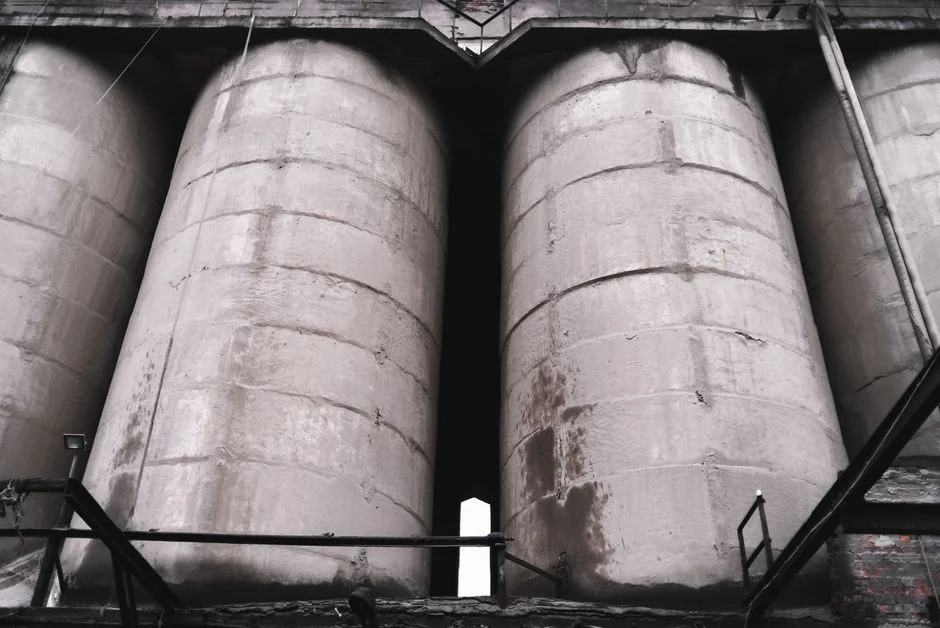
Air stripping in a packed tower is a fast physical solution for warm, high-pH streams or those with influent NH4+ >50 mg/L. Operators raise pH to 10.5–11.5 with NaOH (or lime, where Ca2+ is tolerable) and pass water over 2–4 m of structured packing at an air-to-water ratio of 3,000–5,000 m3/m3; 80–95% removal is typical. The catch is temperature: efficiency drops 5–8 percentage points for every 5 °C below 20 °C, so plants in cold climates must either heat the water or oversize the tower. OPEX runs $0.10–$0.25/m3, dominated by NaOH and blower power.
Breakpoint chlorination is a stoichiometric reaction: NH4+ + 1.5 Cl2 → 0.5 N2 + 3 HCl, followed by further oxidation of the HCl and any residual N to NO3−. Reaching the breakpoint requires a Cl2:N mass ratio of 8–10:1; dosing less than that produces toxic chloramines. Removal exceeds 99% when the ratio is right, but the reaction leaves 7–12 mg/L residual Cl2 that must be quenched with SO2 or GAC to prevent damage to the receiving water's biota. OPEX lands at $0.20–$0.50/m3 because of the chlorine and the dechlorination chemicals; consequently, most 2026 installations route chlorine through a PLC-controlled dosing system for breakpoint chlorination and pH adjustment with ORP control. Non-thermal plasma combined with zeolite is an emerging polishing route for low-flow streams; early work in J. Hazard. Mater. reported strong removal on synthetic feeds, though industrial field data remain limited.
Ion Exchange, Biochar and Membrane Polishing
Polishing becomes mandatory when the biological train leaves 5–30 mg/L NH4+ and the permit demands below 5 mg/L, or when the water is destined for boiler feed or process reuse. Natural and modified zeolites (clinoptilolite) exchange NH4+ for Ca2+/Na2+ and routinely cut TAN from 20 mg/L to under 1 mg/L on column tests; they regenerate cleanly with brine. Magnesite-tailings modified biochar is a 2025–2026 research focus for livestock streams because it pairs adsorption with phosphate co-removal (per SSRN, doi:10.2139/ssrn.5177588) and offers a lower-cost alternative to engineered resins when the stream is high-strength but low-volume.
Reverse osmosis is the workhorse for the tightest targets, including reuse, cooling-tower make-up, or discharge below 0.5 mg/L NH4+. A thin-film composite RO rejects >99% of NH4+ at 10–30 bar, but only if the feed is low in suspended solids and free oil; that is why RO is always downstream of biological or MBR treatment. A properly sized RO polishing train for ammonia reuse or sub-1 mg/L discharge typically operates at 0.5–1.5 kWh/m3 and concentrates the rejected NH4+ into a 5–10% brine stream that can be sent back to the head of the biological reactor for destruction.
Side-by-Side Comparison of the Four Methods
The table below consolidates the operating envelope, energy, and OPEX for each mainstream route plus the most common 2026 hybrid pattern. Use it to score options against your influent concentration, target limit, and energy budget.
| Method | Best influent NH4+ range | Removal % | Energy (kWh/m3) | OPEX ($/m3) | Main cost driver | Typical 2026 use case |
|---|---|---|---|---|---|---|
| Biological nitrification-denitrification (activated sludge / MBBR / MBR) | 50–1,500 mg/L | 94–99% | 0.3–0.8 | 0.05–0.30 | Aeration electricity | Main step for food, livestock, chemical, refinery streams; default for any new plant |
| Air stripping (packed tower) | 50–500 mg/L | 80–95% | 0.4–0.9 (blower + heating) | 0.10–0.25 | NaOH/lime + heat | Warm, high-pH side-streams; landfill leachate; fertilizer condenser water |
| Breakpoint chlorination | 5–50 mg/L | >99% (at breakpoint) | 0.05–0.15 | 0.20–0.50 | Cl2 + SO2 chemicals | Polishing low-flow concentrates, dechlorination-friendly outfalls, emergency capacity |
| Ion exchange / membrane (zeolite, biochar, RO) | 1–30 mg/L | 95–>99% | 0.5–1.5 | 0.15–0.60 (resin) / 0.30–1.00 (RO) | Resin regeneration or membrane replacement | Reuse, boiler feed, sub-1 mg/L discharge polishing |
| Hybrid train (biological + breakpoint or RO polish) | 50–500 mg/L | 99.5–>99.9% | 0.4–1.0 | 0.25–0.70 | Aeration + chemical/membrane | 2026 default for sites with TN or NH4+ limits below 2 mg/L |
For a biological main step followed by a polishing stage, an MBR membrane bioreactor for combined biological ammonia removal and solids separation is the workhorse, with a PLC-controlled dosing system for breakpoint chlorination and pH adjustment handling any residual.
Choosing the Right Train for Your Plant in 2026
Map your influent concentration and your discharge or reuse target to a train in three steps. The rule of thumb is: influent >200 mg/L NH4+ almost always justifies a biological main step, because air stripping or breakpoint chlorination at that loading becomes chemical-prohibitive; influent 50–200 mg/L is a gray zone where either biological or stripping is defensible and the decision is driven by land area and existing assets; influent <50 mg/L is breakpoint or ion-exchange territory. On the outlet side, target <10 mg/L is met by biological alone, target <2 mg/L or reuse needs a polishing step, and target <0.5 mg/L requires RO plus ion exchange in series.
Two 2026-specific factors tilt the design. First, EPA and EU permits now cap total nitrogen, not just ammonia, which forces a denitrification stage in the train. Second, high-strength streams from livestock and landfill benefit from struvite precipitation upstream of the biological step, which recovers ammonia as a slow-release fertilizer and can offset 10–20% of OPEX. For background on foaming and dissolved-oxygen control that often make or break a biological train, the oxidation ditch troubleshooting and foaming control guide is a useful companion, and the 2026 industrial pretreatment compliance guide covers the regulatory side.
Frequently Asked Questions
What is the fastest method to remove ammonia nitrogen from wastewater?
Breakpoint chlorination is the fastest, reaching >99% removal within 10–30 minutes of contact time when the Cl2:N mass ratio is held at 8–
Frequently Asked Questions
What is the most effective method to remove ammonia nitrogen from wastewater?
Biological Nutrient Removal (BNR) using an integrated fixed-film activated sludge (IFAS) process is currently considered the most effective and sustainable method for large-scale municipal applications. This method consistently achieves effluent ammonia nitrogen concentrations below 0.5 mg/L by utilizing specialized nitrifying bacteria in a controlled aerobic environment.
What is the difference between nitrification and denitrification?
Nitrification is an aerobic process where ammonia (NH3/NH4+) is oxidized by autotrophic bacteria into nitrite (NO2-) and subsequently into nitrate (NO3-). Denitrification is an anoxic process where heterotrophic bacteria reduce nitrate (NO3-) into nitrogen gas (N2), effectively removing the nitrogen from the liquid stream and releasing it into the atmosphere.
How much chlorine is needed for breakpoint chlorination of ammonia?
Breakpoint chlorination requires a mass ratio of chlorine to ammonia-nitrogen (Cl2:NH3-N) of approximately 8:1 to 10:1. Reaching the breakpoint ensures that combined chlorine residuals are oxidized, allowing for the complete removal of ammonia, though the exact dosage depends heavily on the alkalinity and pH levels of the specific wastewater matrix.
When should I choose air stripping over biological treatment for ammonia?
Air stripping is most appropriate for high-strength industrial wastewater streams with ammonia concentrations exceeding 100 mg/L and a pH greater than 10.5. It is preferred when biological systems would be inhibited by toxicity or when the influent temperature is too low for effective bacterial nitrification, provided the ambient air conditions support mass transfer.
Can RO remove ammonia nitrogen to below 1 mg/L?
Yes, Reverse Osmosis (RO) can remove ammonia nitrogen to below 1 mg/L, but its efficiency is strictly dependent on the pH of the feed water. Because ammonia exists as a dissolved gas (NH3) at high pH levels, it can pass through standard membranes; therefore, the pH must be maintained below 7.0 to ensure the ammonia remains in the ionic ammonium (NH4+) state, which the RO membrane can effectively reject.