Why Saint-Louis Wastewater Treatment Costs Are Rising in 2025
The Metropolitan St. Louis Sewer District (MSD) is currently navigating a $900 million wastewater infrastructure upgrade, a project necessitated by an EPA consent decree aimed at eliminating combined sewer overflows (CSOs) and improving regional air quality. For municipal engineers and industrial facility managers, this massive public investment signals a broader trend: the era of "low-cost" wastewater management in Missouri has ended. As the city grapples with 1920s-era piping and aging treatment facilities, the cost of both greenfield projects and retrofits is being driven upward by stricter regulatory oversight and necessary technological modernization.
In 2025, the Missouri Department of Natural Resources (DNR) implemented a revised permit fee structure that directly impacts project budgeting. Facilities with a design flow of 500,000 gallons per day (GPD) or greater now face initial permit fees of $3,000, with additional annual fees based on discharge complexity (per Missouri DNR PUB2564). For industrial operators, particularly those in food processing, chemical manufacturing, and metal finishing, compliance with 40 CFR Part 403 industrial pretreatment standards is adding an estimated 20–30% to total project costs. These standards require specialized equipment to remove fats, oils, and grease (FOG), heavy metals, and high biological oxygen demand (BOD) loads before effluent enters the municipal system.
Beyond regulatory fees, the physical reality of Saint-Louis’s infrastructure adds a "retrofit premium." Integrating modern compact underground sewage treatment systems for Saint-Louis municipalities into existing urban footprints often requires complex utility relocation and soil stabilization, which can increase civil engineering costs by 15% compared to suburban greenfield developments. the rising cost of specialized labor and raw materials in the Midwest has pushed the baseline for even basic secondary treatment systems higher than previous five-year averages.
Wastewater Treatment Plant Cost Benchmarks for Saint-Louis: Municipal vs. Industrial
Estimating a wastewater treatment plant cost in Saint-Louis requires a clear distinction between municipal secondary treatment and industrial pretreatment. According to Missouri DNR data and regional project analysis, municipal plants typically range from $3 to $8 per gallon of daily capacity. This means a 1 million gallon per day (MGD) municipal facility generally requires a capital investment of $3 million to $8 million, depending on the effluent limits for nitrogen and phosphorus. For larger regional expansions, such as the $157 million Metro East plant upgrade, economies of scale apply, but the complexity of modern nutrient removal often keeps the per-gallon cost toward the higher end of the spectrum.
Industrial systems, however, operate on a different cost logic. Because industrial influent is often 10 to 50 times more concentrated than domestic sewage, these systems cost between $5 and $15 per gallon of capacity. For example, a Saint-Louis food processing plant recently commissioned a 0.5 MGD system to handle influent with a BOD of 1,200 mg/L and TSS of 800 mg/L. The project utilized MBR systems for high-efficiency wastewater treatment in Saint-Louis combined with DAF pretreatment, totaling a $2.1 million investment. This higher cost-per-gallon is justified by the significant reduction in municipal surcharges and the avoidance of EPA non-compliance fines.
| Project Scale/Type | Estimated CAPEX (Saint-Louis) | Cost Per Gallon | Typical Technology |
|---|---|---|---|
| Small Municipal (0.1 MGD) | $800,000 – $1.2M | $8.00 – $12.00 | SBR or Package Plant |
| Medium Municipal (1.0 MGD) | $3.5M – $6.0M | $3.50 – $6.00 | Activated Sludge / Oxidation Ditch |
| Large Municipal (10+ MGD) | $30M – $50M+ | $3.00 – $5.00 | Conventional with BNR |
| Industrial Pretreatment (0.2 MGD) | $1.5M – $2.5M | $7.50 – $12.50 | DAF + Aerobic Digestion |
| Industrial High-Strength (0.5 MGD) | $4.0M – $7.0M | $8.00 – $14.00 | MBR + Chemical Dosing |
On a per-capita basis, municipal engineers should budget between $1,200 and $2,500 per person served. While the national average sits near the lower end of this range, Saint-Louis’s specific labor rates and the requirement for advanced phosphorus removal to meet Missouri River Basin standards push local benchmarks toward the $2,000+ mark for new construction.
Technology-Specific Cost Breakdowns: MBR vs. DAF vs. Conventional Systems
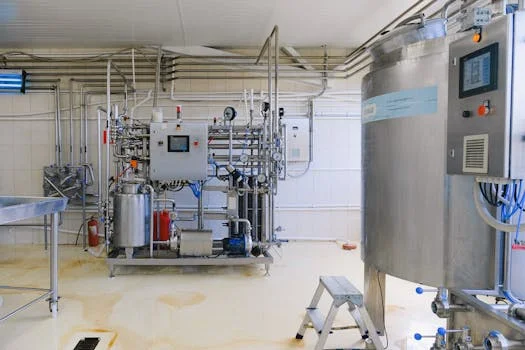
The choice of technology is the primary driver of both capital expenditure (CAPEX) and long-term operational expenditure (OPEX). Conventional activated sludge (CAS) remains the baseline for municipal projects due to its lower CAPEX of $2 to $5 per gallon. However, CAS requires a massive footprint and generates significant sludge volumes, leading to higher disposal costs. In Saint-Louis, where land in industrial corridors is at a premium, many facilities are opting for Membrane Bioreactor (MBR) technology or Dissolved Air Flotation (DAF) systems to maximize efficiency in confined spaces.
MBR systems represent the high-performance tier, costing $8 to $15 per gallon. While the initial investment is higher, MBRs provide 30% lower footprints and produce effluent quality suitable for immediate reuse in cooling towers or irrigation. For industrial applications, DAF systems for industrial pretreatment in Saint-Louis food processing and metal finishing plants are often the most cost-effective solution for removing TSS and FOG, with CAPEX ranging from $4 to $10 per gallon. Operational costs in Saint-Louis are also influenced by the region's hard water, which often necessitates an automatic chemical dosing system for pH adjustment and coagulant efficiency.
| Technology Type | CAPEX Rank | OPEX (per 1,000 gal) | Footprint Req. | Effluent Quality |
|---|---|---|---|---|
| Conventional Activated Sludge | Low | $0.50 – $1.10 | High | Standard Secondary |
| MBR (Membrane Bioreactor) | High | $1.20 – $2.50 | Very Low | Near-Potable / Reuse |
| DAF (Dissolved Air Flotation) | Moderate | $0.80 – $1.50 | Low | High TSS/FOG Removal |
| SBR (Sequencing Batch Reactor) | Moderate | $0.70 – $1.30 | Moderate | Flexible / Nutrient Removal |
According to EPA 2024 benchmarks, municipal OPEX in the Midwest averages $0.50 to $1.20 per 1,000 gallons treated, while industrial OPEX can climb to $3.00 per 1,000 gallons when specialized chemical treatments and high-energy aeration are required. For a industrial wastewater treatment for food processing plants, the cost of sludge dewatering and polymer addition alone can account for 25% of the annual operating budget.
Funding Options for Saint-Louis Wastewater Projects: Loans, Grants & Incentives
Navigating the financial landscape is critical for making wastewater compliance affordable. The Missouri Department of Natural Resources (DNR) manages a $640 million loan program that serves as a lifeline for Saint-Louis projects. For qualifying municipal upgrades, this program can offer 0% interest rates, while industrial projects may qualify for rates as low as 2%. Over a 30-year amortization period, these subsidized loans can save a district or corporation up to 63% in total interest payments compared to traditional municipal bonds or commercial lending.
Another major pillar is the Water Infrastructure Finance and Innovation Act (WIFIA). The St. Louis Sewer District utilized WIFIA to fund its $900 million project, benefiting from 30-year terms and interest rates currently hovering around 1.5%. For smaller industrial players, the Missouri Department of Economic Development offers industrial pretreatment grants, which can provide a 25% cost-share for compliance-related upgrades, capped at $500,000. This is particularly useful for facilities needing an engineering guide to package wastewater treatment plants to meet new effluent limits.
| Funding Source | Typical Interest Rate | Max Term | Eligibility |
|---|---|---|---|
| MO DNR State Revolving Fund | 0% – 2% | 20–30 Years | Municipalities & Non-profits |
| EPA WIFIA Loans | 1.5% – 2.5% | 35 Years | Large-scale ($20M+) Projects |
| EPA CWSRF Grants | N/A (Grant) | N/A | Disadvantaged Communities |
| MO Dept. of Econ Dev | N/A (Cost-share) | N/A | Industrial Compliance Upgrades |
Strategic financial planning often involves "stacking" these sources. A municipality might use a CWSRF grant to cover 20% of the project, a WIFIA loan for 50%, and local revenue bonds for the remainder. This approach minimizes the immediate impact on rate-payers while ensuring the project meets the 2025 Missouri DNR compliance deadlines.
ROI Calculator: How to Justify Your Wastewater Treatment Investment
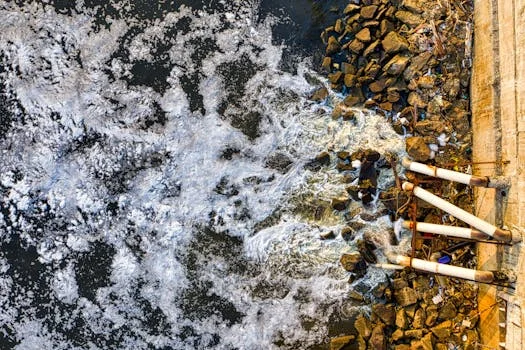
For private industrial facilities, a wastewater treatment plant is often viewed as a "cost center," but a detailed ROI analysis reveals significant long-term value. The primary financial drivers for ROI in Saint-Louis are the reduction of municipal sewer surcharges and the avoidance of EPA non-compliance penalties. MSD surcharges for high-strength waste can range from $0.50 to $2.00 per 1,000 gallons for BOD and TSS concentrations exceeding domestic levels. By installing an on-site pretreatment system, a facility can essentially "pay itself" the money it would have otherwise paid to the city.
The standard ROI formula for these projects is: (Annual Savings from Surcharges + Revenue from Water Reuse) / (CAPEX + Annual OPEX). Consider a Saint-Louis metal finishing plant with a $1.2 million CAPEX for a DAF-based pretreatment system. If the system costs $150,000 per year to operate but saves $450,000 per year in city surcharges and water procurement costs, the payback period is approximately 4 years. This does not account for the "hidden" ROI of risk mitigation; EPA fines for non-compliance can range from $5,500 to $55,000 per day per violation, which can bankrupt a medium-sized operation in weeks.
facilities can use the Missouri DNR permit fee calculator to estimate their annual compliance costs. By investing in higher-efficiency technology like MBR systems for high-efficiency wastewater treatment in Saint-Louis, plants can often achieve a "zero-discharge" or "high-reuse" status, which may exempt them from certain annual discharge fees and provide a competitive advantage in corporate sustainability reporting. For a more comprehensive look at regional compliance strategies, consult our technical guide to industrial wastewater treatment compliance.
Frequently Asked Questions
How much does it cost to set up a sewage treatment plant in Saint-Louis?
For municipal projects, expect a cost of $3 to $8 per gallon of daily capacity. For industrial pretreatment systems, the range is typically $5 to $15 per gallon due to the higher complexity of the influent and stricter pretreatment requirements. Small package plants for decentralized applications generally start at $250,000.
Do wastewater treatment plants make money?
While primarily a service, plants can generate revenue through tipping fees for septic haulers, the sale of treated effluent for industrial reuse, and the conversion of biosolids into fertilizer. In Saint-Louis, some industrial plants also generate ROI by recovering valuable metals or chemicals from their waste streams before discharge.
How much does a residential sewage treatment plant cost?
Small-scale residential or "cluster" systems (500 to 2,000 GPD) in the Saint-Louis area typically cost between $15,000 and $50,000. These costs include the equipment, installation, and Missouri DNR permit fees for onsite systems, which are mandatory for properties not connected to the MSD grid.
What are the permit fees for a 100,000 GPD plant in Saint-Louis?
According to Missouri DNR PUB2564, a facility of this size would typically fall under the standard minor permit category. You should budget for an initial permit fee of approximately $1,500 to $3,000, with annual fees and monitoring costs totaling roughly $1,200 to $2,500 depending on the specific discharge parameters.
Can I get funding for an industrial pretreatment system?
Yes. Industrial facilities in Saint-Louis can access low-interest loans (approx. 2%) through the Missouri DNR State Revolving Fund. Additionally, the Missouri Department of Economic Development provides 25% cost-share grants for businesses upgrading systems to meet environmental compliance standards, with a maximum grant amount of $500,000.