Why Paper Mill Sludge Is the Most Costly Waste Stream You Haul
Paper mill sludge is over 95% water by weight (pulp and paper technology, 2026), so every hauling trip and every landfill invoice is primarily a payment to move water. Translate that into a ton: a 25% dry-solids cake means roughly 4 tons hauled per ton of dry solids, while a 45% cake cuts that to about 2.2 tons — a 40–45% drop in trips and tipping fees for the same solids output. Because the pulp and paper industry consumes 250–300 m³ of water per ton of paper produced (PMC review, 2021-12), sludge volume is structural to the process.
Four sludge sources hit the dewatering floor, and each dewaters differently: primary fiber rejects (long cellulose, dewaterable), deinking solids from recycled mills (clay, ink, fines — hard to bind), biological waste activated sludge (weak, hydrated, fines-dominated), and boiler or effluent treatment residues (often mineral-rich). This mix explains why a one-size-fits-all press selection rarely works. The four cost buckets every mill should track are CAPEX, polymer and conditioning chemicals, energy, and hauling and disposal — and both industry data and field reports rank hauling by weight as the largest line item (pulp and paper technology, 2026; Altum, 2026). When a manager asks where the next 20% of cost reduction will come from, the answer is in the fourth bucket, driven by press performance. For a broader framework, see this sludge dewatering machine comparison and decision framework.
How Dewatering Technology Choice Drives Total Cost per Ton
Sticker price remains the least predictive variable for dewatering OPEX; actual costs depend on the dry-solids band each technology reliably hits on paper sludge and the associated polymer, energy, and throughput trade-offs. The table below compares the four technologies on the parameters that move $/ton of dry solids disposed.
| Technology | Typical dry solids on paper sludge | Polymer demand | Energy profile | CAPEX band | Dominant OPEX driver | Best-fit mill |
|---|---|---|---|---|---|---|
| Screw press | 30–45% | Low–moderate | Low (continuous, low rpm) | Moderate | Wear parts on screw flight | Kraft, tissue, recycled mills with steady sludge |
| Belt press | 25–35% | High (wash-water + polymer) | Moderate | Lower | Polymer and wash-water | Medium mills with variable sludge and lower CAPEX budgets |
| Decanter centrifuge | Variable, typically 25–35% | Highest of the four | Highest (high-G, motor-driven) | Moderate–high | Energy and polymer | Mills with tight footprint or strict odor control |
| Plate-and-frame / membrane filter press | 45–50%+ | Moderate | Low per ton, but batch | High | Cycle time, membrane replacement | Mills where tipping fees are weight-dominated and landfill diversion is the goal |
Screw presses are the dominant technology in modern mills because they run continuously, draw relatively little energy, and handle fibrous paper sludge exceptionally well — the long cellulose fibers self-form a stable filter cake (pulp and paper technology, 2026). Belt presses are proven and lower CAPEX but they carry higher polymer and wash-water costs, suiting medium mills with variable sludge and capital constraints. Decanter centrifuges are fully enclosed, compact, and tolerate variable feed — but they consume more energy and polymer than any of the other three (pulp and paper technology, 2026), making them better for footprint or odor control than $/ton optimization. Plate-and-frame and membrane filter presses are batch and slower, but at 45–50%+ dry solids they are unmatched when disposal is charged by weight (pulp and paper technology, 2026). For a fuller sludge dewatering machine comparison and decision framework and a look at downstream drying, see this sludge drying technology comparison for 2026. The selection rule: pick the technology by which cost bucket hurts most — hauling weight → filter press; continuous throughput + moderate dryness → screw press; tight footprint or odor → centrifuge.
The Hidden Link Between Upstream Effluent Quality and Dewatering Cost
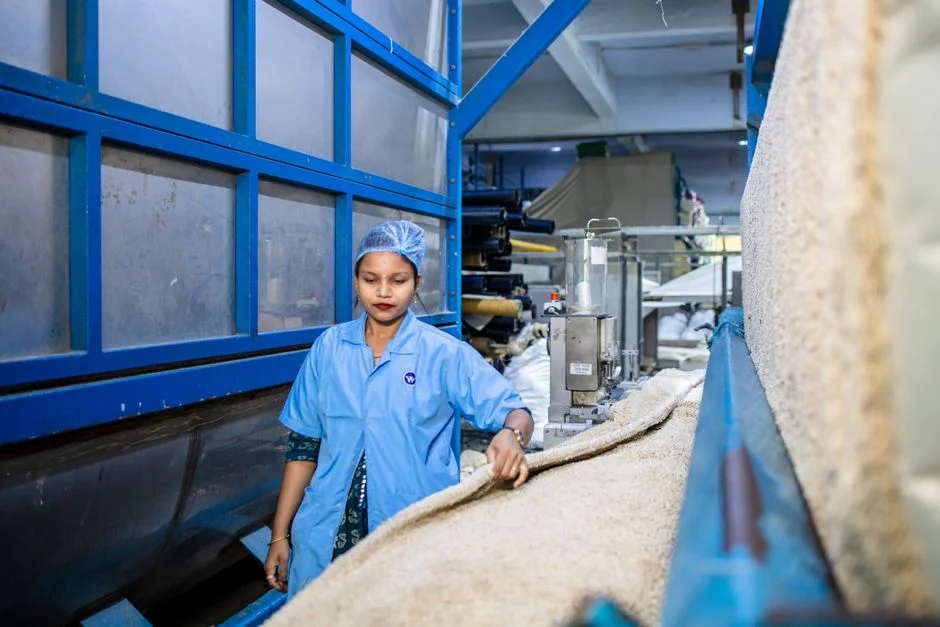
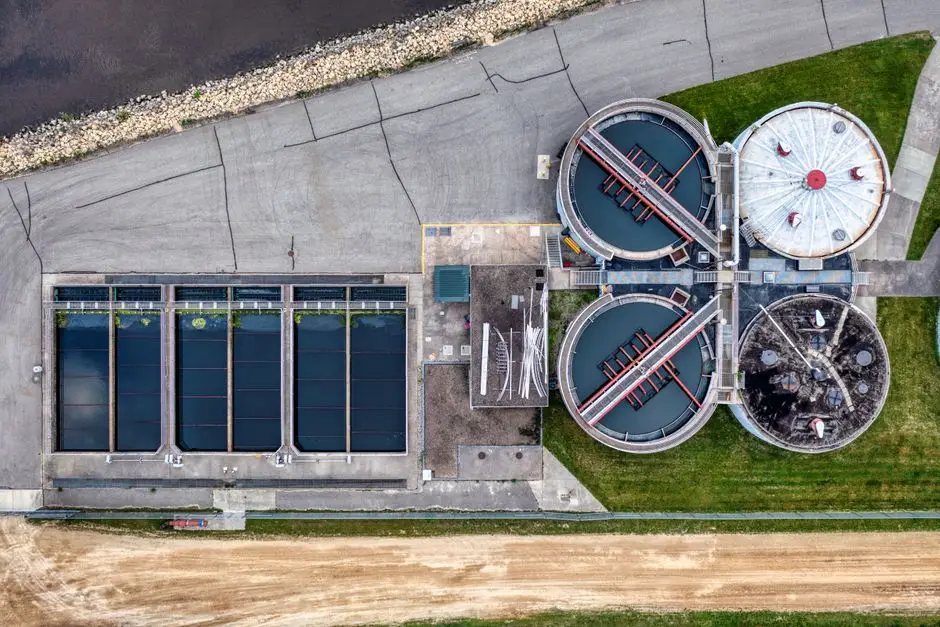
Biological treatment upstream acts as a dewatering cost lever that runs in the opposite direction to the press. Pulp and paper effluent carries lignin, chlorinated organics, AOX, color, BOD, and COD, and its biodegradability index sits below 0.4 (PMC review, 2021-12), which dictates what biology can run ahead of the press and how much biosolids that biology will send downstream. Activated sludge alone delivers 60–95% COD removal and up to 99% BOD removal on pulp and paper wastewater (PMC review, 2021-12), but it produces large volumes of weak waste activated sludge that wrecks dewatering performance by overloading the press with fines-bound water.
UASB reactors remove 80–93% COD on agro-based pulp and paper wastewater, and 78–82% COD plus 71–99% chlorinated organics on bleached and unbleached kraft effluent — with methane recovery on top (PMC review, 2021-12). The biosolids resulting from a UASB are denser and less hydrated than waste activated sludge, allowing them to dewater to a higher dry-solids band at a lower polymer dose. MBR and MBBR configurations produce less sludge in a smaller footprint and deliver reuse-quality water (PMC review, 2021-12), shrinking both effluent compliance risk and the sludge load hitting the press. Practical implication from field data: shifting upstream biology from conventional activated sludge to UASB+MBR has lifted cake dry solids 1–3% and cut polymer dose in documented retrofits. For selection detail, see this MBBR vs IFAS comparison for pulp and paper mills and this MBR system for pulp and paper effluent case.
Five Cost-Reduction Levers That Pay Back in 2026
- Optimize polymer conditioning. Dose-response jar trials on the actual sludge stream routinely cut polymer use 10–20% at the same dry-solids target, and switching from emulsion to dry polymer typically lifts cake dry solids by roughly 2% (HydropureWater field data, 2026). An automatic polymer dosing system for sludge conditioning keeps the dose on target as feed solids swing.
- Add pre-treatment (ultrasound or thermal hydrolysis). Ultrasound on the feed to a centrifuge has delivered 2–5% dry-solids gains and clearer reject water in documented cases (Altum, 2026) — both a direct polymer saving and a hauling saving because the cake is drier. Thermal hydrolysis is CAPEX-heavier but offers the same direction of effect at larger scale.
- Recover fiber before dewatering. A simple screw thickener or drum screen upstream of the press pulls reusable cellulose out of the sludge stream, reduces mass to the press, and in some mills generates a saleable by-product (pulp and paper technology, 2026). Primary clarification with a DAF system for pulp and paper primary clarification sits in the same role upstream of the biology.
- Switch disposal route. Landfill, incineration with energy recovery, cement kiln, brick manufacture, and land application are the five routes on the table (pulp and paper technology, 2026). The right route depends on the dry solids you can actually achieve, not on the press itself — a 45% cake opens kiln and brick routes that a 25% cake cannot.
- Address evaporator fouling. In mills running effluent evaporators, lamella fouling can force weekly cleaning shutdowns (Altum, 2026). Ultrasonic anti-fouling on those evaporators has recovered roughly two-thirds of annual maintenance cost in one cited case (Altum, 2026) — a 2026 payback that does not require changing the press. A sludge dryer installation and commissioning guide and a decanter centrifuge working principle for paper sludge reference round out the equipment side.
A 90-, 180-, and 365-Day Roadmap to Lower Sludge OPEX
| Phase | Timeline | Action | Typical owner | Target KPI |
|---|---|---|---|---|
| 1 — No CAPEX | 0–90 days | Polymer dose-response trials; cake solids baseline; hauling-cost-per-ton baseline; reject-water TSS logging | Process engineer + environmental lead | Establish $/ton of dry solids baseline |
| 2 — Low CAPEX | 90–180 days | Install inline polymer make-down; add sludge thickener; trial ultrasound on one centrifuge; renegotiate tipping fee at higher dry solids | Maintenance + procurement | +1–2% cake dry solids; 10–20% polymer reduction |
| 3 — CAPEX | 180–365 days | Upgrade belt to screw press, retrofit filter press with membrane squeeze plates, or add MBR polishing upstream | Plant manager + capital committee | ≤2-year payback; $/ton of dry solids reduced 20%+ vs. baseline |
Run every CAPEX proposal through a single formula: (Δdry solids × annual wet tons hauled × tipping $/ton) − (new annual OPEX + amortized CAPEX) = annual net saving. If the result is negative on a 2-year amortization, defer or downsize. Set one KPI for 2026 across the whole site: $/ton of dry solids disposed, not $/ton of wet cake — the wet-cake metric obscures improvements made at the press. A sludge dewatering machine comparison and decision framework is the right reference when the Phase 3 selection goes to committee. For mills targeting the highest cake dryness, a plate and frame filter press for paper mill sludge is the typical Phase 3 candidate.
Frequently Asked Questions
What dry-solids percentage should a paper mill expect after mechanical dewatering?
Most mechanical dewatering technologies reach 25–45% dry solids on paper sludge, with screw and belt presses in the 30–40% band and plate-and-frame or membrane filter presses reaching 45–50%+ for maximum moisture removal (pulp and paper technology, 2026).
Which dewatering equipment is best for paper mill sludge?
Screw presses are the default for continuous operation, low energy use, and strong performance on fibrous sludge, while filter presses are preferred when the priority is the driest possible cake (pulp and paper technology, 2026).
What is the single biggest cost driver in paper mill sludge management?
Transport and disposal, charged by weight and therefore by moisture content, makes dewatering efficiency the largest lever for cost control (pulp and paper technology, 2026; Altum, 2026).
Can paper mill sludge be reused instead of landfilled?
Yes. Reuse routes include energy recovery through incineration, cement kiln raw feed, brick manufacturing, and land application, with the feasible route set by achieved dry solids and local regulation (pulp and paper technology, 2026).