Why 2026 Changes the Math for Cairo Fabs and Data Halls
Egypt sits below the 1,000 m³ per-capita renewable freshwater threshold that defines chronic water poverty, and Cairo is the largest single industrial user on the Nile basin — drawing from the same constrained source that serves irrigation, municipal demand, and the Delta governorates downstream. Direct cooling-tower blowdown to the municipal sewer is no longer a 2026 permit baseline: EEAA Law 4/1994 and its implementing Decree 44/2000 set the discharge envelope for TSS, BOD, residual chlorine, and heavy metals, and Law 202/2020 layers a treated-wastewater reuse mandate on top of it. The economic gravity is shifting in the same direction — discharge fees in water-stressed jurisdictions already run $5–$15 per 1,000 gal and TDS caps below 1,500 mg/L are being enforced (Genesis Water Tech, 2025-08) — so the arithmetic of "discharge it and forget it" no longer closes. On the international side, EU EED 2023/1791 mandates a waste-heat cost-benefit assessment for data centers above 1 MW from October 2025 and a PUE ≤1.2 target by 2026, and any Cairo facility intended to operate into the 2030s will be benchmarked against it during sovereign-cloud and hyperscaler due diligence. The compliance picture is not permissive on the Egyptian side either: roughly 40% of national wastewater treatment plants are already non-compliant (Springer, 2025-09), which means EEAA reviewers will read a discharge permit application against a tightening baseline rather than a forgiving one. A side-stream screen, hollow-fiber UF and BWRO train with partial ZLD via mechanical vapor compression is the configuration that satisfies all three pressures at once — water-stress reality, Egyptian discharge law, and the EED trajectory — and it is the design basis the rest of this article sizes for a 10 MW Cairo site.
Two Wastewater Streams, One Permit File: Fab Process Water vs. Data-Hall Cooling Blowdown
The fab stream is dominated by ultrapure water (UPW) used to rinse wafers between process steps, dilute chemistries in chemical mechanical polishing (CMP), feed wet-etch and photoresist-strip baths, and supply cleanroom humidity. A modern fab uses up to 10 million gallons of water per day (IDE Tech, 2026), and a single fab can draw around 14 billion litres of UPW per year (WEF, 2025, cited in TNFD 2026-02). For every unit of UPW produced, 1.4–1.6 units of municipal water are consumed (IDE Tech, 2024) — which is why fab water stress is a UPW problem, not a cooling problem. The data-hall stream is fundamentally different: a 10 MW Cairo site drawing approximately 200,000 L/day of Nile makeup produces 60,000–180,000 L/day of cooling-tower blowdown at 4 cycles of concentration (CoC) (IDE Water Tech, 2025-11; Genesis Water Tech, 2025-08), with the blowdown ratio calculated as 1/(CoC-1). Both streams, despite their chemistry differences, must clear the same EEAA Law 4/1994 + Decree 44/2000 envelope on TSS, BOD, residual chlorine, and heavy metals, and both trigger the Law 202/2020 reuse registration once treated permeate exceeds the relevant volume threshold. The cost-defensible answer in both cases is a four-stage train that ends in partial ZLD, with the industrial reverse osmosis skid for blowdown treatment as the workhorse.
| Parameter | Semiconductor Fab (UPW/CMP) | Data-Hall Cooling Blowdown (10 MW) |
|---|---|---|
| Source | UPW rinse, CMP, wet etch, photoresist strip | Evaporative cooling tower blowdown at 4 CoC |
| Daily volume | Up to ~38 million L/day (10 MGD) per fab | 60,000–180,000 L/day |
| Annual UPW/makeup | ~14 billion L/yr UPW per fab | ~73 million L/yr makeup |
| Dominant contaminants | HF/HCl/H₂SO₄, Cu/Ni/W, CMP slurry, PFAS, fluoride | Suspended solids, silica, residual biocide, phosphonate |
| Municipal-to-product water ratio | 1.4–1.6× per unit of UPW | N/A (cooling makeup is end-use) |
| EEAA envelope | Law 4/1994 + Decree 44/2000 + Law 202/2020 reuse | Law 4/1994 + Decree 44/2000 + Law 202/2020 reuse |
Contaminant Map: What EEAA Will See in Your Discharge
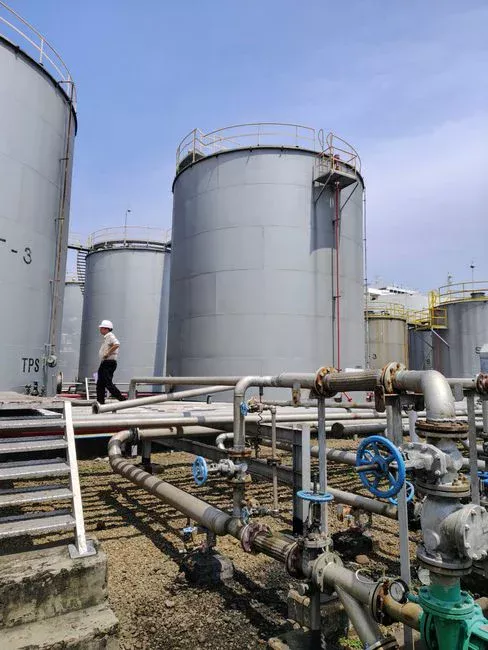
Semiconductor fab wastewater contains HF, HCl, H₂SO₄, and NH₃ acid/alkaline residues; copper, nickel, and tungsten from deposition and CMP; abrasive CMP slurry solids; photoresist solvents and stripper organics; fluoride from etching baths; PFAS from specialty chemistries; and high total organic carbon (TOC) (IDE Tech, 2026). CMP alone represents 30–40% of total fab wastewater volume (IDE Tech, 2026), which is the engineering justification for a segregated CMP pretreatment lane rather than blending slurry into the general acid waste drain. The data-hall blowdown stream is chemically simpler but still fails a direct-discharge envelope: suspended solids 10–50 mg/L from corrosion products, biofilm fragments, and atmospheric dust; residual oxidising biocides; phosphonate scale inhibitors; and reactive silica at 60–120 mg/L at 4 CoC (Genesis Water Tech, 2025-08; IDE Water Tech, 2025-11). The binding future constraint across both streams is PFAS: the EPA has designated PFOA and PFOS as hazardous substances under CERCLA, and effective treatment requires high-pressure membrane filtration plus activated carbon adsorption or advanced oxidation, not conventional RO alone (IDE Tech, 2026). EEAA reviewers will test for the full list below; any strategy that does not segregate CMP slurry, manage fluoride, and address PFAS will be returned with a deficiency notice.
| Stream | Contaminant | Typical Concentration / Note |
|---|---|---|
| Fab — general | HF, HCl, H₂SO₄, NH₃ | pH 1–3 (acid) or 10–13 (alkaline); requires neutralization |
| Fab — metals | Cu, Ni, W | From deposition and CMP; precipitation + membrane polish |
| Fab — CMP | Slurry solids (SiO₂, CeO₂, Al₂O₃) | 30–40% of fab wastewater volume; segregate upstream |
| Fab — etch | Fluoride | Up to several hundred mg/L; CaCl₂ precipitation or RO |
| Fab — photoresist | Solvents, stripper organics, high TOC | AOP (UV/H₂O₂, O₃) before membrane |
| Fab — specialty chemistries | PFAS (PFOA, PFOS, GenX) | CERCLA hazardous substance; high-pressure RO + AOP or GAC |
| Data-hall blowdown | Suspended solids | 10–50 mg/L; spiral screen + UF to <1 mg/L |
| Data-hall blowdown | Reactive silica | 60–120 mg/L at 4 CoC; caps BWRO recovery |
| Data-hall blowdown | Phosphonate / biocide | Threshold inhibitors; PLC-paced dosing |
Cairo Feed Chemistry and Why Silica Sets the Recovery Ceiling
Cairo tap water drawn from the Nile typically sits at 500–1,200 mg/L TDS — measurably higher than the 400–900 mg/L Mediterranean blend that frames Alexandria's cooling-tower chemistry (Genesis Water Tech, 2025-08; IDE Water Tech, 2025-11). The harder Cairo feed carries more calcium, magnesium, and reactive silica, and those three species are exactly what cap BWRO recovery and force antiscalant selection. Running that makeup at 4 CoC concentrates the circulating water to TDS 1,200–6,000 mg/L, with suspended solids 10–50 mg/L from corrosion products, biofilm fragments, and atmospheric dust, plus residual oxidising biocides, phosphonate scale inhibitors, and accumulated silica (Genesis Water Tech, 2025-08). Reactive silica at 15–30 mg/L in the tap water concentrates four-fold to 60–120 mg/L at 4 CoC, and that is what caps BWRO recovery at 75–80% on Cairo's feed (IDE Water Tech, 2025-11). Phosphonate antiscalant extends the ceiling by a few points but cannot eliminate silica scaling — silica is not threshold-inhibitor chemistry the way CaCO₃ is. The two engineering-defensible responses are: hold recovery at 75–80% with PLC-paced antiscalant dosing via an PLC-paced antiscalant and biocide dosing skid, or insert a fluidized-bed crystallizer pre-stage upstream of MVC to drop reactive silica toward 1 mg/L in the permeate (IDE Water Tech, 2025-11). The first option is the lower-CAPEX default; the second is reserved for sites where permeate reuse demand justifies the added unit operation.
The 2026 Reference Train: Screen → UF → BWRO → Partial ZLD
The 2026 reference train for a Cairo 10 MW site runs in four unit operations, each sized to the blowdown working stream rather than the full cooling-tower circulation. Step 1 — Side-stream self-cleaning spiral screen: 1–5% of circulation flow, 10–25 µm cut size, $50,000–$200,000 capital band (Genesis Water Tech, 2025-08). The objective is membrane protection, not water polishing — dropping suspended solids and biological load before blowdown leaves the basin lowers SDI and TSS feed enough for the downstream RO to run at higher recovery with fewer cleanings. Step 2 — Hollow-fiber UF: 0.01–0.1 µm pore size, 90–95% recovery, 10–30 psi operating pressure, chemical cleaning every 1–3 months (Genesis Water Tech, 2025-08). Bacteria, colloids, and biofilm fragments that pass the spiral screen are removed here, delivered as a hollow-fiber UF pretreatment skid sized to the blowdown working stream. Step 3 — BWRO: 95–99% dissolved-solids rejection at 150–400 psi with antiscalant injection; conventional recovery 50–85% on standard feed but capped at 75–80% on silica-rich Nile makeup (IDE Water Tech, 2025-11). A 50,000 GPD skid costs $250,000–$500,000 installed at $1.50–$3.00 per 1,000 gal OPEX (Genesis Water Tech, 2025-08) and is delivered as an industrial reverse osmosis skid for blowdown treatment. Step 4 — Partial ZLD via mechanical vapor compression: 15–25 kWh per 1,000 US gal, distillate under 10 mg/L TDS, overall system recovery 85–95% (Genesis Water Tech, 2025-08), $1–3 million additional CAPEX. Side-stream antiscalant and PLC-controlled biocide dosing are mandatory add-ons — without them the BWRO recovery cap on Cairo's silica-rich feed slips by 5–10 percentage points. Total installed CAPEX for the 10 MW reference case stacks at $1.3–$3.7 million (screen + BWRO + partial ZLD + dosing).
| Step | Unit Operation | Key Parameters | CAPEX Band (USD) |
|---|---|---|---|
| 1 | Side-stream spiral screen | 10–25 µm cut; 1–5% of circulation | $50,000–$200,000 |
| 2 | Hollow-fiber UF | 0.01–0.1 µm; 90–95% recovery; 10–30 psi | Included in train |
| 3 | BWRO | 95–99% rejection; 75–80% recovery on silica feed; 150–400 psi | $250,000–$500,000 (50,000 GPD) |
| 4 | Partial ZLD — MVC | 15–25 kWh / 1,000 gal; distillate <10 mg/L TDS | $1,000,000–$3,000,000 |
| Add-on | Antiscalant + biocide dosing | Phosphonate, threshold inhibitor; PLC-paced | $30,000–$80,000 |
| Total | 10 MW reference train | Overall recovery 85–95% | $1,300,000–$3,700,000 |
Strategy A to D: Choosing the 2026 Treatment Level
Procurement for a Cairo 10 MW site is a strategy choice, not a sales choice, and the four strategies below map against EEAA compliance, HCWW economics, and capital availability. Strategy A — Direct discharge only is effectively closed off by discharge fees of $5–$15 per 1,000 gal and tightening TDS caps below 1,500 mg/L (Genesis Water Tech, 2025-08); not viable as a 2026 baseline. Strategy B — RO reuse only costs $250,000–$500,000 for a 50,000 GPD BWRO skid at $1.50–$3.00 per 1,000 gal OPEX (Genesis Water Tech, 2025-08) but leaves the concentrate as a discharge liability that EEAA reviewers will flag. Strategy C — Partial ZLD (RO + MVC) is the recommended 2026 default for Cairo: 85–95% overall recovery, $1–3 million incremental CAPEX on top of the BWRO skid, residual brine at 20–30% dissolved solids sent off-site for disposal as a manageable slurry, and the 15–25% PUE improvement available through waste-heat reuse to the MVC evaporator (Algeria Tech News, 2025-10) compounding the freshwater-displacement payback. Strategy D — Full ZLD with brine concentrator and crystallizer costs $3–8 million installed and $5–$15 per 1,000 gal OPEX (Genesis Water Tech, 2025-08); over-specified for Cairo unless direct discharge to sewer is fully prohibited by permit condition. Engineers benchmarking against the broader MENA portfolio can cross-reference the comparable Cairo data center wastewater and cooling blowdown treatment 2026 guide.
| Strategy | Treatment Level | EEAA Compliance | Installed CAPEX | 2026 Verdict |
|---|---|---|---|---|
| A | Direct discharge only | Closed off by TDS caps <1,500 mg/L | ~$0 | Not viable |
| B | RO reuse only | Workable where brine sewering allowed | $250,000–$500,000 | Brine liability remains |
| C | Partial ZLD (RO + MVC) | Permeate + brine both compliant | $1,300,000–$3,700,000 | Recommended 2026 default for Cairo |
| D | Full ZLD (RO + crystallizer) | Over-specified unless discharge banned | $3,000,000–$8,000,000 | Reserve for zero-discharge sites |
Permit Pathway: EEAA, HCWW, MCIT, and the EED Overlay
The treatment train has to clear three Egyptian regulators in parallel before the first cubic metre of blowdown is processed. EEAA issues the environmental permit under Law 4/1994 and Decree 44/2000, setting TDS, BOD, TSS, and residual chlorine limits on the discharge; those are the parameters the permeate stream and the final brine both have to clear. Law 202/2020 layers the treated-wastewater reuse mandate on top, which turns Strategy C from a sustainability option into a permit alignment — permeate reuse must be registered, not just declared. The Holding Company for Water and Wastewater (HCWW) handles Greater Cairo makeup supply tariffs and discharge consent to the municipal sewer; the freshwater-displacement savings on the HCWW line item directly fund the MVC OPEX, and that linkage is what makes the 3–5 year payback defensible to a finance committee. The Ministry of Communications and Information Technology (MCIT) coordinates sovereign-cloud alignment for any hyperscaler or colocation operator above the threshold, and the national power utility is engaged for waste-heat supply to the MVC evaporator. The EU EED 2023/1791 overlay requires a waste-heat CBA for data centers >1 MW from October 2025 and a PUE ≤1.2 by 2026; the resulting heat-recovery loop to the MVC evaporator is both the compliance proof and the OPEX lever.
Cost, Payback, and the Waste-Heat → PUE Lever
For a 10 MW Cairo site drawing approximately 200,000 L/day of Nile makeup and producing 60,000–180,000 L/day of blowdown at 4 CoC (IDE Water Tech, 2025-11; Genesis Water Tech, 2025-08), the installed CAPEX envelope stacks to $1.3–$3.7 million. OPEX sits at $1.50–$3.00 per 1,000 gal for the BWRO stage plus 15–25 kWh per 1,000 US gal of MVC electricity (Genesis Water Tech, 2025-08), partly offset by HCWW freshwater-displacement savings on the makeup line. Waste-heat reuse from the IT hall to the MVC evaporator delivers a 15–25% PUE improvement (Algeria Tech News, 2025-10), which is the single largest OPEX lever in partial ZLD and the variable that takes a marginal sustainability investment to a 3–5 year payback typical for the asset class. MVC kWh cost is the dominant OPEX variable on the Egyptian grid, so pairing the unit with a heat-recovery loop is what tips the project over the finance-committee line. Procurement leads benchmarking against North American peer sites can also review the Toronto semiconductor and data hall wastewater 2026 guide and the Vancouver semiconductor and data hall process wastewater 2026 guide for comparative cost and PUE benchmarks outside the Egyptian tariff envelope.
Frequently Asked Questions
What four-stage train clears EEAA Law 4/1994 and the EU EED PUE ≤1.2 target for a 10 MW Cairo site?
A side-stream spiral screen (10–25 µm, 1–5% of circulation) followed by hollow-fiber UF (0.01–0.1 µm, 90–95% recovery), BWRO capped at 75–80% recovery on silica-rich Nile feed, and partial ZLD via mechanical vapor compression (15–25 kWh per 1,000 US gal, distillate under 10 mg/L TDS) sized for 60,000–180,000 L/day of blowdown at 4 CoC.
How should PFAS in fab wastewater be handled to meet the EPA CERCLA hazardous-substance designation?
Treat PFAS-bearing streams with high-pressure reverse osmosis followed by activated carbon adsorption or advanced oxidation (UV/H₂O₂, O₃), since PFAS resists conventional oxidation and is not removed by standard RO alone (IDE Tech, 2026); segregate PFAS streams upstream of the general acid waste drain to keep the polishing stage focused.
Which treatment strategy is the 2026 default for Cairo, given the 1,500 mg/L TDS cap and the 75–80% silica-limited BWRO recovery?
Strategy C — partial ZLD (RO + MVC) — is the recommended default: $1.3–$3.7 million installed CAPEX for a 10 MW site, 85–95% overall recovery, residual brine at 20–30% dissolved solids sent off-site for slurry disposal, and 15–25% PUE improvement available through waste-heat reuse to the MVC evaporator.
When does EU EED 2023/1791 start to bind a Cairo data center, and what is the PUE target?
The waste-heat cost-benefit assessment applies to data centers above 1 MW from October 2025, and the PUE target is ≤1.2 by 2026; pairing the MVC evaporator with an IT-hall heat-recovery loop satisfies both the CBA trigger and the PUE benchmark that sovereign-cloud due-diligence teams will apply.
Related Equipment
- side-stream multi-media filter for silica and turbidity reduction — specifications, capacity range, and technical data