Why an ArcelorMittal India Acquisition Is a Water-Compliance Event, Not Just a Share Deal
The March 2019 ArcelorMittal + Nippon Steel acquisition of Essar Steel and the April 2023 acquisition of Indian Steel Corporation, both out of the Indian insolvency resolution process, are the two live precedents that confirm a simple truth (per S5 Wikipedia): the share certificate changes hands, but the environmental liability does not. Under Section 25/26 of the Water Act, 1974 and Section 21 of the Air Act, 1981, the consent holder is the operating entity — so AM/NS India must apply to the Gujarat PCB, Karnataka SPCB or Odisha SPCB, depending on the asset, for transfer or fresh re-issue of the Consent to Operate (CTO) inside the SPCB's standard 30/60/90-day window from the date the new owner is recorded on the MCA register. The same 30-day clock governs CGWA groundwater NOC novation when the abstraction wellfield goes with the asset.
ArcelorMittal's own sustainability framing (S2) treats EIAs "in line with international standards" and "automatization of environmental data collection" as material issues — public commitments that elevate the floor above the local statutory minimum and that an SPCB, or the National Green Tribunal on appeal, will weigh when consent renewal comes up. In water-stressed districts where the NGT has already ordered steel plants in Haryana, Gujarat and Odisha toward zero liquid discharge (ZLD) — including the Vizag-cluster orders of the last 36 months — the de-facto compliance ceiling the new owner inherits is recycle, not discharge. A bid team that waits for the corporate transition to settle before scoping the water train will miss the consent-transfer window and arrive late to a ZLD hearing.
The Indian Statutory Stack the New Operator Inherits
An AM/NS India acquisition triggers a stack of permits that the corporate ISO 14001 / ResponsibleSteel™ framework (S2) does not replace — it sits on top of them. The order in which the acquirer must act is:
- Consent to Establish (CTE) and Consent to Operate (CTO) under Section 25/26 of the Water Act, 1974 and Section 21 of the Air Act, 1981, issued by the relevant State Pollution Control Board (GPCB for Hazira, KSPCB for Vijayanagar, OSPCB for Odisha, MPCB for Maharashtra). The CTO is typically renewed on a 5-year cycle for integrated steel units.
- Environmental Clearance (EC) under the MoEF&CC EIA Notification, 2006. Integrated steel plants at or above 0.8 Mtpa crude-steel capacity are Category A and require clearance from the central MoEF&CC, not the State-level SEIAA — a threshold the bidder must verify against the asset's current EC before quoting.
- Authorization under the Hazardous and Other Wastes (Management and Transboundary Movement) Rules, 2016, for the spent pickle liquor, used oil, ETP sludge and bag-filter dust streams a steel plant generates.
- CGWA NOC under the Environment (Protection) Act, 1986 read with the groundwater regulation framework, for every abstraction well in the plant's wellfield; abstraction in notified over-exploited blocks is restricted or refused.
- Public Liability Insurance Act, 1991 cover, and where process modification triggers threshold quantities, the MSIHC Rules, 1989 (Manufacture, Storage and Import of Hazardous Chemical Rules) notification to the factory inspectorate and the SPCB.
| Permit / Standard | Governing Instrument | Issuing Authority | Typical Cycle / Threshold |
|---|---|---|---|
| Consent to Operate (CTO) | Water Act 1974 §25/26; Air Act 1981 §21 | GPCB / KSPCB / OSPCB / MPCB | 5-year renewal, transfer within 30–90 days of share change |
| Environmental Clearance | EIA Notification 2006 | MoEF&CC (Cat. A) for ≥0.8 Mtpa | Re-EC if capacity / process change triggers Schedule |
| Hazardous Waste Authorization | HW Rules 2016 | SPCB | 5-year validity, site-specific |
| CGWA NOC | EP Act 1986 / CGWA guidelines | Central Ground Water Authority | 2-year validity, mandatory novation on change of ownership |
| Effluent limits | CPCB Schedule VI — Iron & Steel | CPCB, enforced via SPCB consent | Plant-specific consent can be tighter than CPCB floor |
ArcelorMittal's own environmental page (S2) lists ISO 14001, ResponsibleSteel™ and CSRD-readiness as its governance framework — useful for global reporting, but a substitute for none of the five rows above. The bidder who treats the corporate ESG stack as the deliverable will fail the SPCB transfer review.
Typical Effluent Parameters an Indian Steel Plant Must Hit in 2026
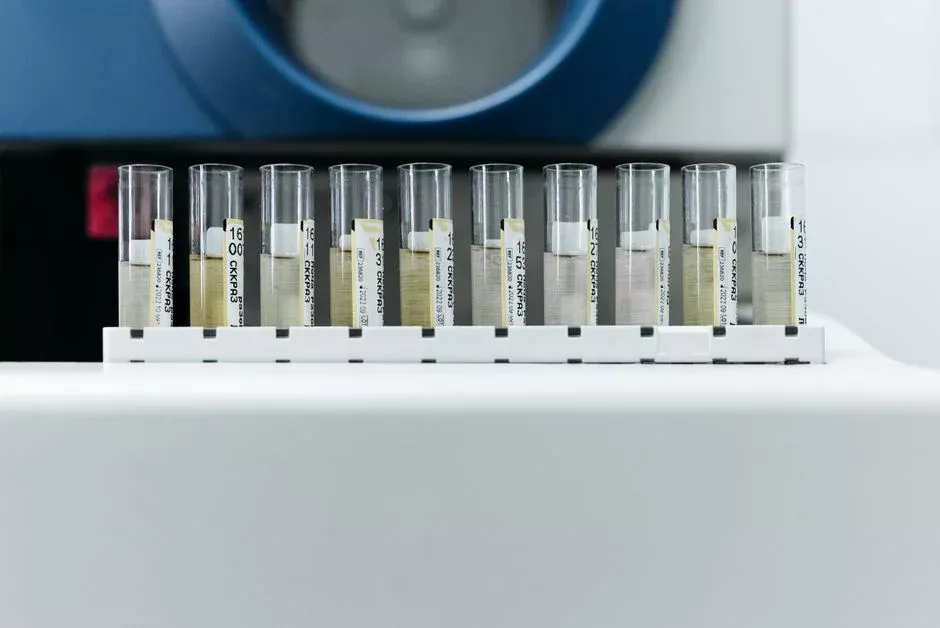
The effluent numbers a 2026 AM/NS India plant must meet are set by the CPCB Schedule VI standards for the iron and steel sector, and then re-asserted — usually tightened — in the plant-specific SPCB consent. The table below is the working envelope a treatment train must be engineered against:
| Parameter | CPCB General Limit (typical) | Plant-Specific Consent (common 2026 practice) | Source / Driver |
|---|---|---|---|
| pH | 6.5–8.5 | 6.5–8.5 (often 7.0–8.0 in ZLD districts) | CPCB Schedule VI; SPCB consent |
| Suspended solids (SS) | <100 mg/L | <50 mg/L; <10 mg/L if ZLD recycle target | SPCB consent; NGT ZLD orders |
| Oil & grease | <10 mg/L | <5 mg/L | CPCB; rolling-mill and BF gas-washer streams |
| COD | <250 mg/L | <150 mg/L where ZLD enforced | CPCB; NGT |
| BOD (3-day, 27°C) | <30 mg/L | <20 mg/L | CPCB |
| Total residual chlorine | <1 mg/L | <0.5 mg/L | CPCB |
| Cyanide (as CN) | <0.2 mg/L | <0.1 mg/L — coke-oven stream | CPCB; coke-oven / by-product plant |
| Phenol | <1 mg/L | <0.5 mg/L | CPCB; coke-oven effluent |
| Free ammonia (as N) | <5 mg/L | <3 mg/L in ZLD districts | CPCB; SPCB consent |
| TDS | <2,100 mg/L (discharge) | Recycle target — no TDS discharge under ZLD | CPCB; NGT ZLD orders (Vizag, Raipur, Kutch) |
| Heavy metals (Cr, Ni, Zn, Pb, Hg) | Trace limits per CPCB | Site-specific; driven by pickling line chemistry | CPCB Schedule VI; pickling-line wastewater |
The CPCB number is the floor; the consent is the ceiling. NGT's order-driven push toward ZLD in water-stressed districts (Vizag, parts of Kutch, parts of Odisha) effectively means the SPCB will write "no discharge" into the consent on renewal. The bidder's job is to engineer a recycle loop against the consent numbers, not the CPCB floor. ArcelorMittal's stated priority of "reducing water use and protecting water quality" (S2) lines up with that direction — the consent and the corporate message are not in conflict.
Translating ArcelorMittal's Corporate Commitments into Indian Plant Actions
The brand-level ESG language on ArcelorMittal's environmental page (S2) maps to specific, on-the-ground engineering and compliance deliverables in India:
| ArcelorMittal Corporate Pillar | Source Statement | Indian Plant-Specific Action |
|---|---|---|
| ISO 14001 Environmental Management System | "robust framework underpinned by evidence-based decision-making" (S2) | Documented EMS at acquired plant; internal audit cycle; SPCB-visible records |
| ResponsibleSteel™ site certification | "leading standards such as ResponsibleSteel™" (S2) | Gap assessment against ResponsibleSteel International Standard v2.0 at Vijayanagar / Hazira |
| TNFD / LEAP biodiversity & water assessment | "LEAP methodology… prioritised key sites… detailed assessments at two pilot locations" (S2) | Site-specific water-dependency and biodiversity assessment for any new Indian asset; wellfield and discharge-zone mapping |
| Desalination / reuse (Tubarão, Brazil pilot) | Seawater desalination plant at Tubarão (S2) | Inland-reuse analog for Indian ZLD — high-recovery RO + brine evaporation; relevant to Vizag / Kutch sites |
| CSRD readiness; automated environmental data | "automatization of environmental data collection" (S2) | Online analyzers (pH, COD, ammonia, flow) feeding SPCB/NGT-readable data pipeline; CSRD-aligned ESG reporting |
The recently contracted Danieli water-treatment plant for AM/NS India (S4) is the operational pattern: large, skid-based, automation-heavy treatment systems specified at the acquisition or brownfield-expansion stage, not retrofitted. A 2026 bid that cannot show skid-mounted MBRs, DAFs and RO with a built-in SCADA / IoT layer is underspec'd against what AM/NS India's procurement team is already buying.
The Treatment Train an ArcelorMittal India Plant Must Procure
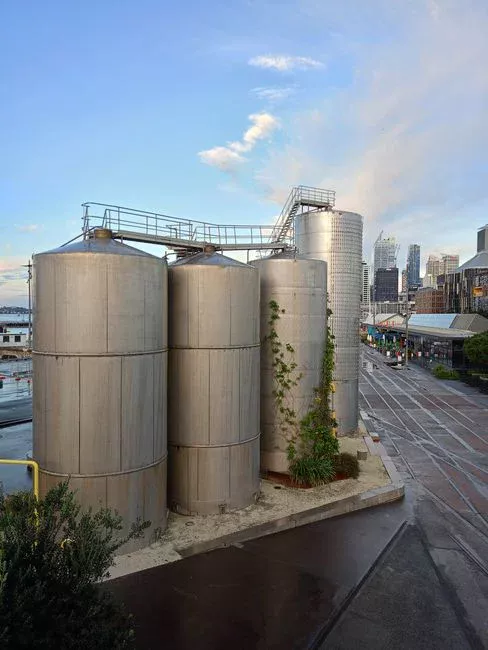
The treatment train an AM/NS India acquisition must price, based on the effluent envelope above, runs in the following order. Each unit is described by its role in the consent-compliance chain rather than by unverified removal percentages:
- Headworks — rotary mechanical bar screen for gross solids removal ahead of the equalization tank. Specified as a rotary mechanical bar screen for steel-plant headworks, this is the first line of defence against coke- and slag-handling debris.
- Oil-water separation using an API or CPI separator to knock out free oils from the rolling-mill and BF gas-washer streams before the DAF.
- Dissolved Air Flotation (DAF) for emulsified oil, grease and suspended solids — the highest-leverage step for any steel effluent with rolling-mill or pickling-line carry-over. A DAF system for oil, grease and suspended solids removal typically feeds equalization downstream.
- Equalization + neutralization with a PLC-controlled chemical dosing for pH and coagulant control to buffer flow and pH swings before the biological stage.
- Biological stage — A/O (anoxic-oxic), SBR, or MBR for ammonia and COD reduction. The MBR variant — an MBR system for ammonia and COD reduction in steel effluent — is the high-recovery choice and the configuration most often seen in the Danieli-supplied AM/NS India trains (S4).
- Tertiary multimedia filtration + activated carbon polishing to bring residual COD, colour and trace organics below consent.
- Two-pass RO for TDS reduction, with the concentrate routed to brine recovery. A high-recovery RO system for ZLD polishing is the unit the SPCB's "no discharge" consent paragraph in water-stressed districts effectively mandates.
- Forced-evaporation crystallizer for the RO reject stream — the unit that closes the loop to ZLD and removes the last discharge liability.
The MBR and DAF stages are the two unit operations that most often decide consent compliance on a steel effluent with oil, ammonia and recalcitrant COD — they are the highest-leverage items in the bid. Online analyzers for pH, COD, ammonia and flow should be priced in: ArcelorMittal's own "automatization of environmental data collection" (S2) is the internal standard the AM/NS India procurement team will be checking against. For related context, see the parallel ArcelorMittal Germany acquisition compliance guide and the ArcelorMittal Hungary acquisition compliance guide; for the Indian rural and decentralized context outside the steel sector, the rural and decentralized sewage treatment in India guide covers the smaller-scale track. The Vizag water-strategy backdrop that drives the ZLD push is documented in the Visakhapatnam four-source water plan reporting.
Frequently Asked Questions
Which Indian permits must AM/NS India transfer first after acquiring a steel plant?
The Consent to Operate (CTO) under Section 25/26 of the Water Act, 1974 and Section 21 of the Air Act, 1981, the CGWA groundwater NOC, and the Hazardous Waste authorization under the 2016 Rules must all be transferred or re-issued in the SPCB's name within the 30–90-day window after the share-purchase closure. If capacity or process triggers the EIA Notification 2006 thresholds, a fresh or amended Environmental Clearance from MoEF&CC is also required before commissioning changes.
Do ArcelorMittal's ISO 14001 and ResponsibleSteel commitments override Indian effluent standards?
No. ISO 14001, ResponsibleSteel™ and the TNFD/LEAP framework (per S2) are corporate governance and reporting standards; they sit on top of the CPCB Schedule VI effluent limits for the iron and steel sector and the plant-specific SPCB consent, which are the legally enforceable numbers the treatment train must be designed to hit.
What effluent parameters drive the 2026 consent limits for an Indian integrated steel plant?
The plant-specific consent typically sets pH at 6.5–8.5, suspended solids below 50 mg/L, oil & grease below 5–10 mg/L, COD below 150–250 mg/L, BOD below 20–30 mg/L, cyanide below 0.1–0.2 mg/L, phenol below 0.5–1 mg/L, free ammonia below 3–5 mg/L and, in ZLD districts, no TDS discharge at all. These are the numbers the SPCB applies; CPCB's general standards are the floor, not the ceiling.
Is zero liquid discharge now mandatory for steel plants in India?
ZLD is not universally codified in a single statute, but the National Green Tribunal has issued order-driven ZLD directions for steel plants in water-stressed districts including Vizag, parts of Kutch/Gujarat and parts of Odisha, and the SPCB typically translates those orders into a "no discharge" consent on renewal. Any 2026 AM/NS India acquisition bid should assume a recycle loop, not a once-through discharge.
What is the working precedent for a 2026 AM/NS India water-treatment contract?
The Danieli-contracted water-treatment plant for AM/NS India (S4) is the live operational precedent — large, skid-based, automation-heavy systems with MBR, DAF and RO specified at the brownfield-expansion stage. A 2026 bid that cannot match that scope and integration is underspec'd against the AM/NS India procurement standard.