
Why Alexandria Is a Closed Discharge Envelope in 2026
Semiconductor and data-hall facilities in Alexandria, Egypt in 2026 cannot rely on the AGOSD sewer or Lake Maryout to absorb hyperscale blowdown. The 2026 working envelope is two-pass RO at 80-95% recovery, mechanical vapor recompression on the RO brine when discharge is restricted, and a design aligned to Law 4/1994 and PM Decree 44/2000 receiving-water limits — not to a generic municipal standard. Lake Maryout is a closed, anaerobic, hypersaline basin with historic TDS in the 10,000-40,000 mg/L range, already beyond the PM Decree 44/2000 receiving-water envelope for any new industrial discharge. The Alexandria General Organization for Sanitary Drainage (AGOSD) West and East plants — roughly 540,000 m³/d and 240,000 m³/d of nameplate capacity respectively — both operate above design on a normal day and have no industrial CTBD load class in their permit text. TNFD's February 2026 tech-sector water case study puts the scale of the problem in plain terms: 40% of existing fabs and over 40% of new fabs announced since 2021 sit in basins with high or extremely high water-stress risk by 2030, and a single fab consumes ~14 billion litres of UPW per year against a 1.4-1.6× municipal feed ratio. Alexandria sits inside that envelope.
The 2026 Egyptian Regulatory Stack for Process Wastewater
The binding instruments for a 2026 Alexandria permit are: Law 4/1994 (Environment, as amended), PM Decree 44/2000 (the Industrial Wastewater Discharge Regulation, which sets COD/BOD/TDS/metal limits to receiving waters), Law 93/1962 and Law 48/1982 as drainage baselines, the EEAA Hot Spot framework, and EMIS reporting thresholds that tighten annually. A Lake Maryout or Mediterranean coastal site is held to the strictest branch of the regime because the receiving-water baseline is already impaired; PM Decree 44/2000 caps the parameters that matter most for a hyperscale project: TDS, BOD/COD, TSS, oil & grease, chloride, sulfate, fluoride, total heavy metals (Cu, Zn, Fe, Pb, Cd, Cr, Ni) and ΔT. A fab adds HF-etch fluoride at 50-500 mg/L, CMP nanoparticles, and TMAH — each one alone is enough to push the discharge envelope past the Decree's receiving-water limit and into full-EIA review territory. A stand-alone data hall stays inside the cooling-tower blowdown envelope only: TDS, hardness, silica, biocide residuals, and ΔT against the receiving water. EEAA full-EIA review in 2026 runs 90-180 days from submission, conditional on the project demonstrating >80% internal reuse at hyperscale flow — that 80% number is the permit pre-condition, not a target you can negotiate later.
| Instrument | Scope | 2026 Limit / Trigger |
|---|---|---|
| Law 4/1994 (Environment) | Umbrella environmental law | EIA requirement, EMIS reporting |
| PM Decree 44/2000 | Industrial wastewater discharge to receiving waters | TDS, BOD/COD, TSS, O&G, Cl⁻, SO₄²⁻, F⁻, metals (Cu/Zn/Fe/Pb/Cd/Cr/Ni), ΔT |
| EEAA Hot Spot framework | Impaired receiving waters (Lake Maryout basin) | Stricter branch; full-EIA mandatory at hyperscale flow |
| EMIS reporting thresholds | Continuous self-monitoring | Quarterly discharge logs; on-line TOC/conductivity at >1,000 m³/d |
| EEAA full-EIA review | Hyperscale fab or hall | 90-180 days; conditional on >80% internal reuse |
What the Influent Actually Looks Like in an Alexandria Site
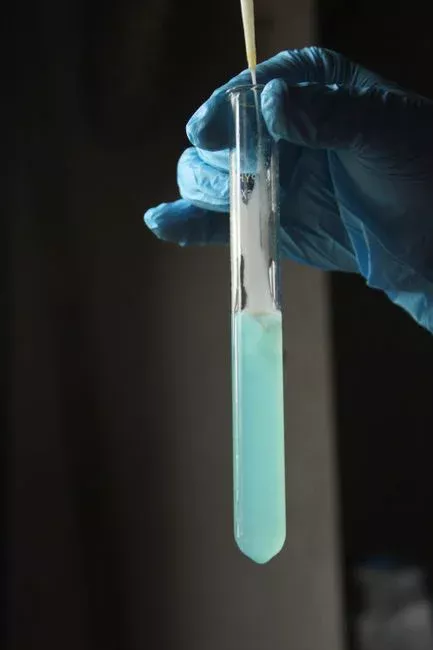
Stream chemistry drives every downstream decision, and the difference between a stand-alone hall and a co-located fab is the difference between a routine permit and a forced ZLD. A stand-alone data hall sees cooling-tower blowdown at 4-6 cycles of concentration (TDS up to 2,000 ppm, effluent 30-40 °C, Cu/Zn/Fe corrosion products, isothiazolinone biocide residuals, phosphonate antiscalant) and AHU condensate at <50 mg/L TDS. The blowdown ratio is B = E/(COC-1): at 4 COC, blowdown is 25% of make-up; at 6 COC, 20% — that single equation sizes the EQ tank, the RO train, and the brine line. A co-located fab layers HF-etch fluoride (50-500 mg/L), CMP nanoparticles, and TMAH on top of the CTBD load; the combined stream cannot be negotiated down to a 1,000 mg/L TDS Lake Maryout envelope, which is what locks the project into full-stream ZLD. Three sparingly soluble salts drive the scaling envelope on the Alexandrian water profile: silica (Mediterranean and groundwater silica, seasonal), CaCO₃, and CaSO₄. The highest-magnitude salt picks the antiscalant chemistry and the second-pass recovery ceiling.
| Stream | Stand-Alone Hall | Co-Located Fab |
|---|---|---|
| Cooling-tower blowdown | TDS 600-2,000 ppm; 4-6 COC; 30-40 °C; Cu/Zn/Fe; isothiazolinone; phosphonate | Same as hall |
| AHU condensate | <50 mg/L TDS; segregated if glycol present | <50 mg/L TDS; segregated |
| HF-etch fluoride | Not present | 50-500 mg/L F⁻ |
| CMP nanoparticles | Not present | SiO₂ / CeO₂ slurry |
| TMAH developer | Not present | 5-25 mg/L TMAH |
| Sanitary (optional co-mingle) | <300 mg/L BOD; <300 mg/L COD | <300 mg/L BOD; <300 mg/L COD |
The 2026 Treatment Train: EQ to Two-Pass RO
The staged build for an Alexandria project runs segregation and equalization first, DAF and multi-media filtration second, softening and antiscalant third, MBR polishing fourth (stand-alone hall only when sanitary load is co-mingled), and two-pass RO fifth. Start with a dedicated EQ tank at 4-8 h HRT and online pH/conductivity instrumentation; the 1-5 pH excursions that follow a chiller trip are routine on a hyperscale site and will kill an RO if they reach the membranes un-dampened. AHU condensate stays segregated at <50 mg/L TDS — glycol from a coil leak belongs on a stripper, not in the RO loop. A dissolved air flotation unit in the 4-300 m³/h class floats oils, biofilm, and metal-hydroxide floc; a downstream multi-media filter drops SDI below 3 and protects the RO from Cu, Fe, and Zn fouling. A KJ-WT twin-tank softener (1-45 T/h class) targets hardness <50 mg/L as CaCO₃ and silica <10 mg/L as SiO₂, with a PLC-controlled antiscalant skid tied to RO feed flow to mop up residual scaling potential. A submerged PVDF MBR polishing stage with 0.1 µm membranes delivers <1 NTU and <10 mg/L COD for direct RO feed — only required if sanitary load is co-mingled, otherwise skip it. The main lift is a two-pass industrial RO unit at 80-95% recovery: first pass at 150-250 psi (10-17 bar) for bulk salts, second pass polished to cooling-tower make-up spec (TDS <200 mg/L, Cl⁻ <100 mg/L). Above 95% recovery, silica scaling on second-pass membranes drives CIP frequency up sharply (IDE-Tech, 2026). Side-stream filtration at 1-5% of total circulation flow using 10-25 µm self-cleaning units drops suspended solids to levels the RO handles without pre-coat, which is the cheapest way to push COC higher and shrink the RO train. For a worked Yerevan analogue, see the Vancouver Semiconductor & Data Hall Process Wastewater: 2026 Compliance & Treatment Guide and the Toronto Semiconductor & Data Hall Wastewater Treatment: 2026 Guide.
| Stage | Equipment | Design Target |
|---|---|---|
| 1 — EQ | Dedicated EQ tank, online pH/cond. | 4-8 h HRT; 1-5 pH excursions damped |
| 2 — DAF + MMF | DAF + multi-media filter | SDI <3 for RO; oils, biofilm, floc removed |
| 3 — Softener + antiscalant | KJ-WT twin-tank; PLC antiscalant skid | Hardness <50 mg/L CaCO₃; SiO₂ <10 mg/L |
| 4 — MBR (optional) | Submerged PVDF, 0.1 µm | <1 NTU; <10 mg/L COD (sanitary co-mingle only) |
| 5 — Two-pass RO | Industrial two-pass RO unit | 80-95% recovery; permeate <200 mg/L TDS, Cl⁻ <100 mg/L |
| Side-stream | 10-25 µm self-cleaning filter | 1-5% of circulation flow |
When ZLD on the RO Brine Becomes Non-Negotiable
Stand-alone hall: MBR + two-pass RO at 80-95% is the 2026 default. Reserve ZLD on the RO brine for when AGOSD or Lake Maryout discharge is fully closed by permit — in that case route a mechanical vapor recompression unit sized to RO brine flow (not the full stream) at 25-40 kWh/m³ of brine concentrated. Brine haul-off to an EEAA-licensed off-site facility is the right answer when MVC electricity at industrial Egypt tariffs cannot be justified by avoided-discharge savings. Co-located fab: full-stream ZLD is the 2026 default. HF-etch fluoride at 50-500 mg/L, CMP nanoparticles, and TMAH cannot be negotiated down to a 1,000 mg/L TDS Lake Maryout envelope, so the design has to plan for MVC or equivalent brine concentration from day one. Biocide choice drives RO life more than most operators expect: route a chlorine dioxide generator upstream of RO in place of isothiazolinone in the tower. ClO₂ at 0.5-1.0 mg/L residual controls biofilm without the RO-fouling residuals that isothiazolinone leaves behind, and it shrinks CIP frequency in the second pass. For a cross-reference on biocide-vs-RO life, the How to Extend Membrane Life in an RO System: 2026 Engineering Guide covers the operating envelope.
Permit Pathway, CAPEX Bands and Payback Math
The 2026 EEAA full-EIA pathway runs 90-180 days from submission, conditional on the project demonstrating >80% internal reuse at the design flow. The way to make that demonstration credible is to anchor the EIA narrative on the 80% reuse threshold before the P&ID is finalised, not after. CAPEX bands in 2026 (HydropureWater field data, 2026): a small data hall under 200 m³/d on a package plant plus haul-off runs $150-300/m³/d installed; mid-size 200-1,000 m³/d on MBR + RO runs $400-700/m³/d; hyperscale with ZLD on the RO brine runs $800-1,200/m³/d installed. Avoided-discharge payback at $5-15/kgal: 100 m³/d of untreated blowdown at the upper end of the range is ~USD 400/day, so an 80% recovery RO typically pays back inside 24 months at hyperscale flow. The OPEX lines that erode that payback are silica CIP frequency above 95% recovery on the second pass, biocide residuals shortening RO life (which is the case for a chlorine dioxide generator upstream of the RO), and MVC electricity at 25-40 kWh/m³ of brine. Specify RO/UF membrane elements rated for high-silica feed; that's a one-line procurement change that drops replacement frequency by 30-50% in Alexandria's silica profile.
| Project Class | CAPEX (USD/m³/d installed) | ZLD Scope | Typical Payback |
|---|---|---|---|
| Small data hall (<200 m³/d) | $150-300 | Package plant + haul-off | <18 months |
| Mid-size hall (200-1,000 m³/d) | $400-700 | RO brine ZLD only, when AGOSD restricted | ~24 months at 80% recovery |
| Hyperscale / fab-hall hybrid (>1,000 m³/d) | $800-1,200 | Full-stream ZLD for co-located fab | 24-36 months; mandated by receiving-water envelope |
Decision Rule: Stand-Alone Hall vs Co-Located Fab in Alexandria
Stand-alone hall (5-20 MW, ~200-1,000 m³/d blowdown at 4-6 COC): MBR + two-pass RO at 80-95% recovery, with ZLD on the RO brine only if the AGOSD or Lake Maryout discharge path is restricted by permit. Brine haul-off is usually cheaper than MVC until AGOSD refuses the load. Co-located fab or fab-hall hybrid: MBR + two-pass RO + MVC brine concentration as a non-negotiable baseline, with hyperscale-class CAPEX of $800-1,200/m³/d installed. The 80% internal reuse threshold is the permit pre-condition; below 80%, the EEAA pathway becomes slow and conditional because the project cannot credibly address Alexandria's water-stress and discharge constraints. A chlorine dioxide generator upstream of the two-pass industrial RO unit in place of isothiazolinone in the cooling tower is the cheapest single change that extends RO life and shrinks OPEX in this water profile. Use a submerged PVDF MBR polishing stage only when sanitary load is co-mingled.
| Project Type | Flow (m³/d) | Treatment Train | CAPEX Band |
|---|---|---|---|
| Stand-alone hall, 5-20 MW | 200-1,000 | MBR + two-pass RO 80-95%; brine ZLD only if AGOSD restricted | $400-700/m³/d |
| Co-located fab or fab-hall hybrid | >1,000 | MBR + two-pass RO + MVC brine concentration (mandatory) | $800-1,200/m³/d |
| Reuse threshold for permit | All | >80% internal reuse to clear EEAA full-EIA in 90-180 days | — |
Frequently Asked Questions
What is the binding Egyptian regulation for hyperscale process wastewater in Alexandria in 2026?
PM Decree 44/2000 (Industrial Wastewater Discharge Regulation) is the binding downstream instrument, anchored to receiving-water limits for TDS, BOD/COD, TSS, O&G, Cl⁻, SO₄²⁻, F⁻, and heavy metals (Cu, Zn, Fe, Pb, Cd, Cr, Ni), with Law 4/1994 and the EEAA Hot Spot framework sitting above it. EEAA full-EIA review runs 90-180 days, conditional on >80% internal reuse at hyperscale flow.
What recovery does a two-pass RO hit on Alexandria cooling-tower blowdown?
Two-pass RO holds 80-95% recovery on CTBD with TDS up to 2,000 ppm at 4-6 COC; above 95%, silica scaling on second-pass membranes drives CIP frequency up sharply (IDE-Tech, 2026). The 80% recovery floor is what closes the avoided-discharge payback inside 24 months at $5-15/kgal.
Why is full-stream ZLD the default for a co-located fab in Alexandria?
HF-etch fluoride (50-500 mg/L), CMP nanoparticles, and TMAH in the fab stream cannot be negotiated down to the ~1,000 mg/L TDS Lake Maryout receiving-water envelope, so MVC brine concentration at 25-40 kWh/m³ is sized to the RO brine flow, not the full stream. Expect hyperscale-class CAPEX of $800-1,200/m³/d installed (HydropureWater field data, 2026).
Does a stand-alone data hall need full-EIA in Alexandria?
Yes if the freshwater withdrawal and discharge envelope both trip higher-tier review, which they will at hyperscale flow. The 2026 EEAA pathway is 90-180 days from submission, conditional on demonstrating >80% internal reuse, and a stand-alone hall can usually meet that bar with MBR + two-pass RO at 80-95% recovery plus brine haul-off or restricted-discharge MVC.