
Why Boston Hotels Are Choosing Packaged MBR Over Conventional Sewage Plants
Boston hotels are land-constrained, cold-exposed, and discharge into one of the most strictly regulated sewer and reuse regimes in the United States. A packaged submerged integrated MBR membrane bioreactor system typically removes 90-95% of influent pollutants, eliminates the secondary clarifier, and cuts the treatment footprint by roughly 50-60% versus a conventional activated sludge (CAS) plant of the same capacity (per imemflo hotel MBR technical data). That footprint reduction is decisive on a Back Bay podium, a Seaport infill site, or a basement mechanical room where every square metre competes with valet, back-of-house, or revenue space. A typical 150-300 room Boston hotel generates a base flow of 30-110 m³/d, which sits comfortably inside the 25,000-150,000 GPD sweet spot of factory-built packaged MBR units.
The case strengthens once reuse enters the picture. With 314 CMR 9.0-compliant effluent, a Boston hotel can offset 30-50% of incoming potable water by recycling to toilet flushing, laundry, or landscape irrigation, a meaningful payback lever against Massachusetts water and sewer rates. Reference plants such as the imemflo 5-star, 200-bed installation at 250 m³/d demonstrate that the same packaged MBR envelope scales cleanly from a single skid to a multi-train hotel plant without forcing the developer into custom concrete tanks.
Boston and Massachusetts Compliance Path: Title 5, BWSC, MWRA, and 314 CMR 9.0
Every Boston hotel MBR project picks one of three discharge routes, and the route chosen drives tank sizing, polishing, and permitting scope. The first route is a sanitary sewer connection to the Boston Water and Sewer Commission (BWSC) interceptor, with discharge into the MWRA trunk governed by the MWRA Sewer Use Rules (per BWSC site plan review procedures). The second is on-site subsurface disposal under MA DEP Title 5 and 310 CMR 15.000, which applies to sites that cannot reach a sewer. The third is on-site reuse under MA DEP 314 CMR 9.0, requiring a groundwater discharge or reuse permit, residual disinfection, color and turbidity compliance, and ongoing monitoring.
A packaged MBR producing TSS below 5-10 mg/L and BOD below 10 mg/L will normally clear BWSC and MWRA discharge thresholds without a separate polishing clarifier, but commercial kitchens and on-site laundry still trigger an industrial waste permit review. Engineers should also confirm whether a UV sterilizer for 314 CMR 9.0 reuse polishing is required downstream of the membrane tank when reuse, not just sewer discharge, is the design endpoint.
| Discharge Route | Governing Rule | Typical Effluent Target | Permit Lead Time |
|---|---|---|---|
| BWSC/MWRA sewer | MWRA Sewer Use Rules, BWSC site plan | BOD <10 mg/L, TSS <5-10 mg/L | 2-4 months |
| On-site subsurface | MA DEP Title 5 / 310 CMR 15.000 | BOD <30 mg/L, TSS <30 mg/L | 3-6 months |
| On-site reuse | MA DEP 314 CMR 9.0 | TSS <5 mg/L, turbidity <2 NTU, fecal coliform <2.2 CFU/100 mL | 4-8 months |
Sizing a Packaged MBR STP for a Boston Hotel: Flow, Load, and Footprint
Start with a hotel-specific flow basis of 200-450 L per guest per day (about 53-120 gal/guest·day) plus 50-100 L per employee per day, then apply a 1.5-2.0 peaking factor to absorb the 4-6 hour evening occupancy peak. For a 150-room Boston limited-service hotel at 75% occupancy, that produces roughly 30-50 m³/d base flow and 60-80 m³/d peak daily flow. A 300-room full-service hotel at 80% occupancy with restaurants, banquet, and laundry lands closer to 70-110 m³/d base and 130-180 m³/d peak, still inside the 25,000-150,000 GPD packaged MBR envelope defined for hotel-class plants (HydropureWater field data, 2026).
Hotel wastewater characteristics run BOD 250-600 mg/L, COD 500-1,200 mg/L, TSS 200-500 mg/L, and oil and grease 50-150 mg/L when kitchen and laundry discharges are routed to the same drain. The MBR must sit behind a properly sized grease interceptor, with a small DAF pre-stage recommended for full-service hotels carrying heavy food and oil load. Size the membrane module area for a sustainable flux of 12-20 L/m²·h at an MLSS of 8,000-12,000 mg/L, and always provide a spare cassette so one train can be isolated for clean-in-place (CIP) without shutting the hotel down.
Cold climate is the Boston-specific design risk most out-of-region suppliers miss. Mixed-liquor temperature must stay above 10-12 °C through the winter or nitrification collapses, BOD removal slips, and membrane fouling accelerates. Specify an insulated, partially buried, or indoor skid arrangement and size the equalization tank at 8-12 hours of average flow so a frozen inlet pipe does not starve the biology.
| Hotel Profile | Rooms | Occupancy | Base Flow (m³/d) | Peak Flow (m³/d) | Daily BOD Load (kg/d) |
|---|---|---|---|---|---|
| Limited-service, urban | 150 | 75% | 30-50 | 60-80 | 8-15 |
| Full-service, mid-rise | 225 | 80% | 50-80 | 100-140 | 15-25 |
| Full-service, large | 300 | 80% | 70-110 | 130-180 | 22-35 |
Membrane module selection should be locked to a PVDF flat sheet MBR membrane module rated for sub-15 °C operation, with at least one redundant cassette and a documented CIP protocol.
Membrane Configuration: Hollow Fiber vs Flat Sheet PVDF for Hotel Duty
For Boston hotel duty, both submerged hollow fiber (HF) and flat sheet (FS) PVDF configurations are technically viable, and the choice should be a defensible engineering decision, not a default. Hollow fiber delivers higher packing density (typically 250-400 m²/m³ of tank volume) and lower capex per square metre, while flat sheet handles hair, lint, and fibrous debris from guest rooms and laundry with less irreversible fouling and tolerates more aggressive chemical cleaning. Specify PVDF, not PES or PS, because PVDF's chlorine tolerance (typically 1,000-2,000 mg/L free chlorine during CIP) and mechanical strength better absorb the wipes, threads, and hair that hotel plumbing always produces.
Among the brands the market actually quotes, Toray is the reference for flat sheet PVDF with strong fouling tolerance, Mitsubishi for high-packing-density hollow fiber, and Suez and DuPont (formerly Dow FilmTec/Memcor) for global service networks and proven long-term performance (per imemflo membrane brand list). Reject any "engineered equivalent" membrane without independent third-party test data and a documented replacement schedule.
Size the scour blower at roughly 0.3-0.6 m³ of air per m² of membrane area per minute for continuous crossflow, and program automatic relax or backflush cycles between CIP events to keep transmembrane pressure inside the supplier's warranty band. For a side-by-side benchmark, the parallel packaged MBR STP guide for an Abu Dhabi hotel project shows the same HF-versus-FS tradeoff resolved differently in a hot, high-load climate.
| Parameter | Hollow Fiber (HF) PVDF | Flat Sheet (FS) PVDF |
|---|---|---|
| Packing density | 250-400 m²/m³ | 80-150 m²/m³ |
| Fouling tolerance (hair, lint, wipes) | Moderate | High |
| Typical sustainable flux | 15-25 L/m²·h | 12-20 L/m²·h |
| Chemical cleaning interval | 2-4 weeks | 4-8 weeks |
| Replacement cost per cassette | Lower | Higher |
| Reference brands | Mitsubishi, Suez, DuPont | Toray, Suez |
Pre- and Post-Treatment Skid: What to Put Before and After the Membrane
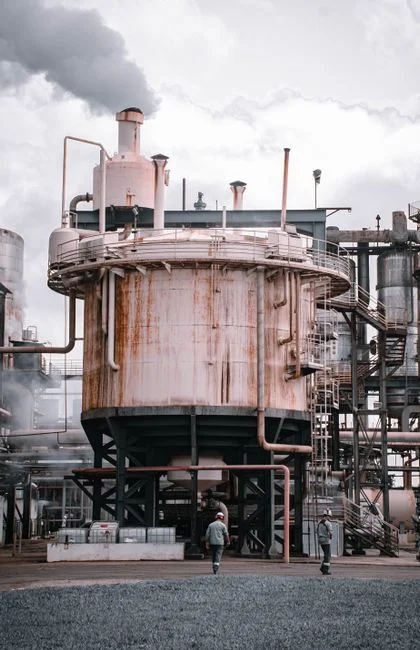
The MBR tank is only one of five trains on a Boston hotel plant. Upstream, install a 2-3 mm rotary fine screen, a grit chamber or vortex degritter, and a properly sized grease interceptor; a small DAF pre-stage for hotel FOG and laundry load is justified for any full-service property with a 200+ cover banquet kitchen or on-site laundry. Add a rotary mechanical bar screen for MBR headworks ahead of the bioreactor to keep fibrous debris off the membrane fibers. The equalization tank should hold 8-12 hours of average flow to dampen the evening occupancy surge and protect the biology from a frozen or slugged inlet.
Downstream, the membrane handles residual solids, so the polishing train is mainly for reuse compliance. Install a UV sterilizer for 314 CMR 9.0 reuse polishing sized at 30-40 mJ/cm², with an optional chlorine dioxide dosing loop where the hotel wants a residual in the reuse ring main. Sludge is the OPEX line most feasibility studies understate: a small aerobic digester or a plate and frame filter press for MBR sludge drops cake solids to 18-22% and reduces annual off-site hauling volume by 60-70%.
Packaged MBR Cost Bands for a Boston Hotel Project (2026)
For 2026 capital budgeting, a fully skid-mounted packaged hotel MBR with membranes, blowers, controls, and a small control building falls into the following bands in USD: roughly $250,000-$600,000 for a 25,000-50,000 GPD plant and $400,000-$900,000 for a 50,000-150,000 GPD plant, with Boston-area labor, NEC electrical, and MA DEP permitting premiums already included. OPEX typically runs $0.015-$0.04 per gallon treated, dominated by aeration energy at 0.6-1.2 kWh/m³, membrane cleaning chemicals, a membrane replacement reserve of $0.01-$0.03 per gallon amortized, and a part-licensed operator on call (BWSC and MA DEP both expect a qualified operator for plants above the Title 5 flow threshold).
Against a Boston Water and Sewer Commission connection plus MWRA sewer-use fees, an on-site MBR with reuse can pay back in 4-7 years for a large full-service hotel, especially where toilet-flushing and laundry reuse displace 30-50% of incoming water. Hold a 10-15% contingency for cold-climate housing, winter commissioning, and BWSC/MWRA coordination; cost bands widen sharply when subsurface Title 5 disposal or 314 CMR 9.0 permit support is in scope.
| Capacity (GPD) | CAPEX Range (USD) | OPEX (USD/gal) | Payback vs Sewer |
|---|---|---|---|
| 25,000-50,000 | $250,000-$600,000 | $0.025-$0.04 | 5-7 years |
| 50,000-100,000 | $400,000-$750,000 | $0.020-$0.035 | 4-6 years |
| 100,000-150,000 | $550,000-$900,000 | $0.015-$0.030 | 4-5 years |
Boston Supplier Evaluation Checklist: 7 Questions to Ask Before You Sign
Before signing a packaged MBR purchase order in Boston, run every bidder through the same seven-question scorecard. Ask for documented performance at a hotel or commercial building of similar flow and loading, with at least 12 months of operating data, not a municipal reference. Confirm Massachusetts P.E. stamping on the shop drawings, UL 508A control panel certification, and a local service partner within 2-3 hours of Boston for emergency call-out. Require membrane origin and warranty terms in writing (PVDF only, HF or FS from named brands like Toray, Mitsubishi, Suez, or DuPont), and reject generic "or equal" substitutions without independent test data. Verify the CIP protocol, expected chemical consumption, and recommended cleaning interval; a vague answer here is a walk-away signal. Ask for a guaranteed flux, MLSS window, and aeration specific energy in kWh/m³ written into the performance warranty, with liquidated damages for shortfalls. Confirm the scope explicitly covers MA DEP Title 5 and 314 CMR 9.0 permit support and BWSC/MWRA coordination, not just equipment supply. Finally, check the operator training plan and the U.S. spare parts inventory; a Boston hotel cannot wait 6-8 weeks for a membrane cassette shipped from overseas.
| Criterion | Pass / Fail Threshold |
|---|---|
| Hotel reference plant, 12+ months data | Pass = named hotel, dated data |
| MA P.E. stamp, UL 508A panel | Pass = stamped drawings submitted |
| Local service within 2-3 hr of Boston | Pass = named local partner |
| Named PVDF membrane brand | Pass = Toray, Mitsubishi, Suez, or DuPont only |
| Guaranteed flux, MLSS, kWh/m³ in warranty | Pass = written performance warranty with LDs |
| MA DEP / BWSC permit support in scope | Pass = named compliance deliverable |
| U.S. spare parts inventory | Pass = membrane cassette <2 weeks lead time |
Frequently Asked Questions
What flow basis should a Boston hotel use to size a packaged MBR?
Use 200-450 L per guest per day (about 53-120 gal/guest·day) plus 50-100 L per employee per day, then apply a 1.5-2.0 peaking factor for the 4-6 hour evening peak. A 150-room hotel at 75% occupancy lands near 30-50 m³/d base, while a 300-room full-service hotel at 80% occupancy lands near 70-110 m³/d base (HydropureWater field data, 2026).
Does a packaged MBR meet BWSC and MWRA discharge limits without a clarifier?
Yes. A submerged MBR with PVDF membranes typically produces TSS below 5-10 mg/L and BOD below 10 mg/L, which clears the MWRA Sewer Use Rules and BWSC site plan thresholds without a separate polishing clarifier, though a commercial kitchen or on-site laundry may still trigger an industrial waste review.
Can a hotel reuse MBR effluent for toilet flushing or laundry in Boston?
Yes, under MA DEP 314 CMR 9.0. The reuse train must include UV or chlorination disinfection, residual color and turbidity compliance (typically turbidity below 2 NTU and fecal coliform below 2.2 CFU/100 mL), and an ongoing monitoring program documented in the reuse permit.
What is the 2026 CAPEX range for a packaged hotel MBR in Boston?
Budget $250,000-$600,000 USD for a 25,000-50,000 GPD plant and $400,000-$900,000 USD for a 50,000-150,000 GPD plant, fully skid-mounted with membranes, blowers, controls, and a small control building. Add 10-15% contingency for cold-climate housing, winter commissioning, and BWSC/MWRA coordination.
Why is winter mixed-liquor temperature critical for a Boston MBR?
Nitrification and BOD removal slow dramatically below 10-12 °C, and membrane fouling accelerates when biology underperforms. Insulate, partially bury, or house the skid indoors, and keep the equalization tank at 8-12 hours of average flow so a frozen inlet cannot starve the biomass.