Why Eden-area paper mills can't just connect to a sewer
Roughly 50% of U.S. pulp and paper facilities discharge to publicly owned treatment works rather than directly to surface water (IWA Publishing, 1988, as cited in the HydropureWater national guide), and every one of those indirect dischargers still operates under full federal regulation. Discharging to a municipal sewer does not exempt an Eden-area mill from the National Pretreatment Program — it stacks two enforcement layers on top of each other: 40 CFR Part 403 at the POTW connection and 40 CFR Part 430 categorical standards for the pulp, paper, and paperboard category.
Two words in 40 CFR 403.3(p) define failure. Pass-through is a discharge that exits the POTW in quantities or concentrations that, alone or with other sources, cause a violation of the POTW's NPDES permit. Interference is a discharge that inhibits or disrupts the POTW's treatment processes, sludge processes, or disposal — again causing a permit or sludge violation. Either trigger gives the POTW independent enforcement authority against the mill, with no federal inspection required (per EPA, 2026).
A 2026-era mill discharging to a municipal POTW in the Eden region typically faces narrative plus numeric local limits developed under 40 CFR 403.5(c), layered on top of Part 430 categorical numbers. Local limits for zinc, copper, lead, sulfides, temperature, and oil/grease are routinely tighter than the federal numbers because they protect the POTW's own NPDES permit and biosolids program, not the categorical standard (per EPA, 2026). The cost of doing nothing is therefore not "no permit" — it is a sewer-connection enforcement action triggered by a single upsets event.
The 40 CFR Part 430 subpart that applies to your mill
EPA promulgated 40 CFR Part 430 in 1974 and 1977, amended the rules in 1982 and 1986, and added the major 1998 toxic-pollutant amendment covering AOX, chlorinated organics, and color (per EPA Effluent Guidelines, 2026). The regulation is split into subparts A through L, and each subpart carries its own parameter set — identifying the right one is the first engineering step, because subpart choice determines the binding pollutant list the POTW evaluates against.
Subpart B covers dissolving sulfite mills producing nitration, viscose, cellophane, and acetate grades; it typically carries the strictest AOX and color limits because dissolving pulp uses more chlorine dioxide in the bleach plant. Subpart C covers bleached kraft and soda mills — market pulp at bleached kraft mills, plus paperboard, tissue, and fine paper at bleached kraft and soda mills — and also runs strict on AOX, color, and chlorinated organics. Subpart D covers unbleached kraft (including linerboard, bag paper, and the unbleached kraft–NSSC cross-recovery process) and combined unbleached kraft/semi-chemical mills; AOX is lower but BOD, TSS, and sulfides still constrain the discharge. Subpart E covers papergrade sulfite with blow-pit or drum-wash washing. Subparts F through L cover semi-chemical (ammonia or sodium base), groundwood/TMP/CTMP/chemi-mechanical, newsprint, non-wood chemical, deink, secondary fiber (non-deink wastepaper), and non-integrated purchased-pulp mills — each with its own parameter set (per EPA Effluent Guidelines, 2026).
| Subpart | Mill type (Eden-relevant examples) | Dominant regulated pollutants |
|---|---|---|
| B | Dissolving sulfite (nitration, viscose, cellophane, acetate) | AOX, color, chlorinated organics (strictest) |
| C | Bleached kraft market pulp, paperboard, tissue, fine paper; bleached soda | AOX, color, chlorinated organics, BOD |
| D | Unbleached kraft, NSSC cross-recovery, combined | BOD, TSS, sulfides |
| E | Papergrade sulfite (blow pit or drum wash) | BOD, TSS, sulfides |
| F | Semi-chemical (ammonia or sodium base) | High BOD, COD, TSS |
| G | Groundwood mills (mechanical, TMP, CTMP, chemi-mechanical), newsprint, fine paper | High TSS, BOD, color |
| H | Non-wood chemical pulp | BOD, COD, color (stream-specific) |
| I | Deink (fine paper, tissue, newsprint) | High TSS, ink, fillers, FOG, BOD |
| J | Secondary fiber / non-deink wastepaper (paperboard, tissue, molded, builders' paper) | High TSS, BOD, fillers |
| K | Fine and lightweight papers from purchased pulp (wood or cotton furnish) | BOD, TSS, stream-specific |
| L | Tissue, filter, non-woven, and paperboard from purchased pulp (non-integrated) | BOD, TSS, stream-specific |
For an Eden-area mill, the subpart decision is rarely a guess. Southeast kraft and recycled-fiber clusters usually map to Subparts C, D, I, or J, with Subpart B appearing only at dissolving-pulp or specialty-cellulose sites. Lock the subpart before any equipment selection — categorical parameters drive DAF chemistry, biological-stage sizing, and the decision to add AOX/color polishing after the 1998 amendment.
What raw pulp & paper wastewater actually looks like
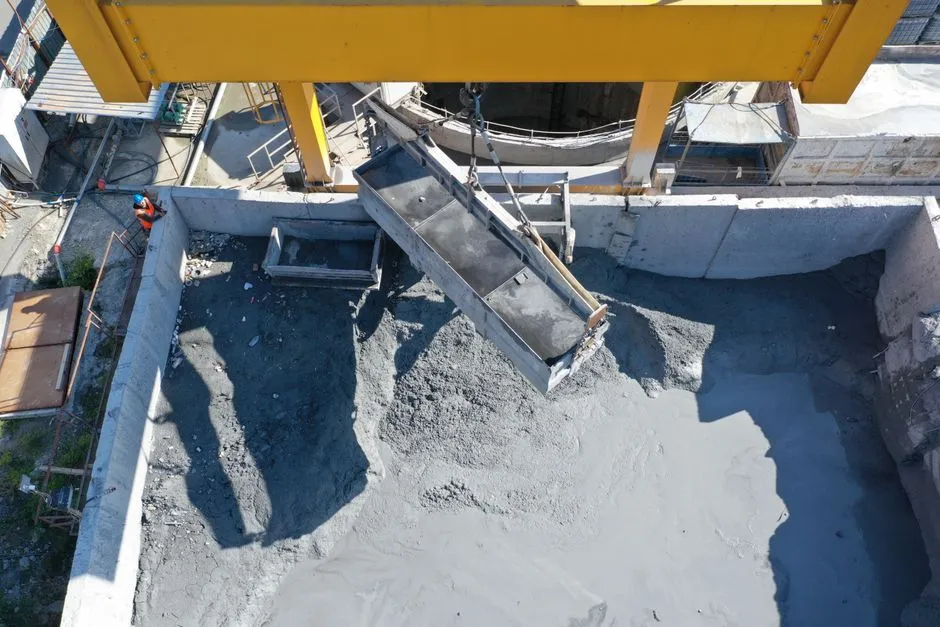
Large mills generate up to 70 m³ of wastewater per metric ton of paper, depending on raw material, finished product, and the extent of in-mill reuse (BioResources review, citing Rintala and Puhakka 1994 and Latorre et al. 2007). The industry uses about 70% of its water intake as process water, and has reduced water consumption per tonne of paper by roughly 95% over the last 30 years (Blanco et al. 2004, as cited in the BioResources review) — but load per litre has risen as circuits close. AOX has been reduced more than 80% industry-wide since 1990 (Friere et al. 2003), yet absolute AOX load at dissolving and bleached kraft sites can still drive a polishing step after biological treatment.
Dissolving-kraft and semi-chemical streams carry the highest BOD, COD, and AOX; bleached kraft and dissolving sulfite follow. Recycled-fiber (deink and secondary fiber) streams are high in TSS, ink, fillers, FOG, and BOD but typically low in AOX unless whitening chemicals enter the furnish. Benchmarking a mill's own influent against industry-typical bands catches design gaps before the POTW does, because the local-limit conversation is driven by what arrives at the headworks, not by what leaves the paper machine.
| Parameter | Typical raw range (mg/L unless noted) | Streams at the high end |
|---|---|---|
| BOD5 | 100–1,500 | Dissolving kraft, semi-chemical |
| COD | 500–5,000 | Dissolving kraft, NSSC, bleached kraft |
| TSS | 200–2,500 | Deink, secondary fiber, groundwood |
| AOX | 0.5–25 | Bleached kraft, dissolving sulfite |
| Color (Pt-Co) | 200–2,000 | Bleached kraft, dissolving pulp |
| pH (SU) | 5–9 | Site-specific; swings are common |
| Temperature (°C) | 25–55 | Warm process streams from bleaching, paper machine |
The BOD/COD ratio is the most useful single diagnostic — a low ratio (under 0.3) means a large fraction of the organics are poorly biodegradable, which usually forces an advanced oxidation or membrane polish downstream of the biotreatment basin (BioResources review, citing McCubbin and Folke 1993 and Dahlman et al. 1995).
The treatment train that gets you under the POTW cap
The standard indirect-discharge train is a sequence of unit operations, each justified by the pollutant fraction it removes. Skipping a step almost always shows up later as a POTW violation or as a biological system that cannot hold the swing load. For a Subpart C bleached kraft market pulp mill, the full train runs fiber recovery and save-all → primary clarification with DAF → equalization and pH control → biological treatment (often an anaerobic/aerobic combination) → AOX/color polishing → sludge dewatering with a plate-and-frame filter press (per EPA Effluent Guidelines, 2026). An unbleached kraft linerboard mill on Subpart D typically drops the AOX polish and sometimes the anaerobic stage, but keeps the same backbone.
Fiber recovery and save-all is the first unit operation and recovers furnish fiber while cutting TSS load before the rest of the train. Primary clarification with DAF is the default because colloidal and fine-fiber fractions do not settle well in gravity clarifiers — DAF handles colloidal solids, FOG, fillers, and ink in one stage. Equalization and PLC-controlled chemical dosing for coagulants, flocculants, and pH smooths the variable load that otherwise destabilizes biotreatment; manual dosing fails under swing conditions. Biological treatment is the workhorse for BOD and COD removal; activated sludge remains the U.S. default, an MBR membrane bioreactor is the default where footprint is constrained or polishing TSS must sit below 10 mg/L, and an anaerobic reactor (UASB or IC) suits high-strength BOD streams from dissolving pulp or NSSC and offsets aeration power. AOX and color polishing is required to meet Subpart B and C categorical limits after the 1998 toxic-pollutant amendment, and is typically an advanced oxidation or membrane step. Sludge dewatering with a plate-and-frame filter press, with polymer or lime conditioning, is the endpoint — cake dryness above 30% lowers haul cost (HydropureWater field data, 2026). Conventional primary plus activated sludge is the long-standing baseline; advanced oxidation, MBR, and membrane filtration are the supplements that close compliance gaps (BioResources review).
| Train step | Primary pollutants removed | Typical design range / target |
|---|---|---|
| Fiber recovery / save-all | Furnish fiber, bulk TSS | 70–90% fiber capture upstream of primary |
| DAF (primary) | Colloidal solids, FOG, fillers, ink | 15–25 m³/m²·h; 90–95% TSS removal at design load |
| Equalization + pH control | Load swings, pH excursions | 2–6 h HRT typical; PLC-controlled dosing |
| Activated sludge / MBR / anaerobic | BOD, COD, partial AOX | 95–99% BOD; MBR effluent TSS < 10 mg/L |
| AOX / color polish (Subpart B/C) | AOX, color, residual COD | Effluent AOX meets categorical limit for subpart |
| Plate-and-frame press (sludge) | Water in biosolids | >30% cake dryness with polymer or lime |
Train complexity scales with subcategory. A Subpart C bleached kraft market pulp site needs every step above; a Subpart D unbleached kraft linerboard site usually stops at biological treatment and skips the AOX polish. The temptation to delete a step to save capex almost always backfires at the POTW connection.
DAF, MBR, and the equipment that does the heavy lifting
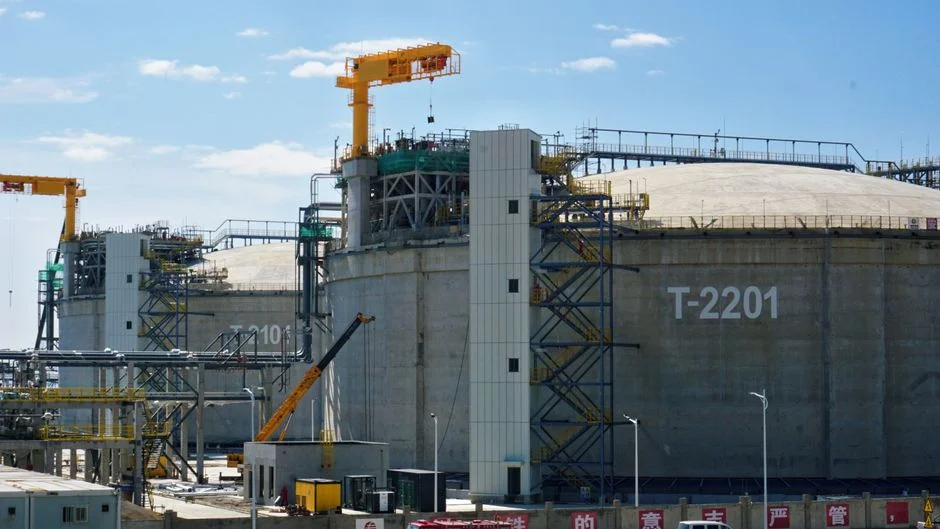
DAF is the workhorse primary step for colloidal solids, FOG, fillers, and ink in pulp and paper service — 13 standard DAF models cover 4–300 m³/h at hydraulic-loading rates of 15–25 m³/m²·h, which is the operating band a dissolved air flotation (DAF) system for pulp & paper primary clarification typically runs at in paper-mill service. The 15–25 m³/m²·h range is consistent with the BioResources review's discussion of DAF as an upstream process change to cut pollutant load before end-of-pipe treatment.
An MBR is the default biological step when footprint is constrained or polishing TSS must sit below 10 mg/L. Submerged PVDF flat-sheet modules (DF series, 80–225 m²) deliver 32–135 m³/day per cassette with 10–20× lower energy than external cross-flow; an integrated MBR membrane bioreactor for pulp & paper biological treatment is typically sized 10–2,000 m³/day and lands at roughly 60% smaller footprint than a conventional activated-sludge basin with a separate clarifier. Submerged PVDF MBR membranes in pulp and paper service typically last 5–8 years with proper chemical cleaning and relaxation protocols; high AOX, color, and calcium scaling shorten life, and consistent MLSS control plus periodic recovery cleans extend it (HydropureWater field data, 2026).
PLC-controlled chemical dosing for coagulants, flocculants, and pH adjustment is required to hold performance under variable load — manual dosing fails under swing conditions, and a swing load is exactly what a paper machine produces. A PLC-controlled chemical dosing system for coagulants, flocculants, and pH ties the coagulant pump, flocculant pump, and pH probe into one loop. Sludge generated by the train is dewatered with a plate-and-frame filter press for sludge dewatering, available from 1–500 m² filtration area with PLC control; select press size after the upstream train is fixed, because sludge volume is a function of chemistry, not of the press. For engineers weighing DAF against gravity clarification at the primary step, the DAF vs clarifier decision guide for pulp & paper primary treatment is a useful adjacent read. A regional reference for adjacent mill regions is the Glen Rock pulp & paper pretreatment compliance guide.
Indirect (POTW) vs direct (NPDES) discharge — the 2026 trade
Two compliance layers apply for indirect discharge: 40 CFR 403 (pretreatment) plus 40 CFR Part 430 categorical standards. For direct discharge, the stack is EPA or state NPDES plus 40 CFR Part 430, and the categorical limit becomes the binding end-of-pipe number, not a local limit negotiated with a POTW. Direct discharge requires full biological and tertiary treatment to receiving-water quality; indirect discharge requires only pretreatment-scope treatment because the POTW polishes the rest.
Capex and opex sit higher under direct discharge — full power, chemical, and sludge-handling cost lands on the mill, not on a shared POTW. The decision is rarely a technical preference; it usually turns on local POTW capacity, hauling cost, and whether the mill can meet local limits without train expansion. Stay indirect when POTW local limits are achievable with the current train plus targeted upgrades; switch to direct when the POTW refuses acceptance or local limits are technically infeasible at the connection (per EPA, 2026). A brown-water reuse target — brown-stock wash water, paper-machine shower water — now overlaps with pretreatment compliance, because the same train that gets a mill under the POTW cap produces water clean enough for reuse (ACS ES&T Engineering, 2021).
| Decision factor | Indirect (POTW) | Direct (NPDES) |
|---|---|---|
| Compliance stack | 40 CFR 403 + 40 CFR Part 430 | EPA/state NPDES + 40 CFR Part 430 |
| End-of-pipe target | Categorical + POTW local limits (40 CFR 403.5(c)) | Categorical + receiving-water-quality based limits |
| Treatment scope on mill | Pretreatment only; POTW does final polishing | Full biological + tertiary to receiving-water quality |
| 2026 capex band | Lower (pretreatment scope) | Higher (full biological + tertiary) |
| 2026 opex band | Lower (shared with POTW) | Higher (power, chemical, sludge handling on mill) |
| Stay / switch trigger | Local limits achievable with current train | POTW refuses acceptance or local limits infeasible |
The 2026 retrofit decision framework reduces to three questions: Can the existing train, with targeted upgrades, meet the POTW's 403.5(c) local-limit set at the connection? Is the POTW willing to accept the projected load over the next permit cycle? And is the reuse target (brown-stock wash, shower water) achievable with the same equipment a compliance upgrade would specify? If the answer to all three is yes, stay indirect and layer the reuse retrofit on top of the compliance scope.
A pass-through scenario Eden-area mills can actually face
Consider a bleached kraft market pulp mill on a Subpart C permit, discharging to a municipal POTW whose NPDES permit is up for renewal in 2026. The mill effluent carries high AOX and color from the bleach plant, plus elevated zinc from a paper-machine corrosion inhibitor. As the POTW's permit is renewed and receiving-water-quality based limits tighten, the mill's AOX begins to show up as pass-through at the POTW outfall (visible color and measurable AOX above the new limit), and the zinc load begins to disrupt the POTW's biotreatment basin (interference under 40 CFR 403.3(p)).
The POTW issues a local-limit enforcement notice under 40 CFR 403.5(c) and demands AOX and zinc compliance at the connection point. The resolution path is layered, not a single equipment swap: add an AOX/color polishing step after the existing biological stage, tighten the PLC-controlled chemical dosing system for coagulants, flocculants, and pH loop to hold performance under swing load, and add a zinc source-control program on the paper machine to lower the metal at source rather than trying to precipitate it all at end-of-pipe. Keep activated sludge and add an integrated MBR membrane bioreactor for pulp & paper biological treatment as a polishing step to hold TSS below 10 mg/L and protect the biotreatment basin from shock loading. Sludge volume rises with the extra chemistry — verify plate-and-frame filter press for sludge dewatering capacity before signing the upgrade purchase order, because the press is sized to the upstream train, not the other way around (HydropureWater field data, 2026). Engineers evaluating adjacent mill contexts — for example, food and beverage pretreatment near the southern border — can reference the food & beverage pretreatment compliance guide near the U.S.–Mexico border for a contrasting categorical stack.
Frequently Asked Questions
What is the difference between pass-through and interference under 40 CFR 403?
Pass-through is a discharge that exits the POTW in quantities or concentrations that cause a violation of the POTW's NPDES permit; interference is a discharge that inhibits or disrupts the POTW's treatment processes, sludge processes, or sludge disposal, again causing a permit or sludge violation. Both are defined in 40 CFR 403.3(p) and are independent enforcement triggers — a POTW can act on either one alone (per EPA, 2026).
Which 40 CFR Part 430 subpart applies to a bleached kraft market pulp mill?
Subpart C covers bleached kraft and soda mills producing market pulp, paperboard, tissue paper, and fine paper, and it carries the strictest AOX, color, and chlorinated organics limits. Subpart B (dissolving sulfite for nitration, viscose, cellophane, acetate) is stricter still, but it does not apply to standard kraft market pulp operations (per EPA Effluent Guidelines, 2026).
Why are POTW local limits sometimes tighter than the federal categorical numbers?
Local limits reflect site-specific POTW treatment capability, receiving-water quality, and sludge-handling constraints. Pollutants that disrupt biotreatment — zinc, copper, lead, sulfides — are typically constrained tighter than the Part 430 categorical numbers because the POTW's own NPDES permit and biosolids program are the binding documents, not the federal categorical standard (per EPA, 2026).
How long do submerged PVDF MBR membranes last in pulp and paper service?
Submerged PVDF MBR membranes in pulp and paper service typically last 5–8 years with proper chemical cleaning and relaxation protocols. High AOX, color, and calcium scaling shorten membrane life; consistent MLSS control and periodic recovery cleans extend it (HydropureWater field data, 2026).