What Counts as Total Nitrogen in Industrial Wastewater
Total nitrogen (TN) is the sum of four measurable nitrogen species: ammonia-N (NH3/NH4+), nitrite-N (NO2-), nitrate-N (NO3-), and organic-N. Kjeldahl nitrogen (TKN) covers only ammonia-N plus organic-N, which is why most industrial labs report TKN and NO3-N separately and compute TN as TKN + NO2-N + NO3-N. The distinction matters because a process that removes 99% of ammonia but leaves 40 mg/L nitrate in the effluent has moved nitrogen from one species to another without actually lowering TN.
Typical industrial influent ranges (engineering values, not vendor claims) sit at 100-800 mg/L TN for food processing, 200-500 mg/L NH3-N for semiconductor ammonia-stripping condensate, 30-200 mg/L TN for textile, and 50-400 mg/L TN for refinery wastewater, consistent with the ranges catalogued in the 2023 PMC review on wastewater nitrogen removal. Many jurisdictions cap discharge TN at 10-40 mg/L for surface waters, which forces complete nitrification plus denitrification rather than ammonia-only polishing. EPA 40 CFR Part 418 (electroplating) and the EU Urban Wastewater Treatment Directive (91/271/EEC) both apply TN limits in the 10-15 mg/L band for sensitive catchments, so a removal target under 15 mg/L TN is the working design point for most procurement decisions.
Biological Nitrogen Removal: Nitrification, Denitrification, and the C/N Bottleneck
Conventional biological nitrogen removal (BNR) is a two-step mechanism: autotrophic nitrification oxidizes NH4+ to NO2- and then to NO3- under aerobic conditions, and heterotrophic denitrification reduces NO3- to N2 gas under anoxic conditions. Nitrifiers are slow-growing (yield ~0.15 g VSS/g NH4-N oxidized) and require dissolved oxygen (DO) of 2-3 mg/L plus a solids retention time (SRT) of 10-20 days; denitrifiers need an anoxic zone with NO3-N residual under 5 mg/L and a usable carbon source. Both species are temperature-sensitive: at 27 °C, average NH4+ removal is 93% and overall BNR efficiency is 79%; at 15 °C the nitrification rate roughly halves, which is why many cold-climate plants specify moving-bed biofilm reactors (MBBR) or membrane bioreactors (MBR) to retain biomass (PMC review on nitrogen removal, 2023).
The influent C/N ratio is the single most important design lever. At C/N 10, the average NH4+ removal climbs to 96.54% and TN removal reaches 86.1%. At C/N 4, those figures drop to 82% NH4+ and 53% TN — a 33-point TN penalty for an under-carbonated feed. For high-C/N streams such as food and beverage wastewater, conventional nitrification-denitrification is the cheapest path. For low-C/N streams such as digester reject water, landfill leachate, or semiconductor condensate, the same biology stalls without external carbon dosing. Engineers comparing reactor geometries for retrofit should weigh the operational implications of a sequencing batch reactor against a continuous A/A/O train, as detailed in the 2026 SBR vs AAO process comparison.
| Parameter | Nitrification (aerobic) | Denitrification (anoxic) |
|---|---|---|
| DO target | 2-3 mg/L | <0.5 mg/L |
| SRT | 10-20 days | 3-10 days |
| MLSS (typical CAS) | 2,000-4,000 mg/L | 2,000-4,000 mg/L |
| Temperature optimum | 25-30 °C | 20-30 °C |
| TN removal at C/N 10 | 86.1% (per PMC review, 2023) | |
| TN removal at C/N 4 | 53% (per PMC review, 2023) | |
Shortcut Nitrogen Processes: Partial Nitritation, Anammox, and Bio-Carrier Boost
Shortcut nitrogen processes attack the cost drivers of conventional BNR rather than its biology. Partial nitritation oxidizes roughly half the NH4+ to NO2- (NH4+ → NO2-), and the anammox reaction then combines the remaining NH4+ with NO2- to produce N2 directly (NH4+ + NO2- → N2). The combination cuts aeration energy by approximately 60% and requires no external carbon, because anammox bacteria are chemolithoautotrophs. The 2023 PMC review reports anaerobic digester effluent reaching 99% ammoniacal nitrogen removal after acidification pretreatment, which is the cleanest single-stream benchmark for shortcut nitrogen applied to reject water.
Bio-carrier enrichment is the most practical low-C/N retrofit because it stacks onto existing tanks. The PMC review notes that adding carriers "slightly increase[s] the total nitrogen removal rate, even at lower C/N values" by enriching both nitrifying and denitrifying biomass on the protected surface area. Suitable industrial streams for anammox include anaerobic digester reject water (1,000-2,000 mg/L NH4+ at low C/N), landfill leachate, and the ammonia-stripping condensate from semiconductor fabs covered in the 2026 semiconductor ammonia nitrogen treatment design package. The practical caveat for procurement: anammox bacteria double in 7-14 days under controlled conditions, so plant startup demands stable SRT, DO under 0.5 mg/L during the anammox step, and tight temperature control around 30-35 °C.
Chemical and Physical Routes: MAP Precipitation, Air Stripping, Membranes
Non-biological routes handle the streams where biology is impractical: toxic feeds, low-strength polishing targets, and any plant that wants to recover nitrogen as a saleable product rather than destroy it. Magnesium ammonium phosphate (MAP or struvite) precipitation is the leading recovery-plus-removal option. Struvite solubility is only 0.169 g/L at 25 °C, so it precipitates readily when Mg2+, NH4+, and PO43- are dosed in stoichiometric ratio. Raising pH from 8 to 9.5 lifts NH4+ removal from 40% to 85.9%; at Mg2+:NH4+:PO43- of 1.2:1:1.2 and pH 8.5, the same review reports over 95% ammoniacal nitrogen removal and 98% ammonia removal with 59% nitrogen recovery as a usable struvite product (PMC review, 2023). For a plant that wants to dose MgCl2 and Na2HPO4 precisely, an automatic chemical dosing for MAP precipitation skid is the standard control layer.
Air stripping exploits the pH/temperature shift that converts NH4+ to free NH3: at elevated pH and temperature, 95% of total ammonia nitrogen converts to free ammonia and can be driven off in a packed tower. Reported NH3 removal efficiencies run 55-73% across feed gas velocities of 0.28, 0.5, 0.75, and 0.84 m/s in the same review. Reverse osmosis removes over 82% NH4+ and over 90% NO3- in the concentrate, while forward osmosis with quaternized thin-film-composite membranes delivers 99% NH4+ rejection (PMC review, 2023). Lanthanum-modified zeolite achieves 92% TN release reduction in sediment capping, useful as a tertiary niche. None of these are stand-alone TN solutions; their economic role is polishing for reuse or concentrating nitrogen for downstream recovery.
| Process | TN / NH4+ removal | Energy / chemical intensity | Best-fit stream |
|---|---|---|---|
| MAP precipitation (pH 8.5, 1.2:1:1.2) | >95% NH4+ | Mg/PO4 dosing | High-NH4+ reject water, recovery goal |
| Air stripping (pH >11, T >30 °C) | 55-73% NH3 | Heat + caustic | High-NH4+ condensate |
| Reverse osmosis | >82% NH4+, >90% NO3- | High pressure | Reuse polishing |
| Forward osmosis (TFC-Q) | 99% NH4+ rejection | Draw solute | Concentration step |
| La-modified zeolite | 92% TN release reduction | Solid contact | Tertiary niche |
MBR and Hybrid Systems: The Industrial Default for Compact TN Removal
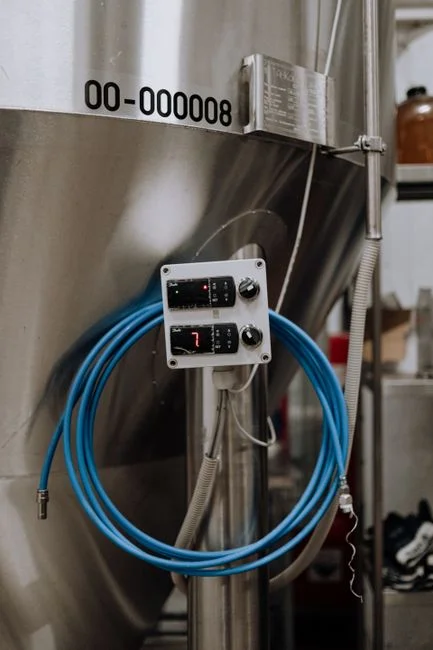
Membrane bioreactors (MBR) are now the default industrial TN platform where footprint and effluent quality both matter, because complete biomass retention decouples SRT from hydraulic retention time (HRT). Typical MBR mixed liquor sits at 8,000-12,000 mg/L versus 2,000-4,000 mg/L in conventional activated sludge, and the submerged membrane filters to under 1 μm. That retention lets slow-growing nitrifiers stay in the reactor under high hydraulic load, and an upstream anoxic zone delivers the denitrification step. A well-designed MBR membrane bioreactor for industrial nitrogen removal routinely hits 90%+ TN removal at roughly 60% of the footprint of a comparable CAS train (HydropureWater product specification, 2026).
Hybrid MBR-MBBR configurations go further by adding biofilm carriers to enrich nitrifiers and denitrifiers simultaneously. The PMC review confirms that bio-carriers sustain TN removal at C/N ratios below 6, directly addressing the C/N 4 weakness that limits conventional BNR. For a plant that needs to scale capacity, PVDF flat sheet MBR modules in 80-225 m² units can be combined into 32-135 m³/day trains, then paralleled into integrated systems up to 2,000 m³/day. The practical engineering benefit is operational stability: less sludge washout, tighter effluent TSS under 5 mg/L, and a smaller anoxic tank because the membrane retains the biomass that does the work.
Selecting a TN Removal Process for an Industrial Stream
Process selection is a three-axis decision: influent C/N ratio, target effluent TN, and the cost of carbon versus the cost of aeration. For high-C/N (>8) streams such as food processing, conventional nitrification-denitrification is the cheapest path and pairs with an A/O packaged treatment plant for small sites. For low-C/N (<5) streams with high ammonia, anammox or an MBBR/MBR-carrier hybrid is the right answer. For high-NH4+ streams with a recovery goal, MAP precipitation plus an DAF pre-treatment for nitrogen removal ahead of the reactor handles both solids and nitrogen economically.
A simple rule applies to polishing: if biological TN is already under 50 mg/L, RO or FO polishing reaches under 10 mg/L for reuse; if biological TN is still above 50 mg/L, adding MAP or anammox upstream is more economic than forcing the membrane to do primary work. Biological CAPEX runs $200-800/m³ of daily capacity and OPEX $0.10-0.30/m³ as a 2026 industry rule of thumb; MAP chemical cost dominates at influent NH4+ above 1,000 mg/L, while membrane cost dominates when the effluent target drops below 10 mg/L TN. For textile plants in regulated catchments, the 2026 textile wastewater treatment guide walks through the compliance envelope that drives the biological-plus-polishing default.
| Technology family | TN efficiency | C/N tolerance | Footprint vs CAS | Best industrial fit |
|---|---|---|---|---|
| Conventional BNR | 53-86% | C/N ≥ 8 optimal | 1.0× (baseline) | Food, beverage, refinery |
| Anammox / partial nitritation | >90% | C/N < 5 | 0.6-0.8× | Digester reject, landfill leachate |
| MBR (with anoxic zone) | 90%+ | C/N 5-10 | 0.6× | Pharma, electronics, compact sites |
| MBR + biofilm carriers | 90%+ at C/N < 6 | C/N 4-10 | 0.7× | Variable-strength industrial |
| MAP precipitation | >95% NH4+ | C/N independent | Chemical skid | High-NH4+ reject, recovery |
| Air stripping + polishing | 55-73% + 90% | C/N independent | Tower + biotank | Semiconductor condensate |
| RO / FO (polishing) | >90% of residual | Best on low-TN feed | Skid | Reuse applications |
Frequently Asked Questions
What is total nitrogen in industrial wastewater?
Total nitrogen (TN) is the sum of ammonia-N (NH3/NH4+), nitrite-N (NO2-), nitrate-N (NO3-), and organic-N. Kjeldahl nitrogen (TKN) covers only ammonia-N plus organic-N, so TN is calculated as TKN + NO2-N + NO3-N (PMC review, 2023).
Which nitrogen removal process is best for low C/N industrial wastewater?
Anammox combined with partial nitritation, or an MBR with biofilm carriers, is the most efficient option at C/N below 5, because both systems avoid the external carbon requirement that limits conventional denitrification (PMC review, 2023).
What TN removal efficiency should a plant expect from a well-designed MBR?
A properly sized MBR with an upstream anoxic zone delivers 90%+ TN removal, even at elevated MLSS of 8,000-12,000 mg/L, because complete biomass retention prevents nitrifier washout (HydropureWater product specification, 2026).
How does the semiconductor industry typically hit the 99.8% ammonia removal benchmark?
Hybrid trains pairing air stripping or membrane concentration with anammox or MAP precipitation are the documented path to 99.8% NH3 removal on wafer-fab condensate, as detailed in the 2026 semiconductor treatment design package.
What is the typical CAPEX range for industrial biological nitrogen removal?
Biological nitrogen removal CAPEX runs $200-800 per m³ of daily treatment capacity and OPEX runs $0.10-0.30 per m³ treated as a 2026 industry rule of thumb; membrane polishing adds roughly 30-50% to total CAPEX for reuse-grade targets.