
Why Packaged MBR Is the Default for Seoul Hotels
Packaged MBR systems—fully assembled, pre-tested, and delivered in ISO container or skid format—are the default biological treatment choice for Seoul hotel projects because they collapse the footprint of a conventional activated-sludge (CAS) plant by roughly 60% and reduce on-site work to a crane lift and pipework tie-in. A packaged MBR system combines an aerobic activated-sludge reactor with submerged flat-sheet or hollow-fiber membranes, eliminating the secondary clarifier and producing polished effluent in a single tank. The membrane barrier holds mixed liquor suspended solids (MLSS) at 6,000–12,000 mg/L—2–3× higher than CAS—which enables the smaller footprint (per sigmadafclarifiers.com, 2026).
Hotel wastewater is medium-strength, low-toxicity sewage with high BOD/COD and significant FOG from kitchens and laundry. The closest published analog for a Seoul business hotel is the Trident Nariman Point, Mumbai case study (800 KLD submerged UF-MBR), which delivered 96.34% BOD removal and 98.13% TSS removal across a four-month grab-sample campaign (Desalination and Water Treatment, 2025). For a 200–300 room property in Gangnam or Yeouido, where the plantroom is located in a basement, podium deck, or rooftop, this modular advantage tips the technology decision away from CAS and toward packaged MBR.
Korean Discharge Rules Every Hotel MBR Must Hit
Every packaged MBR sized for a Seoul hotel must align with Korea's Water Environment Conservation Act (수질환경보전법) effluent framework, with the stricter tier applied inside Water Quality Protected Areas (수질오염감시대상지역) along the Han River basin.
The practical design targets for a packaged MBR with an anoxic chamber are BOD ≤ 30 mg/L, COD ≤ 40 mg/L, SS ≤ 30 mg/L, T-N ≤ 20 mg/L, and T-P ≤ 2 mg/L. These are the parameters the Trident Nariman Point plant demonstrably meets in continuous operation and what a Seoul permit reviewer will expect in a discharge compliance table (per Water Environment Conservation Act, 2026 framework; removal performance per ScienceDirect case study, 2025). If the hotel discharges to a municipal sewer (하수관로), local NIER/MOE guideline values apply—typically more relaxed on nitrogen but tighter on FOG—making a grease interceptor upstream of the MBR non-negotiable. For hotels pursuing reuse (laundry, irrigation, cooling-tower make-up), Korean Water Reuse Guidelines impose additional turbidity and coliform limits that require RO or UV polishing downstream of the MBR permeate tank. Design reports must address these three compliance tracks—Han River public-water discharge, sewer discharge, and reuse—to be defensible in a Korean permit meeting.
Step 1: Size the MBR to Hotel Hydraulics, Not Headcount Alone
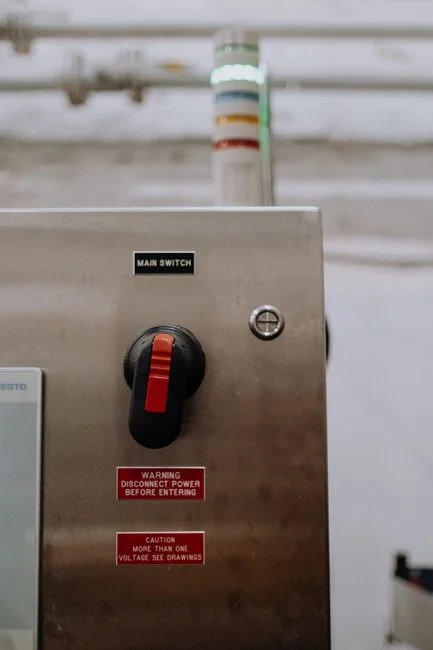
Hotel MBR sizing must start from per-unit water duty and a peak factor rather than a rule-of-thumb m³/day per key.
For a Seoul business hotel, assume 1.5–2.0 m³ per available room·day; 0.8–1.2 m³ per room for serviced residences; add 50–80 L per restaurant cover·day for F&B outlets; and 15–25 L per staff shift·day for back-of-house. Apply a peak factor of 2.5–3.0× to absorb the morning checkout surge (07:00–10:00), banquet return flow, and the simultaneous laundry cycle. This peak factor is the primary cause of undersized packaged plants in hotel retrofits. A 250-room business hotel with a 200-cover/day restaurant and ~120 staff requires a base flow of ~500 m³/day, peaking at ~1,400 m³/day at 2.8×. The equalization tank must absorb the ~900 m³/day delta so the MBR runs at steady MLSS and stable flux. Influent characterization for Seoul hotels falls in the ranges below, and the FOG figure drives the mandatory grease-removal pre-step (HydropureWater field data, 2026).
| Parameter | Seoul hotel influent range | Design assumption |
|---|---|---|
| Flow per room (business) | 1.5–2.0 m³/day | 1.7 m³/day |
| Peak factor (07:00–10:00) | 2.5–3.0× | 2.8× |
| BOD | 250–400 mg/L | 320 mg/L |
| COD | 450–650 mg/L | 520 mg/L |
| SS | 200–350 mg/L | 260 mg/L |
| FOG | 80–150 mg/L | 100 mg/L |
| T-N | 40–60 mg/L | 50 mg/L |
| Temperature (winter) | 5–10 °C | 8 °C |
Step 2: Configure the Bioreactor and Membrane Cassette
Membrane selection and the inclusion of an anoxic pre-chamber affect the packaged MBR price by 15–25% and determine compliance with T-N limits in the Han River basin.
An anoxic pre-chamber is mandatory when influent T-N exceeds 40 mg/L, which applies to almost every Seoul hotel; it enables simultaneous COD oxidation and nitrification-denitrification in a single tank (per S1 anoxic pre-chamber design, 2026). Flat-sheet modules—such as the DF series flat-sheet membrane module—use 0.1 μm PVDF with an integrated aeration box and 10–20× lower energy than external cross-flow designs; each cassette delivers 32–135 m³/day and is tolerant of intermittent operation. Hollow-fiber UF at 0.03 μm PVDF offers higher packing density but is more sensitive to hair and fibrous debris, making it better suited to continuous-duty municipal plants. Design the membrane flux at 15–25 L/m²·h at 15 °C; in the Mumbai hotel case, chemical cleaning with NaClO and citric acid recovered flux from 27 to 31 L/m²·h (Desalination and Water Treatment, 2025).
| Parameter | Flat-sheet (DF series) | Hollow-fiber UF |
|---|---|---|
| Pore size | 0.1 μm PVDF | 0.03 μm PVDF |
| MLSS tolerance | up to 12,000 mg/L | up to 10,000 mg/L |
| Per-cassette capacity | 32–135 m³/day | 50–180 m³/day |
| FOG / hair tolerance | High (flat geometry sheds debris) | Low (fibers blind easily) |
| Operating flux at 15 °C | 15–25 L/m²·h | 15–22 L/m²·h |
| Best-fit duty | Hotel / packaged skid, intermittent | Continuous municipal, low-FOG |
| Energy intensity | 10–20× lower than cross-flow | Comparable aeration demand |
Step 3: Pretreatment and Effluent Polishing
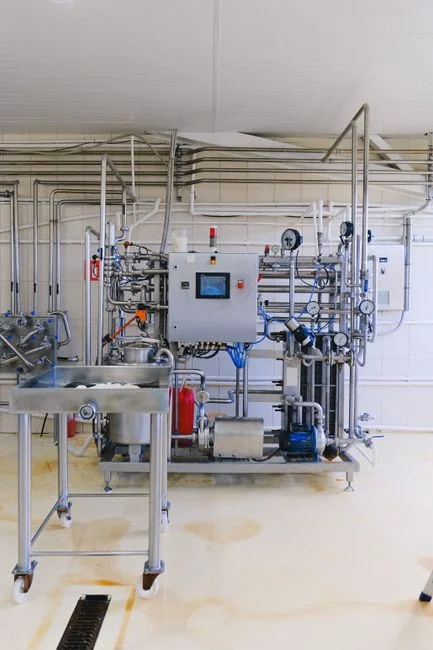
The primary failure modes for packaged MBRs in hotel service are FOG and hair fouling the membranes and downstream reuse quality failing to meet design targets.
The mandatory pretreatment train for a Seoul hotel is rotary bar screen → grit chamber → grease interceptor (FOG < 50 mg/L at outlet) → flow equalization. The grease step is non-negotiable because fats, oils, and hair physically blind flat-sheet membranes and cannot be removed by backwash alone (sigmadafclarifiers.com, 2026). A rotary bar screen with 3–5 mm apertures is the standard first stage, sized to peak flow. Downstream of the MBR permeate tank, route effluent to RO if the hotel targets >80% reuse for laundry, toilet flushing, or cooling-tower make-up; for non-potable reuse, a UV disinfection unit at 40 mJ/cm² is sufficient and avoids the 20–30% RO reject stream. MBR produces 30–50% less waste activated sludge than CAS, but the concentrated sludge (1.5–2.5% dry solids) should be routed to a plate-and-frame filter press for dewatering to >18% dry solids before off-site disposal.
Step 4: Select, Procure, and Commission the Packaged Unit
Successful procurement requires confirming site constraints: footprint, crane access, and maximum single-lift weight for the packaged skid.
ISO container modularity allows the bioreactor tank and membrane cassette to be shipped separately and assembled on-site, often the only viable delivery method in dense Seoul areas. Vendor evaluation should prioritize documented hotel reference plants in service for over 3 years, an in-situ CIP system, a PLC with Korean-language HMI, and 48-hour field-service response within the Seoul metropolitan area. Commissioning follows a fixed sequence: tank leak test → membrane integrity test → biological seed → 8–12 week ramp to design MLSS at winter temperatures (5–10 °C) → performance test against WEC Act limits → operator handover. Directional CAPEX for a 200-room packaged MBR with anoxic chamber is USD 180,000–320,000 ex-works; Korean import duty, installation, and site civils are additional (HydropureWater field data, 2026).
Frequently Asked Questions
What effluent limits must a packaged MBR meet for a Han River basin hotel?
A packaged MBR serving a hotel inside a Water Quality Protected Area along the Han River must meet BOD ≤ 30 mg/L, COD ≤ 40 mg/L, SS ≤ 30 mg/L, T-N ≤ 20 mg/L, and T-P ≤ 2 mg/L per the Water Environment Conservation Act; the Trident Nariman Point 800 KLD plant demonstrated 96.34% BOD and 98.13% TSS removal, proving these targets are routinely met by a properly configured submerged UF-MBR (Desalination and Water Treatment, 2025).
Flat-sheet or hollow-fiber MBR for a hotel STP — which is better?
Flat-sheet MBR is the better default for hotel duty because the flat geometry sheds hair and fibrous debris that would blind hollow-fiber bundles, and individual elements are replaceable without draining the tank. Hollow-fiber UF delivers higher packing density and slightly tighter nominal pore size (0.03 μm vs 0.1 μm), but it is more sensitive to FOG excursions and better suited to continuous-duty municipal plants (HydropureWater field data, 2026).
How do I size a packaged MBR for a 250-room Seoul hotel?
Start at 1.5–2.0 m³ per available room·day (use 1.7 m³/day), add 50–80 L per restaurant cover·day and 15–25 L per staff shift·day, then apply a 2.5–3.0× peak factor; a 250-room property with a 200-cover restaurant typically designs at ~500 m³/day average and ~1,400 m³/day peak, with an equalization tank sized to absorb the ~900 m³/day delta to maintain steady MLSS.
When is RO polishing required after the MBR for hotel reuse?
RO polishing is required when the hotel targets >80% reuse for laundry, cooling-tower make-up, or toilet flushing, as the Korean Water Reuse Guidelines impose turbidity and coliform limits that an MBR alone cannot reliably meet; for non-potable reuse such as landscape irrigation, a UV unit at 40 mJ/