Why the Former Grohmann Automation Site Is a Useful Compliance Reference
The former Grohmann Automation facility in Prüm, Rhineland-Palatinate, now operates as Tesla Automation / Tesla Manufacturing Germany and is the regional benchmark for advanced EV and battery-component assembly, making it a defensible local reference for any engineer mapping shop-floor discharge against the German regulatory stack (per WHG §58, AbwV Anhang 49, and IED 2010/75/EU activity thresholds). Indirect discharge from the site is regulated under three overlapping instruments: the Wasserhaushaltsgesetz (WHG) framework, the Abwasserverordnung (AbwV) industry-specific minimum requirements, and the EU Industrial Emissions Directive 2010/75/EU because the automotive surface-treatment activity exceeds the IED capacity thresholds for metal and plastic surface treatment. For US-headquartered parent companies running a corporate EHS audit, the same plant's compliance function is also benchmarked against pretreatment standards that mirror 40 CFR Part 403, so the engineer must satisfy two frameworks simultaneously without re-engineering the unit operations (per EPA 40 CFR 403.3(j) Industrial User definition). The Stellantis, Ford Cologne, and Volkswagen MEB-platform plants in the broader Eifel/Moselle region produce comparable shop-floor streams and therefore comparable contaminant envelopes, which is why Prüm is a defensible reference rather than a one-off case. No specific mg/L limit for the Prüm site is published; the value of the reference is the framework, not a single number.
The Contaminant Mass Balance Inside an EV or Auto Assembly Plant
An EV or auto assembly plant generates five distinct wastewater clusters, each of which maps to a different unit operation downstream: oils and FOG, heavy metals, suspended solids, color and pigment, and pH imbalance (per ALAR pretreatment framework). Body-in-white processes (stamping, welding) are the dominant source of emulsified oils, hydraulic fluid leaks, and grinding swarf as TSS, with zinc and nickel loading from galvanized steel and electrodeposited coatings, plus phosphate from conversion-coating rinsing steps that typically run 1–3 g/L phosphate in the drag-out. The paint shop contributes overspray paint solids, solvent-derived COD and BOD that survive the air-stripper, heavy metals from pigment binders (notably chromium and lead in legacy formulations, now largely eliminated under REACH but still present in aftermarket lines), and high pH spikes from alkaline degrease baths that routinely push rinse water above pH 10. Final assembly and battery module build generate low-ionic rinse water contaminated with glycol from thermal-management loop testing and trace solvents from adhesive curing; these streams are dilute but high-volume. Compressor condensate and boiler blowdown are intermittent but oil-bearing, and they must be kept out of the sanitary sewer. Organizing the mass balance by shop-floor stream is the only way to assign the right unit operation to the right contaminant cluster, and the same approach is used in the electrocoagulation for metal-finishing streams primer.
| Shop-floor stream | Dominant pollutants | pH range | Treatment target |
|---|---|---|---|
| Body-in-white (stamping/welding) | Emulsified oils, hydraulic fluid, grinding swarf, zinc, nickel, phosphate | 6.5–9.0 | DAF + metals precipitation |
| Paint shop (pretreatment + booth) | Overspray solids, COD/BOD, pigment metals, alkaline degrease | 8.5–11.5 | Lamella clarification + pH trim |
| Final assembly / battery build | Glycol, trace solvents, low-ionic rinse | 6.5–8.5 | Biological (MBR) if reuse is targeted |
| Compressor condensate / boiler blowdown | Free and emulsified oil, thermal surges | 6.0–9.0 | DAF + oil-water separator |
| Conversion-coating rinse | Phosphate, zinc, nickel, fluoride | 3.5–5.5 | pH correction + chemical precipitation |
The Regulatory Stack: 40 CFR Part 403, AbwV, IED, and WHG Side by Side
40 CFR Part 403.3(j) defines an Industrial User; 403.3(p) defines pass-through; 403.3(k) defines interference; and 403.5 lists prohibited discharges that trigger local-limit development, with 403.5(c) placing the obligation on the POTW to develop site-specific local limits and making them federally enforceable once approved (per EPA pretreatment guidance). Local limits are site-specific, numeric or narrative, applied at the end-of-pipe connection to the POTW collection system, and EPA guidance covers maximum allowable loadings, pollutants of concern, and the annual review cycle (per S3 EPA). On the German side, the Abwasserverordnung sets industry-specific minimum requirements (Anhang 49 covers metal-processing and manufacturing, including the auto sector), IED 2010/75/EU sets BAT-AELs for the surface treatment of metals and plastics, and WHG §58 requires an indirect-discharge permit for industrial flows into the municipal Abwasseranlage. Where the two frameworks overlap on parameters such as zinc, nickel, total hydrocarbons, and TSS, the engineer should target the more stringent limit, document the basis in the plant's PLC historian, and route the audit trail through a single compliance log so the Wasserbehörde and the corporate EHS team read the same numbers. Engineers from adjacent sectors will recognize the same dual-stack logic from the mining and metals pretreatment compliance primer.
| Parameter | US anchor (40 CFR 403.5 / local limit) | DE/EU anchor (AbwV Anhang 49 / IED BAT-AEL) |
|---|---|---|
| Oil & grease / total hydrocarbons | Local limit, typically ≤ 100 mg/L at the IU connection | AbwV Anhang 49 — site-specific per Indirekteinleiterverordnung |
| Zinc | Local limit, commonly 1–5 mg/L | IED BAT-AEL for surface treatment of metals |
| Nickel | Local limit, commonly 1–3 mg/L | IED BAT-AEL for surface treatment of metals |
| TSS | Local limit, commonly 30–50 mg/L (POTW-dependent) | AbwV Anhang 49 — narrative / site-specific |
| pH | Local limit, typically 5.0–10.0 (narrative range) | AbwV Anhang 49 — 6.5–10.0 typical |
| COD / BOD | Local limit, POTW-dependent | AbwV Anhang 49 — site-specific |
Process Train: Equalization, Coagulation, DAF, and Polishing
Flow and load equalization is the prerequisite; surges from batch degrease baths or paint-shop dumps will defeat any downstream chemistry if not damped, and the ASABE turkey-processing case study identified the lack of equalization as a primary compliance failure mode alongside the absence of pH control and process automation (S5, paper 046139). Coagulation and flocculation with pH correction follows, using caustic soda to raise pH and precipitate heavy metals and polymer to bridge floc, or sulfuric acid to trim alkaline cleaning baths (per ALAR chemical dosing guidance). An industrial DAF for automotive FOG removal is the workhorse for free and emulsified oil, FOG, and floatable suspended solids, with automatic skimming handling the float layer and a capacity envelope of 4–300 m³/h across 13 standard models. A lamella clarifier for paint-shop wastewater is the alternative when floor space is constrained, operating at 20–40 m³/m²·h surface loading with up to 30% lower chemical consumption than a conventional clarifier. An MBR polishing step for water reuse using PVDF submerged membranes (0.1 μm pore size) is added when the receiving POTW imposes tight BOD/TSS limits or when the plant is moving toward reuse for paint-shop rinse, cooling-tower make-up, or boiler feed. The PLC-controlled coagulant and pH dosing skid closes the loop with pH, conductivity, TSS, and oil-in-water feedback, which is the modern control layer that turns the process train into an audit-ready system.
DAF vs. Lamella Clarifier vs. MBR: Choosing the Right Polishing Step
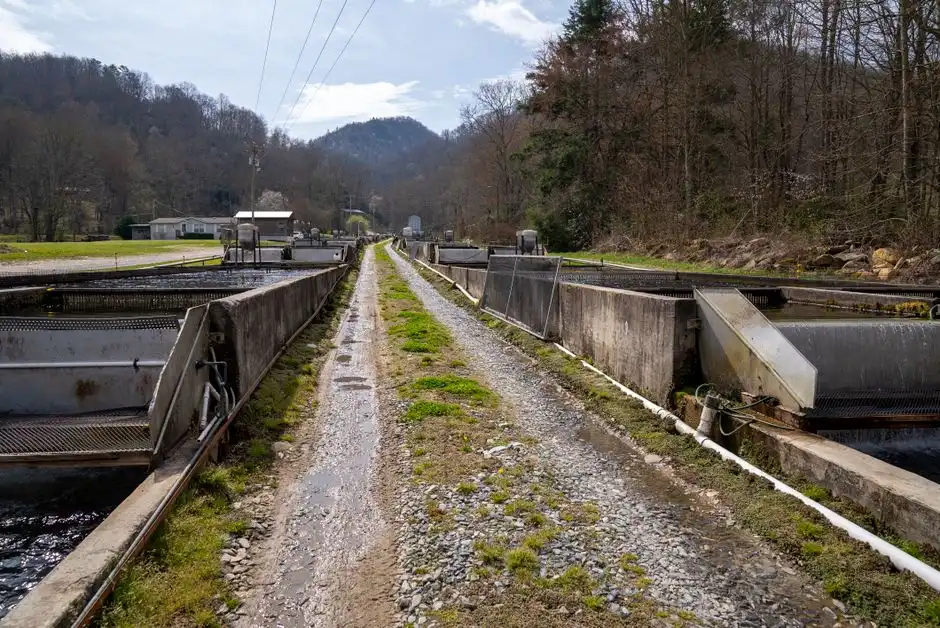
DAF, lamella, and MBR each solve a different part of the automotive wastewater envelope, and the choice is driven by contaminant profile, footprint, and whether the plant is on a water-reuse roadmap. The industrial DAF for automotive FOG removal is micro-bubble flotation with automatic skimming, proven in metalworking and petrochemical, and is the right primary when free and emulsified oil dominates and the TSS is mostly floatable. The lamella clarifier for paint-shop wastewater uses inclined plates with sludge recirculation at 20–40 m³/m²·h surface loading and delivers up to 30% lower chemical consumption, making it the right choice when floor space is constrained and the load is mineral TSS plus precipitated metals. The MBR polishing step for water reuse uses 0.1 μm PVDF membranes in flat-sheet modules, consumes 10–20× less energy than external cross-flow, and has a footprint roughly 60% smaller than conventional activated sludge, making it the right choice when the POTW limit on BOD/TSS is tight or when the plant needs reuse-quality effluent. The DF-series MBR module is the building block for that polishing step. Use DAF for stamping and machining wastewater, lamella for paint-shop clarification where settleables dominate, and MBR where the same plant is on a water-reuse roadmap or a tight BOD/TSS discharge envelope.
| Criterion | DAF | Lamella clarifier | MBR (DF series / integrated) |
|---|---|---|---|
| Best target contaminant | Free & emulsified oil, FOG, floatable TSS | Mineral TSS, precipitated metals | Dissolved BOD/COD, fine TSS to reuse quality |
| Capacity envelope | 4–300 m³/h, 13 standard models | 20–40 m³/m²·h surface loading | Site-specific; modular PVDF flat-sheet |
| Footprint | Medium | Small (inclined plates) | ~60% smaller than CAS |
| Chemical demand | Polymer + coagulant | Up to 30% lower than conventional clarifier | Minimal downstream; biology-driven |
| Effluent quality | O&G < 10–20 mg/L achievable with good upstream chemistry | TSS 20–50 mg/L typical | TSS < 5 mg/L, BOD < 5 mg/L (reuse-grade) |
| Energy signature | Low (saturated recycle pump) | Very low (gravity-driven) | 10–20× lower than external cross-flow |
| Reuse compatibility | Limited | Limited | Yes — paint-shop rinse, cooling-tower, boiler feed |
Sludge Handling and Chemical Dosing: Closing the Loop
Sludge from DAF float and lamella underflow is typically 1–4% dry solids, and a filter press for DAF float and clarifier underflow (1–500 m² filtration area, manual to PLC-automatic) reduces volume by 80–90% and qualifies the cake for off-site disposal or, in some German Länder, for thermal recovery under KrWG conditions. The chemical program is a coagulation and flocculation chemistry decision, not a product list: cationic polymers for emulsified oils and organic matter, anionic polymers for clay and pigment analogues, and bentonite-based blends (ALAR One Step®) for combined FOG, phosphate, and metals sweep in a single dose (per ALAR chemical guidance). A PLC-controlled coagulant and pH dosing skid with pH, flow, and TSS feedback reduces chemical overuse, which is a recurring surcharge driver in municipal pretreatment bills (per ALAR cost narrative). pH trim with caustic soda or sulfuric acid is the final guard band before the sewer connection; the operational range must be set per local limit and confirmed in the daily PLC log. Engineers who need a paint-shop-specific primer can compare notes with the paint-shop wastewater process guide.
Frequently Asked Questions
What contaminants must an EV or auto assembly plant remove before discharging to a municipal sewer under 40 CFR Part 403 and AbwV Anhang 49?
Under 40 CFR Part 403.5 and the EPA local-limits framework, an Industrial User must remove oil and grease, TSS, heavy metals (notably zinc and nickel from stamping and conversion coating), pH excursions, and COD/BOD to site-specific numeric or narrative local limits applied at the end-of-pipe connection; under AbwV Anhang 49 and IED 2010/75/EU BAT-AELs, the same plant must additionally meet German industry-specific minimum requirements for the surface treatment of metals and plastics, with the more stringent of the two governing the operating envelope.
When should an automotive plant choose DAF over a lamella clarifier for primary solids removal?
DAF (4–300 m³/h) is the right primary when free and emulsified oil dominates and the TSS is mostly floatable, which is the typical stamping, machining, and compressor-condensate envelope; a lamella clarifier (20–40 m³/m²·h surface loading) is the right primary when the load is mineral TSS and precipitated metals from the paint shop and the floor plan cannot accommodate a DAF basin — the same selection logic used in the DAF vs. lamella vs. MBR table above.
Does an MBR polishing step make sense for an auto plant on a water-reuse roadmap?
Yes. An MBR (DF series flat-sheet or integrated, 0.1 μm PVDF membranes) is the right polishing step when the receiving POTW imposes tight BOD/TSS limits or when the plant is moving toward reuse for paint-shop rinse, cooling-tower make-up, or boiler feed; it delivers reuse-grade effluent (TSS and BOD typically below 5 mg/L each) and runs at 10–20× lower energy than external cross-flow designs, with a footprint roughly 60% smaller than conventional activated sludge.