Why Spray-Booth Water Cannot Be Discharged Raw
A wet spray booth captures paint aerosols against a recirculating water wall, and that water accumulates a mix of floating lacquer skins, suspended pigment, dissolved resins, and solvent residues that will not pass any modern discharge threshold. Raw booth water typically measures 200–4,000 mg/L TSS, 300–8,000 mg/L COD, pH 7–9, with visible foam from surfactants and solvents — figures that exceed China GB 8978-1996 second-class limits of COD 500 mg/L and TSS 400 mg/L by 2–10×, and that breach the discharge envelopes enforced by most municipal POTWs in the EU and North America.
Two paint populations have to be addressed at once. Water-soluble coatings — latex, water-borne acrylic, electrodeposition primers — stay in the dissolved phase and demand coagulant chemistry to drop out of solution. Non-water-soluble coatings — solvent-borne polyurethane, epoxy, enamel — float as a coherent film and demand skimming plus air flotation. A single unit operation (a paint-kill pit, a clarifier, or DAF alone) reliably removes one fraction and lets the other pass; that asymmetry is why every credible spray-painting wastewater treatment solution in 2026 is a multi-stage train rather than a single vessel.
Operationally, the symptoms drive the capital project: clogged water-wall nozzles, foaming that defects the paint film, rising hazardous-waste hauling cost on sludge, and a discharge permit that is no longer being met. The path forward is engineered, not improvised.
Influent Characteristics and 2026 Discharge Limits
Engineers size a treatment train against a numeric envelope, not a vendor pitch. The table below is the working reference frame used through the rest of this article; it pairs typical raw-booth-water concentrations with the targets each downstream stage is expected to hit.
| Parameter | Raw booth water (typical) | After DAF | After biological / AOP polish | GB 8978-1996 second-class |
|---|---|---|---|---|
| TSS (mg/L) | 200–4,000 | 30–150 | ≤10 (MBR) | ≤400 |
| COD (mg/L) | 300–8,000 | 150–600 | ≤100 (MBR); ≤150 (Electro-Fenton) | ≤500 |
| BOD (mg/L) | 100–1,500 | 50–300 | ≤20 | ≤300 |
| pH | 7.0–9.0 | 7.0–8.0 | 7.0–8.0 | 6.0–9.0 |
| Oil & grease (mg/L) | 50–500 | ≤20 | ≤5 | ≤20 |
| Color (PT-Co) | 500–5,000 | 100–400 | ≤50 | — |
In the EU, coating installations consuming more than 5 t/yr of solvent fall under the Industrial Emissions Directive 2010/75/EU, with VOC and TOC limits set in the BAT conclusions for surface treatment using organic solvents (2014/687/EU). In the United States, EPA 40 CFR 433 Metal Finishing categorical standards are the de-facto engineering analog for paint lines — a TSS monthly average of 52 mg/L and strict metals ceilings — even though paint lines are not strictly named in 433. In China, the 2020 upgrade of GB 30485 (automotive coating air emissions) and tightening GB 8978 enforcement are pushing plants in 2025–2026 toward ≥60% water reuse rather than simple discharge (HydropureWater field data, 2026).
The 2026 Treatment Train: Stage by Stage
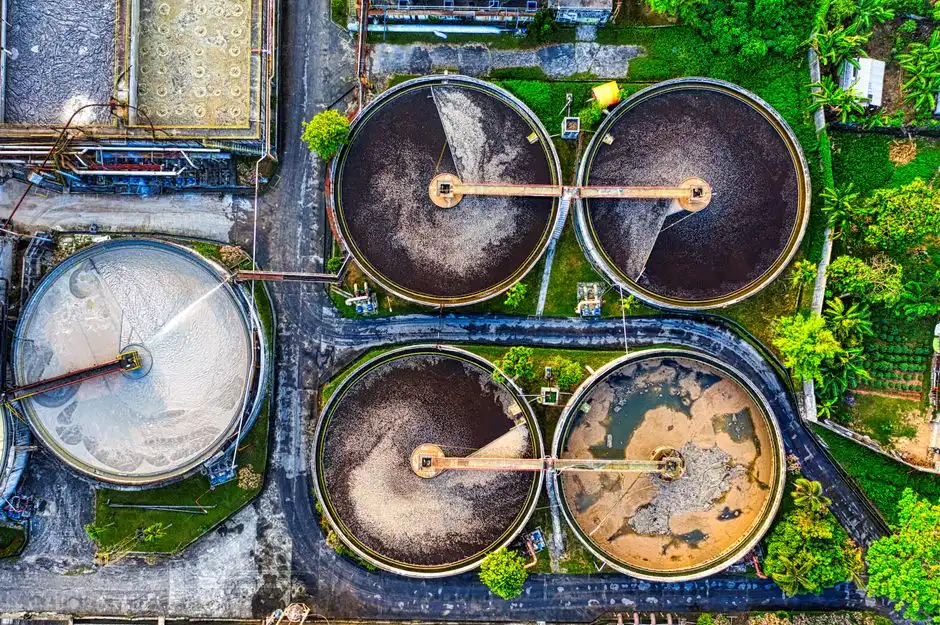
A defensible spray-painting wastewater treatment solution in 2026 has five stages, each with a measurable job to do. The table anchors the prose; the bullets justify the choice of each unit operation.
| Stage | Unit operation | Key parameters | Typical removal |
|---|---|---|---|
| 1. Paint kill / EQ | Equalization basin with mechanical skimmer | HRT 10–30 min; pH adjust to 7.0–8.0 | Captures floating lacquer film |
| 2. Coag + floc | PAC + anionic PAM | PAC 50–300 mg/L; PAM 1–5 mg/L; G·T 20,000–50,000; 15–25 min floc | Destabilizes colloidal paint |
| 3. DAF | Dissolved air flotation | Hydraulic loading 4–25 m/h; recycle 20–40% | TSS 90–97%; COD 50–70% |
| 4. Biological / AOP | MBR, SBR, or Electro-Fenton | MBR flux 10–15 LMH; HRT 6–12 h | COD to ≤100 mg/L; TSS <1 μm |
| 5. Sludge dewatering | Plate-and-frame filter press | 1–500 m² area; 0.6–0.8 MPa | Cake 25–35% DS |
Stage 1 — Paint kill and equalization. A 10–30 min hold with a mechanical skimmer pulls the floating lacquer skin off the surface and dampens the peak flows from intermittent booth operations. pH is trimmed to 7.0–8.0 because paint resins are amphoteric and shift surface charge outside this band, which destabilizes the downstream coagulant dose.
Stage 2 — Coagulation and flocculation. Polyaluminum chloride (PAC) at 50–300 mg/L plus anionic polyacrylamide at 1–5 mg/L agglomerates the fine pigment particles that would otherwise slip through the DAF. The flocculator is sized for a G·T (velocity gradient × time) of 20,000–50,000 and 15–25 min flocculation time, with a slow-mix tail to grow dense floc that floats cleanly.
Stage 3 — Dissolved air flotation. A HydropureWater DAF system sized for 4–300 m³/h treats the flocculated stream at 4–25 m/h hydraulic loading and a 20–40% recycle ratio; micro-bubbles 20–80 μm in diameter attach to the floc and lift it as a 2–4% dry-solids scum. Surface TSS removal runs 90–97% and COD removal 50–70% on a single pass.
Stage 4 — Biological or AOP polish. The DAF effluent still carries dissolved resin and solvent residues that no physical-chemical stage can address. An MBR biological polish (10–2,000 m³/day, membrane pore <1 μm) drives soluble COD to ≤100 mg/L and produces an effluent suitable for direct reuse in booth rinse loops; an SBR is a lower-cost alternative for flows above 100 m³/h. For small flows where biological is impractical — typically below 20 m³/h with high solvent load — Electro-Fenton has been demonstrated to reduce COD by 60–80% at short residence times, per peer-reviewed 2024–2025 work on coupled electro-Fenton for spray-paint streams.
Stage 5 — Sludge dewatering. The floated paint scum is thickened to 2–4% dry solids and then dewatered on a plate-and-frame filter press (1–500 m² area, 0.6–0.8 MPa) to a 25–35% DS cake that can be lifted with a forklift and shipped off-site as non-hazardous waste (US RCRA / EU EWC coding to be confirmed locally).
Chemistry, Reagents, and Sludge Handling
The OPEX side of a paint line is dominated by three consumables: coagulant, flocculant, and sludge disposal. Polyaluminum chloride (PAC) at 50–300 mg/L plus anionic polyacrylamide at 1–5 mg/L remains the workhorse chemistry, but a well-tuned automatic chemical dosing skid is what keeps that dose honest under variable booth loading; manual dosing drifts, and drifted dose equals wasted chemistry and dirty effluent.
For water-borne paint lines — increasingly common as solvent regulations tighten — a cationic coagulant such as polydadmac at 5–20 mg/L is often more effective than PAC and cuts sludge volume by 10–20%. Either way, pH must be held to 7.0–8.0 because the resin's surface charge flips outside that band and the coagulant demand doubles. Sludge yield typically runs 3–8 kg dry solids per cubic meter of booth water; that number feeds the dewatering press sizing and the hauling contract. Dewatered paint cake at 25–35% DS is generally non-hazardous under US and EU codes, though local generator status must be confirmed; some automotive lines recover the cake as a pigment extender, which turns a waste line into a small revenue line.
Compliance, Water Reuse, and 2026 Economics
A correctly designed DAF + MBR train clears China GB 8978-1996 second-class (COD ≤500, TSS ≤400), the EU IED 2010/75/EU VOC envelope for coating installations, and the US EPA 40 CFR 433 benchmark (TSS monthly avg ≤52 mg/L) simultaneously with operating margin. The economic case is now stronger than the compliance case: clarified booth water recycled at 60–90% reduces fresh intake by 35–60%, and for a 50 m³/h booth that is 200–700 m³/day of saved water. Payback on the reuse loop is commonly inside 18–30 months in 2024–2025 installations, with OPEX dominated by chemicals (20–30%), electricity (25–35%), sludge disposal (25–35%), and labor (10–15%) — the breakdown is mapped in detail in the 2026 industrial wastewater OPEX breakdown. Plants that still design for discharge-only in 2026 are buying a near-term retrofit; the trend line in both China (GB 30485-2020 enforcement) and the EU (water-reuse regulation 2024/590) makes reuse the default, even if phase one only reuses clarified water back to booth rinse.
For sites that also handle metals-bearing streams — phosphate conversion coatings, e-coat rinses — the cross-reference to 2026 heavy metals discharge standards matters, since the same DAF/MBR train can be sized to clear metals ceilings if the upstream chemistry is right.
Equipment Selection by Flow Rate and Paint Type
Procurement-ready equipment lists map cleanly to flow rate and paint chemistry. The table below is the short list; the prose explains when to deviate.
| Flow band | Typical plant | Recommended train | Reference equipment |
|---|---|---|---|
| ≤20 m³/h | Job-shop, water-borne | Batch chemical + DAF + bag filter | dosing skid + DAF |
| 20–100 m³/h | Automotive OEM, mixed paint | Equalization + DAF + MBR | DAF + MBR |
| >100 m³/h | Heavy-machinery coater | Lamella pre-clarifier + DAF + SBR + dewatering | lamella clarifier + DAF + press |
For low-solids clear-water reuse loops, a lamella clarifier at 20–40 m/h hydraulic loading can save roughly 30% of coagulant versus a DAF on the same stream, and it is a sensible pre-thickener upstream of the DAF on the heavy paint load. The cost-defensible baseline in any flow band is three units: a chemical dosing skid, a DAF or clarifier for solids, and a plate-and-frame press for sludge. Everything else (MBR, SBR, AOP) is justified by the discharge limit or the reuse target.
Frequently Asked Questions
What is the most common treatment train for spray-booth water in 2026? A five-stage train: paint kill, coagulation/flocculation, dissolved air flotation, biological or AOP polish (MBR or Electro-Fenton), and plate-and-frame sludge dewatering. Single-unit approaches fail because paint kill alone leaves 300–8,000 mg/L COD, and DAF alone leaves dissolved organics that breach GB 8978-1996 second-class limits.
How much of spray-booth water can be reused? A DAF + MBR train routinely recycles 60–90% of clarified booth water back to the water wall or to booth rinse, cutting fresh intake by 35–60%. For a 50 m³/h booth this is 200–700 m³/day of saved water and a payback typically inside 18–30 months, as detailed in the OPEX guide.
Which chemicals are used and at what dose? Polyaluminum chloride (PAC) at 50–300 mg/L plus anionic polyacrylamide at 1–5 mg/L is the standard chemistry, with pH held to 7.0–8.0. For water-borne lines, cationic polydadmac at 5–20 mg/L is often more effective and cuts sludge volume 10–20%.
What discharge limits apply? China GB 8978-1996 second-class sets COD ≤500 mg/L and TSS ≤400 mg/L. EU coating installations >5 t/yr solvent fall under IED 2010/75/EU with BAT from 2014/687/EU. In the US, EPA 40 CFR 433 (Metal Finishing) is the de-facto analog at TSS monthly avg ≤52 mg/L.
What sludge yield should be expected from a spray booth? Typical floated sludge runs 3–8 kg dry solids per m³ of booth water, which a plate-and-frame filter press dewatered at 0.6–0.8 MPa will produce as a 25–35% DS cake suitable for off-site disposal or, in some automotive lines, pigment-extender recovery.