Why Cape Town Hotels Need a Packaged MBR in 2026
Choose a packaged MBR STP for a Cape Town hotel by sizing peak wet-weather flow at roughly 2.0–2.5× average daily demand, matching effluent to either the South African Department of Water Affairs (DWS) special limits (for discharge) or the DWS wastewater reuse guidelines (for irrigation and toilet flushing), and selecting a containerised, factory-tested module built locally in Cape Town. A 200-bed 5-star hotel at 250 m³/d is a typical reference case.
Day Zero was 2018, but the commercial-water restraint it triggered has not loosened. The City of Cape Town continues to apply stepped tariffs and restrictive by-laws to high-volume commercial users, and hotels sit squarely in that bracket: a 200-key property can draw 200–300 m³/d from municipal supply at near-full occupancy. Against that backdrop, on-site treatment and reuse is no longer a sustainability narrative; it is a planning condition. The South African Department of Water Affairs special limits set the discharge ceiling for any treated stream leaving the site, while the DWS wastewater reuse guidelines govern toilet-flushing, irrigation, and laundry make-up end uses.
Membrane Bioreactor (MBR) technology pairs conventional activated sludge with submerged membrane filtration, with membrane porosities sitting between microfiltration and ultrafiltration. That combination delivers near-reuse-quality effluent in a single 40 ft hi-cube container, factory wet-tested before dispatch. For a hotel retrofit where every lost room-night costs revenue, a factory-built package STP replaces weeks of in-situ concrete tank construction with a one-week crane lift and a commissioning window measured in days. The same logic drives the comparable hospitality market case outlined in the hotel and resort wastewater treatment guide for a comparable hospitality market, and it underpins the sister guide for packaged MBR STP sizing in a Lisbon hotel context.
Step 1: Characterise Hotel Wastewater Loading
Hotel wastewater is medium-strength domestic sewage with three hotel-specific overlays: kitchen FOG (fats, oils, grease), laundry detergent surge, and pool backwash spikes. A defensible influent characterisation is the first thing an MBR supplier will ask for, and it drives both tank sizing and the pre-treatment train. Treat the package plant vendor's default influent table as medium-strength domestic wastewater, then adjust upward where the hotel runs a 24-hour commercial laundry, a high-cover restaurant, or a conference centre.
Characteristic parameters that drive MBR design are BOD, COD, TSS, ammonia, and FOG. Higher organic loading or different compositions can be designed for based on the client's water quality and end treated water requirements, which is why a one-line "hotel sewage at 250 mg/L BOD" assumption is rarely enough. Laundry streams carry surfactant loads that stress biological floc, and kitchen FOG blinds membranes if it reaches the cassette unchecked. A dedicated DAF pre-treatment for kitchen and laundry FOG upstream of the MBR is the standard mitigation, and many operators also install a separate grey-water plant for laundry waste so surfactant shocks never reach the membrane tank.
Variability matters more than absolute strength. Occupancy seasonality at coastal Cape Town hotels, weekend peaks over the December–January season, and event functions drive the peak factor that actually sizes the plant. A hotel at 70% average occupancy can spike to 95%+ on a long weekend, and that ratio is what pushes the design flow off the average.
Step 2: Size Average and Peak Flow for the MBR
Walk the numbers with a worked reference case. A 200-room, 3-star Cape Town hotel at 70% average occupancy generates approximately 120 m³/d of average dry-weather flow once guest bathroom, F&B, and laundry contributions are summed. The MBR's flexibility to handle flow and load variation is one of the reasons it suits variable hotel loading, but "flexible" is not the same as "sized for the peak."
Apply a 2.0–2.5× peak factor to the average to land on a 240–300 m³/d design capacity. That range lines up with the Imemflo hollow-fibre 250 m³/d reference install at a 200-bed 5-star property. Add a further safety margin for wet-weather inflow/infiltration where the sewer connection is old, and for the December–January occupancy peak that runs above the annual average. For an equivalent packaged MBR STP buyer's guide for a Warsaw hotel, the same 2.0–2.5× logic holds even though the climate driver is cold-weather grease rather than summer occupancy.
Putting a single number on a purchase order: spec the MBR at 250–300 m³/d for a 200-key 3- to 5-star Cape Town hotel, sized on peak wet-weather flow rather than annual average. Anything sized on the average will short-tank on the first long weekend.
Step 3: Choose MBR Configuration and Membrane Type
Two membrane formats dominate the packaged MBR market for hospitality: hollow-fibre (HF) and flat-sheet (FS). Both are submerged, both deliver ultrafiltration-grade solids and pathogen removal, and both are supplied by major membrane OEMs including Suez, DuPont, Toray, and Mitsubishi. The choice is driven more by vendor preference, footprint, and air-scour regime than by effluent quality. An integrated MBR membrane bioreactor system typically arrives with the membrane cassette pre-installed and wet-tested; a separate DF series flat-sheet MBR module retrofit is the more common path for tank conversions.
Configuration choice follows the compliance pathway. Configuration A adds an anoxic and anaerobic zone in front of the aerobic MBR tank and is specified when biological nitrogen and phosphorus removal are required — typically because the discharge goes to a sensitive water body or the reuse end use includes irrigation. Configuration B is the simpler carbonaceous-only train (anoxic, aerobic, and a secondary settling or SST step) used when BOD/COD and TSS removal alone meet the permit. The energy footprint differs: Configuration B on a COD load of 800 mg/L lands in a specific-energy band the vendor's design sheet will quote per kilolitre treated.
Flat-sheet DF modules typically run 0.1 μm nominal pore size with coarse-bubble aeration directly beneath the cassette for continuous membrane scouring. HF cassettes run a similar pore rating but use a different air-scour geometry and pack more membrane area per cassette, which can shrink the tank footprint on tight hotel sites. An MBR process does not typically generate foul odours; the process is designed to minimise production of foul-smelling gases through proper aeration and mixing, and any residual smell is limited to the screening and lift-station stages, which can be mitigated with covers and vent filters.
| Parameter | Hollow-Fibre (HF) MBR | Flat-Sheet (FS) MBR / DF Series |
|---|---|---|
| Typical pore size | ~0.1–0.4 μm (UF range) | ~0.1 μm nominal |
| Air-scour mechanism | Coarse-bubble from aerator below cassette | Coarse-bubble integrated under module frame |
| Footprint | Higher membrane area per cassette; smaller tank | Larger cassette envelope; easier to retrofit into existing tanks |
| Configuration A compatibility | Yes (HF + anoxic/anaerobic) | Yes (FS + anoxic/anaerobic) |
| Configuration B compatibility | Yes | Yes |
| Reference install | Imemflo HF MBR, 200-bed 5-star, 250 m³/d | DF series flat-sheet modules, packaged plants 50–500 m³/d |
Step 4: Match the Effluent Target to DWS Standards
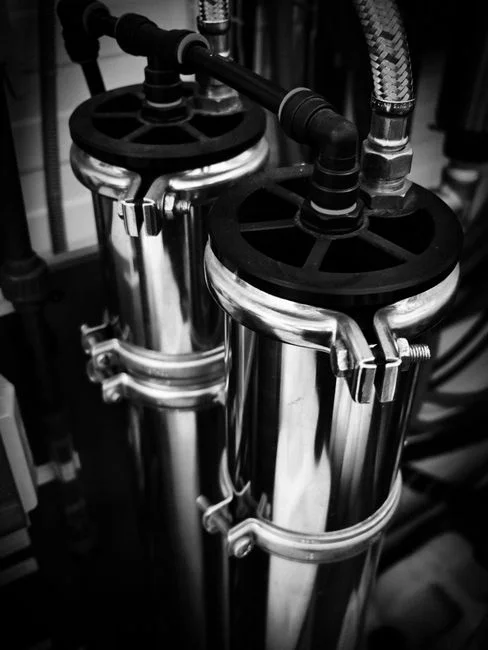
The treated water from a properly designed MBR reactor is compliant with the South African Department of Water Affairs special limits standards and can be discharged to sensitive water bodies, reused for irrigation, reused as process water for cleaning operations, or used as pre-treatment for a reuse system. That single sentence is the regulatory hinge: it tells the consulting engineer that a packaged MBR with the right configuration can carry either compliance pathway, but the configuration is not the same on both paths.
On the discharge path, the MBR's pathogen and solids removal alone meet the special limits for direct discharge; no further disinfection is legally required, though operators commonly dose for residual control. On the reuse path — toilet flushing, landscape irrigation, and cooling or cleaning make-up — pathogen removal is the headline benefit, but reuse typically still requires a polishing step. A UV steriliser for reuse polishing is the standard add-on because it leaves no chemical residual and handles the bacterial and viral load the MBR has already reduced by 90–95%. Where a residual is wanted in the distribution loop, a chlorine dioxide generator sized for the reuse flow provides persistent disinfection without the trihalomethane formation risk of chlorine.
Before commissioning, the developer must clear two administrative gates: a City of Cape Town building-plan approval covering the on-site drainage and treatment plant footprint, and a DWS Section 21 authorisation covering both the water-use aspect (taking or storing effluent for reuse) and the discharge aspect (where reuse does not consume 100% of the flow). These run on different lead times and are usually applied for in parallel by the MEP consultant.
Step 5: Score Vendors on Local Fabrication, Automation and Support
Once the technical spec is fixed, the shortlist comes down to supply chain, automation, and after-sales — the three factors a Cape Town hotel actually feels in year two of operation. Weight local Cape Town fabrication and factory wet-testing because modules designed, engineered, fabricated and tested in Cape Town prior to shipping have shorter spares lead times and arrive with a known commissioning history rather than a sea-freight risk register. The factory-built, fully wet-tested package approach minimises on-site construction and installation, which is exactly what a revenue-sensitive retrofit needs.
Require PLC-based automation with remote monitoring so the hotel's small facilities team can supervise the plant without a full-time operator. Decentralised MBR STPs with PLC-based automation and remote monitoring are now standard offerings and remove the single biggest operational cost line on small packaged plants. Confirm the optional extras the supplier will quote: lifting station, screening, effluent conditioning, polishing with sand or AFM filtration, and sludge handling. A packaged underground integrated sewage treatment skid often pairs with a rotary mechanical bar screen for headworks screening as the upstream protection stage. Finally, confirm the reactor's coating: carbon-steel epoxy-mastic, specially designed for industrial and maritime environments, is the right call for a coastal Cape Town site where salt-air corrosion is the lifetime risk.
| Vendor Evaluation Criterion | Weight | What to Verify |
|---|---|---|
| Local Cape Town fabrication & wet-testing | 25% | Factory tour evidence; FAT (Factory Acceptance Test) report; module built in 40 ft hi-cube container |
| PLC automation & remote monitoring | 20% | PLC panel spec; SCADA or cloud dashboard; alarm escalation routes |
| Configuration A/B options | 15% | Documented nitrogen & phosphorus removal when required |
| Membrane OEM & format | 10% | HF or FS; OEM brand (Suez, DuPont, Toray, Mitsubishi); membrane warranty terms |
| Coastal/maritime reactor coating | 10% | Epoxy-mastic on carbon steel; coating thickness spec |
| Optional extras scope | 10% | Lifting station, screening, polishing, sludge handling all in-house |
| After-sales response in Western Cape | 10% | Local service team; spares warehouse proximity; SLA on callout time |
2026 Cost Band and ROI for a Cape Town Hotel MBR
For the 50–300 m³/d class that covers most 100- to 300-key Cape Town hotels, packaged MBR installed CAPEX in 2026 typically lands in a R 35,000–R 65,000 per m³/d band, with OPEX in the R 4–R 8 per m³ treated range, driven mostly by energy (Configuration B specific-energy at an 800 mg/L COD load sets the baseline) and membrane replacement amortised over a 7–10 year cycle. Local fabrication, factory wet-testing, and the choice between Configuration A and B move both numbers more than membrane format does.
ROI is set by the City of Cape Town commercial water tariff and the avoided cost of municipal effluent discharge for hotels near capacity constraints. Recycled water for toilet flushing and irrigation can offset 30–50% of a hotel's municipal water use, which is the real payback lever — the more the hotel reuses, the less it draws at the rising-block tariff, and the faster the MBR pays back. Size a sludge dewatering option — plate-and-frame filter press, drying bed, or geotextile bag — to the MBR's stabilised, low-odour sludge stream, and budget the spare-parts and valve media list with the consumables package at commissioning so the first year is not a series of emergency purchases.
Frequently Asked Questions
What peak factor should I apply when sizing a packaged MBR for a Cape Town hotel?
Apply a 2.0–2.5× peak factor to the average dry-weather flow and add a wet-weather safety margin. For a 200-room hotel at ~120 m³/d average, that lands on a 240–300 m³/d design capacity, consistent with the 250 m³/d 5-star reference install at a comparable hospitality property.
Does MBR effluent meet the DWS special limits for direct discharge?
Yes. Treated water from a properly designed MBR reactor is compliant with the South African Department of Water Affairs special limits standards and can be discharged to sensitive water bodies without further disinfection, though a UV or chlorine dioxide polishing step is commonly added where reuse or residual control is also required.
Which is better for a hotel, hollow-fibre or flat-sheet MBR membranes?
Both deliver ultrafiltration-grade solids and pathogen removal; both are supplied by Suez, DuPont, Toray, and Mitsubishi. Hollow-fibre packs more area per cassette and suits a tight tank footprint, while flat-sheet DF modules are easier to retrofit into existing concrete tanks. Membrane format moves footprint and air-scour geometry more than it moves effluent quality.