Why Kampala Is a Different Cooling-Water Problem from Lagos or Stockholm
Kampala sits inside the Lake Victoria basin, where ambient temperature runs 17–27°C and relative humidity frequently exceeds 70% (Backspace, 2026) — conditions that change the air-side versus water-side cooling tradeoff that dominates designs in cooler Nordic and dry West African markets. A Lagos operator can lean on coastal outfall economics; a Stockholm operator can lean on free-air economizer hours. A Kampala operator gets neither: humidity above 70% caps economizer-mode hours, while dust loading and grid unreliability push operators toward hybrid water-assisted cooling with a non-trivial blowdown stream. The UMEME commercial-tariff structure makes water-treatment energy — typically $1.50–$3.00/kgal of treated water — a material OPEX line that should drive high-recovery, low-energy unit operations rather than membrane-heavy designs imported from Lagos or Stockholm (HydropureWater field data, 2026).
Three Uganda-specific constraints set the design envelope. First, Lake Victoria basin water stress combined with the 2020 NEMA EIA regime puts a permit ceiling on freshwater withdrawal that is tighter than what an operator in Lagos or Stockholm faces. Second, Uganda is landlocked: brine concentrate cannot be sent to a marine outfall, so concentrate handling is a structural cost line, not an optional add-on. Third, grid unreliability shapes the water train indirectly — pumps, blowers, and SCADA must be generator-backed, and any membrane system that cannot ride through a 30-second transfer event is the wrong choice for a 2026 Kampala build. The takeaway for the front-end engineer: do not import a Lagos or Stockholm train; re-scope the four-stage logic to Lake Victoria feed-water chemistry and Uganda's landlocked brine path.
Kampala Feed-Water Assumptions and the Mass Balance Behind Them
Kampala municipal and shallow borehole feed runs 200–600 mg/L TDS, with hardness-driven Langelier Saturation Index (LSI) sitting in the upper scaling band and silica at 8–20 mg/L as the conservative design point (HydropureWater field data, 2026; per typical NWSC Kampala mains chemistry). Lake Victoria-derived surface water carries a lower TDS but higher turbidity and microbial load after rainfall events, which sets the sizing of the multi-media filter and the ultrafiltration (UF) duty downstream. A Kampala 2026 build should design against the higher-TDS borehole envelope and treat lake water as a secondary source with dedicated coagulation ahead of media filtration.
The mass balance is the part most often under-engineered in a Kampala P&ID. For a 50 MW heat load at 80% cooling-tower efficiency, evaporation is approximately 99,537 kg/h; blowdown equals evaporation divided by (cycles of concentration − 1), so CoC 4 produces about 33,000 kg/h of blowdown versus about 19,900 kg/h at CoC 6 (HydropureWater field data, 2026). The blowdown stream at 1,200–6,000 mg/L TDS carries 10–50 mg/L suspended solids from corrosion products and biofilm fragments, plus accumulated biocides and corrosion inhibitors — the exact load the side-stream filter must knock down before any membrane. LSI and the Ryznar Stability Index (RSI) must be held in the −0.5 to +0.5 band; without softening or RO make-up, a cooling tower running at CoC 5 will foul chiller barrels within one to two maintenance cycles (Ecologix Environmental Systems, 2026).
| Parameter | Kampala mains / borehole | Lake Victoria surface | Cooling-tower blowdown (CoC 4–6) |
|---|---|---|---|
| TDS (mg/L) | 200–600 | 100–250 | 1,200–6,000 |
| Hardness as CaCO₃ (mg/L) | 150–350 | 80–150 | 600–2,800 |
| Silica (mg/L as SiO₂) | 8–20 | 6–15 | 30–120 |
| Turbidity (NTU) | 1–10 | 5–80 (rainfall peaks) | 5–30 |
| Suspended solids (mg/L) | 5–20 | 10–60 | 10–50 |
| LSI band | +0.3 to +1.2 (scaling risk) | −0.2 to +0.5 | +1.5 to +2.8 (must be neutralized) |
The Four-Stage Treatment Train for a Kampala Data Center
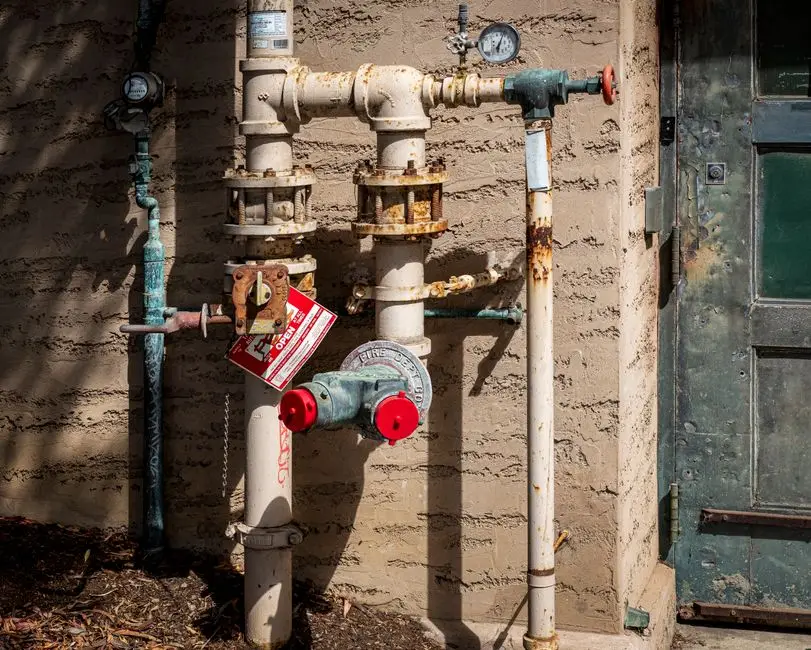
The train is the same four-stage logic used in Lagos — intake pretreatment, side-stream filtration, ultrafiltration, brackish reverse osmosis — but re-scoped for Lake Victoria basin feed and Uganda's landlocked brine path. A Kampala 2026 design intent is reuse, not once-through, and every stage should be specified with that target in mind. For an East Africa regional comparison on regulatory framing, the East Africa NEMA/EMCA compliance reference lays out the parallel Kenyan regime; for a Nordic contrast on the same four-stage logic, the Stockholm data center cooling-blowdown treatment guide is the cleanest side-by-side.
Stage 1 — Intake pretreatment. A multi-media filter for surface and borehole feed cuts turbidity below 3 NTU and protects downstream RO membranes; units sized for 10–200 m³/h with automatic backwash are the standard first barrier. For Lake Victoria surface water, specify coagulation ahead of the media filter to handle rainfall-event turbidity swings above 50 NTU.
Stage 2 — Side-stream filtration. Self-cleaning 10–25 µm screen filters handle 1–5% of circulation flow and drop blowdown suspended solids to membrane-friendly levels (Genesis Water Technologies, 2026). Capex lands at $50,000–$200,000 for a typical data-center installation; OPEX is dominated by periodic solids disposal. This stage is the cheapest insurance against premature RO membrane fouling and is often under-specified in early Kampala P&IDs.
Stage 3 — Ultrafiltration. A PVDF hollow-fiber ultrafiltration system with 0.03–0.1 µm pores operates at 90–95% recovery, 10–30 psi, and automatic backwash — the standard RO pretreatment for Kampala groundwater. UF removes bacteria, colloids, and biofilm fragments the side-stream screen cannot catch and gives the RO stage a consistent SDI below 3, which is what protects membrane life on a Kampala feed with seasonal variability.
Stage 4 — Brackish reverse osmosis. An industrial brackish-water reverse osmosis skid at 75–85% recovery produces 10–50 mg/L TDS permeate for cooling-tower make-up. Concentrate at 5,000–8,000 mg/L TDS should be routed to a side-stream softener or a small mechanical vapor compression (MVC) polisher rather than discharged — Uganda is landlocked, and a marine outfall is not an option. A PLC-controlled chemical dosing skid handles antiscalant, biocide, and pH adjustment, holds LSI neutral, and exports the SCADA logs a NEMA audit will demand. For non-cooling reuse polish (toilet flushing, landscape), specify UV or chlorine dioxide for secondary disinfection.
| Stage | Unit operation | Design parameter | Kampala-specific note |
|---|---|---|---|
| 1 | Multi-media filtration | 10–200 m³/h, <3 NTU outlet | Add coagulation step for Lake Victoria surface feed |
| 2 | Side-stream screen filtration | 10–25 µm, 1–5% of circulation | Mandatory ahead of UF on high-biofilm borehole feed |
| 3 | PVDF UF (hollow fiber) | 0.03–0.1 µm, 90–95% recovery, 10–30 psi | Hold SDI15 < 3 to protect downstream RO |
| 4 | BWRO | 75–85% recovery, 10–50 mg/L TDS permeate | Route concentrate to softener or MVC, not discharge |
| — | Chemical dosing | Antiscalant, biocide, pH adjustment | SCADA export required for NEMA audit trail |
NEMA Permits, EIA Scope, and Effluent Limits a Kampala Operator Must Hit
The Uganda regulatory stack is built on the National Environment Act 2019 and the 2020 NEMA Environmental Impact Assessment Regulations, which require a project-level EIA for water-using installations above defined thresholds; hyperscale builds in Kampala routinely cross those thresholds, and a 5–20 MW site will sit squarely inside the EIA scope. Effluent discharge is governed by the National Environment (Standards for Discharge of Effluent into Water or on Land) Regulations, Schedule 6, which sets numerical limits on TDS, BOD, COD, TSS, residual chlorine, pH, and temperature rise. NEMA site-specific permits typically require on-site flow metering, pH/conductivity/temperature logging, and a maintenance log, and the SCADA plus chemical dosing skid should be specified to export these records automatically — manual logs do not survive a NEMA audit.
The landlocked-site constraint is the piece that most often breaks a copy-pasted design. Brine concentrate cannot be sent to a marine outfall, so a 2026 Kampala train must assume an on-site buffer tank plus either a licensed hauler to a registered disposal site or a lined evaporation pond, with a small MVC polisher reserved as the high-recovery option for water-scarce or zero-liquid-discharge sites. For a parallel West Africa comparison, the Lagos data center cooling-blowdown treatment guide shows the coastal outfall path a Kampala operator does not have.
| Parameter | NEMA Schedule 6 limit (typical) | Design implication for a Kampala data center |
|---|---|---|
| TDS | ≤ 2,000 mg/L (site-specific) | BWRO permeate at 10–50 mg/L is well below; concentrate handling is the design driver |
| pH | 6.0–9.0 | Dosing skid must trim both directions for the RO permeate and any neutralized blowdown |
| Temperature rise (ΔT) | ≤ 5 °C above receiving water | Cooling-tower discharge must cool or blend before any outfall |
| Residual chlorine | < 0.5 mg/L (site-specific) | Dechlorination stage before discharge if chlorine disinfection is used upstream |
| TSS | ≤ 50 mg/L (site-specific) | Side-stream filter and UF protect the outfall envelope |
| BOD / COD | Site-specific, low for CTBD | Blowdown BOD is low unless biocide breakthrough occurs — monitor on SCADA |
Capex, OPEX, and Payback for Two Kampala Reference Builds

Two reference cases cover the Kampala 2026 envelope. Reference case A — a 2–5 MW colocation build at Water Usage Effectiveness (WUE) 1.8 L/kWh — implies 36,000–90,000 m³/year of cooling-tower make-up; a 50 m³/day BWRO skid handles blowdown at CoC 5, and a 50,000 GPD RO skid lands at $250,000–$500,000 installed. Side-stream filtration adds $50,000–$200,000, putting the typical 2–5 MW scope at $400,000–$800,000 (Genesis Water Technologies, 2026; HydropureWater field data, 2026).
Reference case B — a 10–20 MW hyperscale build — hits 1.14–1.70 million L/day (Ecologix Environmental Systems, 2026). A 200–300 m³/day BWRO train with side-stream filtration, UF, and chemical dosing is the typical scope; full installed cost lands at $1.2M–$2.5M depending on concentrate handling. ZLD polish is reserved for water-scarce sites at $3M–$8M. OPEX runs $1.50–$3.00/kgal treated, dominated by energy at UMEME industrial tariffs; chemical dosing adds 10–15%. Cutting Kampala mains draw by 60–70% on a 15 MW site saves roughly 250,000–400,000 m³/year, and at Kampala industrial tariffs payback falls inside 3–4 years once avoided discharge and pumping costs are included.
| Cost line | 2–5 MW colocation (Case A) | 10–20 MW hyperscale (Case B) |
|---|---|---|
| BWRO skid (installed) | $250,000–$500,000 | $600,000–$1,200,000 |
| Side-stream filtration | $50,000–$200,000 | $150,000–$300,000 |
| UF + chemical dosing skid | $100,000–$200,000 | $300,000–$600,000 |
| Civil, buffer tank, concentrate handling | $50,000–$150,000 | $200,000–$400,000 |
| Total installed | $400,000–$800,000 | $1,200,000–$2,500,000 |
| OPEX ($/kgal treated) | $1.50–$3.00 | $1.50–$3.00 |
| Annual freshwater saved (m³/yr) | 60,000–140,000 | 250,000–400,000 |
| Simple payback | 3–4 years | 3–4 years |
Frequently Asked Questions
What feed-water TDS should a Kampala data center design against in 2026?
Kampala municipal and shallow borehole feed runs 200–600 mg/L TDS, with silica at 8–20 mg/L as the conservative design point (HydropureWater field data, 2026). Lake Victoria surface water is lower in TDS but spikes on turbidity and microbial load after rainfall. A 2026 design should be sized against the higher-TDS borehole envelope and treat lake water as a coagulated secondary source.
What cycles of concentration should a Kampala cooling tower target?
Target CoC 5–6 for a Kampala facility, with LSI and RSI held in the −0.5 to +0.5 band (Ecologix Environmental Systems, 2026). Raising CoC from 4 to 6 cuts blowdown by roughly a third, the cheapest freshwater-saving move before any membrane capital is committed. Above CoC 6, biological and scaling risks compound and force CoC back down without advanced treatment.
Which NEMA effluent limits drive design choices for a 5–20 MW Kampala site?
Schedule 6 of the National Environment (Standards for Discharge of Effluent into Water or on Land) Regulations sets site-specific limits on TDS (≤ 2,000 mg/L), pH (6.0–9.0), TSS, residual chlorine (< 0.5 mg/L), and temperature rise (ΔT ≤ 5 °C). The 2020 NEMA EIA Regulations require a project-level EIA for water-using installations above defined thresholds, which a 5–20 MW Kampala build crosses by default. Specify the SCADA and dosing skid to export flow, pH, conductivity, and temperature records automatically — NEMA audits do not accept manual logs.
How should brine concentrate be handled at a landlocked Kampala site?
Assume an on-site buffer tank plus either a licensed hauler to a registered disposal site or a lined evaporation pond, with a small MVC polisher as the high-recovery option for water-scarce sites (IDE Water, 2026). Concentrate at 5,000–8,000 mg/L TDS is non-hazardous but cannot be discharged to a NEMA-regulated storm drain or surface water, and a marine outfall is not available. The concentrate-handling decision should be locked in at FEED, not at commissioning, because the civil footprint and the EIA scope both depend on it.
What is the capex range for a Kampala 10–20 MW data-center water reuse plant?
A 200–300 m³/day BWRO reuse plant with side-stream filtration, UF, chemical dosing, and concentrate handling lands at $1.2M–$2.5M installed (HydropureWater field data, 2026). ZLD polish is reserved for water-scarce sites at $3M–$8M. OPEX runs $1.50–$3.00/kgal treated, dominated by energy at UMEME industrial tariffs, and payback falls inside 3–4 years once avoided freshwater and discharge costs are included.
Related Equipment
- industrial brackish-water reverse osmosis skid — specifications, capacity range, and technical data