What the Anammox Process Does and Why It Replaces Nitrification–Denitrification
The anammox process for nitrogen removal converts ammonium and nitrite directly into nitrogen gas under anoxic conditions, eliminating the organic carbon demand of conventional denitrification. In a partial nitritation–anammox (PN/A) configuration, ammonia-oxidizing bacteria (AOB) produce nitrite, which anammox bacteria (Planctomycetes-type) then consume with the remaining ammonium. Compared to conventional nitrification–denitrification, PN/A cuts oxygen demand by 45%, organic matter requirement by 79%, and aeration cost by 50–60% (Renewable & Sustainable Energy Reviews, 2021), and more than 100 full-scale anammox plants are now operating worldwide.
The canonical stoichiometry from the 2021 review expresses the reaction as NH4+ + 1.32 NO2- + 0.066 HCO3- → 1.02 N2 + 0.26 NO3- + 0.066 CH2O0.5N0.15 + 2 H2O. Nitrite — not nitrate — is the electron acceptor, which is why partial nitritation must precede the anammox step. Because anammox uses nitrite rather than the fully oxidized nitrate, the front half of the train has to be engineered to stop nitrite oxidation at NO2-, not push it to NO3-.
Three operational benefits drive PN/A adoption. First, the 45% reduction in oxygen demand comes from skipping the second nitrification step and skipping heterotrophic denitrification entirely. Second, the 79% reduction in organic matter demand removes the methanol or acetate feed that conventional denitrification requires — important for high-ammonia, low-C/N streams where external carbon is a major operating cost. Third, with no organic carbon consumed in the nitrogen train, influent COD is preserved for the anaerobic digester, where methane generation can increase by approximately 47% (Renewable & Sustainable Energy Reviews, 2021). Sludge production is also low because anammox biomass yield is only 0.13 g VSS per g NH4+-N oxidized, reducing both dewatering volume and biosolids haul-off cost.
Partial Nitritation: The Front-Half Problem (NOB Suppression)
Partial nitritation oxidizes roughly half the influent NH4+ to NO2- while suppressing nitrite-oxidizing bacteria (NOB) so the nitrite is not over-oxidized to NO3-. The AOB/NOB competition is the single most important control problem in any PN/A system: if NOB outcompetes AOB, the nitrite supply collapses and anammox has nothing to consume. Three control levers are proven in pilot and full-scale work: low dissolved oxygen (DO), pH selection, and sulfide dosing.
Intermittent aeration with DO held below 5 mg/L suppressed NOB and achieved a 93% nitrite accumulation rate (NAR) in a sequencing batch reactor (Hassan, DUT 2023). The mechanism is kinetic: AOB have a higher affinity for oxygen at low DO than NOB, so under oxygen-limited conditions AOB outcompetes NOB. pH provides a second lever. At pH 5.0 both AOB and NOB activity dropped; raising pH to 7.5 lifted AOB activity to 84% NAR while keeping NOB suppressed (Hassan, DUT 2023). The third lever is sulfide. A dosage of 15 mgS/L sodium sulphide combined with 2–3 mg/L DO established partial nitritation in both synthetic and real wastewater. Long-term operation held NAR at 70 ± 19%, with effluent ammonia at 19 ± 4 mgN/L and nitrite at 18 ± 4 mgN/L (Hassan, DUT 2023). Without pH control, sulfide dosing alone raised NAR from 63% to 85% at doses up to 25 mg/L (Hassan, DUT 2023). The trade-off is operational: NOB populations return when sulfide dosing stops, so continuous dosing is required for sustained NOB suppression.
A fourth, emerging competitor is comammox — complete ammonia oxidizers within the Nitrospira genus that can perform full nitrification to nitrate in a single organism. Per the 2021 review, comammox is energetically advantageous for Nitrospira and must be considered when designing the control philosophy, particularly in low-ammonia mainstream applications where comammox tends to dominate over AOB. The implication is that the same low-DO, pH, and sulfide levers used to suppress NOB also need to suppress comammox, or the system drifts toward full nitrification and the anammox basin starves.
| Control Lever | Setpoint / Range | Effect on NOB | Effect on AOB | Resulting NAR |
|---|---|---|---|---|
| DO (intermittent aeration) | < 5 mg/L | Suppressed | Retained | ~93% |
| pH | 7.5 | Suppressed | Active (84% NAR) | ~84% |
| pH (acidic) | 5.0 | Reduced | Reduced | Low overall |
| Sulfide dosing | 15 mgS/L + 2–3 mg/L DO | Suppressed (long-term) | Tolerant | 70 ± 19% |
| Sulfide (no pH control) | Up to 25 mg/L | Partially suppressed | Active | 63–85% |
Inhibition Envelope: What Kills Anammox and How to Alarm It
Anammox bacteria are slow-growing and inhibitor-sensitive, so the operating envelope is the difference between a stable plant and a multi-month recovery. Per the 2021 review, the documented inhibitors fall into five classes: substrate (free ammonia and free nitrous acid), sulfide, heavy metals, phosphate/salinity, and organic matter at high loading. Operating conditions — DO, pH, temperature, and SRT — form a sixth envelope around the chemistry.
Free ammonia (FA) and free nitrous acid (FNA) are calculated alarms, not measured directly. FA is calculated from total ammonia nitrogen, pH, and temperature; FNA is calculated from nitrite, pH, and temperature. Both must be trended in the PLC because the inhibitory thresholds are tight: high FA or FNA stops anammox metabolism within hours. The 2021 review flags pH ≥ 9.0 as disintegrating anammox granules, so the high-pH alarm should be set well below 9.0 to leave recovery margin. Sulfide is a dual-role compound — it suppresses NOB on the front half but stresses anammox on the back half. The DUT 2023 work showed a short-term negative effect of sulfide on anammox performance but quick recovery under low sulfide stress; the operational guidance is to keep anammox-basin sulfide low and to use the sulfide dosing point on the partial-nitritation basin only, not on the anammox reactor.
The single most important number for SCADA setpoint design is the 10–12 day anammox doubling time (per the 2021 review). A toxic event that kills 50% of the anammox biomass requires roughly 10–14 days of recovery to return to design nitrogen-removal rate. The alarm philosophy must therefore favor early warning and process correction over hard shut-downs — every unnecessary trip costs two weeks of capacity. The table below translates the literature thresholds into operator-facing alarms.
| Parameter | Inhibition Threshold / Range | Calculated Alarm | PLC Action |
|---|---|---|---|
| Free ammonia (FA) | High (calculated from NH3-N, pH, T) | Trend + high alarm | Reduce feed NH4+ load; check pH |
| Free nitrous acid (FNA) | High (calculated from NO2--N, pH, T) | Trend + high alarm | Reduce aeration; bleed nitrite |
| Dissolved oxygen | > ~0.5 mg/L in anammox basin | Inline DO sensor, redundant | Cut aeration; switch to intermittent |
| pH (anammox basin) | ≥ 9.0 disintegrates granules | High-high alarm at 8.5 | Cut alkalinity feed; trim AOB basin |
| Temperature | Mesophilic window ~25–37 °C optimum | Low alarm outside 20–40 °C | Trim heat exchanger setpoint |
| Sulfide (anammox basin) | Stress at elevated dosing | Inline sulfide analyzer | Stop sulfide feed upstream |
| Heavy metals (Cu, Zn, Ni, Cr) | Low mg/L range — specific to metal | Periodic lab + online analyzer | Source control; bypass stream |
| Salinity / phosphate | Inhibitory at high loading | Conductivity, PO4 trend | Blend streams; pretreatment |
Reactor Selection: One-Stage vs. Two-Stage PN/A Hardware
The reactor decision is driven by anammox biomass retention. With a 0.13 g/g yield and a 10–12 day doubling time, anammox cannot survive in a conventional activated-sludge basin — it washes out. The 2021 review lists the candidate reactor types proven for PN/A: continuous stirred tank reactors (CSTR) with carrier materials, CSTRs with micro-granules, sequencing batch granular reactors with bio-filters, membrane bioreactors (MBR), sludge granular systems, and submerged aerated biological filters (SABF). Each solves the washout problem differently: biofilm carriers and granular biomass retain cells physically; MBRs retain them via membrane separation.
An MBR membrane bioreactor system for anammox biomass retention delivers high biomass concentration in a small footprint, <1 μm effluent quality for direct reuse or RO feed, and decoupling of HRT from SRT. The trade-off is biofouling, which is a long-standing membrane problem (per the 2021 review) and adds operator burden for cleaning-in-place and aeration scouring. Granular systems avoid the membrane and achieve comparable retention through self-immobilized granules, but they are vulnerable to pH ≥ 9.0 disintegration and to hydraulic shear during storms or pump upsets. SBRs in two-stage configuration decouple AOB and anammox into separate reactors, giving each population its own optimal conditions (low DO, intermittent aeration on the AOB side; anoxic, low-sulfide on the anammox side) but at the cost of two reactor footprints and two blower/control loops.
For 2026 specification work, the working decision rule is: one-stage MBR or granular PN/A is preferred for flows under ~2,000 m³/day and ammonia under ~500 mgN/L, where compactness and effluent quality dominate. Two-stage SBR is preferred for high-strength streams above ~1,000 mgN/L and variable loads, where the AOB and anammox populations need independent control. Side-stream reject water from anaerobic digester dewatering is the canonical high-strength, low-flow case for two-stage granular or SBR; mainstream municipal flow is the canonical one-stage MBR case.
| Configuration | Best-Fit Flow & Load | Footprint | Capex vs. Op-Ex Character | Key Risk |
|---|---|---|---|---|
| One-stage MBR PN/A | < 2,000 m³/d, NH4+-N < 500 mg/L | Smallest | Higher capex, lower opex | Membrane biofouling |
| One-stage granular PN/A | < 2,000 m³/d, NH4+-N < 500 mg/L | Small | Moderate capex, moderate opex | pH ≥ 9 granule disintegration |
| Two-stage SBR PN/A | Variable / high-strength > 1,000 mgN/L | Larger (two basins) | Moderate capex, higher opex | Process control complexity |
| MBBR / moving-bed biofilm | Mainstream, low-strength | Moderate | Lower capex, moderate opex | Carrier wear; biomass detachment |
| SABF (submerged aerated biofilter) | High-rate side-stream | Compact | Higher capex, low opex | Head loss; backwash |
2026 Specification Checklist for a PN/A Equipment RFQ
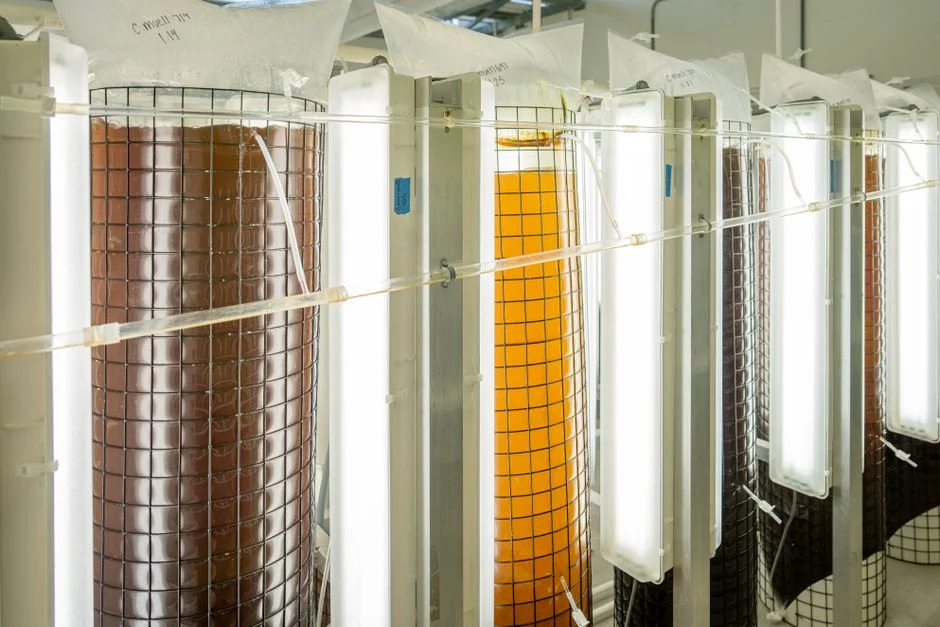
The following checklist is what an engineer should be able to hand directly to procurement for a 2026 PN/A RFQ.
- Reactor configuration. Specify one-stage MBR PN/A or two-stage SBR PN/A based on the decision rule above, including design HRT (typically 12–24 h mainstream, 6–12 h side-stream), SRT target (≥ 30 days for anammox retention), nitrogen loading rate (0.5–2.0 kg N/m³·d depending on configuration), and design temperature window (mesophilic 25–37 °C optimum).
- Influent and effluent. Specify influent ammonia range, target effluent total nitrogen (typically < 10–15 mgN/L for discharge, < 5 mgN/L for reuse), and PN NAR target of 70–90%.
- Aeration and sulfide control. Specify the DO control philosophy (intermittent aeration, low-DO sensor redundancy, setpoint < 5 mg/L for PN), and a sulfide dosing skid if the influent requires it (15 mgS/L target with pH monitoring).
- Instrumentation. Specify inline NH4-N, NO2-N, NO3-N, DO, pH, temperature, and conductivity, all with PLC trending and the alarm setpoints in the table above. A PVDF flat sheet MBR module for PN/A retrofit should be specified where membrane retention is required.
- Sludge handling. Anammox yield is low, but surplus sludge still requires dewatering. Specify a plate and frame filter press for anammox surplus sludge to achieve 20–25% dry solids cake.
Engineers maintaining the broader plant around this train should also reference the anaerobic digester maintenance guide for 2026, and where the wastewater carries metals or chemicals, the MBR vs conventional activated sludge for chemicals wastewater comparison and the online heavy metals analyzer buyer's guide for 2026 are useful adjacent reads.
Frequently Asked Questions
What is the stoichiometry of the anammox reaction?
The canonical reaction (per the 2021 review) is NH4+ + 1.32 NO2- + 0.066 HCO3- → 1.02 N2 + 0.26 NO3- + 0.066 CH2O0.5N0.15 + 2 H2O. The 1.32:1 nitrite-to-ammonium ratio and the ~11% nitrate by-product are the two numbers engineers use to back-calculate nitrite demand and residual nitrate in the effluent.
Why does anammox need partial nitritation first?
Anammox requires nitrite as the electron acceptor, not nitrate. A partial nitritation front-half oxidizes roughly half the influent NH4+ to NO2- while suppressing NOB so the nitrite is not pushed to NO3-. Without stable partial nitritation, the anammox basin starves.
What influent ammonia concentration is anammox economical at?
More than 100 full-scale anammox plants are operating globally (per the 2021 review), with the strongest economics at high ammonia and low C/N — typically side-stream digester reject water, landfill leachate, and industrial ammonia wastewater where conventional denitrification would require large methanol doses.
How long does anammox start-up take?
Anammox bacteria double every 10–12 days, so seeding and enrichment typically take 2–4 months to reach design nitrogen-removal rate. After a severe toxic event, full performance recovery also takes 10–14 days (per the 2021 review), which is why the alarm philosophy emphasizes early warning over hard shut-downs.
What inhibits anammox the most?
The most operationally relevant inhibitors are substrate inhibition by free ammonia and free nitrous acid (calculated from NH3-N/NO2-N, pH, and temperature), sulfide stress, pH ≥ 9.0 (which disintegrates granules), elevated DO in the anammox basin, and heavy metals including Cu, Zn, Ni, and Cr at low mg/L concentrations (per the 2021 review).
Related Equipment
- MBR membrane bioreactor system for anammox biomass retention — specifications, capacity range, and technical data
- PVDF flat sheet MBR module for PN/A retrofit — specifications, capacity range, and technical data
- plate and frame filter press for anammox surplus sludge — specifications, capacity range, and technical data